


The bike assassin is here, has the sharing myth been shattered?


@新熵 Original
Author: Wang Siyuan Editor: Yi Ye
After shared power banks quietly became "price assassins," shared bikes seem to be following suit.
Recently, the price hikes of shared bike platforms like Meituan and Hello during holidays have sparked heated discussions. Many users reported that when scanning a bike, a price change notification pops up, stating: "The current city bike service price is: starting price of 1.8 yuan (including 15 minutes) during legal holidays, with a duration fee of 1.0 yuan per 15 minutes; starting price of 1.5 yuan (including 15 minutes) during other periods, with a duration fee of 1.0 yuan per 15 minutes."
According to this pricing standard, holiday bike rides cost over 20% more, with one hour costing 4.8 yuan—even exceeding the price of 0.5L of gasoline. Most netizens are unhappy with the price hike, calling it "greedy" and "a cash grab."
In response to the price increases, platforms like Meituan and Hello have actively explained: labor and operational costs generally rise during holidays.
Public data estimates that the daily depreciation and operational costs of a shared bike are 2 yuan. Assuming an ideal commuting scenario where "each person uses one bike," with two rides per day, each contributing 2 yuan in revenue, and a minimum vehicle deployment cost of 200 yuan, a shared bike would need at least 100 days of operation to break even.
Additionally, for the remaining 265 days of the year, the bike would incur at least 530 yuan in operational costs. If 100,000 bikes are deployed, the platform’s annual operational expenses would exceed 53 million yuan.
From this perspective, operations are indeed a major challenge for platforms, and price hikes have become the simplest and most direct solution.

Looking back, even after multiple rounds of price hikes, shared bike platforms still retain core users. Balancing the needs of these users with operational costs is where sustainable profits lie.
From the early days of burning money to subsidize market capture to the current wave of price hikes, the loyalty of core shared bike users has only grown stronger. The convenience and habits formed by the "sharing economy" are now deeply ingrained.
Frequent small price adjustments seem more like a process of mutual testing between platforms and users. Platforms can filter out non-core users who are price-sensitive and infrequent riders, while also scaling back deployment and cutting costs to improve the efficiency of social resource utilization.
From an industry perspective, price hikes don’t solve the fundamental problem—how to achieve profitability and sustainable development. Currently, shared bike platforms are still operating at a loss. Despite multiple rounds of financing and subsidy wars, they haven’t found an effective profit model. While price hikes and cost-cutting can boost short-term revenue, they inevitably lead to downsizing and may even create a vicious cycle: smaller scale leads to worse user experience, reducing user willingness, which then prompts further price hikes, further lowering user willingness.
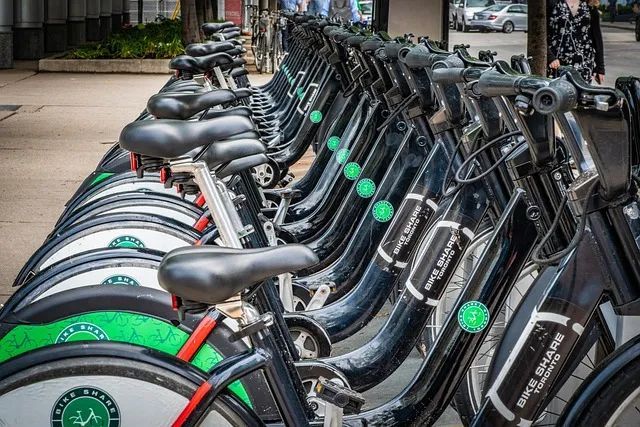
Therefore, shared bike companies need to explore more commercialization avenues. For example, on the product side, they could develop more bike models and features tailored to user needs and scenarios, with clear price segmentation. On the service side, they could offer more value-added services and membership perks. On the partnership front, they could build mutually beneficial relationships with merchants and advertisers. Technologically, they could leverage big data and AI to improve operational efficiency and user experience.
Since entering the domestic market, shared economy platforms across industries have faced constant skepticism. Many experts have pointed out that China’s shared economy model is essentially traditional leasing dressed in internet clothing. While it hasn’t fully realized the reuse of idle resources as envisioned by the sharing model, it’s unfair to completely dismiss its role in addressing real user needs. For platforms, however, perfecting this model to achieve mutual benefit remains a test of business acumen.
The copyright of this article belongs to the original author/organization.
The views expressed herein are solely those of the author and do not reflect the stance of the platform. The content is intended for investment reference purposes only and shall not be considered as investment advice. Please contact us if you have any questions or suggestions regarding the content services provided by the platform.
