AutoNavi is 'pushing boundaries' again.

@新熵 Original
Author 丨 San Jian Editor 丨 Shang Jia
The hidden risks of AutoNavi's aggressive expansion into local services are gradually emerging.
Recently, concerns have been raised about AutoNavi's service providers "facilitating" sexually suggestive content on the platform, pushing the issue of AutoNavi's product oversight into the spotlight.
<As a utility app, finding a sustainable business model is crucial. AutoNavi laid the foundation for its platform and aggregation economy with its ride-hailing business. The subsequent merger with Koubei successfully revitalized its user base, accelerating its commercialization.
However, under this model, AutoNavi's "inaction" in regulatory oversight is being exposed. At the same time, the platform's characteristics—low conversion rates, high risks, and long cycles—are continuously undermining its growth potential.
Whether in mobility or local services, the market has already entered an era of competition for existing users. On such a platform, a single misstep can have widespread repercussions. If AutoNavi fails to maintain a stable image and service quality, most of its businesses will likely face difficulties.
AutoNavi's "Negligence": Regulation Becomes a Facade
In 2014, AutoNavi's chairman, Eddie Wu, stated that the company would remove ads and focus solely on map navigation.
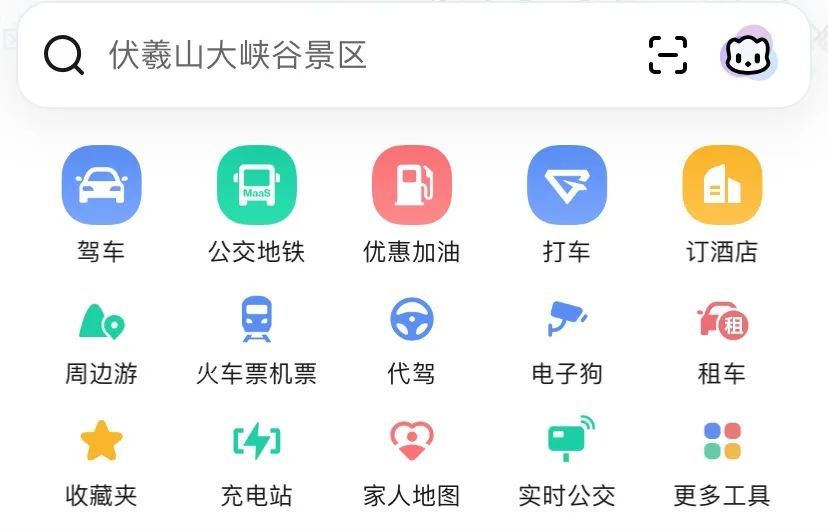
Times have changed. To make money, AutoNavi not only increased ads but also expanded beyond map navigation, aiming to become an open lifestyle service platform.
As Eddie Wu put it, AutoNavi aims to "use one map to cover 衣食住行 (daily necessities, transportation, and accommodation)." All local lifestyle and destination-related services would revolve around AutoNavi.
In early 2023, AutoNavi and Koubei officially merged, consolidating all of Alibaba's local lifestyle services under AutoNavi. Tasked with Alibaba's local services, AutoNavi acted quickly, adopting the same aggregation model used in its ride-hailing business—bringing in mature suppliers, merchants, and products to connect directly with users. For example, AutoNavi uses Tao Piao Piao for movie tickets, Autohome for car market info and quotes, and Fliggy and Tongcheng for hotel bookings. The advantage of this approach is low costs and rapid scaling.
But just a year later, its pursuit of rapid growth led to missteps.
Recent reports revealed that some SPA shops listed on AutoNavi's platform had names that didn’t match their physical stores, with salespeople promoting "soft relaxation massages" that allegedly involved illicit services.
Shockingly, when questioned, some service providers admitted to helping multiple foot massage parlors offering such services get listed on the platform, even coaching them on how to "lure" customers. When asked whether stores reported for illicit services would be removed, one provider claimed they would side with merchants, ignoring complaints.
An industry insider analyzed this as a result of "backdoor deals." Platform operators wield significant power, and those who perform well often cozy up to reviewers. Merchants and projects that would normally be rejected can get approved through certain connections, often faster than usual.
Such practices are common in platform models, but accountability is murky, and review standards exist in a gray area. Reviewers often turn a blind eye, as cracking down would disrupt operations. In this operations-heavy model, the platform becomes a mediator, and regulation becomes a mere formality.
It must be acknowledged that local services like 衣食住行 (daily necessities, transportation, and accommodation) rely heavily on offline fulfillment quality. Managing supplier service quality and improving user experience under an aggregation model is inherently challenging. However, lax platform oversight not only emboldens unscrupulous merchants but also degrades user experience, making it hard to build user loyalty and even breeding resentment.
Beyond local services, AutoNavi's regulatory challenges are even more apparent in its ride-hailing business.
Ride-Hailing Aggregation: Quick Profits, Shifting Blame
Aggregation platforms, with their unique business models, have rapidly risen as a new monetization path for high-traffic platforms like AutoNavi.
By aggregating small and mid-sized ride-hailing providers, these platforms distribute massive orders to various carriers. While this seems like efficient resource integration, it has spawned gray areas.
The most common issue is how AutoNavi splits profits with ride-hailing platforms of different sizes and scales.
Reportedly, AutoNavi charges a commission based on the order revenue generated through its platform for service providers. AutoNavi representatives have stated that it collects "information fees," with specifics dictated by contracts.
However, compared to Didi's "direct" ride-hailing model, aggregation adds more layers. AutoNavi distributes orders to smaller platforms, which then assign them to drivers. This process incurs additional costs, such as "resale fees," which sometimes exceed the actual platform commission.
As a result, drivers' actual earnings shrink significantly, while a large portion of passengers' fares flows into middlemen rather than improving service quality or safety. This inevitably harms user experience and may drive customers away.
Most critically, as an aggregator, AutoNavi not only profits from reselling orders but also avoids the responsibilities and risks it should bear, creating numerous issues and pitting passengers against drivers.
A simple example: When passengers face safety incidents or losses, accountability becomes murky. Aggregators often shift blame to ride-hailing platforms, which may then blame drivers, leaving passengers in a dilemma and struggling to seek justice.
Aggregation platforms are designed for quick monetization, meaning they’re unlikely to invest in long-term planning or deep industry integration like leading ride-hailing companies. Their goal is instant commission profits, so their commitment to compliance is inherently limited.
Luring users with low prices while squeezing value from service providers can only push platforms toward pure profiteering, severely damaging the mobility ecosystem. This bias stems from AutoNavi's longstanding issues with lax reviews and oversight, which persist despite repeated warnings and penalties.
In the second half of 2023, AutoNavi was warned by transportation authorities in Wuhan and Shenzhen on July 26 and 31, respectively. From August onward, Shanghai, Shaoyang, and Lianyungang also added their names to AutoNavi's list of reprimands. With each warning, regulators grew harsher.
Last year, AutoNavi faced multiple penalties for "unlicensed operations" in ride-hailing. In November, Shaoyang authorities explicitly labeled the chaos under AutoNavi's aggregation model as "illegal."
AutoNavi may have taken some action after these warnings, but with over 100 partner platforms—many of them small—it’s an uphill battle to reform its ride-hailing business.
Given the frequency of warnings and penalties, AutoNavi seems to have chosen to "neglect" the issues. "Collecting commissions while ignoring reviews" has become a deeply ingrained bias against AutoNavi.
Unsolvable or Unwilling to Solve?
Whether in local services or ride-hailing, AutoNavi's businesses are products of the platform and aggregation economy. This new model requires more authority and autonomy to foster disruptive innovation.
In other words, a lenient regulatory environment helps platform economies grow rapidly in their early stages. But as innovation slows, the socioeconomic problems they create become more apparent. Incomplete contracts between platforms, merchants, users, and individuals become tools for platforms to exploit others, necessitating stricter oversight.
In fact, after aggregation entered the ride-hailing industry, the structure evolved from a taxi-like model to one closer to e-commerce—aggregator-operators-drivers-consumers mirrors e-commerce platform-sellers-consumers.
Previously, industry regulation focused on transportation operations, but increasingly, it’s based on e-commerce laws. Cities like Yantai have cracked down on illegal price adjustments under the E-Commerce Law.
But in e-commerce, platforms bear less responsibility than sellers. Applied to ride-hailing aggregation, this shifts accountability to operators. This raises a question: If a major incident occurs, how many small ride-hailing firms under aggregation can actually shoulder the responsibility?
Recent declines in AutoNavi's order compliance rates suggest that as its market grows, so do management challenges. Since aggregation profits rely on drivers and ride-hailing platforms, stricter oversight would raise costs and squeeze margins—contrary to its interests.
However, as seen with early B2C e-commerce and food delivery, similar issues arose but were resolved through stronger oversight and policy refinement. Aggregators' "immunity" should disappear, facing greater regulatory scrutiny.
For AutoNavi, whether in local services or ride-hailing, a race to the bottom is no solution. Strict vetting of platform info and partners, fostering healthy competition, and full compliance are key to growing its ride-hailing business and revitalizing Alibaba's local services. But blinded by profits, "losing control" seems inevitable.
The copyright of this article belongs to the original author/organization.
The views expressed herein are solely those of the author and do not reflect the stance of the platform. The content is intended for investment reference purposes only and shall not be considered as investment advice. Please contact us if you have any questions or suggestions regarding the content services provided by the platform.