


Tencent and JD.com are sitting at the new table of fintech.

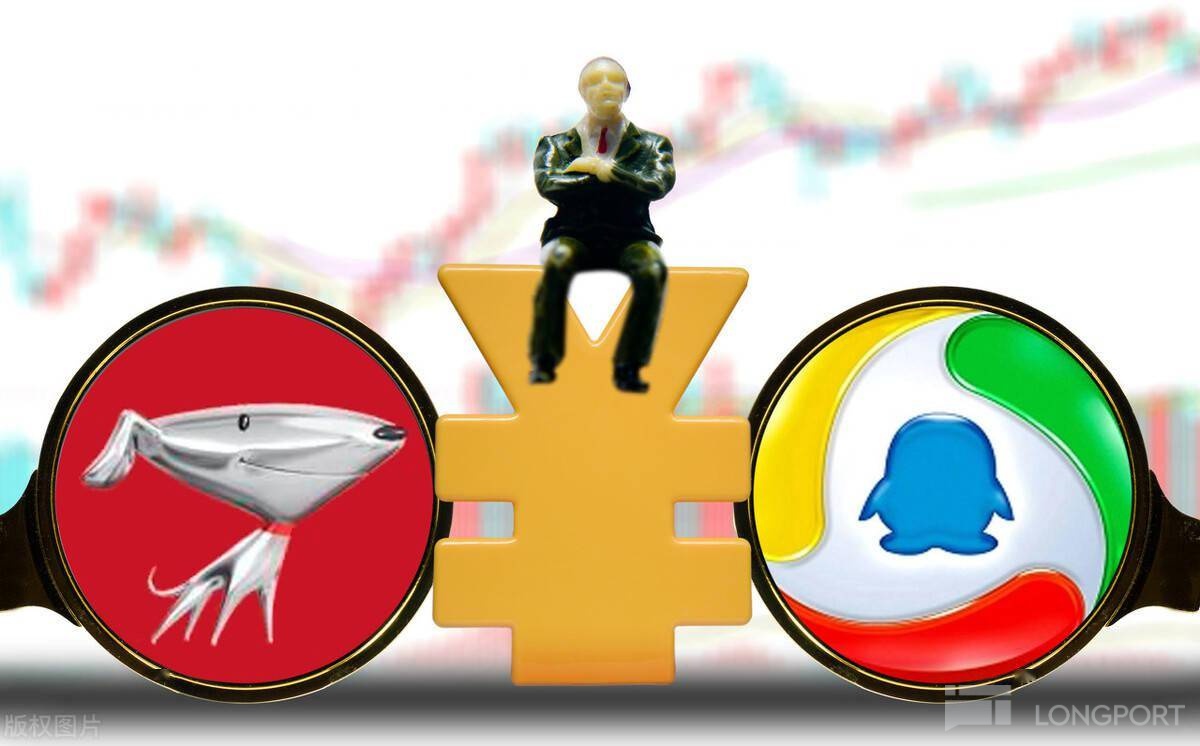
When the integration of digital and physical becomes a trend, finding the right path becomes the key to success for every player.
Some focus on the deployment of new technologies, some explore new models, and others concentrate on expanding into new markets.
Regardless of the approach, one thing is certain: relying solely on traditional internet models will never achieve true digital-physical integration.
Discovering new pathways for digital-physical integration and thereby opening new skylights for internet players may be the correct way forward.
In this process, fintech, which has undergone deep transformation and upgrades, has gradually become an excellent method for achieving digital-physical integration.
Whether it's fintech playing an increasingly significant role in Tencent's expansion into the C-end market or the immense potential it demonstrates in JD.com's supply chain and industrial chain integration, these are direct manifestations of this phenomenon.
As fintech begins to play a more critical role in digital-physical integration—especially by empowering internet players to support the real economy—we have every reason to believe that fintech will no longer be synonymous with internet finance but rather the epitome of internet players' iterative upgrades.
This marks the beginning of a new phase for fintech and a new cycle for internet players.
Through Tencent and JD.com's exploration and practice in fintech, we can see the functions and roles fintech should play in this new era of digital-physical integration.
This may open a new skylight for fintech development, allowing it to find new roles and definitions even in the post-internet era and ushering fintech into a brand-new cycle.
Tencent: Empowering Diverse Scenarios with Fintech
According to Tencent's annual financial report, its fintech and business services revenue reached RMB 203.8 billion by December 31, 2023, a 15% year-on-year increase. Q4 revenue alone was RMB 54.4 billion, up 15% YoY.
Tencent attributes this growth to increased commercial payment activities, wealth management services, and consumer loan services. The company has strengthened payment compliance, enhanced mini-program-based transaction tools, and improved cross-border payment experiences.
In payments, Tencent's report highlights "foreign card binding": digital initiatives significantly improved payment experiences for foreigners in China, with WeChat Pay's foreign card transactions maintaining high growth. "Outbound domestic use": Hong Kong residents can now use HKD for payments in mainland China. In December 2023, WeChat Pay HK expanded its mainland coverage from the Greater Bay Area to nationwide. Other overseas local wallets are also being introduced.
Disclosures show Tencent's wealth management segment uses technology to aid investor education, with a full-process system helping users navigate market volatility. For example, during investment phases, product recommendations and exposure weights are adjusted based on market conditions to curb irrational trading. In credit, Tencent collaborates with banks, consumer finance firms, and trusts to offer installment and credit services via digital platforms, boosting consumption and supporting real economic growth.
Tencent's report demonstrates how fintech empowers diverse scenarios, particularly C-end payment ecosystems, fulfilling its role in digital-physical integration.
Tencent's practice shows that fintech is no longer about harvesting C-end traffic but rather meeting payment needs while enhancing efficiency to bridge virtual and real economies.
Tencent facilitates deep integration between technology and finance, unlocking new growth opportunities.
Here, Tencent Fintech is no longer confined to the virtual economy but connects deeply with countless C-end scenarios.
In this context, Tencent Fintech primarily channels traffic to diverse scenarios and enhances their operational efficiency.
This undoubtedly achieves better integration between virtual and real economies, maximizing the potential unleashed by such synergy.
JD.com: Connecting Industries with Fintech
JD.com has long focused on building supply and industrial chains.
This distinguishes it from e-commerce players like Alibaba and Pinduoduo.
As digital-physical integration gains momentum, JD.com has joined the trend, seeking breakthroughs through its own practices.
Today, we see new entities like JD Supply Chain Fintech taking on the role of connecting industries.
In 2023, JD Digital released its "Four Integrations" strategy for supply chain fintech: internal + external, tech + finance, upstream + downstream, and B-end + C-end integration.
"Internal + External Integration" deepens JD's internal ecosystem while innovating demand-aligned products. Building on last year's "Dual-Chain Linkage" strategy, JD Supply Chain Fintech has validated models across industries and scaled them. Future efforts will extend from JD's ecosystem to core enterprises' own domains and vice versa.
"Tech + Finance Integration" uses tech to bridge financial and industrial information flows, unlocking financial institutions' service potential. JD Supply Chain Fintech has deployed across dozens of industrial chains within a year, with rapid financing growth and low credit risk, proving the model's viability. Future improvements will enhance product experience and operations for broader financial services.
"Upstream + Downstream Integration" involves deep industry research to tailor solutions based on operational traits and scenario needs, achieving "one-chain-one-policy" or even "one-enterprise-one-policy." This end-to-end service creates positive feedback, boosting supply chain efficiency and capital utilization.
"B-end + C-end Integration" unifies underlying data to deliver combined supply chain finance, payment tech, and consumer finance solutions. Payment and consumer finance leverage terminal consumption to solve last-mile sales challenges, aligning demand with supply and improving overall efficiency—truly enabling end-to-end B2B2B2C financial services.
JD's fintech exploration, especially its "Four Integrations," shows fintech is no longer about scaling virtual economies or perpetuating internet-style growth but integrating deeply with real industries.
Reviewing JD's "Four Integrations," digital-physical integration is its foundational logic.
With this framework, integration is no longer lip service but an actionable reality.
As integration materializes through these efforts, we can confidently expect new possibilities for JD.
Fintech is no longer a staple of the traffic era but of the stock era.
For players like JD, starting with supply chain fintech's "Four Integrations" perfectly bridges consumer and industrial internet, enabling virtual-real synergy, vertical collaboration, and B-C alignment—making digital-physical integration a reality.
Lessons from Tencent and JD
Whether Tencent's C-end fintech exploration or JD's B-end practices, fintech is evolving from a virtual, consumer-internet entity to one connecting virtual and real economies across industrial fronts and ends.
This new evolution highlights fintech's role in digital-physical integration.
Thus, fintech is no longer the endgame for internet players but a starting point for new growth and breakthroughs.
If there's one takeaway from Tencent and JD's fintech practices, it's shifting focus from traffic and platforms to integrating B-C, front-back, internal-external, and tech-finance.
When these "Four Integrations" become fintech's theme, it can truly fulfill its role in digital-physical integration and paint a new landscape.
For any player aiming to make an impact in this era, fintech is the key to solving integration challenges and entering a new developmental phase.
Conclusion
As digital-physical integration trends, more players seek new pathways.
Represented by Tencent and JD, they are joining the fintech game.
Their explorations shed light on integration's new dawn.
Fintech is no longer confined to the consumer internet, platforms, or internet derivatives but transitions to industrial internet, breaks platform limits, and drives new internet evolution.
This marks fintech's shift from virtual-real division to synergy—the starting point for mutual growth. $TENCENT(00700.HK)
—End—
Author: Meng Yonghui, Senior Writer, Columnist, Industry Expert, Influencer, Digital Economy Scholar.
The copyright of this article belongs to the original author/organization.
The views expressed herein are solely those of the author and do not reflect the stance of the platform. The content is intended for investment reference purposes only and shall not be considered as investment advice. Please contact us if you have any questions or suggestions regarding the content services provided by the platform.
