


 Commemorative
 Likes Received
Tesla 2024Q1: Revenue decreased year-on-year, profits fell short of expectations, Model 2 to commence production in 2025.

On Tuesday, April 23, after the U.S. stock market closed, Tesla released its Q1 2024 earnings report, reporting revenue of $21.3 billion, a 9% year-over-year decline. Surprisingly, it showed negative growth this time, falling short of analysts' expectations of $23.3 billion. $Tesla(TSLA.US) $NASDAQ Composite Index(.IXIC.US) $Dow Jones Industrial Average(.DJI.US) $S&P 500(.SPX.US) $Hang Seng Index(00HSI.HK) $Invesco QQQ Trust(QQQ.US) $NVIDIA(NVDA.US) $XIAOMI-W(01810.HK) $Microsoft(MSFT.US) $Alphabet(GOOGL.US)
I. Summary of Personal Views
1. Tesla's performance in recent quarters has been underwhelming, with this quarter's revenue showing a year-over-year decline for the first time in several years. Profitability has also significantly dropped due to higher costs.
2. Tesla's automotive gross margin continues to show a clear downward trend, which is currently the market's biggest concern. However, the good news is that Tesla reaffirmed its plan to start production of the Model 2 in the second half of 2025, which has boosted market confidence.
3. Tesla's stock price has recently experienced a significant pullback. After this earnings release, it saw a short-term gap-up. Personally, I believe the main reasons are that the gross margin did not drop to even lower levels as feared and the Model 2's production timeline remains unchanged. However, I still think Tesla faces considerable short-term pressure, and a cautious approach is advisable.
Overall, Tesla's performance in recent quarters has been lackluster, with this quarter's revenue marking the first year-over-year decline in several years. Profitability has significantly weakened due to rising costs, particularly the declining trend in automotive gross margin, which has raised market concerns. However, Tesla's reaffirmation of its Model 2 production plan for the second half of 2025 has provided some relief. Although the stock saw a short-term gap-up post-earnings, given the company's ongoing short-term pressures, investors are advised to remain cautious and adopt a conservative approach.
II. Financial Analysis: Revenue Declines Year-Over-Year, Earnings Fall Short of Expectations
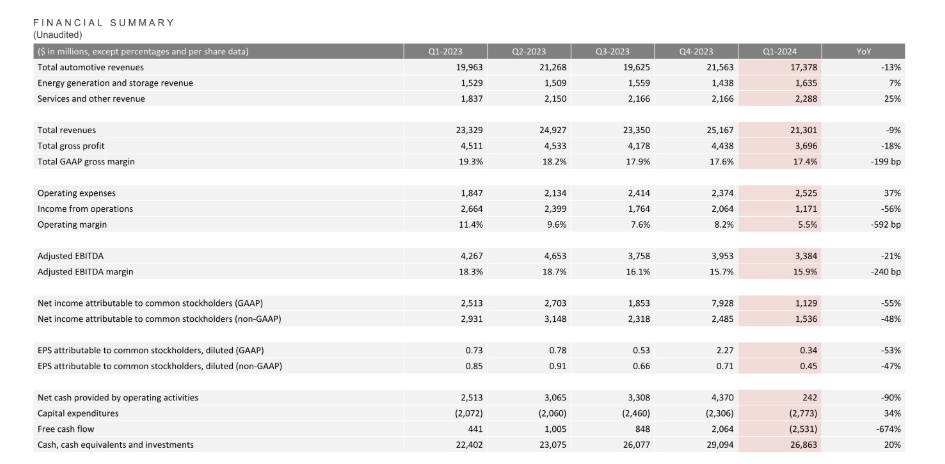
In terms of revenue, Tesla reported Q1 revenue of $21.3 billion, a 9% year-over-year decline—surprisingly negative growth—falling short of analysts' expectations of $23.3 billion. The slowdown in growth has persisted for several quarters, and this quarter officially marked negative growth, the first since the Shanghai Gigafactory began operations. The primary driver was weak vehicle deliveries.
In terms of profitability, Tesla's Q1 net income was $1.13 billion, a sharp 55% year-over-year decline, far below market expectations of $1.9 billion. More precisely, Tesla's adjusted EPS for Q1 was $0.45, down 47% year-over-year and 37% quarter-over-quarter, missing the expected $0.59. The decline in profitability was driven by two factors: lower year-over-year revenue and increased spending on AI and FSD.
III. Operational Breakdown: Negative Growth in Vehicle Deliveries, Gross Margin Under Pressure, Model 2 Production in 2025
1. Negative Growth in Vehicle Deliveries
Looking at Tesla's vehicle deliveries in recent quarters, the once-rapid growth momentum has clearly weakened, and overall growth seems to have hit a bottleneck. This quarter's deliveries even showed a year-over-year decline, casting a shadow over Tesla's market performance. A deeper analysis reveals that both the pessimistic outlook for pure EV development in Western markets and the intense price war in the NEV market have contributed to the decline in deliveries.
Specifically, Tesla delivered 386,800 vehicles in the latest quarter, down 8.53% year-over-year and 20.16% quarter-over-quarter. This decline directly led to a significant drop in Tesla's automotive revenue, with Q1 automotive revenue falling 13% year-over-year to $17.34 billion. This undoubtedly puts considerable pressure on Tesla's financials.
More critically, before the launch of the Model 2, Tesla's vehicle deliveries are unlikely to see a meaningful rebound in the short term. This is primarily due to multiple challenges Tesla faces. On one hand, competition in the NEV market is intensifying, with automakers striving to improve performance and reduce costs to gain market share. On the other hand, consumer acceptance of pure EVs remains uncertain, particularly in Western markets, where concerns about range and charging infrastructure persist—factors tied to the current environment in those regions.
2. Gross Margin Under Continued Pressure
For automakers, gross margin is another key indicator of healthy operations alongside deliveries. Tesla, as a leader in the NEV market, is under even greater scrutiny for its gross margin performance. However, the latest Q1 earnings report shows Tesla's gross margin continuing to decline, extending a multi-quarter downtrend.
Specifically, Tesla's Q1 gross margin was 17.4%, significantly lower than the 19.3% a year ago and hitting a new recent low. The decline is largely due to the price war, as Tesla has had to cut vehicle prices to maintain market share, directly reducing average selling prices.
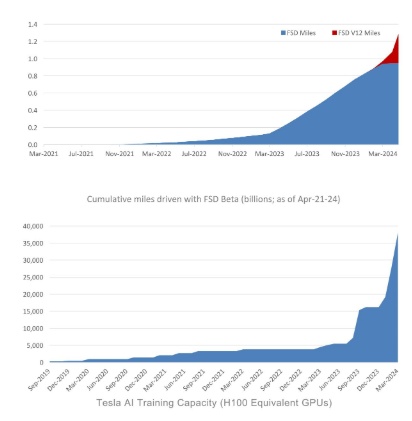
Additionally, Tesla faces pressure on operating expenses, which contributed further to the gross margin decline this quarter. Due to increased spending on AI R&D and FSD (Full Self-Driving), Tesla's operating expenses rose 37% year-over-year to $2.525 billion despite lower revenue. This drove operating income down to $1.171 billion from $2.664 billion a year ago and $2.064 billion last quarter, far below expectations.
While the Q1 gross margin of 17.4% shows only a slight decline from last quarter's 17.6% and is slightly better than feared, a deeper look at vehicle-level gross margin reveals a more pronounced drop—18.5%, down 2.6 and 0.4 percentage points year-over-year and quarter-over-quarter, respectively. Notably, excluding $442 million in regulatory credit revenue, Tesla's vehicle gross margin would have fallen further to 16.4%, down 2.6 and 0.8 percentage points year-over-year and quarter-over-quarter.
The discrepancy is mainly due to higher-margin businesses like FSD contributing a larger share of revenue amid declining automotive revenue.
3. Key Focus Areas Moving Forward
Beyond its core automotive business, Tesla's operations extend to energy and other services. The energy generation and storage segment, a key part of Tesla's business, saw revenue grow 7% year-over-year to $1.64 billion, with gross profit surging 140% year-over-year—both hitting record highs. However, growth rates continue to slow, likely due to intensifying competition and technological bottlenecks.
Meanwhile, services and other revenue, including FSD, grew 25% year-over-year to $2.29 billion. While growth has also slowed, it remains resilient compared to the decline in automotive revenue. That said, these segments still contribute relatively little to Tesla's overall revenue and cannot yet serve as major pillars.
In the near term, Tesla's focus will center on the Model 2's production timeline. In this earnings report, Tesla reiterated its commitment to start production of "new vehicles" in the second half of 2025, hinting at accelerated plans for more affordable models and its dedicated Robotaxi. This has injected some optimism into Tesla's outlook, standing out as one of the few bright spots in the report. After all, rumors about the Model 2 have circulated for years, and its eventual launch is bound to stir market reactions.
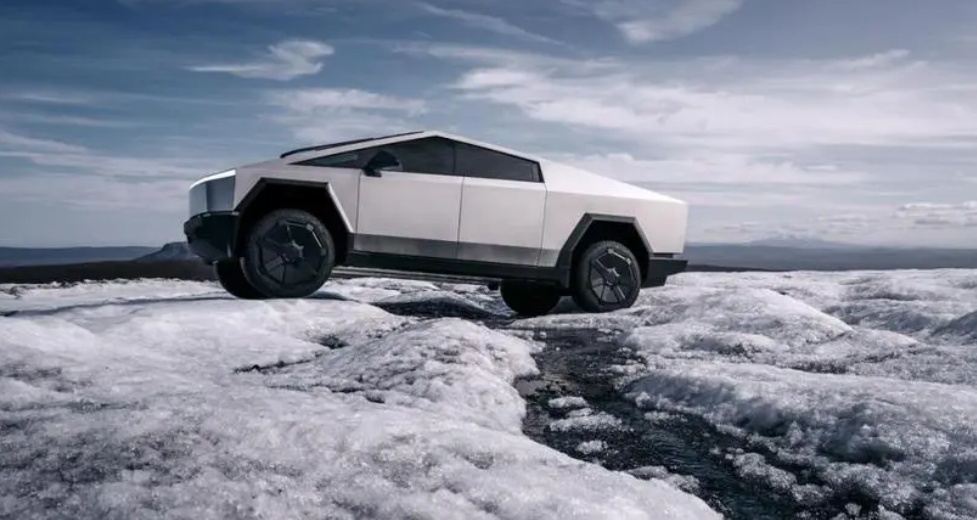
Additionally, the much-hyped Cybertruck, despite strong initial orders, is unlikely to drive meaningful profit growth in the short term. Rising costs during the production ramp-up will weigh on profitability, so Tesla must prioritize cost control to reach an inflection point.
This article represents my personal analysis of the quarterly report, based on my own research and insights. Feedback is welcome. Note that this is not investment advice—readers should conduct their own due diligence.
The copyright of this article belongs to the original author/organization.
The views expressed herein are solely those of the author and do not reflect the stance of the platform. The content is intended for investment reference purposes only and shall not be considered as investment advice. Please contact us if you have any questions or suggestions regarding the content services provided by the platform.
