



MediaTek, the No. 1 in the mobile chip market, uses top-tier AI to boost performance.

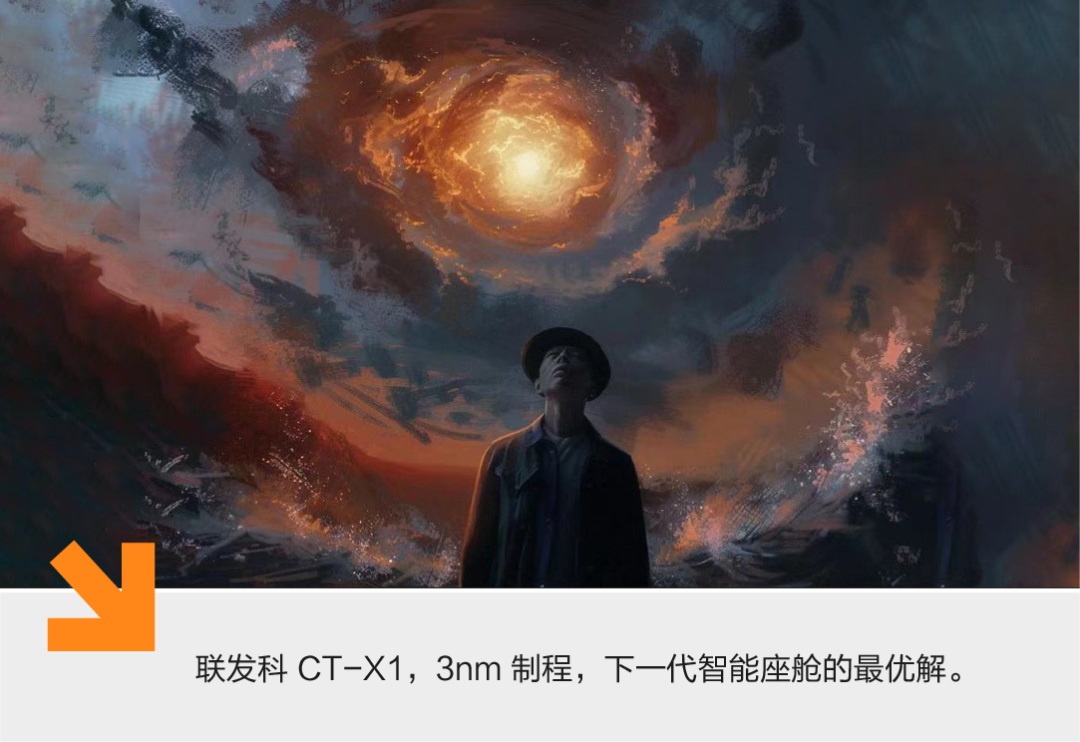
Advanced process chips are no longer exclusive to consumer electronics.
On April 26, MediaTek unveiled its first three cockpit chips under the Dimensity Auto platform—the 3nm CT-X1, and the 4nm CT-Y1 and CT-Y0.
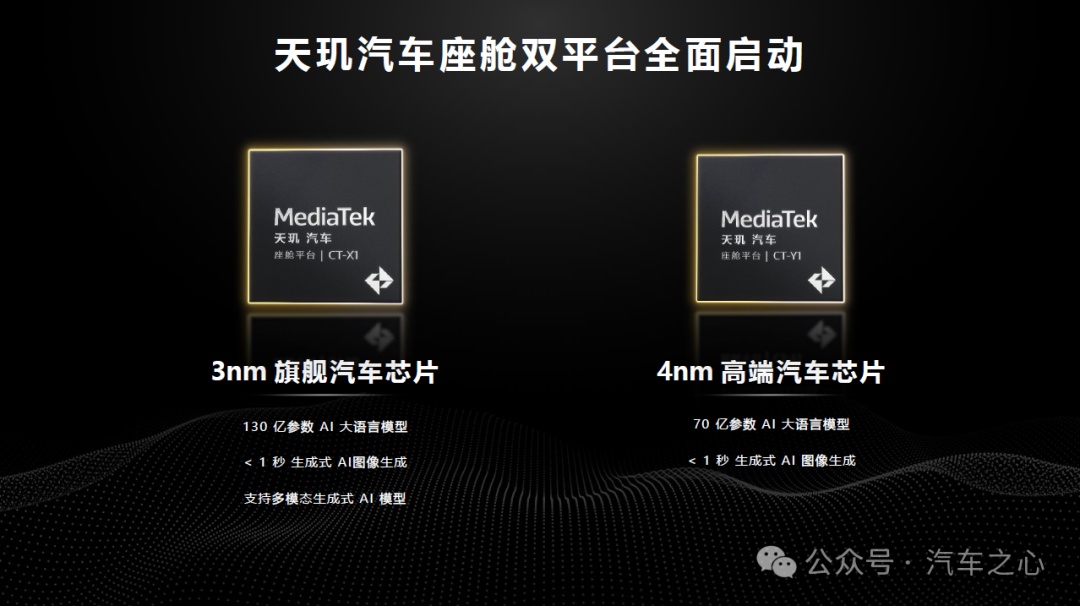
Undoubtedly, these represent the "most advanced cockpit chips" globally today.
In the smartphone sector, MediaTek has held the top global market share for mobile chips for over three years.
The Dimensity 9000 proved MediaTek's capability to compete in the high-end chip market. The Dimensity 9200 and 9300 solidified its position as a leader in flagship smartphone chips.
How can MediaTek replicate its smartphone success in smart cars?
Global chipmakers are "demonstrating their strengths and racing to innovate," with the smart cockpit emerging as the next battleground alongside autonomous driving.
With the debut of its 3nm and 4nm cockpit chips, MediaTek is poised to challenge Qualcomm's dominance in this space, offering diverse smart cockpit solutions for more automotive brands.
01、How the 3nm CT-X1 Became the World's Most Powerful Cockpit Chip
During the 2023 Shanghai Auto Show, MediaTek launched the Dimensity Auto platform, comprising four key components: cockpit platform, connectivity platform, driving platform, and critical components.

At the time, MediaTek's Senior Vice President and General Manager of the Computing and Metaverse Business Group, You Renjie, mentioned: "The cockpit platform will adopt flagship 3nm chips."
A year later, at this year's Beijing Auto Show, MediaTek unveiled its "game-changer"—the 3nm cockpit chip: CT-X1.
In September 2023, Apple released the A17 Pro, the first 3nm chip in consumer electronics.
Now, MediaTek's CT-X1 marks the first time automotive chips have matched mainstream consumer chip processes, signaling that vehicle chips have caught up to mobile chips in technology and performance.
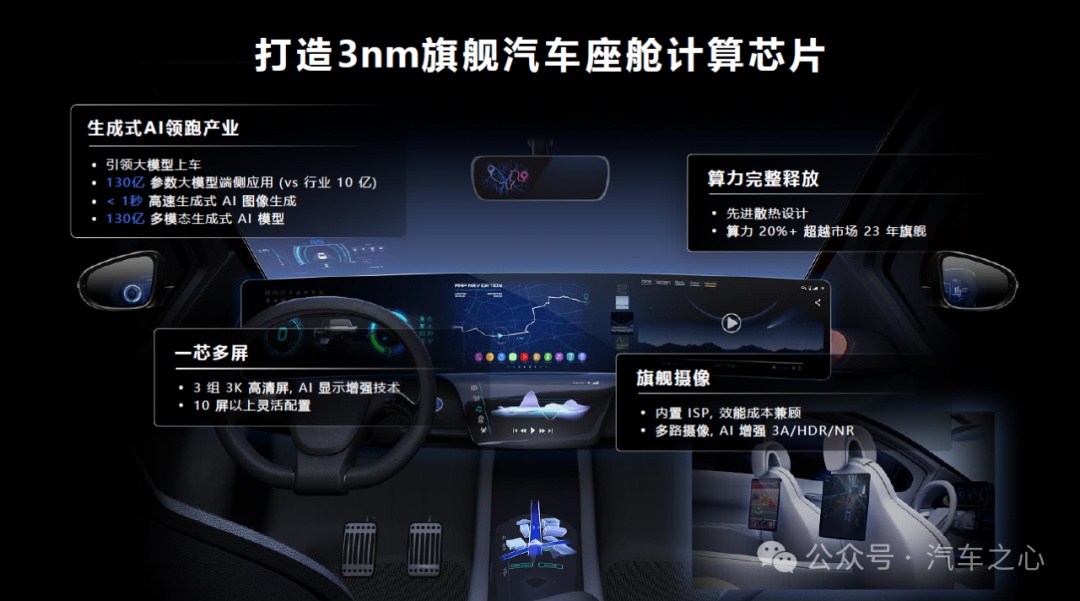
The CT-X1's debut means advanced 3nm technology will soon enter the automotive sector.
Compared to the current most advanced 5nm cockpit chips, MediaTek's CT-X1 undoubtedly leads the field.
While CT-X1's exact computing power wasn't disclosed, the performance of its 4nm counterpart, the CT-Y1 (positioned as a sub-flagship), scored over 1.07 million on AnTuTu's automotive benchmark, matching Qualcomm's flagship cockpit chip, the 8295.
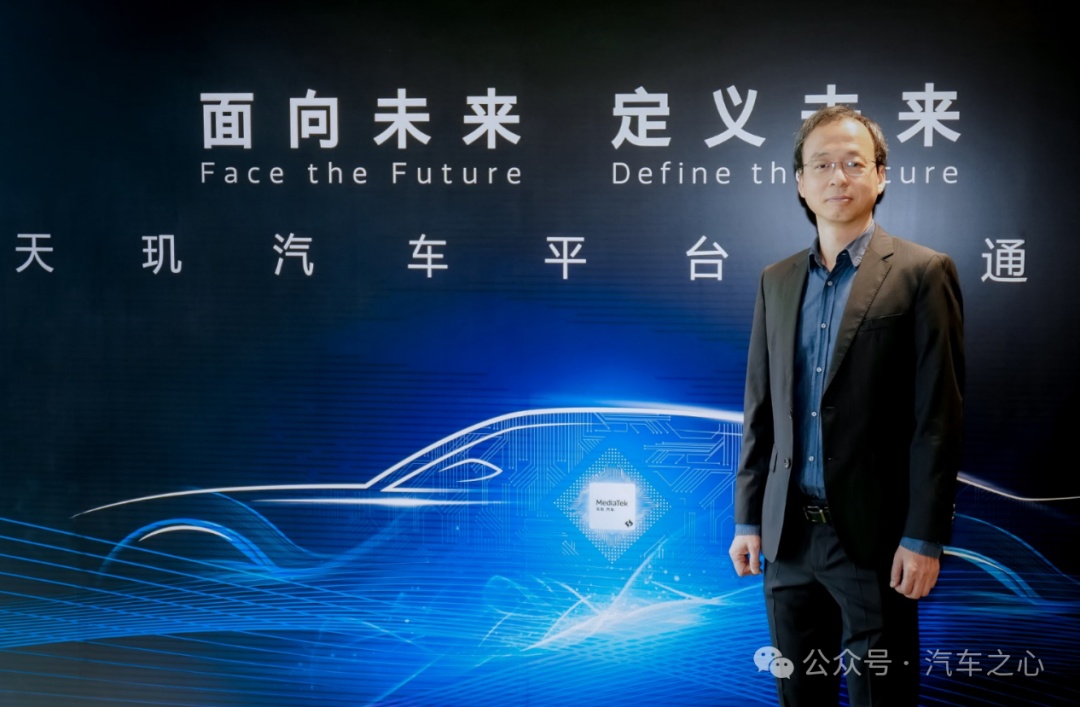
MediaTek's Vice President and General Manager of the Automotive Platform Division, Zhang Yutai, stated that the 3nm CT-X1 delivers over 30% higher computing power than the market's top flagship chips at the end of 2023.
According to industry sources, MediaTek's Dimensity Auto cockpit platform has already been adopted by six leading Chinese automakers.
Beyond its advanced process, another highlight of the CT-X1 is its support for on-device generative AI.
Currently, Qualcomm's Snapdragon 8295 supports AI language models with up to 3 billion parameters.
In contrast, the 3nm CT-X1 can handle 13 billion-parameter AI large language models (LLMs), significantly expanding the potential for on-device generative AI applications.
This enables the CT-X1 to run multiple mainstream LLMs and AI image generation (e.g., Stable Diffusion) directly in vehicles.
Additionally, the chip supports advanced AI-driven features like 3D graphical voice assistants, multi-screen interaction, display technologies, and driver alertness monitoring.
Clearly, in generative AI, the CT-X1 promises to elevate the smart cockpit experience.
As the CT-X1 enters mass production, MediaTek's leadership in cockpit chips will solidify, potentially leaving competitors behind for years.
02、Key Advantages of the 3nm Flagship Cockpit Chip
One of the hottest terms in automotive today is "generative AI."
Currently, AI is primarily applied in smart cockpits through voice assistants, enabling conversational interactions, logical reasoning, and knowledge Q&A tailored to driving scenarios. Smooth "human-car dialogue" allows the system to understand and respond to user commands, delivering personalized services.
This is the mainstream application of "AI + cars" today. For example, Baidu's generative dialogue product—ERNIE Bot—has been integrated by automakers like Ji Yue, Changan, Geely, Voyah, Hongqi, and Great Wall.
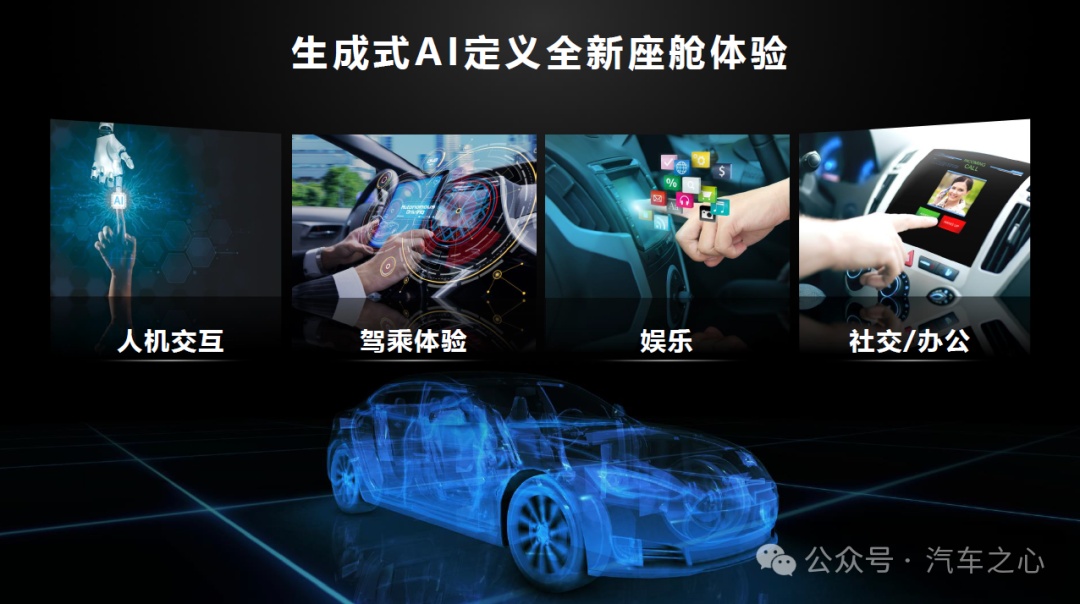
Zhang Yutai emphasized that on-device generative AI is critical for human-machine interaction, as cloud processing introduces latency that degrades user experience. For voice assistants and contextual understanding, on-device AI ensures faster responses.
Thus, only high-performance, low-power chips can enable rapid AI deployment in smart cockpits. Support for LLMs and AI image generation (Stable Diffusion) is a core advantage of MediaTek's CT-X1.
MediaTek has also focused on cost reduction for automakers.
First, high hardware integration delivers significant cost savings.
For instance, its 3nm and 4nm chips integrate 19 functions—including modems, 5G T-BOX, dual-band Wi-Fi, Bluetooth, GNSS, and flagship HDR ISP—reducing hardware costs substantially.
Second, development cycles are halved or shorter versus competitors.
MediaTek's Dimensity Auto Connectivity Platform VP Weizhi Yu revealed that development timelines can be 50% shorter, slashing labor and time costs.
Third, system performance optimization.
MediaTek pre-integrates lightweight hardware to support larger AI models while reducing memory bandwidth and capacity needs. For example, its 4nm/3nm chips can handle 7B-13B parameter models, cutting generative AI memory requirements by 60%.
Fourth, hardware-software co-optimization minimizes peripheral resource needs, further lowering costs.
MediaTek's robust software foundation enables significant CPU/GPU/AI efficiency gains. For instance, one chip can match competitors' dual-chip setups, saving costs.
Amid the AI wave, automakers are racing to adopt "large model" tech.
In February, Geely Auto Group CEO Gan Jiayue declared: "AI will divide smart cars—those without are mere tools; those with are intelligent partners."
Li Auto CEO Li Xiang commented on Apple's exit from carmaking: "AI remains key to automotive success. Electrification was the first half; AI is the finals."
At Xiaomi's SU7 launch on March 28, CEO Lei Jun stressed AI's role, naming smart driving, cockpits, and ecosystem connectivity as Xiaomi's three tech pillars.
As auto intelligence enters its "second half," industry leaders agree: AI is the future.
This trend underscores a profound shift—computing power is the bedrock of smart mobility, and chips are its cornerstone.
Imagine the smart cockpit as a high-IQ driver's seat, its brain being the chip. This "brain" must process vast data while powering AI models for advanced features.
Here, computing power dictates cockpit responsiveness and intelligence, with chips as the physical enabler.
Without powerful chips, AI models cannot run smoothly in smart cockpits.
MediaTek's CT-X1 reserves ample performance, offering 30% more computing power than 2023's flagship Snapdragon 8295. It supports LLMs, generative AI, and in-car entertainment (cinematic video, surround sound, AI noise reduction).
Whether for interaction, driving experience, entertainment, or efficiency, the CT-X1 is the optimal solution for next-gen smart cockpits.
03、Deep "AI + Auto" Integration Expands MediaTek's Market
In smart cockpit chips, Qualcomm has long led.
Since 2022, most new Chinese cars' cockpit domain controllers have used Qualcomm platforms, making it one of the largest single suppliers.
But as tech advances and competition intensifies, the smart cockpit has become a new battleground for chip giants.
In May 2023, at COMPUTEX, MediaTek announced a partnership with NVIDIA to co-develop AI cockpit solutions.
This alliance combines MediaTek's SoC and multimedia expertise with NVIDIA's AI, cloud, graphics, and software strengths, accelerating MediaTek's generative AI push.
The MediaTek-NVIDIA collaboration aims to challenge Qualcomm with high-performance AI cockpits, potentially reshaping the market.
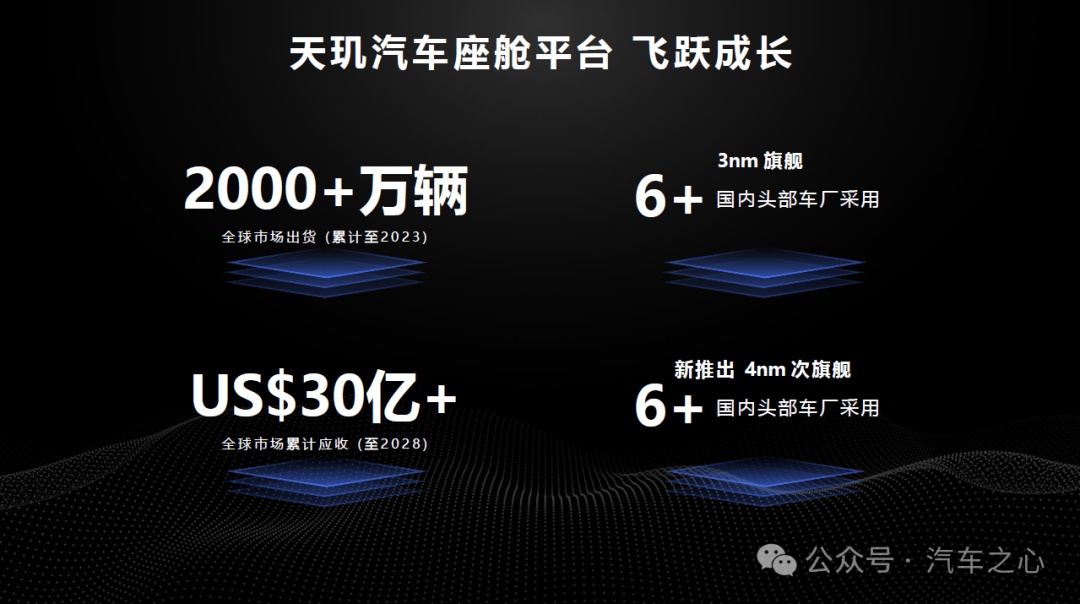
In April 2023, MediaTek launched the Dimensity Auto platform (cockpit, connectivity, driving, and components).
By end-2023, its cockpit platform shipped over 20 million units globally, with projected cumulative revenue reaching $3 billion by 2028.
Notably, MediaTek's 3nm flagship and 4nm sub-flagship chips have been adopted by six leading Chinese automakers.
In just a year, Dimensity Auto has demonstrated strong growth, validating its tech and market potential.
You Renjie noted that MediaTek's cross-domain expertise translates well to automotive. "Only chip designers mastering advanced processes can thrive in the AI-driven auto future."
Advanced processes, high computing power, and low 功耗 are critical for automotive chips. MediaTek's 3nm cockpit chips set a new benchmark.
In semiconductors, MediaTek is among the few with full wireless tech—Modem AI, NTN satellite comms, and cutting-edge 5G.
Its cockpit platform leverages these strengths to help automakers build immersive ecosystems.
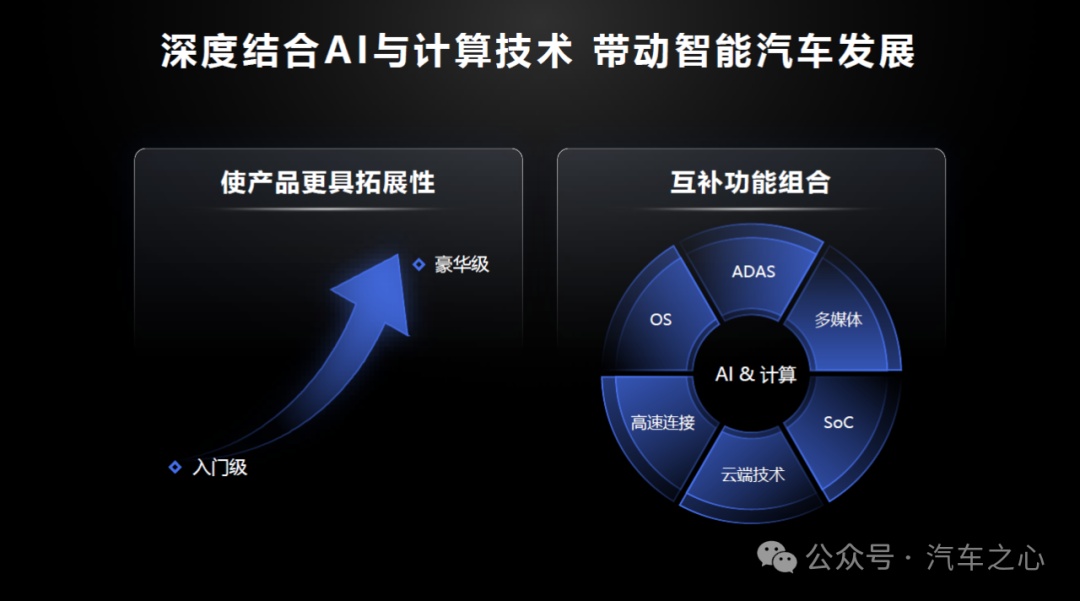
Facing China's fierce auto market, MediaTek is driving AI-powered transformation.
The rise of ChatGPT and Sora hints at AI's expanding role in autos.
MediaTek-NVIDIA collaboration opens new "AI + auto" possibilities.
As AI defines cockpits, the industry faces revolutionary change—a new smart mobility era dawns.
MediaTek's efforts promise not only market growth but also pivotal contributions to auto's evolution.
$NVIDIA(NVDA.US) $MediaTek(MTK.NA)
The copyright of this article belongs to the original author/organization.
The views expressed herein are solely those of the author and do not reflect the stance of the platform. The content is intended for investment reference purposes only and shall not be considered as investment advice. Please contact us if you have any questions or suggestions regarding the content services provided by the platform.
