


长期佛系的怡宝,正走向华润的主舞台

“厘清了战略问题和产权问题后,怡宝内生动力将被激发和释放。”
上周,国内包装水行业发生了两件大事,一是华润饮料(即怡宝)向港交所递交了招股书,二是农夫山泉推出纯净水产品。
前者代表着长期处于相对佛系状态的怡宝将发挥其主观能动性,意在谋求更大的市场份额和品牌影响力;
后者可能预示着现阶段农夫山泉的增长需要,既要尽力阻挡/阻止竞争对手的增长势头,又要尽可能保持住其目前的财务/增速/市值,所以,其才会硬着头皮也要搅入纯净水市场。
客观上,包装水乃至整个软饮行业就是这样一个动态竞争的市场,行业很难进入到一个均衡的状态,意味着头部品牌商之间需要持续不断地见招拆招。
借着这次怡宝和农夫山泉的最新动作,我们将通过对比分析的方式来进一步展现包装纯净水和包装天然水之间的业务模式差异,前者的成本劣势究竟来自于哪里及原因。
而站在怡宝上市扩规模的角度来看,怡宝未来的增长并不完全来自于与农夫山泉的直接竞争,其最大的α很可能来自于其自身内部战略的聚焦和产权梗阻的疏通。
这篇文章将从这两个长期困扰怡宝业务发展的内部问题着手,来聚焦经历了内部重构之后,怡宝到底发生了哪些转变。
尽管市场经常拿怡宝与农夫山泉作对比,但在当时当下,怡宝或许更适合与过去的自己作对比,从而才能更有效地发现其未来具备再增长的动力和潜力。
PS:本文中的 “怡宝”“华润怡宝”“华润麒麟”“华润饮料” 根据各自的段落文意,均代指本次上市公司的主体——华润饮料(控股)有限公司。
01—
怡宝之于华润:佛系龙二的成因
从公开数据了解到,华润怡宝的营收从 2014 年的 78.55 亿元增长至 2023 年的 135.15 亿元,CAGR 大概为 6.2%;同期,中国包装水市场规模从 1196 亿元增长至 2150 亿元,CAGR 大概为 6.7%。
这表明在过往的 9 年时间里,主要从事包装水业务的怡宝的增长还是要略微弱于整个大盘的增长,对于一家行业龙二的品牌商而言,这或多或少显得其过往的市场表现会比较佛系,特别是与龙头农夫山泉和龙三景田的增长对比来看。
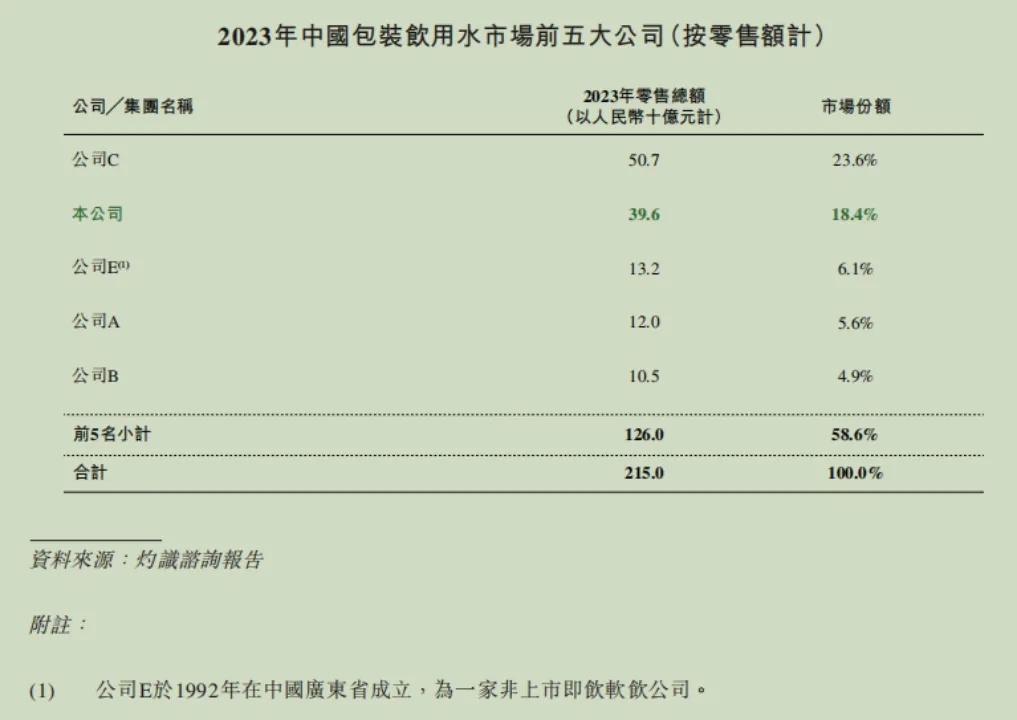
但,尽管如此,怡宝仍然稳坐行业龙二的位置,并且其市占份额仍具备行业绝对优势。据灼识咨询数据,其 2023 年按照销售额统计的市占率为 18.4%,是景田的三倍,并且距离农夫山泉 23.6% 的份额差距也并不太大。
从上述两点内容我们可以大致感受到怡宝在包装水领域的禀赋,其业务的下限相较一般参与者会高出很多,但其业务的上限由于缺乏内生动力的支撑,长期被农夫山泉的包装水业务所盖过,也就限制了市场对其业务上限的预期,其行业 “老二” 的标签也就逐步被市场认知所固化。
之所以如此,与怡宝之于华润的版图地位/权重不无关系。
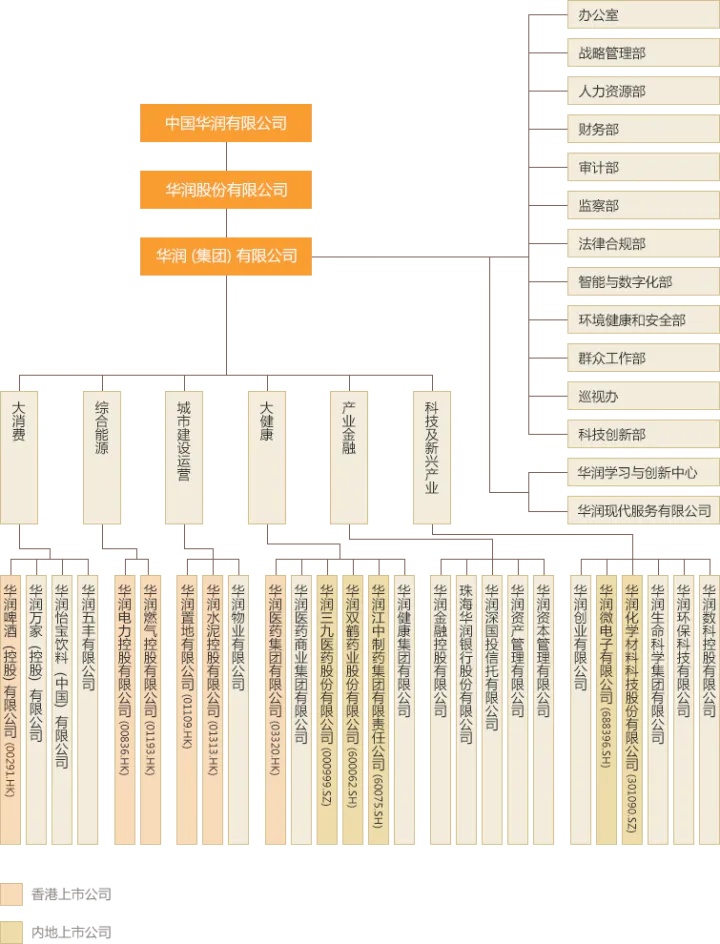
华润是一家拥有在职员工 39 万人的多元化央企,其下设 6 大业务板块、25 个业务单元、3077 家公司实体,并且坐拥 8 家港股上市公司和 9 家 A 股上市公司。
华润庞大的业务分支/组织结构/管理体系意味着怡宝(或华润饮料)在过去相当长时间里,一方面只能够获得华润内部有限的资源调拨/支持,另一方面又要对自身业务结果承担绝对的责任和义务,这就容易造成怡宝在业务策略和战略上的偏谨慎和保守。
而如果再从一个多元化经营的集团层面来看,过去 40 年中国经济发展的主旋律是产业化/城镇化/现代化/信息化,与此大势产生共振效应最大的那些行业是能源、化工、基建、地产、公共设施、互联网、大消费、医疗医药等领域,而华润下设的 6 大业务板块就囊括了其中的绝大部分,并且完成了相关业务主体的上市。
比较而言,包装水行业作为大消费领域的一个子集,其与经济发展主旋律的共振效应还是相对偏弱,也就导致这块业务作为集团规模化发展的优先级被依次后置。
客观上,也就造成了怡宝过去近 10 年的增长基本锚定的是包装水行业大盘的增长态势,但其占据的市场绝对份额依然非常可观的结果。
02—
麒麟之于怡宝:经验主义的结果
如果我们将目光从包装水行业上升至整个软饮行业,毫无疑问,在过去十多年时间里,怡宝饮料业务的发展要显著低于饮料大盘的增长,从而大幅削弱了怡宝之于整个国内软饮行业的市场地位及品牌影响力。
事实上,怡宝到 2023 年也仅录得 10.68 亿元的饮料业务收入,占比总营收的 7.9%,这又限制了市场对其未来能够发展成为一家多品类软饮公司的商业预期。
但,这样的结果,并非是华润怡宝的本意。
早在 2011 年,华润怡宝就与日本麒麟控股成立合资公司——华润麒麟饮料(即本次上市公司主体华润饮料的前身),华润占据 60% 的股份,麒麟以 4.747 亿美元的对价持有另外 40% 的股份。
麒麟成立于 1907 年,背靠日本三菱集团,从事啤酒、饮料、及食品业务,同时也销售保健品和药品,是日本乃至全球著名的大型食品饮料集团。
也就是说,怡宝饮料业务的发展策略就是借助华润的优势资源和自身成功的包装水业务为基本,从而寻求与全球成功的饮料公司实现强强联合的商业模式,通过利益共享的方式直接引入对方的饮料产品,以此实现自身在国内软饮行业的多品类经营和规模化扩张。
这其实是一种低风险、高效用的经营模式,也符合这一时期华润和怡宝各自的发展考量/需要,即以较低的资源/成本投入来尽可能实现有效的增长。
合资,就是已经被各个市场反复验证的方式和路径。
只不过,从华润麒麟的合作结果来看,麒麟带入的饮料产品并没有取得中国市场的反响,到目前为止,除了麒麟啤酒,国内绝大多数消费者都难以将 “麒麟” 品牌与其具体在华销售的饮料产品系列名称相挂钩。
其中包含的原因有很多,最主要的可能是麒麟品牌在时间维度上的后发劣势,可口可乐是 1978 年进入中国市场,百事饮料则是 1981 年,达能饮料也是在 80 年代末就进入国内,麒麟虽然是 1990 年进入中国,但其当时主销的是麒麟啤酒,饮料产品的推广力度弱,从而导致消费市场对其饮料产品的感知弱,难以在饮料市场中树立品牌/品类/产品系列的消费心智。
在此次招股书中披露,麒麟引入的饮料产品(如 “午后红茶”“火咖” 等)从 2021 年至 2023 年所产生的收入占比总营收仅分别为 2.0%、1.5%、1.4%;而在 2017 年至 2019 年的 3 年时间里,怡宝的饮料收入也只分别录得 0.61 亿元、0.87 亿元、2.52 亿元。
这样的市场结果直接表明,华润与麒麟的结合是失效的。华润怡宝原本的合资意图是要补齐自身的饮料业务来实现 “包装水 + 饮料” 的双轮驱动,但麒麟的饮料产品并没有带来多少的业务加成。
反而,在产权问题上,麒麟的入局也给怡宝自身的业务发展带来了很大的内部掣肘。
从 2011 年麒麟取得新合资公司 40% 的股权开始,华润麒麟公司的绝对营收/利润增长引擎仍然是怡宝的包装水业务,等于是给麒麟分享了自身规模增长的红利。尽管华润怡宝当初也获得了麒麟支付的 4.747 亿美元的对价,但可以肯定的是,前者更在意的是后者原本能够带来的饮料业务的补充和协同。
因此,无论是主动还是被动,麒麟的 “不作为” 和 “吃干粮” 也就成为了另一个导致华润麒麟长期处于佛系发展状态的重要内部因素。
03—
重构:矛盾掣肘被化解,内生动力被激发
有了对上述两节内容的感知之后,我们再来聚焦华润怡宝近几年的变化和改变。
首先是关于饮料版块之于华润的战略权重问题。
这与宏观经济周期的轮动不无关系。近几年来,随着国内经济增速调档、城镇化进入下半场、地产经济开始下行、居民部门高杠杆率等一系列环境因素叠加,导致包括能源、化工、基建、地产等多个行业/产业也不得不整体迈入低增长期,其中个别公司再增长需要借助结构优化的α才能实现。
这意味着华润下属的众多业务版块将进入到一个相对放缓的发展阶段,过往集团对这些业务公司的资源倾斜力度也将逐步收回,轮换至集团内部的那些在未来更具增长潜力的其他业务公司上。
所以,饮料业务就成了华润内部一个不错的实现再增长的选项。
在 2020 年之前(也就是农夫山泉上市之前),市场普遍会把康师傅和统一当成观察国内饮料行业的公司研究对象,在 2020 年前后,两者的市值分别介于 500 至 600 亿港币和 300 至 400 亿港币,并且两者都包含占比不低的食品业务。
如果当时华润以康师傅和统一来对照自身的怡宝业务规模,确实会显得怡宝的天花板比较低。
但随着 2020 年农夫山泉的上市并一举将钟睒睒推上中国首富,市场可能才突然意识到国内经济结构的微妙变化,零售消费市场所孕育的财富效应已经能够让这个行业开始迈入中国经济的主舞台。
这意味着华润必然会从战略和策略上提升自身饮料业务的优先级/权重,从而在内部导向上重新唤醒已经佛系多年的华润怡宝。
其次就是针对麒麟的产权掣肘问题。
其最终的解决方案是在 2022 年,由第三方公司 Plateau(即 Plateau Customer Limited,成立于 2022 年 1 月)出面以 10 亿美元的对价收购麒麟持有的华润麒麟饮料 40% 的股权。
通过股权关系了解到,Plateau 由一家投资基金 Plateau Customer Fund,L.P.全资拥有,后者的普通合伙人最终为自然人 Dong Yi 女士,而其最大单一有限合伙人为铭宇有限公司(约占 36.8% 的有限合伙权益);再进一步,铭宇隶属于中国银行旗下公司全资所有,而中国银行最终被控股于中投公司。
就此次收购项目,Plateau 需要就某银团(包括中银香港)向其提供的贷款而将其收购的麒麟所有股份再质押于该银团(中银香港担任质押的担保代理行)。
而 10 亿美元的股权对价,则是双方按照当时的市场价值进行交易,也就代表当时华润麒麟饮料公司的估值为 25 亿美元。
事实上,如果根据 2018 年和 2021 年华润麒麟所公布的营收/净利润数据(分别为 104.35 亿元/7.27 亿元和 113.40 亿元/12.05 亿元)进行估算,其估值也非常贴近于 25 亿美元的交易价格。
作为对比,2022 年农夫山泉的市值大概在近 5000 亿港元,当时两者之间巨大的价格差异主要体现在他们的业绩增速、财务结构、以及涉足品类广度等差距,这点后文将结合当下情况再做对比。
当然,站在麒麟的角度来看,这笔交易其实也是对其最好的结果,约等于是购买了一份理财产品。如果按照金融产品的收益计算,其在 2011 年投资的这 4.747 亿美元在 10 年时间里取得了年化近 8% 的收益率,另外,其在这期间还能分享公司增长带来的额外分红收益。
在处理完 “搭便车” 的麒麟产权问题之后,华润麒麟饮料就变成了如今递表的主体——华润饮料,其内生动力将被调动/被激发。
由此,现在的华润饮料已经捋顺和消除了长期桎梏其业务发展的内部矛盾和掣肘。那么,解绑束缚后的华润饮料的市场表现究竟如何,就显得尤为重要。
04—
增长:市场策略已现成效,财务结构仍在优化
从 2022 到 2023 的两年时间里,华润饮料录得的营收和税前净利润分别为 126.23 亿元/13.75 亿元和 135.15 亿元/18.78 亿元,CAGR 为 9.2%/24.9%,相较过去取得了显著的增长。
如果按照这一增速及业绩数据进行估算,华润饮料现在的估值很可能接近 500 亿元,是麒麟转让其股权时估值的近 3 倍。
这反映出,在消除内部矛盾和掣肘之后,华润给予了华润饮料高度的经营自由度和资源支持,促使后者内生增长动力得到极大的释放,进而带动其组织效率的显著提升,从而使其告别长久以来的佛系状态。
具体而言,这里还是引入早前文章《包装水之道:引入产权理论》中 “产供销” 的产权概念,以一瓶水中品牌商所占据的价格和渠道环节所分得的价格进行比较,来窥探品牌商与渠道之间关系的紧密程度。
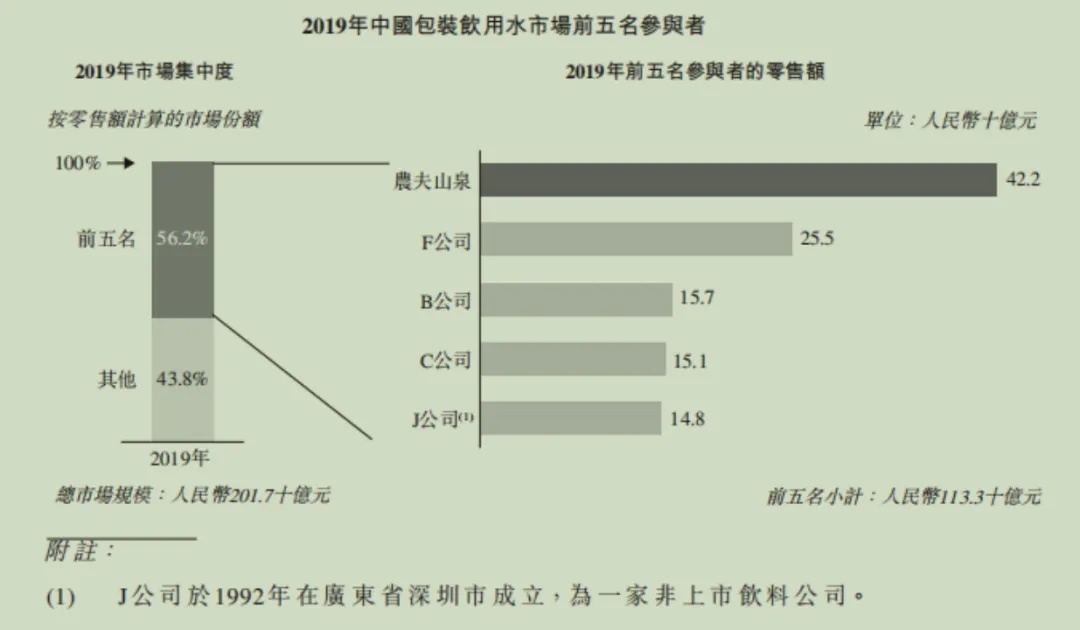
根据农夫山泉招股书数据,2019 年农夫山泉和渠道环节分别占据一瓶包装水的 32% 和 68%,而当时怡宝的这个数据分别为 41% 和 59%,表明农夫山泉对渠道的产权激励程度要大幅高于怡宝。
而根据华润饮料招股书数据,2023 年农夫山泉给予渠道环节的产权降至 60%,而怡宝则大幅提高了渠道商的产权占比至 66%。
这表明在过去的 4 年时间里,农夫山泉依靠自身 “包装水 + 饮料” 双轮驱动的产品/市场优势,在尽可能地压缩渠道的利益,同时扩大自身的收益,从而尽力维持自身业绩的高增长态势,以此来支撑其股价/市值。
而按照麒麟转让股权的时间和上述近两年华润饮料取得的增速来看,怡宝针对渠道环节的产权让利动作应该就是近两年所采取的市场策略,目的就是获得渠道端的支持,实现规模的增长。
目前从结果上来看,怡宝的这一策略无疑是成功的。
还是根据农夫山泉和华润饮料前后在各自招股书中披露的数据,2019 年农夫山泉在包装水终端上录得零售额为 422 亿元,怡宝为 255 亿元;2023 年农夫山泉的零售额为 507 亿元,怡宝则为 396 亿元,经历 4 年时间,怡宝显著缩小了与农夫山泉在包装水市场份额上的差距。
在怡宝包装水业务取得显著增长的基础之上,其饮料业务自然也就获得了更强的推广动能。
由于经销商在怡宝包装水上分得了更多的产权激励,那么其推广怡宝包装水的意愿自然就会提升,进而怡宝也就能够向经销商搭售其更多的饮料产品。因此,怡宝饮料产品将借助其包装水的增长势头一同获得增长。
其招股书显示,其饮料业务从 2021 年的 5.22 亿元增长至 2023 年的 10.68 亿元,两年时间实现翻倍。
而只要饮料业务持续实现增长,其规模效应也将能够显著改善华润饮料的财务结构,其饮料业务的毛利率已由 2021 年的 28.7% 提升至 2023 年的 33.7%。
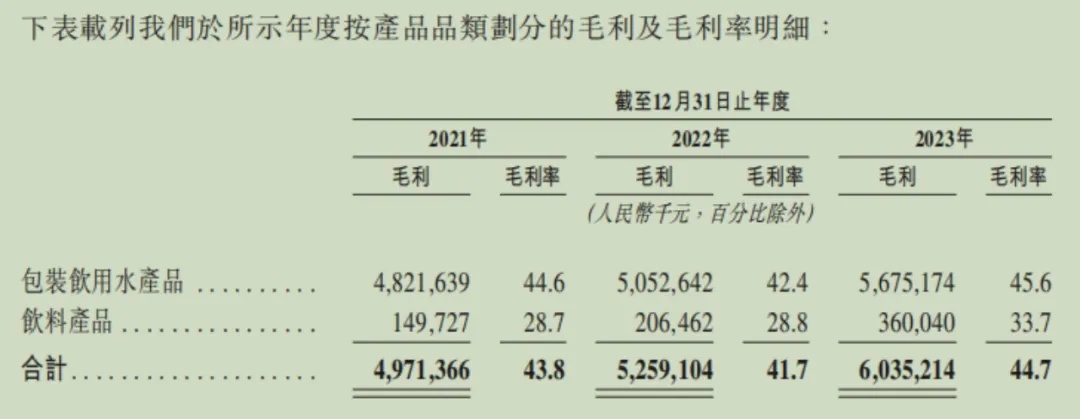
如果再将目光转向华润饮料的整体毛利率,其 2023 年的毛利率为 44.7%,对比而言,2023 年农夫山泉的毛利率为 59.5%。
其中,农夫山泉的包装水业务和茶饮业务的毛利率很可能均超过 60%,这意味着单就包装水而言,怡宝与农夫山泉的毛利率就存在约 15% 的差距,而造成这一差异的主要原因就在于怡宝的代工模式。
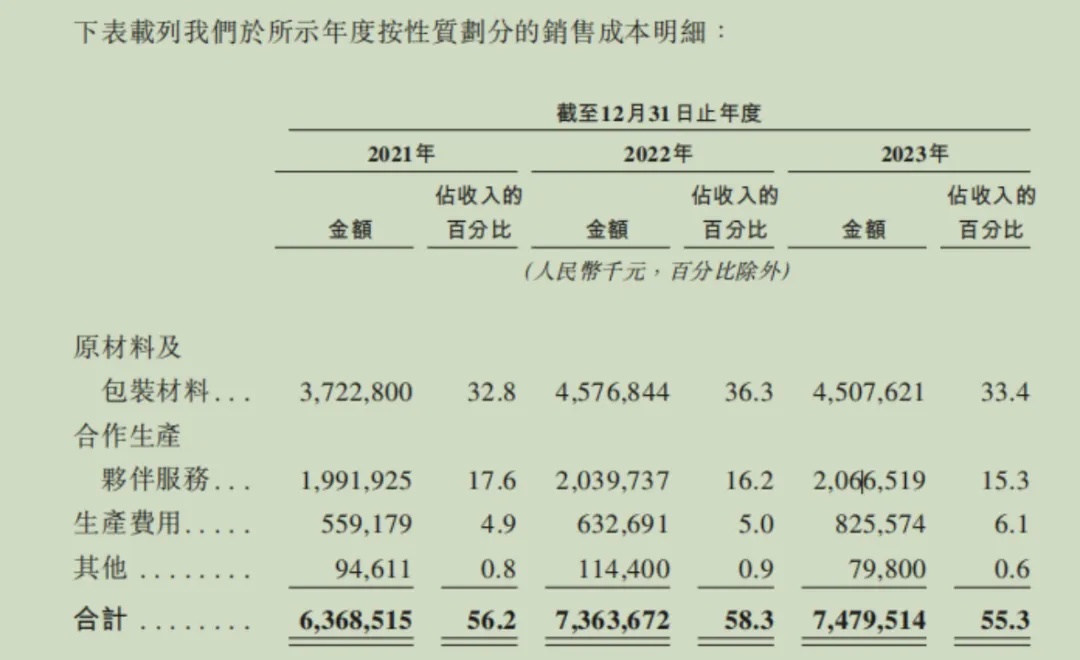
截至 2023 年末,怡宝自有工厂 12 家、代工厂 34 家,自有 47 条生产线、81 条代工厂生产线,代工厂的费用占比总营收为 15.3%。
但随着近年来怡宝资本投入的增加,代工费用比例已呈现逐年下降的趋势,未来随着在建工厂的投产以及市场的扩张,这一费用比例仍将继续下降。
怡宝代工模式背后的成因在于,一来以往处于佛系状态下的怡宝对大额的资本投入会持相对保守态度,而轻资产扩张的模式相对风险系数会更低;二来怡宝包装水产品属于纯净水,上游基本来自各地的地下水和自来水厂,而各地的水资源也相对有限,代工费用也就变为了各地方供水所收取的另外一层费用。
随着华润对怡宝重视程度的增加,预计未来怡宝自建工厂的比例会有明显提升,从而得以改善其整体的财务结构。
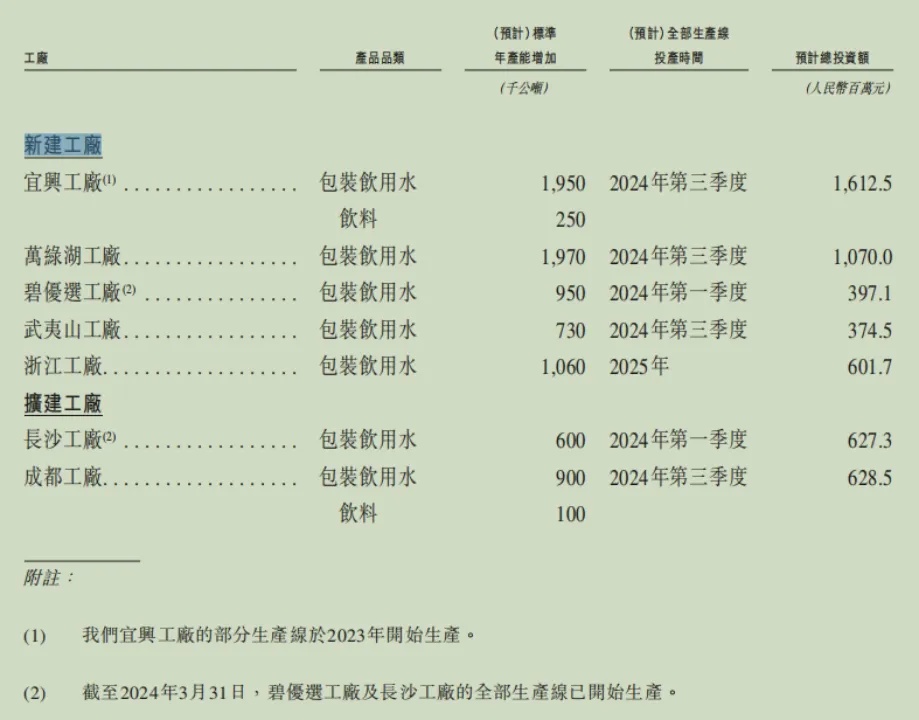
长期以来,怡宝的业务基本盘基本分布在长江以南区域,这与华润的区域影响力不无关系。
怡宝计划将在 2025 年至 2026 年完成长江沿岸城市新建/扩建自有工厂的布局,例如例如浙江、湖北、重庆市、及上海市,以此进一步推进/扩张北方市场。
目前怡宝的经销商数量只有约 1000 家,与农夫山泉超 4000 家经销商相距甚远,而前者的员工数约为 1 万人,后者则有超 2 万人员工,这也意味着怡宝的潜在增长空间非常充裕,只要其市场策略持续奏效,其财务结构的优化空间也将非常可观。
05—
竞争:农夫的安全垫还很厚,怡宝的竞争对手是自己
当然,竞争永远是动态的,何况是软饮这类大众零售行业。
怡宝融资上市之后,必然会进一步追加资本投入和增加市场推广费用,那么作为怡宝最大的竞争对手,农夫山泉必然要采取应对策略。
农夫山泉进入纯进水领域,推出绿瓶装天然水源的纯净水产品就是一个很好的反制手段。
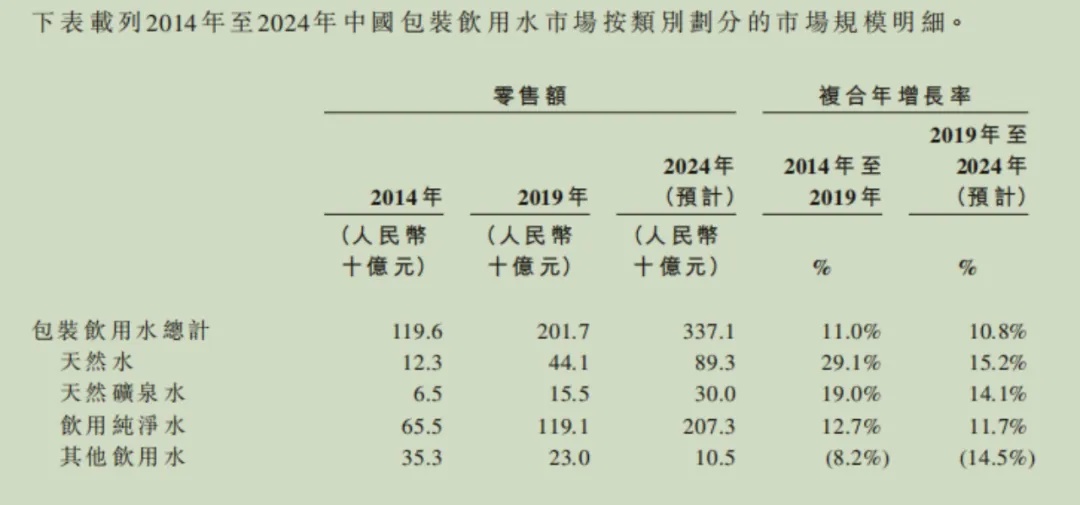
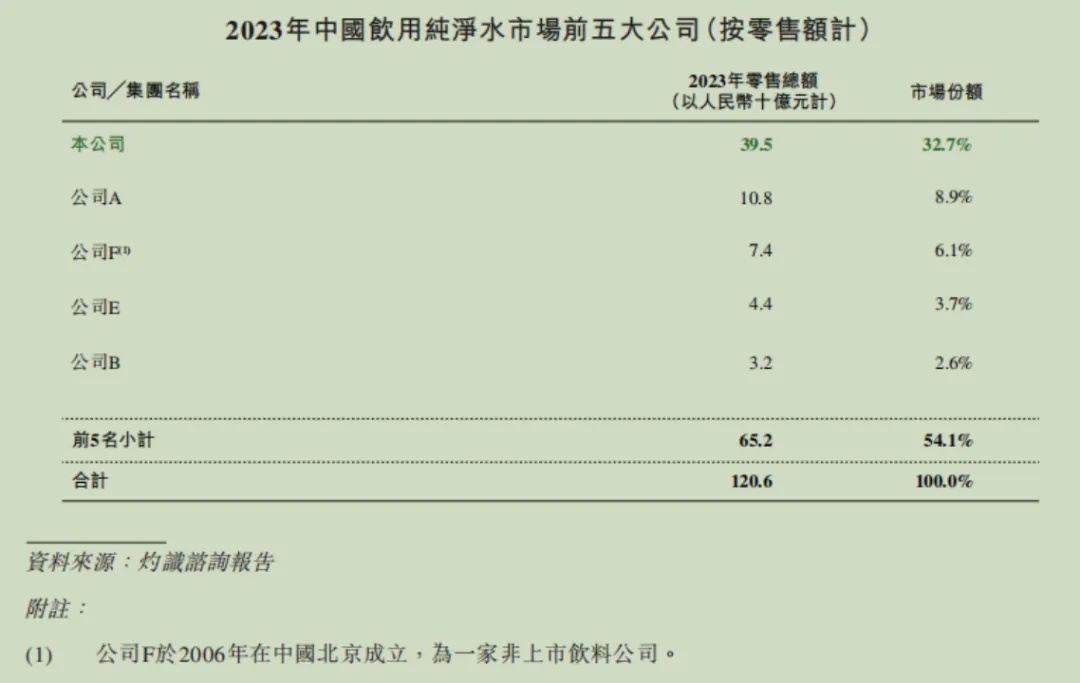
在中国包装水市场中,纯净水是规模最大的细分类别,并且行业第二名至第五名占据的市场份额相对较小,农夫山泉能够借助自身的规模效应和品牌优势快速挤入纯净水行业的前列。
更重要的是,农夫山泉的绿瓶纯净水取至其所拥有的天然水水源,也就避开了怡宝代工厂生产模式导致的成本弊端,这意味着农夫山泉纯净水的毛利率大概率也将超过 60%,依然显著高于当下怡宝包装水业务的毛利率。
但反过来,由于天然水采水许可管理的原因,包括怡宝、康师傅、娃哈哈、可口可乐、今麦郎等纯净水厂商有很难取得规模化的天然水水源。以怡宝为例,其目前只获得广东万绿湖一个天然水水源,而农夫山泉则有 12 个天然水水源。
除此之外,农夫山泉还能够通过给渠道环节让利(即调整产权比例)的方式,重新拉近其与渠道之间的利益关系,以此来制衡怡宝的扩张策略;由于农夫山泉是 “包装水 + 饮料” 双轮驱动,两个业务能够产生协同作用,因此更容易博得经销商的推广意愿和资源倾斜,这是目前业务较为单一的怡宝所不具备的能力;农夫山泉的财务结构大幅优于怡宝,意味着农夫能够承担更多的营销及销售费用。
不过,上述这些反制措施都会对农夫山泉的市值构成不利影响,考虑到农夫山泉欲通过推出纯净水的方式来实现以攻为守,可能代表着目前其并不愿意让自身市值承压。
对于怡宝而言,其目前最大的劣势就是饮料业务的绝对規模还很小,且仍缺乏一个成功的大单品来撑起怡宝饮料的旗帜,因此很难让市场将怡宝与其饮料产品相挂钩。
“至本清润” 菊花茶是怡宝饮料产品中销售额规模最大的一个,2023 年录得 7.56 亿元零售额,算是比较成功的饮料单品,但距离能够扛起品牌影响力的大单品还有不少差距。
归根结底,即饮菊花茶的市场体量很小,大概只有不到 20 亿元的市场规模,怡宝已经占据了这个市场 38.5% 的份额,意味着其未来的增长潜力并不大。
除非,怡宝能够成功效仿王老吉/加多宝的营销手法,将菊花茶带入到一个具体的、大众化的、合乎情理的场景中,并且讲出一个好故事。那么,菊花茶将有望快速帮助怡宝实现 “包装水 + 饮料” 的双轮驱动,但这也需要怡宝持续不断地大额营销投入。
总的来看,在未来中长期的时间跨度里,怡宝还不具备能够直接挑战农夫山泉的实力。
但,经历过内部重整之后,与其目前的自己相比,怡宝依然有较大的增长动能和财务结构的优化空间,这意味着其仍具备一定的投资价值。
事实上,饮料行业是一个长期且格局变化偏缓的快消品行业,参与者都处在一个多模态、相互试探、复杂博弈的游戏进程中,需要持续不断地出招和接招,这样才有希望打开局面谋得增长,而这个市场最忌讳的则是那些 “以不变应万变”“以无招胜有招” 的局中人。
$农夫山泉(09633.HK) $康师傅控股(00322.HK) $统一企业中国(00220.HK)
本文版权归属原作者/机构所有。
当前内容仅代表作者观点,与本平台立场无关。内容仅供投资者参考,亦不构成任何投资建议。如对本平台提供的内容服务有任何疑问或建议,请联系我们。
