


Douyin and Kuaishou's AI short dramas are not yet a new track.

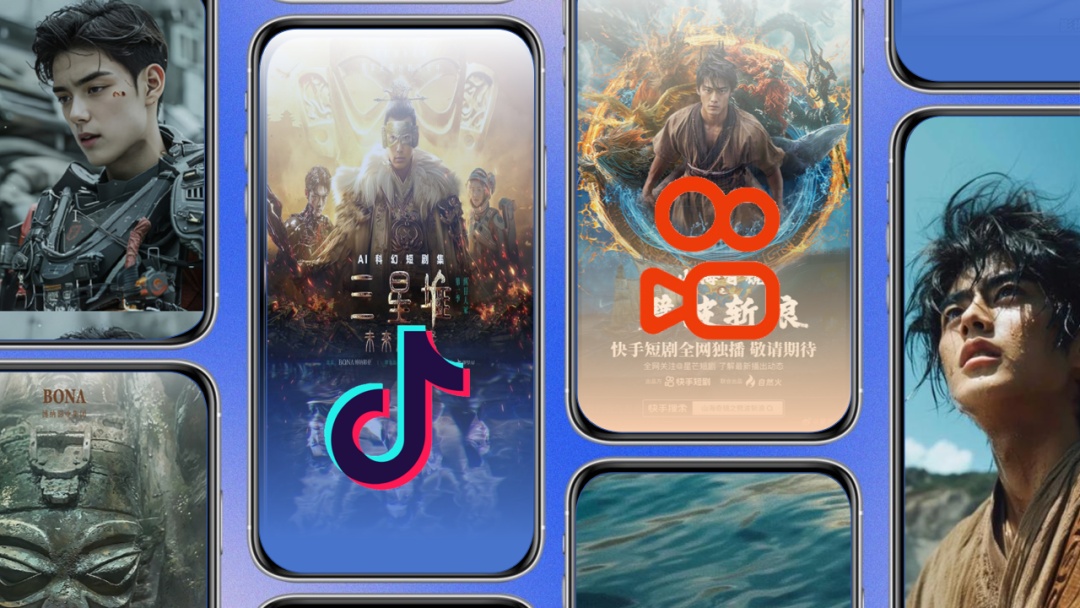
Can AIGC+ short dramas become a new trend? Before Douyin and Kuaishou's AI capabilities can solve key issues like creative generation and emotional expression in short dramas, there's no definitive answer yet.
@新熵 Original
Author 丨 Lin Xi Editor 丨 Jiu Li
The AI wave continues to surge, reaching the short drama industry this July.
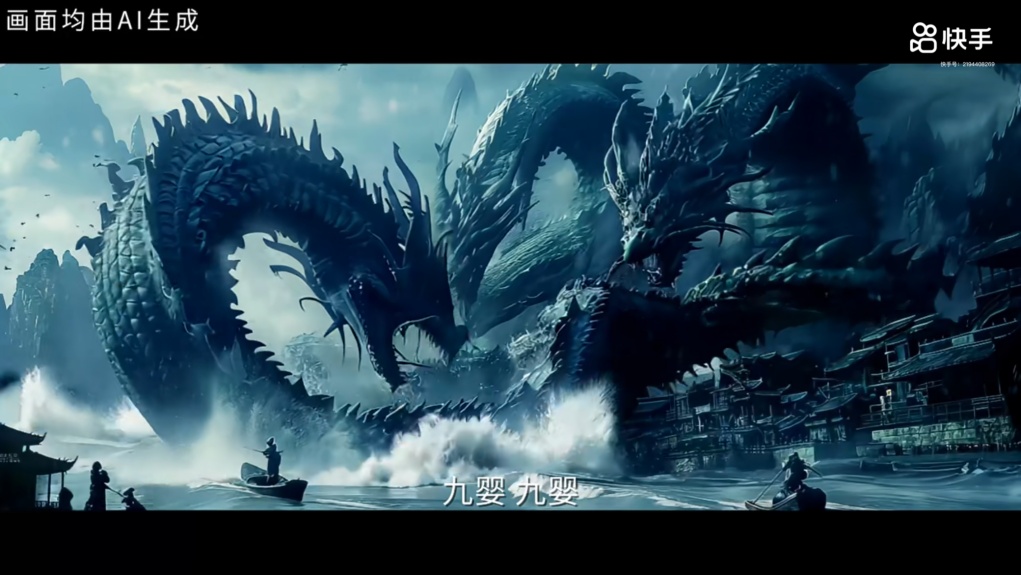
Young Li Xingzhou battles the raging sea alone to save his mother, encountering mythical creatures like the Ying Fish and Gong Gong, aided by the Kun Peng, obtaining the Water God's Halberd, splitting the Hopeless Sea, slaying the nine-headed monster Jiu Ying, and rescuing his loved ones.
Source: Kuaishou
This is a fantasy short drama titled "Mirror of Mountains and Seas: Braving the Waves," set against the backdrop of "Classic of Mountains and Seas." Unlike traditional productions, its visuals and effects are entirely AI-generated. Released on Kuaishou on July 13, the five-episode series has surpassed 52 million views.
One of the AI models behind this drama is Kuaishou's text-to-video model, Keling, launched in June. Coincidentally, on July 8, Douyin debuted its AI sci-fi short drama "Sanxingdui: Future Revelation," which has garnered over 38 million views. This production leverages Dreamina AI, launched by Jianying in May.
Since Sora went viral earlier this year, AI video generation has become a hotly contested field among domestic tech firms. Surprisingly, practical applications have emerged rapidly, with AI short dramas poised to disrupt the industry.
AI Short Dramas: Douyin and Kuaishou Race to Dominate

Short dramas have leveled up. As platforms like Kuaishou and Douyin spearhead AI-driven projects, the industry is on the brink of transformation.
Chen Kun, formerly a director for shows like "The Voice" and "Street Dance of China," transitioned to AI filmmaking last year, founding his own studio.
Earlier this year, his 10-person team produced a two-minute trailer for "Mirror of Mountains and Seas," using Midjourney for visuals and PixVerse for video generation. However, by April, Chen hit a roadblock—existing tools couldn’t achieve dynamic movements, resulting in stiff, slideshow-like footage.
Keling’s arrival marked a leap forward in consistency and logic. Launched in June, Kuaishou’s in-house model generates 1080p videos up to two minutes long, with realistic physics and motion. Chen collaborated with the Keling team, refining the project in under two weeks.
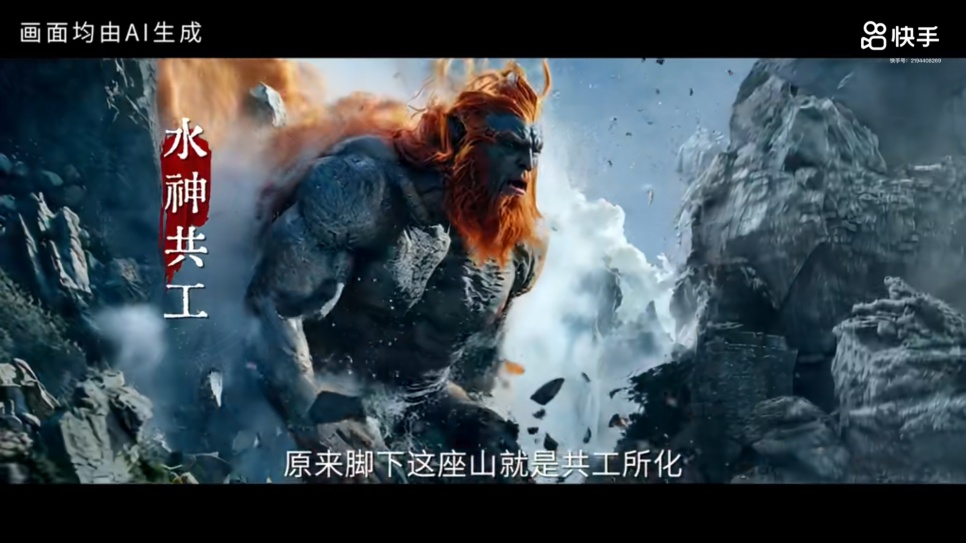
"This isn’t incremental—it’s a generational shift," Chen remarked during a screening at the 2024 World AI Conference, highlighting a scene where the water god Gong Gong rises from a mountain, now rendered with lifelike motion.
Source: Kuaishou
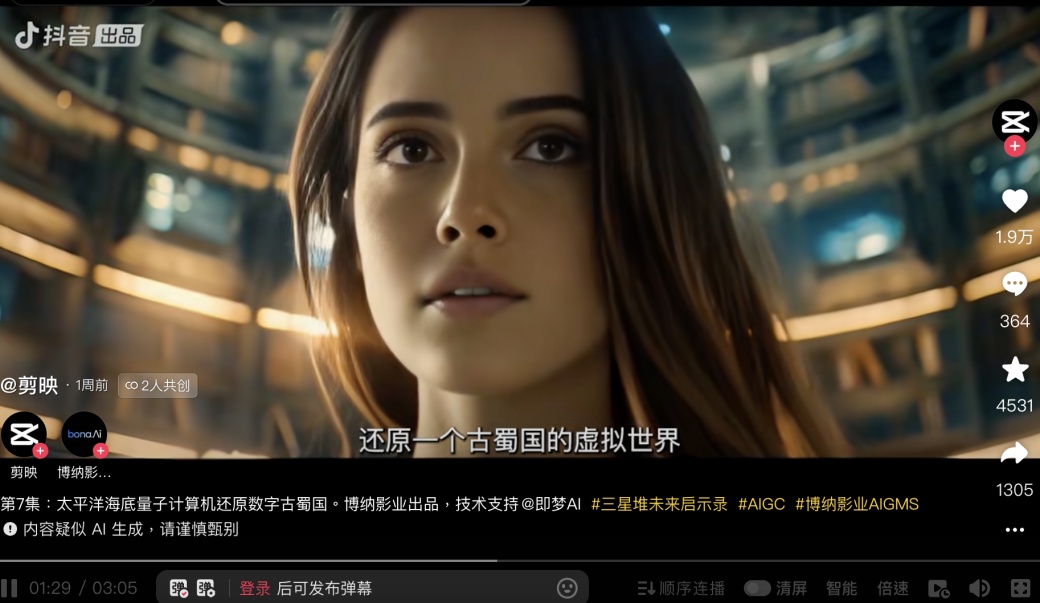
Such effects, traditionally costly, now take minutes. Kuaishou’s entertainment head Chen Yiyi announced plans to fund AI short drama creators, while Douyin’s "Sanxingdui"—a 13-episode sci-fi thriller co-produced by Bona Film Group—showcases Dreamina’s upgraded video tools.
Source: Douyin
"We insisted on full AI generation, no live-action," said Qu Ji Xiaojiang of Bona’s AIGMS center. The industry’s enthusiasm is palpable, but challenges remain.
Opportunities and Hurdles for AI Short Dramas
AI is reshaping short dramas, but its limitations are stark. While it slashes costs—Chen Kun’s team operates at 10% the size of traditional crews—creativity remains human-dominated.
"AI can’t invent stories yet," Chen noted. Scriptwriting, editing, and emotive voice acting still rely on people. Viewers like "San San" (pseudonym) critique disjointed plots and robotic performances: "It feels like a slideshow with dialogue."
Kuaishou’s 400 million daily users include 270 million short drama fans, yet only 300+ series have crossed 100 million views. "Supply can’t meet demand," admitted Chen Yiyi, who sees AI as either a niche genre or a efficiency tool.
Qu Ji Xiaojiang believes commercialization hinges on hitting 100 million views per series. "Season two might be paywalled," she mused, "or even hit theaters if AI matures."
AI Short Dramas: Half a Step Ahead

China’s short drama market, valued at $35.86 billion in 2023, is booming but plagued by cookie-cutter content. AI won’t solve creativity deficits, argues Chen Kun: "It can’t create from nothing."
Chen Yiyi frames platforms as scouts: "We explore possibilities, while creators stick to proven methods." Keling’s lead developer Wan Pengfei agrees: "Great content is always scarce—tech just helps realize visions."
For now, AI short dramas are more curiosity than revolution. Their future lies in collaboration: AI handles grunt work, humans focus on storytelling. As tools evolve, so might their role—but the magic of cinema? That’s still uniquely human.
The copyright of this article belongs to the original author/organization.
The views expressed herein are solely those of the author and do not reflect the stance of the platform. The content is intended for investment reference purposes only and shall not be considered as investment advice. Please contact us if you have any questions or suggestions regarding the content services provided by the platform.
