


New Stock Analysis | Cross-border logistics in high prosperity, will Pan Asia International's performance "go with the flow"?

In recent years, the cross-border e-commerce logistics market has shown a rapid growth trend, attracting the attention of investors. As a cross-border e-commerce logistics service provider, Panfar International Holdings Limited has gained significant attention through its listing hearing on the Hong Kong Stock Exchange. Panfar International's business model mainly involves providing end-to-end cross-border delivery services. Currently, the company has partnered with Alibaba Group's subsidiary, OneTouch. According to data from the General Administration of Customs, the scale of cross-border e-commerce imports and exports is expected to reach CNY 21 trillion in 2022. Correspondingly, the scale of the cross-border e-commerce logistics market is projected to increase from CNY 1.5 trillion in 2018 to CNY 3.2 trillion in 2022, with a compound annual growth rate of 20.4%.
With the upgrading of overseas trade and favorable policies in recent years, cross-border e-commerce has shifted from quantitative growth to qualitative growth, continuously promoting the development and upgrading of cross-border e-commerce logistics.
According to the data from the General Administration of Customs, the scale of cross-border e-commerce imports and exports reached RMB 2.1 trillion in 2022. Correspondingly, the market size of cross-border e-commerce logistics increased from RMB 1.5 trillion in 2018 to RMB 3.2 trillion in 2022, with a compound annual growth rate of 20.4%.
Zhitong App noticed that the rapid growth of the cross-border e-commerce logistics market has also made related companies increasingly active in the capital market. On December 7th, the Hong Kong Stock Exchange website disclosed that Pan Asia International Holdings Limited ("Pan Asia International") conducted a listing hearing on the Hong Kong Stock Exchange, with China Renaissance Capital Limited as its exclusive sponsor.
Backed by Alibaba, enjoying the shade?
The prospectus of Pan Asia International shows that the company is a provider of cross-border e-commerce logistics services. The company's history can be traced back to 2004 when Hangzhou Pan Asia International Logistics Co., Ltd. ("Hangzhou Pan Asia"), a wholly-owned subsidiary of Pan Asia International, was established, marking the beginning of its cross-border e-commerce logistics service business. Subsequently, the company achieved several "milestone" events.
In 2005, Hangzhou Pan Asia became a service contractor for a Fortune 500 multinational logistics company group established in the United States and obtained exclusive operating rights in multiple regions of Zhejiang Province. Ten years later, in 2015, Hangzhou Pan Asia became one of the OGP operators of a Fortune 500 multinational logistics company group established in the United States.
In 2017, Pan Asia International acquired Hangang and became a business partner of Supplier Group A (a Fortune 500 German logistics company group established in the United States and listed on the Frankfurt Stock Exchange), and completed its business layout in South China and Southwest China. Subsequently, Pan Asia International cooperated with Alibaba Holding's subsidiary, OneTouch, in 2018. In 2021, Alibaba China subscribed to 10% of Hangzhou Pan Asia's registered capital for approximately RMB 139 million.
Currently, Pan Asia International's business model mainly involves providing the following: (i) end-to-end cross-border delivery services: the company provides comprehensive international logistics services to customers throughout the entire end-to-end logistics process, delivering packages to destination countries or regions. The company's services cover all major aspects of the cross-border logistics process, including package reception, warehousing, security inspection, packaging, labeling, sorting, export customs declaration, international long-distance transportation, customs clearance, and last-mile delivery.
(ii) Supply chain solutions: the company provides customized supply chain solutions for specific needs of different types of customers. The company offers flexibility to customers to select the services they need the company to perform in the logistics process, such as freight forwarding, customs clearance, pickup, warehouse operation, transportation, and last-mile delivery.
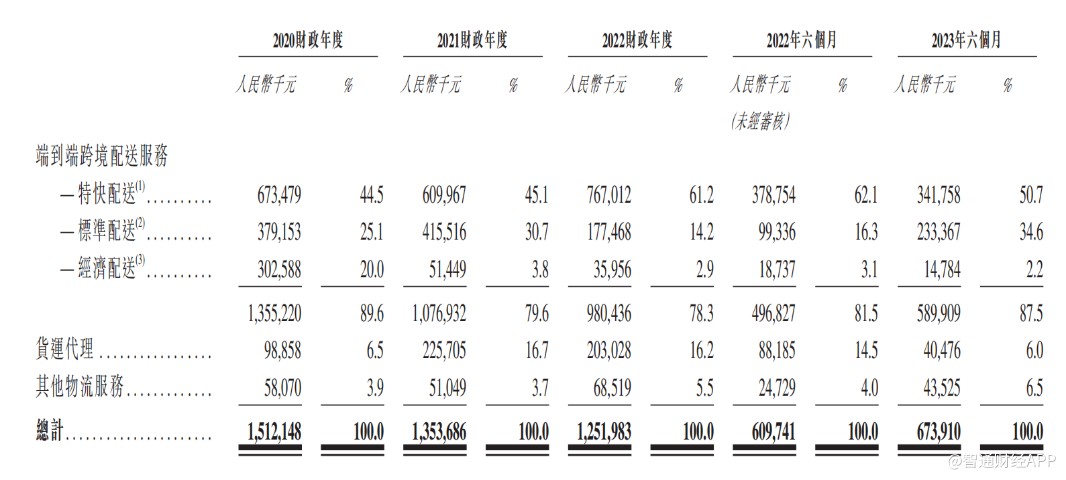 During the reporting period (as of December 31, 2020, 2021, 2022, and June 30, 2023), the company maintained business relationships with over 1,100 suppliers. With a robust supplier network, the company provides end-to-end cross-border delivery services to multiple countries worldwide. During the reporting period, the company has delivered packages to over 220 countries and regions.
Zhitong App noticed that although Pan Asia International's business is backed by Alibaba, it does not necessarily mean that the overall business growth is "riding on the coattails". In 2020, 2021, and 2022, Pan Asia International's revenue was approximately RMB 1.512 billion, RMB 1.354 billion, and RMB 1.252 billion, respectively; with net profits of RMB 52.695 million, RMB 36.892 million, and RMB 25.797 million, showing a downward trend. In the first half of 2023, the company's revenue increased to RMB 674 million, but the net profit further declined to RMB 10.917 million.
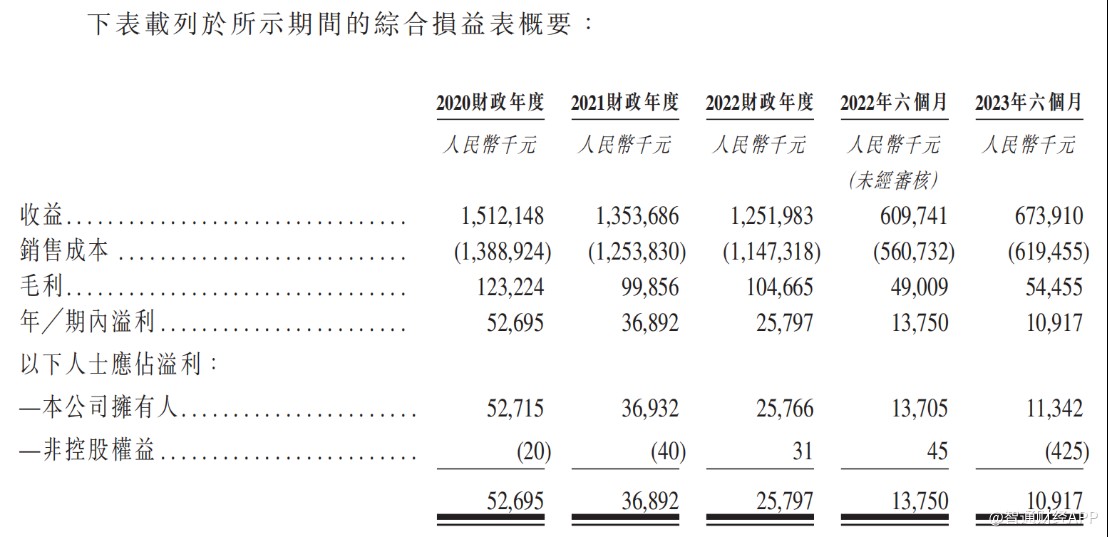
From 2020 to 2022, the main reason for the decline in Pan Asia International's revenue was the decrease in revenue from end-to-end cross-border delivery services, from RMB 1.355 billion to RMB 980 million. In terms of regions, the revenue generated from packages delivered to the United States decreased from RMB 799 million to RMB 595 million. The company highlighted the risk in its prospectus that some customers transporting goods to the United States benefit from certain tax exemption systems, which may change in the future. In such cases, the customers' operations may be negatively affected, thereby impacting the revenue generated by the company from these customers.
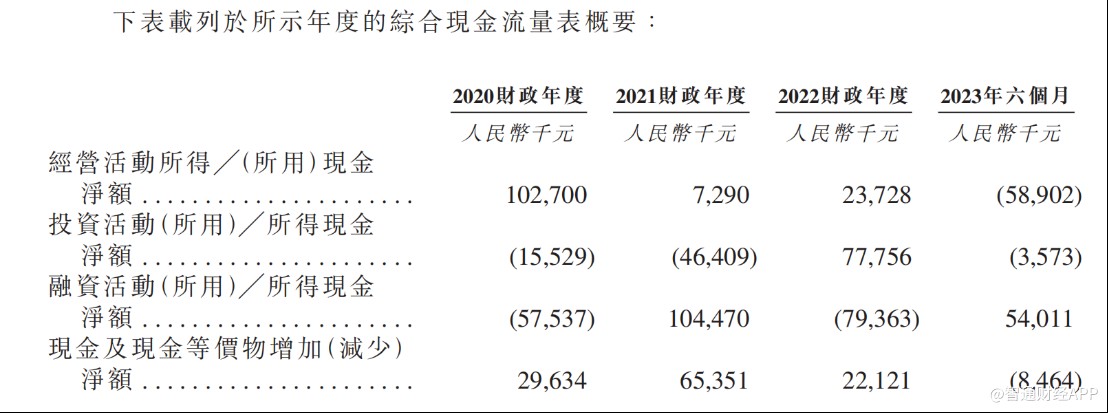
Zhitong App also noticed that not only is Pan Asia International's profitability in a downward trend, but its long-term gross profit margin of less than 10% also indicates that the company has limited room to improve its profitability by reducing costs and expenses. Furthermore, the company's operating cash flow performance is also unstable. In 2020, the net cash flow from operating activities reached RMB 103 million, but it subsequently experienced a sharp decline. In the first half of 2023, the net cash used in operating activities reached RMB 58.902 million.
 "Little Brother" in the Race, High Receivables and Prepayments
According to observations from Zhitong App, Dolphin Research's performance has been declining and its cash flow has been significantly fluctuating in 2020, which does not match the market growth potential.
According to a Frost & Sullivan report, the market size of cross-border e-commerce logistics in China has increased from CNY 1.5 trillion in 2018 to CNY 3.2 trillion in 2022, with a compound annual growth rate of 20.4%. By 2027, this number is expected to reach CNY 5.0 trillion, with a compound annual growth rate of 9.2% from 2022 to 2027.
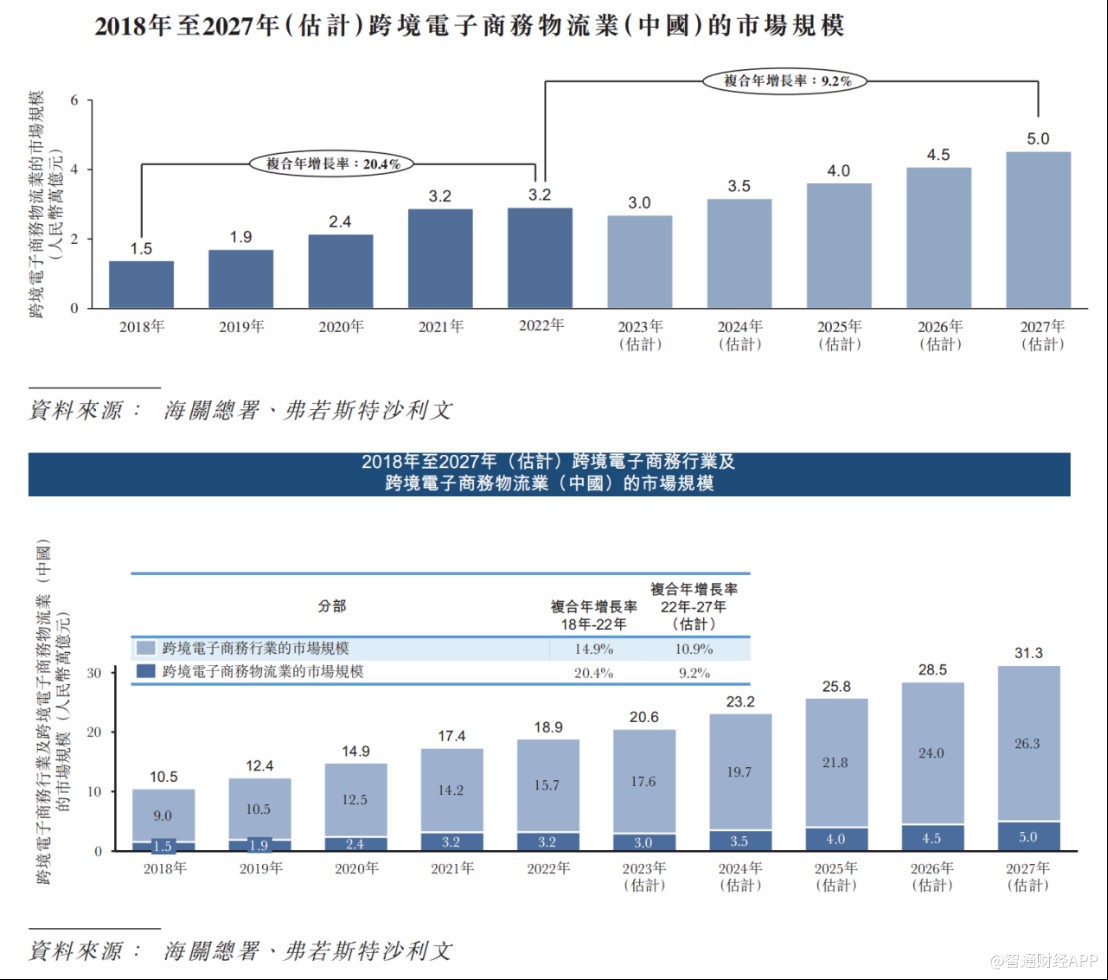
However, the Chinese cross-border e-commerce logistics market is highly fragmented. According to the revenue generated by cross-border e-commerce logistics services in 2022, the top five local participants in the cross-border e-commerce logistics industry only account for 2.5% of the market share. In 2022, based on cross-border e-commerce logistics revenue, Dolphin Research ranks between 25th and 30th among local cross-border e-commerce logistics service providers in China, with its revenue of CNY 1 billion accounting for only 0.03% of the market share. Dolphin Research points out that the company faces competition from existing market participants and potential new entrants, including other cross-border e-commerce logistics service providers, indicating that future market competition may become more intense.
In this context, Dolphin Research's main way to expand its business scale is to establish strong business relationships with major customers and suppliers. However, this also results in the company's dependence on a few suppliers, which in turn affects its bargaining power. Dolphin Research's prospectus shows that the company's trade receivables have been increasing year by year, from CNY 125 million in 2020 to CNY 392 million in the first half of 2023. During the same period, advances, prepayments, and other receivables have increased from CNY 45 million to CNY 120 million.
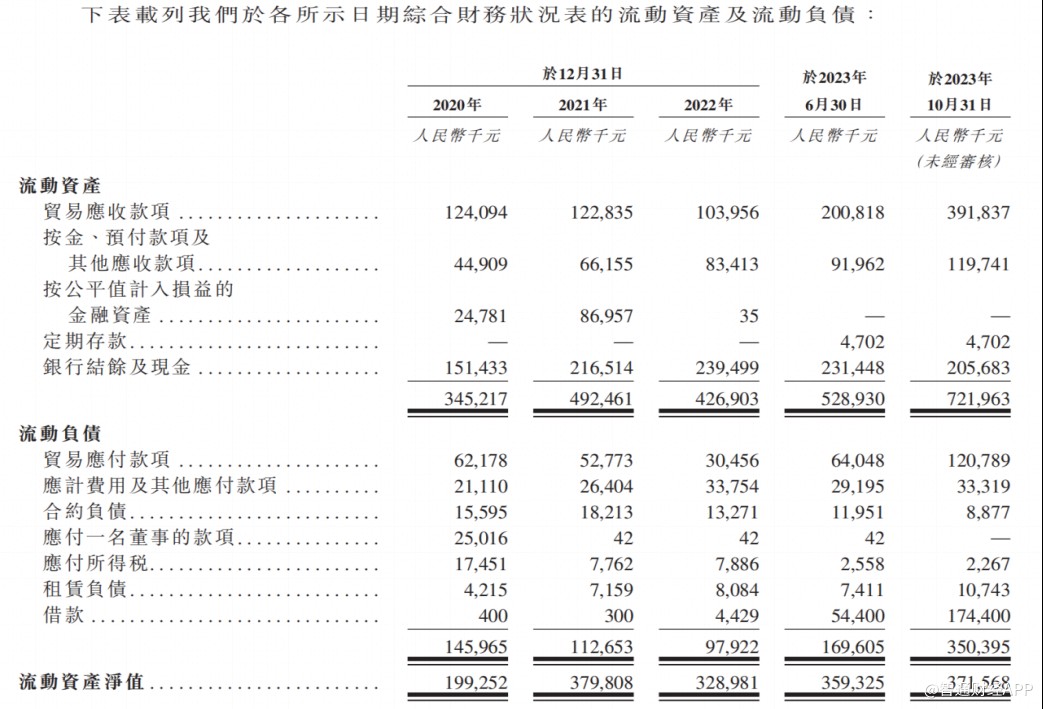
Taking upstream suppliers as an example, Dolphin Research's suppliers mainly include international and national-level logistics service providers, ocean carriers, and air carriers. The company admits that its business is highly dependent on suppliers. In the past reporting period, Dolphin Research's purchases from the top five suppliers accounted for approximately 61.4%, 50.6%, 61.2%, and 62.3% of the total purchases, while purchases from the largest supplier group, Supplier K, accounted for 28.3%, 25.3%, 43.4%, and 39.8% respectively. In its prospectus, VESYNC International stated that it cannot guarantee competitive quotes from suppliers or procure logistics services at preferential prices. If the company cannot provide satisfactory services or reasonable prices, it may face the risk of losing customers to suppliers. Therefore, the company's business, operating performance, and financial condition may be severely adversely affected.
In summary, given the mediocre performance, reliance on a few suppliers, tightening cash flow, and other internal factors, as well as the expectation of a slowdown in market growth and intense industry competition, investors may hold a conservative attitude towards the investment value of VESYNC International.
