With a hundred billion dollars in hand, how to interpret the highlights of the listing of "the first stock of self-immunity" QYUNS-B?

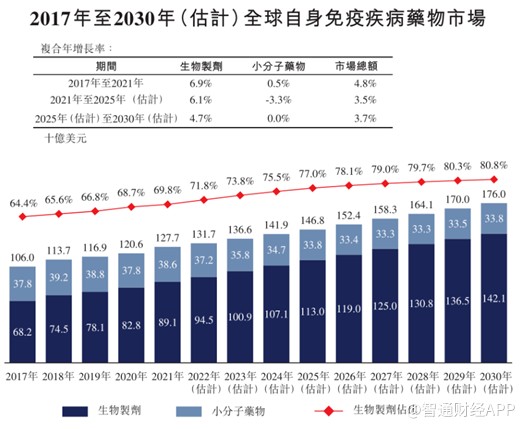
QYUNS-B's listing as the "first stock of self-immunity" has sparked high growth expectations in the market. The pharmaceutical industry is currently in a phase of retreat and adjustment, but signs of recovery are emerging due to multiple favorable factors, gradually revealing investment opportunities in the pharmaceutical sector. It is expected that the Federal Reserve will enter a rate-cutting cycle this year, presenting a rebound opportunity for the pharmaceutical industry. QYUNS-B is a biotechnology company with high-growth varieties, possessing both scarcity and growth attributes, attracting the attention of many investors. The field of self-immunity is the world's second-largest therapeutic area, with the market size continuing to grow, expected to reach $176 billion by 2030. QYUNS-B has a rich pipeline layout in the field of self-immunity, poised to gain significant upward momentum.
In retrospect of 2023, the continuous interest rate hikes by the Federal Reserve and the lingering uncertainty in macroeconomic recovery have kept the pharmaceutical investment and financing market in a prolonged slump. Regulatory measures such as anti-corruption in the pharmaceutical industry have also caused emotional disturbances. Throughout the year, the pharmaceutical sector has remained in a phase of retreat and adjustment.
At this bottoming stage of the market, with signs of recovery brought by multiple favorable factors, investment opportunities in the pharmaceutical sector are gradually emerging.
From a market perspective, most institutions predict that the Federal Reserve is likely to enter a rate-cutting cycle this year, with expectations of restored market liquidity. From an industry perspective, signals of positive support for innovation and development in the pharmaceutical industry were released during the recent National "Two Sessions". With the stabilization of medical insurance policies, the pharmaceutical industry is expected to seize the opportunity for a rebound.
When selecting investment targets in the pharmaceutical industry, the scarcity of product pipelines, future market space, and progress in commercialization are all important considerations. For biotechnology companies with high-growth varieties, as key milestones such as the release of clinical data, market approval, and product volume increase approach, stock prices are expected to gain significant upward momentum under favorable catalysts.
It is understood that Qilu Biotech-B (02509) started its public offering on the Hong Kong Stock Exchange on March 12th and will become the "first domestic self-immunity stock" after listing. Positioned in the highly promising self-immunity track, with the imminent commercialization of key varieties, its dual attributes of scarcity and growth have attracted the attention of many investors.
Deeply cultivating the billion-dollar self-immunity track, the rich pipeline layout highlights its scarcity
Compared to the crowded and fiercely competitive oncology track, the field of self-immunity therapy not only has a large patient base and rapidly growing market demand but also remains a blue ocean in a vigorous development stage.
Data from Frost & Sullivan shows that the global market size of autoimmune disease drugs reached approximately $131.7 billion in 2022, making the self-immunity field the second-largest treatment area globally, just behind oncology. It is projected to increase to $176 billion by 2030, with the Chinese market expected to achieve a higher growth rate due to advancements in innovative therapies and potential medical needs.

Reflected in the capital market, the heat in the self-immunity field is also rising year by year. According to JPMorgan's "2023 Annual Biopharmaceutical Licensing and Venture Capital" report, the self-immunity field ranked fourth in early-stage investments last year.
According to Zhitong App, autoimmune diseases refer to diseases where the body reacts to its own antigens, leading to damage to its own tissues. This also includes allergic diseases caused by hypersensitivity reactions of the immune system, commonly including psoriasis, ankylosing spondylitis, atopic dermatitis, chronic sinusitis, asthma, and food allergies. As chronic diseases, autoimmune diseases are characterized by being difficult to cure, having complex pathogenesis, and historically low levels of patient awareness, diagnosis, and treatment rates. Compared to the global market, the domestic field of immunotherapy started relatively late. From a market perspective, the accessibility of immunotherapy drugs is low, with imported drugs dominating the market for a long time due to their high prices, limiting patient demand. From a corporate perspective, although dozens of domestic companies have entered the field of immunotherapy, innovative pharmaceutical companies focusing on this area are still scarce.
It is worth mentioning that QX Biotech, which is about to be listed on the Hong Kong Stock Exchange, is one of the few innovative pharmaceutical companies in China that solely focus on immunotherapy. It belongs to the top tier in China in terms of pipeline layout and development progress in the field of immunotherapy and allergies.
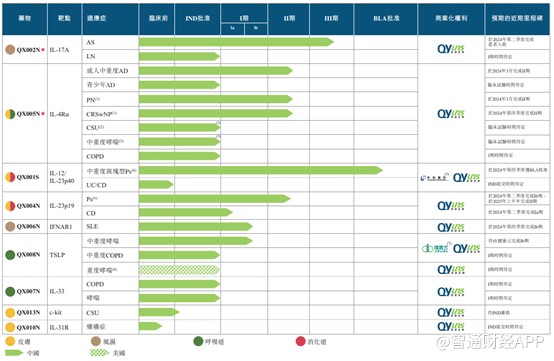
According to QX Biotech's prospectus, it has disclosed 9 products in the field of immunotherapy, with 19 IND (Investigational New Drug) approvals, making it one of the companies with the highest number of IND approvals in the domestic immunotherapy field.
In terms of target layout, QX Biotech is the only biotech company in China with full coverage on interleukin targets, covering IL-4R, IL-17, IL-23, IL-33, IL-31R, etc. A comprehensive layout will help in the full lifecycle management of immunotherapy patients.
Furthermore, the company's QX001S, which is expected to be the first to be commercialized, is the first domestically produced ustekinumab biosimilar submitted for BLA in China. It is expected to break the monopoly of ustekinumab biosimilars in the domestic market.
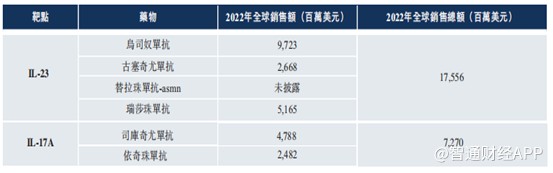
Ustekinumab was approved by the FDA in 2009 and domestically approved in 2017. It is the first biologic drug that selectively inhibits the IL-23 and IL-12 pathways, and is one of the main therapies for treating psoriasis globally.
As a second-generation biologic drug for psoriasis treatment, the IL inhibitor market is not crowded, with the majority of market share traditionally held by multinational pharmaceutical companies. In the two common psoriasis treatment targets, IL-17 and IL-23, ustekinumab targets IL-23, which is upstream in the Th17 signaling pathway of psoriasis pathogenesis. Targeting IL-23 (including IL-12/23) can achieve deeper and more sustained inflammation relief, demonstrating superior long-term efficacy and safety in clinical studies.
In 2023, Johnson & Johnson generated $10.8 billion in revenue from ustekinumab alone. Now, this heavyweight product is about to face its first domestic competitor, and the future growth potential of QX001S is self-evident.
QX Biotech has a rich pipeline of products, leading overall research and development progress. With subsequent products gradually being commercialized, it is expected to generate new performance increments. Including QX001S, QX002N, and QX005N, the company already has 6 candidate biologic drugs in different clinical stages. In the past six months, QX Biotech has achieved significant milestones in its pipeline, including one BLA acceptance, one Phase III initiation, two Phase II reaching major clinical endpoints, one BTD designation, and multiple IND approvals.
Taking a look at the competition landscape in the domestic self-immunity field, as domestic innovative drugs for self-immunity enter the public eye, the previous dominance of imported drugs is being disrupted. The price advantage of domestic alternatives also helps to further increase market penetration. With a large patient base and the demand for long-term or even lifelong medication, coupled with the enhanced willingness to pay by patients due to the improvement in economic levels, the potential of the self-immunity market is gradually being explored.
Commercial Successes Abound, Core Varieties to Enter Harvest Period
In addition to a promising research pipeline layout, Quansheng Biotech has been receiving positive news in its commercialization process.
According to Zhitong App, the biosimilar drug QX001S of ustekinumab has been accepted by the NMPA in August 2023 and is expected to be the first to be approved for marketing in China, becoming the company's first commercially available drug;
The core product QX002N is a high-affinity monoclonal antibody targeting IL-17A, which started Phase III clinical trials for ankylosing spondylitis in September 2023 and is expected to be completed in the second half of 2025;
Another core product, QX005N, aims to inhibit IL-4Rα, a well-validated target for a wide range of indications. The company has obtained IND approvals for seven indications, making it the candidate drug with the most indications for China's IL-4Rα targeting drugs. Currently, applications for Phase III clinical trials of QX005N for AD (atopic dermatitis) and PN (prurigo nodularis) have been submitted, and Phase II clinical trials for the treatment of CRSwNP (chronic rhinosinusitis with nasal polyps) started in April 2023.
In terms of commercialization, the company has established a production base in Taizhou, Jiangsu, with an annual production capacity of approximately 300 kg of therapeutic antibodies. It has also formed a strategic partnership with Huadong Medicine, which has rich experience in chronic disease management and a strong sales network in autoimmune and allergy drugs.
It is understood that Huadong Medicine covers over 3,000 (or more than 90%) Grade III hospitals and over 15,500 secondary and below hospitals in China. Leveraging Huadong Medicine's mature sales channels, Quansheng Biotech's new varieties are expected to penetrate grassroots medical networks after commercialization, quickly gain market share, and establish a leading advantage.
Quansheng Biotech has reached a commercial agreement with Huadong Medicine for the QX001S project, receiving a total of 50 million yuan in upfront and milestone payments, and will obtain half of the domestic pre-tax profits of the product through profit sharing in the future. Considering that this drug will continuously bring in revenue for the company, the profit prospects of Quansheng Biotech are worth looking forward to.
In addition, in January 2024, Quanxin Biotech reached a product cooperation agreement with a leading company in the respiratory field, Health Element, granting the development, production, and commercialization rights of Health Element's QX008N (TSLP antibody) in China (including Hong Kong and Macau), adding a strong partner in the respiratory field. Health Element is one of the major competitors in the domestic respiratory field, with a full-year sales of 1.17 billion yuan in 2022 and sales of 1.11 billion yuan in the first three quarters of 2023, covering respiratory preparations in over 3,800 domestic secondary and above hospitals.
Conclusion
In recent years, the Hong Kong Stock Exchange has introduced multiple reforms and new policies to enhance its attractiveness, and the number of companies going public in Hong Kong has been on the rise since December 2023, showing signs of recovery.
With the pharmaceutical industry possessing essential needs and an aging population structure, the pharmaceutical industry remains a sunrise track of "long slopes and heavy snow," poised to usher in a new round of recovery cycles. In the current undervalued market offering investment opportunities, the broad market blue ocean, rich R&D pipeline reserves, and highly potential new drug varieties will collectively strengthen Quanxin Biotech's confidence in embarking on a high-growth path.