If you are worried about the high price of "Noli" stock, consider this ETF that tracks the "weight-loss drug bull stock"

Recently, Danish pharmaceutical giant Novo Nordisk AS and Eli Lilly have been fiercely competing in the weight loss drug market, with the weight loss drug bull stock ETF becoming a choice of interest for investors. The Tema Cardiovascular and Metabolic (ticker: HRTS) is an ETF that tracks pharmaceutical companies in the weight loss drug sector, with diversified attributes and relatively low volatility. Nine stocks in the HRTS portfolio have outperformed the S&P 500 index, including Novo Nordisk AS and Eli Lilly. This ETF is attractive to investors looking to invest in the weight loss drug sector
Currently, the two major "miracle weight-loss drug" manufacturers in the world - the Danish pharmaceutical giant Novo Nordisk AS (NVO.US) and the American Eli Lilly, are engaged in an exceptionally fierce competition in the field of weight-loss drugs. The weight-loss drug Zepbound launched by Eli Lilly and Wegovy launched by Novo Nordisk AS have shown incredibly strong demand, making "GLP-1" and "miracle weight-loss drug" frequent keywords on international news headlines.
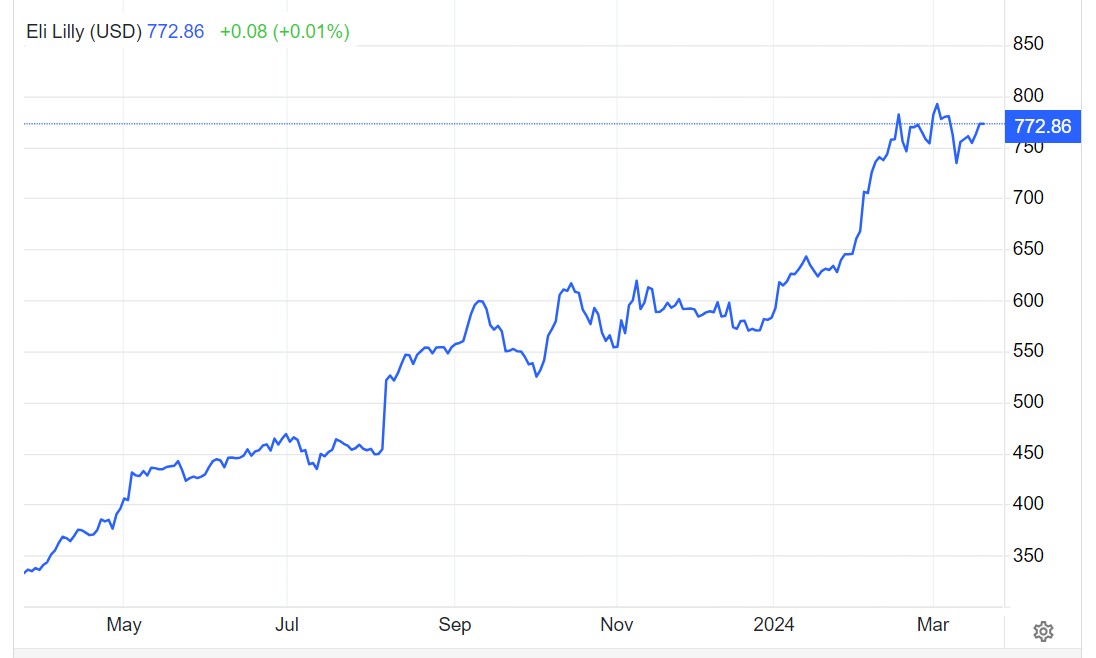
With the supply of these two major weight-loss drug products, Zepbound and Wegovy, far behind the immense global demand, the stock prices of these two companies have repeatedly hit new highs in the secondary market. Eli Lilly's stock price has risen by over 32% in the US stock market since 2024, helping Eli Lilly's total market value to rank among the top ten global listed companies; at the same time, Novo Nordisk AS ADR has risen by over 26% in the US stock market, and currently both are hovering near their all-time highs, potentially reversing downward at any time.
In the US stock market, this ETF tracking the "weight-loss drug bull stock" is worth paying attention to
For investors who have missed the "Novo bull market trend", are unwilling to bear high volatility and chase individual stocks at historical highs, but wish to invest in the weight-loss drug sector, the ETF Tema Cardiovascular and Metabolic (ticker: HRTS) tracking many pharmaceutical companies focusing on the weight-loss drug sector is an excellent choice. Industry ETF portfolios have diversification attributes, with volatility often much lower than individual stocks.
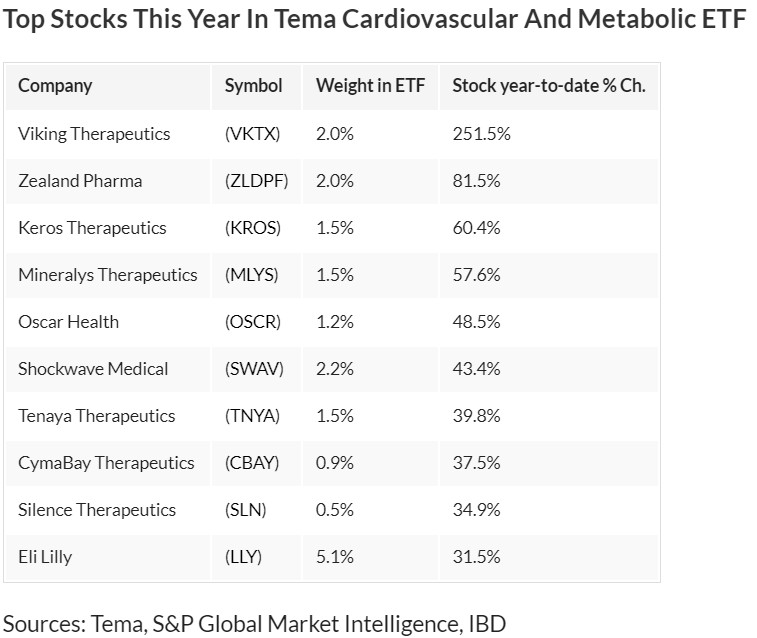
The ETF HRTS tracks Novo Nordisk AS and Eli Lilly, and more notably, according to S&P Global Market Intelligence and MarketSurge data, 9 of the stocks held by HRTS have outperformed the S&P 500 index this year, as well as Eli Lilly and Novo Nordisk AS. These include stocks such as Viking Therapeutics (VKTX.US), Keros Therapeutics (KROS.US), and Mineralys Therapeutics (MLYS.US). HRTS, this ETF can be said to be the first ETF in the US stock market that hopes to achieve high returns from the booming growth expectations in the weight loss drug and related fields. The ETF tracks many pharmaceutical companies focusing on the weight loss drug track, including both super large pharmaceutical giants like Novo Nordisk AS and Eli Lilly, as well as those globally in the early stages with great revenue potential and a focus on developing weight loss drugs.
"A forecast report from the JP Morgan research team shows that by 2030, the GLP-1 market size will exceed $100 billion, with the diabetes and obesity population driving the use of GLP-1, making this market increasingly huge," said analyst Todd Rosenbluth from Vetta Fi. "It is estimated that by 2030, the total number of GLP-1 users in the United States may reach 30 million, accounting for about 9% of the total population."
Wall Street major bank Morgan Stanley expects that by 2024, Zepbound's sales will reach $2.2 billion. The drug was officially approved by the FDA in November 2023. Meanwhile, analysts at Bank of America predicted in a report in November that Zepbound's total sales in 2024 will reach around $2.7 billion.
A forecast report from Goldman Sachs shows that by 2030, the annual sales of the global anti-obesity drug market may grow to around $100 billion, while the annual sales earlier in 2023 were only $6 billion. Goldman Sachs' forecast is based on approximately 15 million US adults receiving anti-obesity drug treatment for chronic weight management by 2030, with the US having about 105 million adults who are medically obese or overweight. Diabetes patients are excluded from the obesity forecast. The World Obesity Federation (WOF) estimates that by 2035, over 4 billion people (more than half of the world's population) may suffer from varying degrees of obesity.
Capitalizing on the investment returns from the global demand for weight loss drugs through ETF
As mentioned above, this ETF HRTS tracks many pharmaceutical companies focusing on the weight loss drug track, holding stocks of over 40 companies closely related to the weight loss drug theme.
As expected, Novo Nordisk AS (Novo Nordisk) and Eli Lilly have the highest positions in the ETF, accounting for 5.3% and 5.1% respectively, but their proportion of the total position slightly exceeds 10%. The new blood focusing on developing weight loss drugs also occupies a significant proportion The more diversified investment portfolio of this ETF has attracted many retail investors. These investors are generally concerned that by betting too much on just a few companies like Novo Nordisk AS and Eli Lilly in such an emerging market, they may miss out on huge gains similar to those seen after the release of blockbuster weight-loss drug research results by "new forces in weight-loss drugs" such as Viking Therapeutics.
Data shows that Viking Therapeutics is the best-performing holding in this ETF this year. Due to the potential for the company's drugs to be more effective than competitors like Novo Nordisk AS and Eli Lilly in the future, the company's stock price has soared by 252% this year. There have also been speculations that the company may be acquired by a pharmaceutical giant. This San Diego-based company is currently valued at only $6.9 billion. On the other hand, Eli Lilly's stock price has surged by nearly 130% in the past five years, with a market value exceeding $700 billion.
At the end of February, Viking Therapeutics announced positive results from the Phase II trial of its weight-loss drug VK2735, meeting all primary and secondary endpoints, showing statistically significant weight reduction at all doses compared to placebo. Patients treated with the drug on a weekly basis experienced a 14.7% decrease in weight from baseline after 13 weeks. In terms of efficacy data, the Phase II results disclosed by VK2735 this time even slightly exceeded the clinical trial data of Eli Lilly's drug with the same mechanism of action and Novo Nordisk AS's semaglutide.
The HRTS ETF has a wide coverage and is currently very small in size. This ETF was launched in November 2023, with a current total size of only around $52 million. Other top-performing companies in the holdings of the HRTS ETF this year include Keros Therapeutics and Mineralys Therapeutics, which have risen by 60% and 58% respectively. Keros is also testing protein-based therapies, while Mineralys is researching new treatments for obesity-related complications such as hypertension.
In the future, there may be more ETFs focusing on the weight-loss drug track. The issuer of HRTS, Tema, has competitors in the ETF space like Amplify and Roundhill planning to launch their own "weight-loss drug-themed ETFs" Analyst Rosenbluth from Vetta Fi predicts that both companies focusing on the weight loss drug ETF are likely to choose to issue in the second quarter. "Among them, Roundhill's version is considered to be more concentrated than HRTS, possibly with only a few companies."
"Thematic ETFs overall help provide investors with diversified portfolios and much lower volatility than individual stocks, as individual companies may face challenges in achieving long-term goals, and some companies may make it difficult to find buying opportunities due to high stock prices or high valuations. In addition, this long-term investment trend may help many start-up companies grow, not just the current industry leaders," Rosenbluth said