


China Real Estate Research Institute: Property services follow the logic of "incremental + stock" market, with the national property management scale expected to reach 315 billion square meters by 2025

In the first half of 2024, the newly added contract area of the top 50 property management companies in China decreased by 6.38% year-on-year. Among them, the management area supplied by related parties decreased by 40.96% year-on-year, while the management area expanded by third-party outsourcing increased by 6.98% year-on-year. It is expected that the national property management scale will still reach 31.5 billion square meters in 2025, following the market logic of "increment + stock". Based on the scale of non-residential properties in China, taking into account the premium level and market acceptance of IFM services, it is estimated that the demand for IFM services in China's property management industry will grow to 1.0699 trillion yuan by 2026, with an average annual compound growth rate of approximately 14.07%
According to the Zhitong Finance and Economics APP, the China Index Research Institute stated in a document that in the first half of 2024, the total newly added contract area of the top 50 property management companies decreased by approximately 560 million square meters year-on-year, a decrease of 6.38%. Among them, the total supply of managed area from related parties was 98.36 million square meters, a decrease of 40.96% year-on-year, while the managed area from third-party expansion was 461 million square meters, an increase of 6.98% year-on-year.
In the first half of 2024, the total newly added contract area of the top 10 companies amounted to 252 million square meters, a decrease of 7.59% year-on-year. Among them, the contract area from related parties was 53.522 million square meters, a decrease of 47.77% year-on-year, and the contract area from third-party expansion was approximately 198 million square meters, an increase of about 16.68% year-on-year.
Property services run through the entire post-real estate service market, with "rigid demand + long cycle" consumption characteristics, making it a "protagonist" in the service economy. Although the real estate industry chain is complex, from land acquisition, planning, design, engineering construction to sales, delivery, operation, etc., the final position is the service of space, equipment, and people by property enterprises. Real estate development follows the logic of incremental market, while property services follow the logic of "increment + stock" market. Even with the slowdown in real estate development growth, it is expected that the national property management scale will still reach 31.5 billion square meters by 2025.
China's huge non-residential property scale lays a broad development space for IFM (Integrated Facility Management) business. Based on the scale of China's non-residential properties and considering the average property service fee level of various formats, the premium level and market acceptance of IFM services, a relatively conservative estimate is made. Taking three times the property management fee as the average fee standard through weighted average method, it is estimated that the expected demand scale of China's property management industry IFM services market will increase from 762.2 billion yuan in 2023 to 1.0699 trillion yuan in 2026, with an average annual compound growth rate of about 14.07%.
01 Summary of China's Property Management Industry in the First Half of 2024
(I) Scale Performance: Revenue and profit growth rates both decline, the phenomenon of "increased revenue but not profit" continues
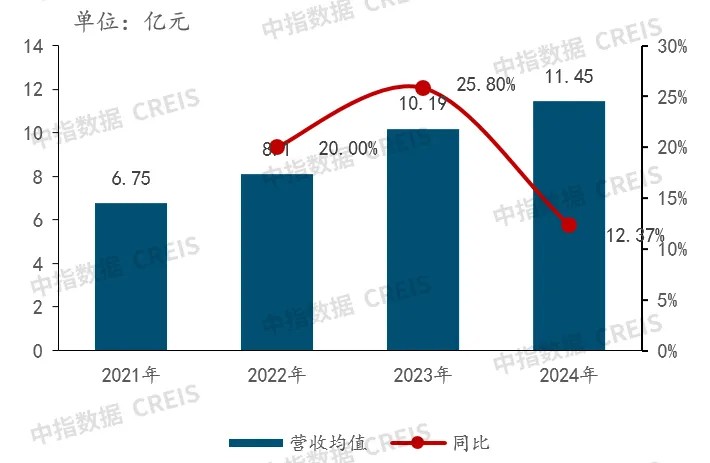
- The average revenue of A-share property enterprises increased by 12.37% year-on-year, while the average gross profit increased by 1.44%.
In the first quarter of 2024, the average operating income of 5 A-share property enterprises was 1.145 billion yuan, an increase of 12.37% year-on-year. There were 4 enterprises with positive revenue growth, among which Cushman & Wakefield's operating income was the highest, at approximately 3.705 billion yuan, and Xinye Real Estate had the fastest revenue growth, at about 19.51%.
Chart: Average operating income and growth of A-share property enterprises in the first quarter from 2021 to 2024
 Data Source: Company Quarterly Reports, compiled by China Index Research Institute
In terms of profit, in the first quarter of 2024, the average gross profit of 5 A-share physical enterprises was approximately 141 million yuan, a year-on-year increase of 1.44%, and the average net profit was approximately 58 million yuan, a year-on-year decrease of 6.95%. Among them, the gross profit and net profit of CMB Accumulated Surplus were 418 million yuan and 191 million yuan respectively, both ranking first.
- In terms of incremental contribution, the significant decrease in supply from related parties is being compensated by accelerated expansion from third parties.
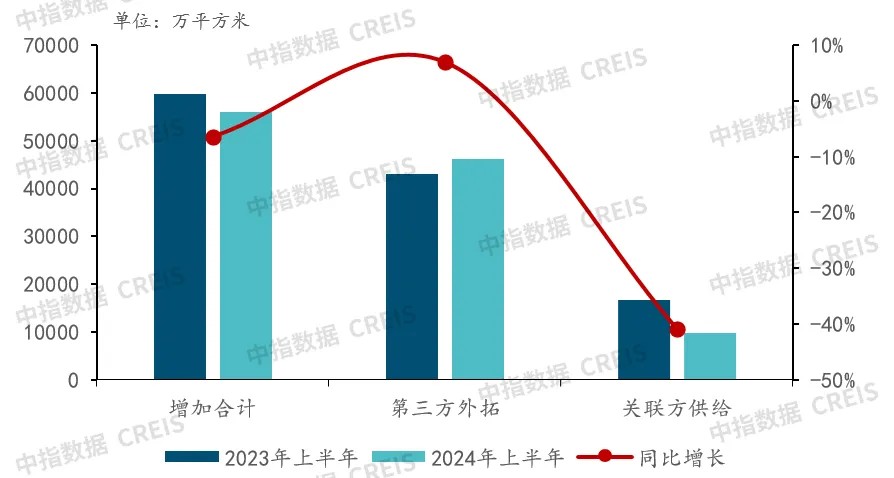
In the first half of 2024, the total newly added contract area of the top 50 companies ranked by new contract area was approximately 560 million square meters, a year-on-year decrease of 6.38%. Among them, the total management area supply from related parties was 98.36 million square meters, a year-on-year decrease of 40.96%, while the management area from third-party expansion was 461 million square meters, a year-on-year increase of 6.98%.
Chart: New contract area from the top 50 companies from related parties and third-party expansion
Data Source: China Index Research Institute CREIS
In the first half of 2024, the total new contract area of the top 10 companies ranked by new contract area was 252 million square meters, a year-on-year decrease of 7.59%. Among them, the contract area from related parties was 53.522 million square meters, a year-on-year decrease of 47.77%, while the contract area from third-party expansion was 198 million square meters, a year-on-year increase of approximately 16.68%.
In 2023, the M&A market further cooled down, with typical cases disclosing transaction amounts of about 1.9 billion yuan, a significant decrease of about 75% compared to the previous year. Some listed companies announced changes to the use of funds raised from their IPOs, intending to reduce or change the funds originally intended for acquisitions and strategic investments to other purposes. Corporate strategies are returning to a more conservative style, effectively enhancing the company's risk resistance and counter-cyclical capabilities. In the first half of 2024, the M&A market further cooled down, with no typical M&A cases monitored, and property service companies are pursuing more rational and cautious mergers and acquisitions.
(II) Capital Market: Influence from related parties is still spreading, with a total market value of the sector at only 221 billion yuan
- Market performance lacks highlights, local state-owned assets still under attention
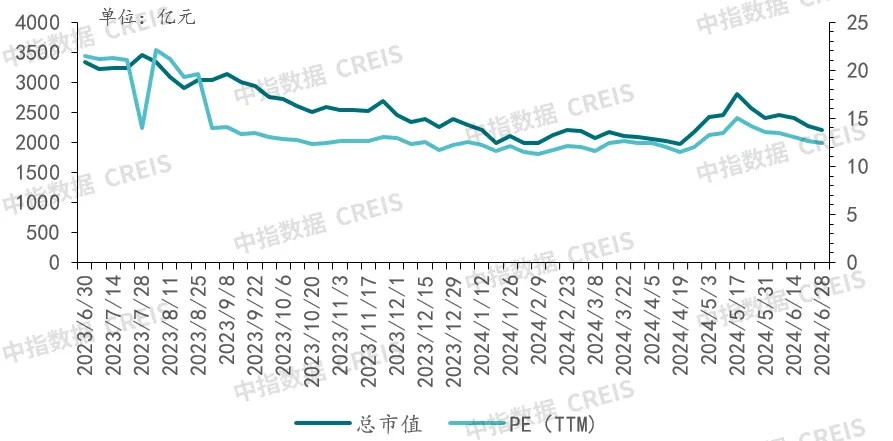
In the first half of 2024, the Hong Kong property sector slightly stabilized, especially since mid to late April, A-shares were influenced by factors such as the "Nine Articles" policy stimulus and favorable policies for related-party real estate, as well as inflow of international funds into Hong Kong stocks, leading to a continuous rebound and a slight increase from the lowest point. As of June 28, 2024, there are a total of 67 listed companies in the industry, including 61 on the Hong Kong main board and 6 on the A-share market, with a total market value of approximately 221.85 billion yuan and an average PE of 12.44 (excluding negative values) Chart: Total market value and P/E ratio of the property sector from June 30, 2023 to June 28, 2024
Source: China Index Research Institute
From the perspective of stock price performance, the stock prices of Hong Kong-listed property companies outperformed those of A-share property companies. Among the 61 Hong Kong-listed property companies, the average increase in closing price on June 28 was 2.29% compared to the beginning of the year. 22 companies saw an increase in stock price, with Leading Services Group having the highest increase at 138.46%. On the other hand, the stock prices of 6 A-share companies decreased by an average of 14.86%, with only 1 company, TeFa Services, maintaining growth at an increase of 36.53%.
- The growth rate of accounts receivable has significantly declined, risks are gradually being cleared, with a quick ratio of 1.97
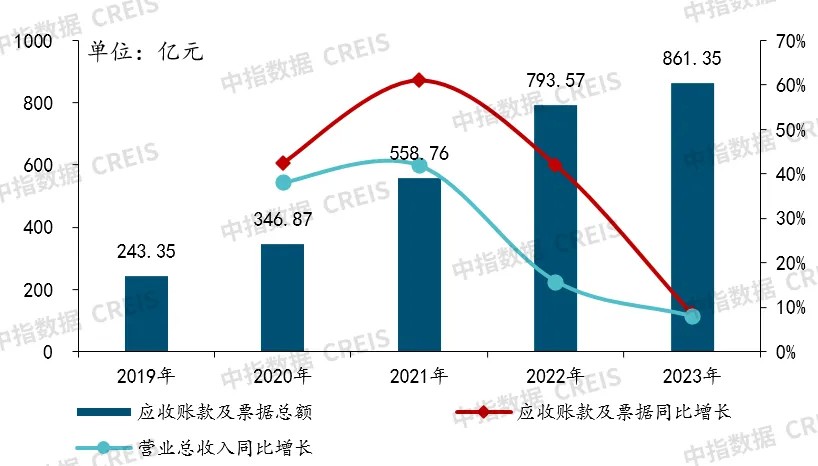
In 2023, the total amount of accounts receivable and notes of listed property service companies reached 86.135 billion yuan, an 8.54% year-on-year increase, significantly down by 33.48 percentage points from the previous year. The difference between the growth rates of accounts receivable and revenue has also decreased significantly by 25.63 percentage points compared to the previous year, indicating relatively controllable growth rates.
Chart: Total amount and growth rate of accounts receivable and notes, revenue growth rate from 2019 to 2023
Source: Listed company annual reports, China Index Research Institute
Listed property companies have increased prepayment efforts and improved collection rates. The net cash flow generated from operating activities in 2023 reached 29.449 billion yuan, a significant improvement from the previous year. The quick ratio has returned to above 1, reaching 1.97 in 2023, a new high in recent years. Industry risks are gradually being cleared, and property enterprises are gradually returning to cash flow logic, which will further boost performance and valuation.
Furthermore, property listed companies have optimized their organizational structure, streamlined operations, strictly controlled sales, management, and other expenses, improved management efficiency, and reduced the expense ratio over the past 5 years, reaching a record low of 8.84% in 2023.
- Dividend and buyback efforts reach a historical high, receiving positive feedback from the capital market
In the first half of 2024, a total of 34 listed property service companies announced the distribution of 2023 annual cash dividends, totaling 9.221 billion yuan, reaching a historical high. In terms of dividend amounts, CR Vanguard Living had the highest dividend amount at 1.763 billion yuan, followed closely by Vanke Cloud at 1.413 billion yuan. 13 companies had a dividend payout ratio exceeding 50%, with Bi Guiyuan Services having the highest payout ratio at 335.98%, ranking first, and Kangqiao Yuesheng at 96.24%, ranking second In the first half of 2024, 8 property enterprises in the Hong Kong stock market conducted share repurchases, including Wanyun, Lvcheng Services, Dexin Service Group, Jinke Services, Yongsheng Services, China Overseas Property, Yuexiu Services, and Xingsheng Commercial. These enterprises all had positive net cash flows from operating activities in 2023, with relatively ample funds. Wanyun had the highest repurchase amount of 71.9981 million yuan.
(III) Value-added Services: Establish a Professional and Independent Operations Team Based on the Core Logic of "Community Services"
- Stable Contribution of Community Value-added Services, Non-Owner Value-added Services Declined by Over 30%
In terms of value-added services and innovative service businesses, the top 100 enterprises have shifted from a large and comprehensive platform model to focusing on high-potential niche tracks, achieving resource concentration and vertical development. While maintaining traditional businesses such as space operations, they have leveraged the advantage of proximity services to achieve contrarian growth in some businesses.
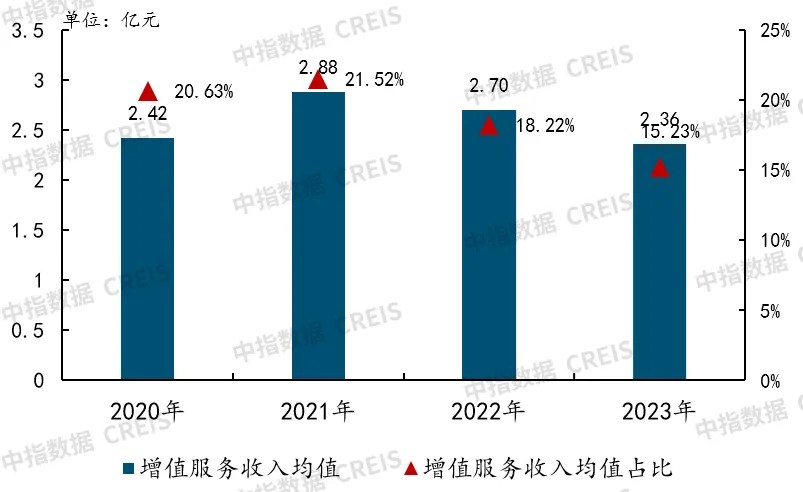
In 2023, the average value-added service revenue of the top 100 enterprises was 236 million yuan, a decrease of 12.59% from the previous year's 270 million yuan, accounting for 15.23%, a decrease of 2.99 percentage points from the previous year. On one hand, the average revenue of non-owner value-added services was 70 million yuan, a decrease of over 30% from the previous year's 105 million yuan, which is the main reason for the decline in value-added service revenue. It is expected that this business will further shrink. On the other hand, constrained by the overall consumption environment, residents' lower income expectations, consumption downgrading, and other factors have led to no significant growth in demand. The average revenue of community value-added services was 166 million yuan, basically unchanged from the previous year, and a significant boost in business is still awaited.
Chart: Value-added service revenue and proportion of the top 100 enterprises from 2020 to 2023
Data Source: CRIC
- Leveraging the Advantage of Proximity, "People, Goods, and Venue" Operations are the Main Source
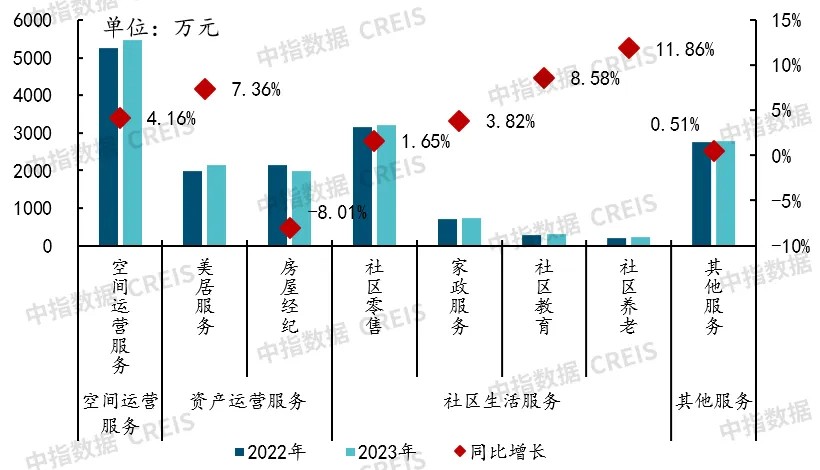
In the community value-added services of the top 100 enterprises, space operation services, asset operation services, and community life services remain the main components, with average revenues in 2023 of 54.688 million yuan, 41.208 million yuan, and 44.704 million yuan respectively, accounting for a total of 84.7% of community value-added service revenue. Among them, space operation services mainly include parking operation, advertising placement or leasing, and other businesses, with a year-on-year growth of 4.16%.
Chart: Average revenue and year-on-year changes of various community value-added services of the top 100 enterprises from 2022 to 2023
Data Source: CRIC Service Quality: Solidly Improve Satisfaction, Build a Comprehensive and Practical Standard System
- Continuously improve service quality driven by customer satisfaction
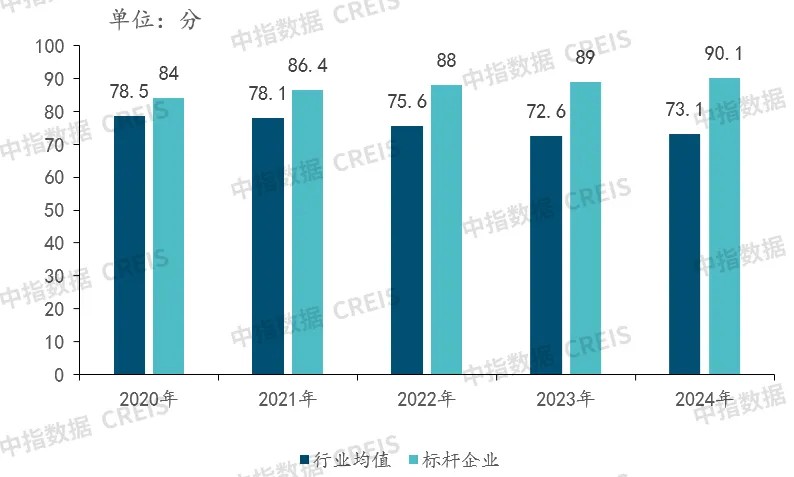
Property service satisfaction has stabilized, halting the downward trend. As residents' demands for living quality continue to rise, property service satisfaction is also increasing. The latest survey data shows that in 2024, property service satisfaction has slightly improved compared to the previous year, reaching 73.1 points. This achievement is attributed to the continuous efforts and innovations of property enterprises, who have won widespread trust and recognition from residents by providing high-quality services and enhancing communication and interaction with residents Chart: Property Service Satisfaction Score 2020-2024
Source: Compiled by China Index Research Institute
Leading property companies in the industry take satisfaction building as the starting point, focus on customer experience, deepen life scenarios, strive to minimize the gap between customer expectations and reality, enhance satisfaction levels, gain more customer recognition based on market reputation and brand advantages. By 2024, the benchmark property company's satisfaction score reached the highest level in nearly five years at 90.1 points.
Maintaining the continuity of property satisfaction surveys, understanding customer needs and adjusting feedback in a timely manner. Property companies conduct surveys through self-inspection, third-party surveys, mystery shoppers, online questionnaires combined with on-site visits, listen to owners' real demands and service suggestions, address weaknesses, optimize service content, improve customer experience, and continuously promote the dual improvement of service quality and owner satisfaction.
Property companies strengthen service quality supervision and enhance satisfaction level construction. Strengthen problem orientation and self-inspection. According to the work plan, property companies conduct comprehensive self-inspections for aspects with low satisfaction scores, enhance responsibility awareness through self-inspection and self-correction, especially by strengthening the service awareness training of front-line staff, promptly identifying and rectifying existing problems and deficiencies. Strengthen performance assessment, establish assessment goals, determine assessment cycles, assess employees from multiple dimensions and levels, adhere to the principles of openness, fairness, and impartiality, integrate assessment with job promotion, training development, and salary adjustments, create a unique assessment atmosphere, bind the company's service concept with employee assessment, forming part of the company culture.
- Customer-Centric Approach, Establish Standards and Design Services
Excellent service quality is not only the foundation of the industry but also the source of continuous development. In the fierce market competition, only by truly focusing on customers can we deeply understand the market pulse and lead the development trend. Returning to the foundation of high-quality development, the industry needs to be closer to customer service needs, deeply understand customer pain points and expectations, and then position service standards. Property companies shift from a management perspective to a customer experience perspective, setting up "experience officer" positions to understand the "real needs" of customers, gather services around and focus on customer experience, and develop standards around scenarios, touchpoints, pathways, and environments to achieve quality service implementation and improvement.
Based on this, through frontline staff and customer feedback, identify the gap between service and customer expectations, increase understanding of customer needs, improve response speed, dynamically adjust standards, continuously innovate service models, optimize service processes, and ensure more accurate and effective services for customers. At the same time, establish a deep service culture, enhance the service awareness and spirit of every employee in the company, organically integrate standardized services, differentiated scenarios, and personalized needs, pay attention to every detail in the service process, and strive to create a comfortable service experience for customers
Smart Technology Empowers Service System Iterative Upgrade
Technology makes life more convenient, and property companies' services are constantly evolving: from "having service" to "excellent service" to "smart service." With the continuous expansion of management scale and the enrichment of management formats, property companies are not only expanding from traditional property and commercial areas to cities, but also enhancing management capabilities and empowering employee service efficiency through digital transformation. This continuous optimization of service quality, improvement of customer experience, enhancement of user satisfaction, and making property services more intelligent and efficient. For example, "AI patrol cars" can promptly report violations on the streets, intelligent sensors can notify cleaning staff to clean garbage bins in a timely manner, and card swiping and facial recognition make it more convenient for owners to enter their homes. Through remote control centers, property companies can promptly respond to and resolve on-site issues, accurately match nearby personnel dispatch and efficient reach, achieving "cloud dispatch + human assistance."
Image: Smart construction of property companies assists in service upgrade
Data Source: China Index Research Institute
(V) Brand Building: Professional capabilities build brand strength, "being practical and specialized" is better than "being big and comprehensive"
- Increase brand exposure and enhance brand communication reach
With the rapid development of the Internet era, information dissemination channels are expanding rapidly. Property companies flexibly use traditional media and new media platforms for comprehensive and multi-angle connections, building a communication matrix to achieve boundaryless and full coverage information dissemination. In terms of online dissemination, property companies continuously explore new digital media channels, utilize new media communication mediums such as "WeChat, Weibo, and Douyin," and self-owned platform communication channels to increase brand exposure and enhance brand communication reach. Property companies design personalized and practical functional modules through WeChat official accounts, WeChat video accounts, and Douyin accounts to increase the coverage of brand communication, enhance the breadth of brand communication, allowing the audience to understand the company's brand concept through multiple channels and perspectives, and enhance brand awareness.
In the first half of 2024, the total reading volume of the top 50 companies on WeChat official accounts was 18.4377 million times, the total video views of the top 30 companies on WeChat video accounts was 1.8909 million times, and the total likes + shares of the top 5 companies on Douyin video accounts was 0.3669 million times.
At the same time, companies actively participate in major events, highlighting service quality in detail, establishing brand image, and promoting brand publicity. Major events or activities involve multiple work lines and complex tasks, including both soft services and hardware support. From basic services to value-added services, it is necessary to ensure the cleanliness of venues, personnel guidance, emergency response, as well as the normal operation of weak current rooms, multimedia screens, smart light signs, underwater rescue systems, and other equipment, covering lighting systems, air conditioning systems, power systems, ventilation systems, and more. Property service companies use meticulous workmanship, persist in their efforts, solidly complete tasks, prioritize quality, highlight professional services, strive for excellence, and demonstrate comprehensive corporate strength At the same time, large-scale events have long cycles, involve many people, and attract social attention. Property management companies convey brand concepts to the outside world through employee attire, demeanor, job content, etc., to establish a brand image.
- Handle relationships with related parties rationally, establish brand differentiation, and promote independent development
It cannot be denied that in the current significant changes in the real estate supply and demand relationship, many related real estate companies are still important forces supporting the development of property service enterprises. However, independent development has become a topic that property enterprises cannot avoid, whether completely independent, relying on rather than depending on, or choosing to return to integrated development. Different enterprises make different choices at different stages of development.
Strengthening independent brand building to support the high-quality and market-oriented development of enterprises. On the one hand, real estate related parties have had a negative impact on the development of property enterprises themselves, including possible fund misappropriation, cash flow pledge financing, etc.; on the other hand, real estate related parties cannot provide high-quality projects for property enterprises, and the business volume of property enterprises from related parties is further compressed to be dispensable. In this situation, property enterprises "completely cut off" from controlling equity to management and then to the brand, taking the path of independent market development is reasonable and appropriate.
- Hierarchical brand building for residential formats, and diversified track brand differentiation
(1) Hierarchical comprehensive property services
Property service enterprises currently provide integrated service products for residential formats, including basic services and value-added services, but there are still differences. This is mainly reflected in personnel allocation, environmental creation, humanistic design, intelligent application, and other dimensions, with different costs allocated hierarchically to achieve the rationality and standardized configuration of different brand services. For example, in order to ensure the effective implementation of services, Poly Property has adopted a three-dimensional standardization approach to manage operational standards, service standards, and business standards in a hierarchical manner, presenting a high, medium, and low-tiered hierarchical quality service to customers.
(2) Diversified business brand differentiation
The positioning of diversified business brands (concept, target audience, value) and the implementation of brands (marketing methods, channel display, service experience) are different from traditional businesses. In the construction of diversified business brands, property service enterprises should handle differentiation. For example, in the segmented tracks of hospital properties and school properties, property enterprises face medical staff, patients, students, and teachers, and brand concepts and values should include care, responsibility, and even obligation. Brand promotion should emphasize safety, environment, hygiene, etc., and brand marketing methods should highlight a humanistic atmosphere rather than celebrity endorsements.
(VI) Corporate Strategy: High-Quality Development, High-Quality Service
- Overall strategy: Seek progress while maintaining stability, pursue quality growth
In terms of overall strategic planning for the company, the characteristics of "stability" are prominent for property service enterprises, with "promoting progress through stability," "seeking progress while maintaining stability," and pursuing quality growth as the main strategic performance for the first half of 2024.
Maintain the existing market share, no longer blindly expand, and stabilize and consolidate the current market position. Leading companies and regional companies are more inclined to pursue "depth of scale" on the basis of pursuing the "breadth of scale." Rapid scaling may lead to organizational operating scale and business scope exceeding the range of resources and capabilities, resulting in inefficiency. Therefore, the enthusiasm for new regional expansion gradually fades, focusing on core cities and core economic belts, with increasing demand for new markets and products Property service companies are transitioning from distributed, homogenized competition to centralized, specialized expansion while diversifying their business formats. They are shifting from random, opportunistic expansion to pursuing advantages in regional density, business format density, and product density. There is a greater focus on comprehensive and systematic customer needs, actively exploring one-stop solutions with multiple business linkages, improving service efficiency, focusing on new market demands and new product markets, increasing productivity per unit area, pursuing reasonable economic benefits and rational growth, and achieving steady progress in development.
- Business Strategy: Cultivating a fertile ground for basic property services and developing synergistic diversified businesses
(1) Developing synergies across multiple businesses to create differentiated core competencies
Currently, the property management industry is shifting from an incremental market to a stock market, with leading companies facing bottlenecks in scale growth and market share, making growth more challenging for other companies. Extending multiple lines of business and integrating markets in various fields may break the deadlock. However, the selection of diversified businesses needs to focus on synergy with basic property services to achieve "one pole, multiple branches" and synergistic development.
The synergy between businesses is mainly manifested in the "unified" management of the back-end and the relatively "independence" of front-end business operations. Property service companies leverage technological means to establish a unified back-end management system, creating a "many-to-one" and "one-to-many" management pattern. By scientifically allocating and adjusting resource allocation according to actual needs, they coordinate management and operations, improve operational efficiency, achieve cost leadership, and operate diversified businesses as a new track distinct from basic property services. Maintaining relatively independent operations helps open up market space. At the same time, customers passively or actively accepting the basic property services provided by the company do not naturally equate to the target group for the development of diversified businesses. The successful development of diversified businesses should be based on genuine customer needs rather than cross-flow between businesses. The development of diversified businesses should "rely on rather than depend on" basic property services.
(2) Implementing centralized and differentiated strategies for diversified business development while focusing on self-capacity building
Facing government clients, property companies propose strategies such as "one city, one policy" and "one street, one policy," while facing corporate clients, they propose strategies such as "one enterprise, one policy." By selecting and implementing centralized strategies based on "scenarios + needs" and seeking differentiation competitive advantages using their own strengths, they create differentiated strategies.
Leading property service companies have innovated and explored their respective diversified business development models based on their advantages in capital, scale, brand, etc., forming a commercial closed loop. Currently, top companies have abandoned the light asset strategy and actively tried self-operated models, effectively increasing operating profits. For example, CR Vanguard leverages the competitive advantages of its three major product lines - Vanguard City, Vanguard Mall, and Vanguard Plaza - to systematically promote the pilot landing of self-operated cosmetics business, establish a consumer fund in the pilot project, build a commercial ecosystem, and empower the high-quality development of the channel.
More companies need to combine strategic direction with resource endowments, rationally choose track layouts. Faced with many development opportunities for diversified businesses, property companies need to distinguish between genuine and false opportunities, fully consider their own resource endowments, and rationally choose the timing of entry. Using basic property services as a "stepping stone," prioritize the layout of new businesses that are "understandable," "easy to start," "feasible," align with the company's resource allocation direction, and possess differentiated advantages For the diversified businesses that have already been established, it is necessary to establish a retrospective mechanism, based on financial indicators and strategic directions, to bravely "subtract" in order to achieve focused development and ensure the effective utilization of resources.
- Functional Strategy: Concrete goals, efficiency and effectiveness enhancement
(1) Building an integrated platform for business and finance, strengthening cash flow management, and increasing collection efforts
Property service companies are building a centralized, scaled, and integrated unified business and finance platform, covering core commercial operations to financial integration construction. They design flexible and configurable interface models, billing models, document models, etc., to quickly respond to new business expansions and adjustments. The integrated platform supports business and finance big data management, effectively supporting business operation analysis and fund risk prediction. Through the integrated platform, business processes can be optimized, achieving traceable fund flows, improving information processing transparency and authenticity; at the same time, providing collection data support, accurate fund collection forecast, helping companies adjust strategies in a timely manner, focusing on operational efficiency, and closely monitoring collections and cash flow to enhance operational efficiency through refined operations.
(2) Reshaping organizational structure, innovating management models, and improving organizational efficiency
Emphasizing flatter structures, simplifying organizational structures in various ways to pursue the ultimate in organizational intensification and flat management, transforming organizations from "large" to "refined." In order to improve organizational control efficiency, the management structure of property service companies that used to be "able to do three things and not four" is also weakening, evolving from a traditional pyramid organization to a platform-based organization. In the service field, diversified businesses need to converge, while at the organizational level, the construction of professional teams is required, transitioning from "specialized" to "strong." Some property service companies set up different business departments to support the development of diversified businesses; larger companies adopt business units or subsidiaries to undertake business, segregating relatively independent business units from other businesses; and some companies establish subsidiaries with external strong brands to achieve leapfrog development while sharing risks. For example, China Overseas Property has created a partnership model, building a "1+N" operation team around project managers, with finance, human resources, marketing, etc., assisting project managers closely to ensure high-quality project operations.
(3) Technological assistance to reduce costs and increase efficiency, achieving sustainable development
As property companies deepen their emphasis on informatization and digitalization, they have embarked on digital construction, which has now entered a period of system platform construction and deepening application.
Positional IoT, operational process automation and mechanization, and AI-based services may be future development trends. Through these information technology means, continuous integration of business, people, and technology is promoted, such as cross-business process operations, significantly improving workflow efficiency and cost control. Leveraging technology to achieve lean cost management, continuously optimizing cost item classification and grading standards, developing detailed comprehensive budget systems around various business nodes, and relying on project information management to achieve real-time monitoring and precise correction of project operations, enhancing the lean management level of operational process control. In addition, companies can practice energy conservation, emission reduction, green, and low-carbon sustainable development concepts through technological means, achieving the integration of cost standards, service experience, and service processes, balancing cost and quality optimization (VII) Industry Policies: Some cities introduce measures to limit property fees, affecting the market-oriented development of the industry
In the first half of 2024, the policy of the property management industry continues to focus on regulating industry development, establishing industry standards as the main line, and encouraging enterprises to carry out diversified services as a supplement. Various policies have been introduced nationwide and locally to continuously build a favorable policy environment, providing strong support for the sustainable development of the property management industry.
- Focus on regulating industry development, accelerating credit construction
In the first half of 2024, the policy of the property management industry continues in the direction of previous years, focusing on regulatory policies, clarifying the content of property services, personnel rights and responsibilities, fee standards, etc. While continuously optimizing industry standards, the aim is to comprehensively improve industry compliance and service quality, promoting high-quality development of the industry.
Regulatory policies mainly involve the revision of property management regulations, property fee mechanisms, credit construction, standardized construction of public services, smart sanitation systems, and safety issues. They efficiently rectify non-compliant behaviors in the industry, promoting the healthy development of the industry. Specifically, in addition to revising property management regulations, regulatory policies focus on credit construction, property fee mechanisms, pricing, etc. In recent years, various regions across the country have introduced policies related to credit construction in the property management industry, mainly clarifying the collection, evaluation, repair of credit information, as well as reward and punishment measures. Linking credit information evaluation with business operations, companies with low credit ratings are subject to key supervision, fully promoting a market supervision mechanism centered on credit, further standardizing the industry market.
- Changes in property fee pricing policies in some cities draw attention
At the same time, property fee pricing policies have become a key focus in the first half of 2024. In January 2024, Chongqing proposed to adjust the residential pre-property service fees from the current government-guided price and market-regulated price to only government-guided price, in order to standardize residential pre-property fee standards and avoid price increases. Subsequently, Chengyang District in Qingdao, Yinchuan in Ningxia, and Jiangxia District in Wuhan all issued relevant property fee pricing mechanisms, clarifying fee standards and reaffirming guided prices. Currently, property fee pricing seems to be tightening, but in fact, most provinces and cities in China implement government guidance for residential pre-property fees, and excessive fees can be approved through filing procedures.
- Encouraging enterprises to carry out diversified services, with life services as the main direction
In the first half of 2024, the property management industry is set to focus on "high-quality services, high-quality development." The "Government Work Report" proposes to "promote continuous improvement in the quality of goods and services to better meet the needs of the people to improve their lives; promote the expansion and improvement of services such as elderly care, child care, and housekeeping, support social forces in providing community services." It encourages more property service enterprises to carry out diversified services, guiding the overall development of the industry. In the first half of 2024, guiding and encouraging policies mostly focus on value-added services, emphasizing the creation of "property services + life services" to meet the needs of the people for a better life.
02 Outlook for the Chinese Property Management Industry in the second half of 2024
(I) "Tile Economy" Incremental Market Slows Down, "Service Economy" Stock Market Game
- The upstream incremental market is weakening, industry scale and performance growth rate slowing down
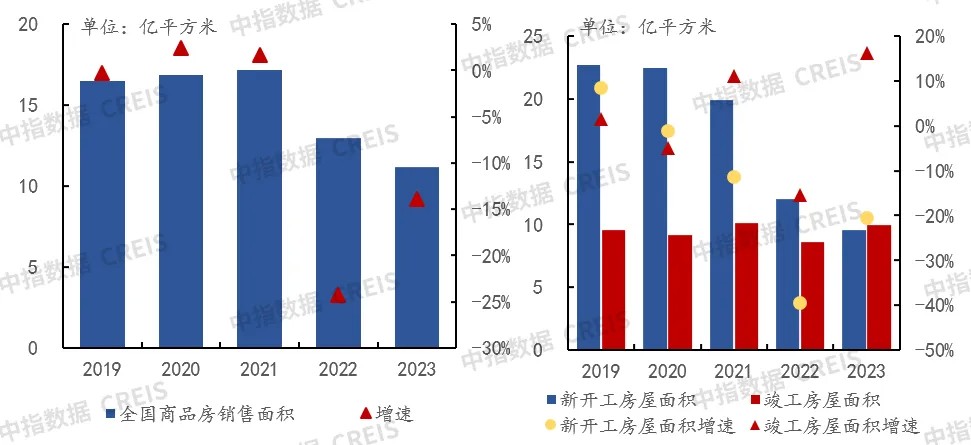
For a long time, China's real estate sector has focused on physical space construction and sales, but with changing market demands, its incremental market is slowing down. In the past five years, the national commercial housing sales area has been continuously shrinking: in 2023, the national commercial housing sales area was approximately 1.117 billion square meters, a year-on-year decrease of 13.92%; in 2023, the national real estate completed housing area was approximately 998 million square meters, achieving positive growth, but at the same time, the number of new real estate projects started by national real estate development enterprises has significantly decreased: in 2023, the area of new real estate projects started by national real estate development enterprises decreased from approximately 2 billion square meters in 2021 to approximately 1.2 billion square meters in 2022, further dropping to less than 1 billion square meters in 2023.
Chart: National commercial housing sales area and growth rate in the past five years (left) Chart: National real estate new construction/completed housing area and growth rate in the past five years (right)
Data Source: National Bureau of Statistics
As a service operation link in the real estate industry chain, property management's incremental market will inevitably be profoundly affected by the development of upstream industries. In the future, the industry's scale growth rate will continue to slow down. Currently, although the overall management scale of the industry is still growing, the growth rate has significantly slowed down: in 2023, the average area under management of property companies listed on the Hong Kong Stock Exchange was approximately 150 million square meters, a year-on-year growth of 11.94%, with a contracted area averaging around 199 million square meters, a year-on-year growth of only 1.02%. Whether it is the contracted area or the area under management, the growth rate is significantly lower than in previous years. On the other hand, "bloated" companies that achieved explosive growth in scale through unconventional means such as mergers and acquisitions in the early stages have begun to show symptoms of "indigestion": impairment of goodwill, declining profits, management imbalance, and deteriorating reputation.
- Industry profit margins continue to be "squeezed", accelerating the bottoming out and stabilization
In the first half of 2024, against the backdrop of deep adjustments in upstream industries, property companies' high-margin businesses represented by non-owner value-added services continued to shrink. Coupled with the fact that the exploration effects of most companies' "second curve" were not significant, the overall industry profit margin will continue to return to the level of basic services. The average gross profit margin of property companies listed on the Hong Kong Stock Exchange decreased from 29.51% in 2021 to 25.40% in 2022, further declining to 23.95% in 2023; during the same period, the average net profit margin decreased from 13.01% to 7.83%, further adjusting to 6.51%. It is expected that in the first half of 2024, the profit margin level of property companies listed on the Hong Kong Stock Exchange will achieve a bottoming out and stabilization Chart: Average gross profit margin and net profit margin of Hong Kong-listed physical enterprises from 2021H1 to 2023
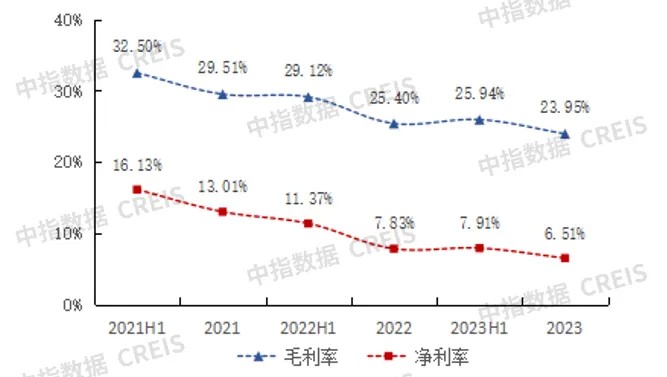
Data Source: Corporate financial reports, China Index Research Institute
Currently, the net profit margin of typical leading and third-party physical enterprises in the industry is concentrated between 4% and 10%, with most gross profit margins below 20%. In the short term, the improvement of management and service capabilities of physical enterprises, relying on higher capital investment, is likely to increase operating costs and thereby affect profit margins; in the long term, if the industry lacks new growth highlights and business breakthroughs, the current level of profit margins may become the industry norm.
- Intensified competition in the stock market, escalating internal competition conflicts
By 2024, the Chinese property service market is transitioning from a blue ocean market with both incremental and stock components to a red ocean market dominated by stock with incremental components. The significant changes in the industry market situation have intensified competition and conflicts between enterprises, as well as between enterprises and customers, driving the rapid rise of customer status and amplifying their expectations for high-quality services. At the same time, it forces physical enterprises to break away from incremental thinking, change their business strategies, and pursue high-quality development. In this transformation and development battle with "survival" as the bottom line and "high quality" as the goal, enterprises that are "passive" will accelerate their exit, while independent and well-reputed service-oriented enterprises will occupy advantageous positions in the competition.
As the scarcity of high-quality projects continues to rise, internal competition among physical enterprises is inevitable. In the market expansion process, some enterprises use extreme methods such as "bringing capital" and "low bidding" as standard actions to increase their bidding success rate in the stock competition. Some enterprises implement full-team external expansion and intensify the assessment goals of their external expansion teams. In the service operation process, some enterprises focus on building a high-standard service system to provide 24/7 butler services to homeowners, while others focus on community cultural construction, conducting customized and diversified community activities for a wide range of homeowners. In the internal management process, some enterprises vigorously promote "expansion" through centralized procurement, down to the level of purchasing cleaning cloths for projects through collective orders, taking cost-saving measures to the extreme.
(II) The value center of real estate shifts towards the back end of the industrial chain, significantly enhancing the position of the property service market
- Property services, as the back-end of the real estate industrial chain, have outstanding value in the service economy
In the stock era, the value center of real estate is accelerating its shift towards the back end of the industrial chain, with businesses focusing on real estate transactions, operations, and management becoming the industry's center. The business models, financial models, and valuation systems of related enterprises will be reshaped, with representative companies including property management companies, real estate brokerage companies, and long-term apartment operators. Among them, property management, as a directly related business of real estate developers, has synergies and first-mover advantages Property services have not only become the key to maintaining the vitality of communities but also an important lever for real estate companies to transform and expand profit channels. As the focus of real estate value shifts towards the back end of the industrial chain, the role of property services becomes increasingly prominent. It is not only the cornerstone of maintaining the daily operation of neighborhoods but also the core force in enhancing the quality of life for homeowners and strengthening community cohesion. Excellent property services can not only effectively extend the service life of properties and enhance their value but also build a strong brand barrier through high-quality service experiences, forming unique market competitiveness.
Property service companies, as the bridge directly facing end users, ensure the comfort and safety of living environments by providing meticulous daily maintenance, security monitoring, environmental beautification, facility upgrades, and other basic services. More importantly, with the advancement of technology, the rise of smart property management makes property services more efficient and convenient. Integration of smart homes, online services through community apps, personalized demand forecasting based on big data analysis, etc., greatly enhance the speed and accuracy of services, meeting the modern residents' demand for a convenient lifestyle. Property services are not only an important part of the back end of the real estate industry chain but also play an increasingly prominent role in the service economy.
- The advantages of property services in "essential + long cycle" are highlighted, and the market growth space is promising
Property services run through the entire post-real estate service market, with the consumption characteristics of "essential + long cycle," making it the "protagonist" in the service economy. Although the real estate industry chain is complex, involving land acquisition, planning, design, construction, sales, delivery, operation, etc., the final position is always the service of space, equipment, and people by property companies. Real estate development follows the logic of incremental market, while property services follow the logic of "incremental + stock," even in the case of slowing down in real estate development growth, it is expected that the national property management scale will still reach 315 billion square meters by 2025.
Chart: Management area of the property management industry in China from 2017 to 2025 and forecast
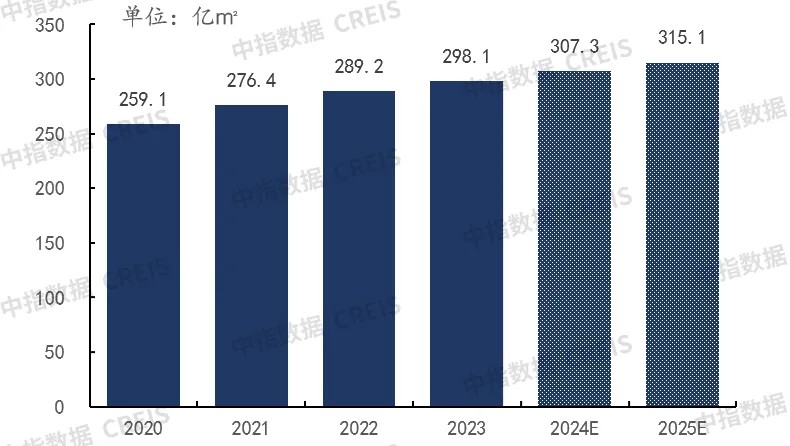
Source: China Real Estate Research Institute
As a professional real estate operation organization, property services, with the support of technology and capital, will further expand their business boundaries and strive for full coverage services from cities to rural areas. Horizontal business expansion: service formats expand from single residential formats to diversified non-residential formats; vertical content expansion: vertical exploration of value-added service content and value space; full-space services: further expansion of full-space services from cities to counties, rural areas.
(III) In the service economy, "quality is king," "good houses + good services" jointly build an ecological closed loop
- The trend of synergy between real estate and property, "good houses + good services" are indispensable
In the real estate development chain, real estate development and property management constitute a complete residential ecological system. Developers build good houses, and property companies provide good services, both of which are indispensable. The deep synergy between real estate and property plays an important role in the modern real estate industry, not only shaping the competitive strength of enterprises in the market but also responding to consumers' inevitable choice for high-quality living environments and personalized service demands Its value is mainly reflected in four main aspects:
Chart: The significance of synergy between real estate and property management
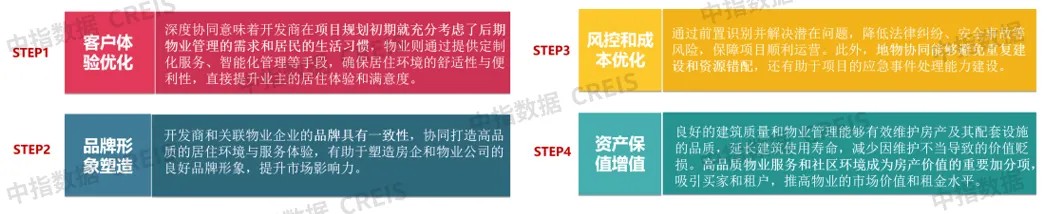
Source: China Real Estate Research Institute
- From a full project lifecycle perspective, the key work and strategies of "real estate-property synergy"
From a full project lifecycle perspective, from the early planning and design, construction, marketing stages to the later delivery and operation, the synergy between real estate and property management (referred to as "real estate-property synergy" below) has different key focuses at different stages of the project. For property management companies, operational and service experience should be adjusted to the front-end design and development stages; for real estate companies, the actual operation in the later stages should be fully considered during the project development stage.
Chart: Content and key work of real estate-property synergy in different stages
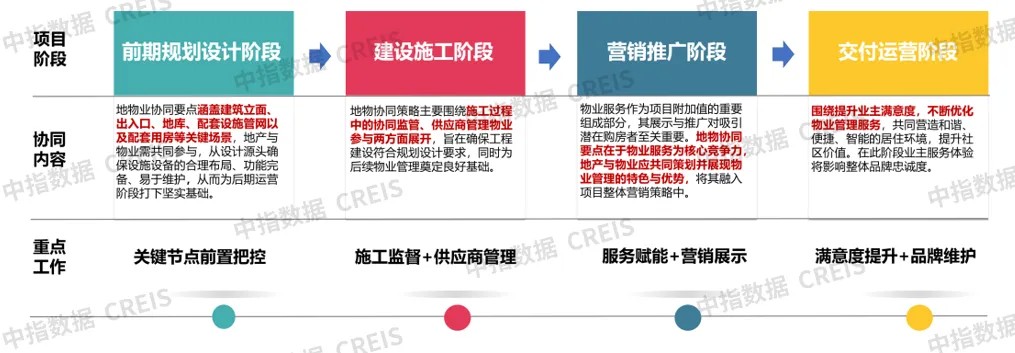
Source: China Real Estate Research Institute
In the early planning and design stage, the key work for property management companies is to control key nodes in advance. During the construction phase, the key work for property management companies is construction supervision + supplier management. In the marketing stage, property services as an important part of the project's added value, its display and promotion are crucial to attracting potential homebuyers. The key work for property management companies in this stage is service empowerment and marketing display. In the delivery and operation stage, the key work for property management companies is to enhance satisfaction and maintain the brand.
(IV) Structural opportunities still exist in diversified businesses, and enterprise capability adaptation is key
- Carry out value-added services that are suitable, and create a "second growth pole" for the enterprise
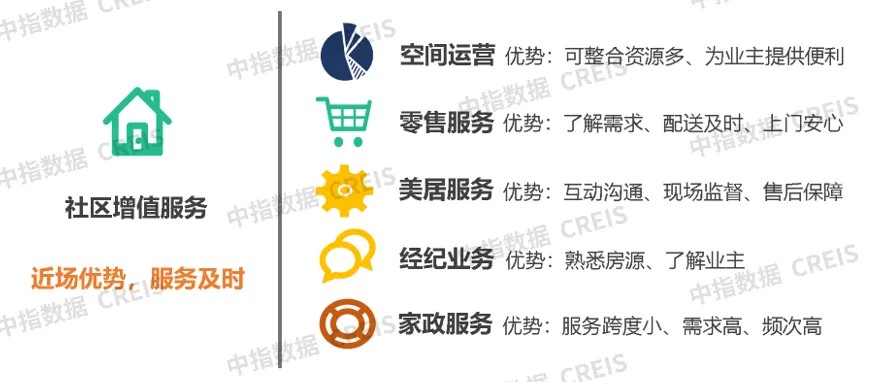
Value-added services deepen and innovate the business model of property management companies, not only expanding the source of income but also reflecting the comprehensive strength and operational level of the enterprise. In the future, property service companies will focus on their "capability circle" when developing value-added services. Due to changes in the external market environment and differences in enterprise operational capabilities, some companies face the issue of having "many but not strong" diversified businesses. Benchmark companies, when carrying out value-added services, pay more attention to the boundaries of their "capability circle": if a new business requires capabilities beyond the circle, caution should be exercised; for ongoing diversified businesses, benchmark companies will also make timely optimization adjustments based on their capabilities and strategic changes, thereby focusing core resources and capabilities on core businesses.
Chart: Main content of property management companies' community value-added services
 Source: China Index Research Institute
In the future, more and more property companies will try to layout value-added services in a "from light to heavy" rhythm. At the current stage, the diversified businesses carried out by domestic property companies basically conform to the "light" commission model, which helps companies quickly scale up in the new track. However, this model also faces obvious development bottlenecks, such as intense market competition and low profit levels. Building self-operating capabilities not only helps companies solidify their core competitiveness and create incremental value but also further opens up development space.
- Focus on the advantageous track of non-residential formats and layout IFM through three types of businesses
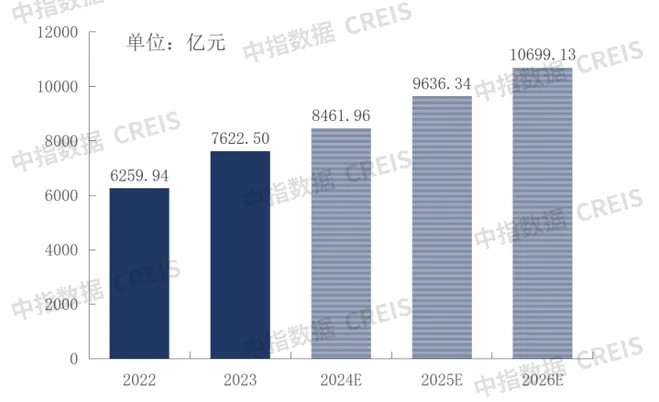
China's huge non-residential property scale lays a broad development space for IFM (Integrated Facility Management) business. Based on the scale of China's non-residential properties, combined with the average property service fee level of various formats, taking into account the premium level and market acceptance of IFM services, in a relatively conservative situation, using three times the property management fee as the average fee standard, the estimated demand scale of China's property management industry IFM services market is calculated through a weighted average method. It is expected to grow from 762.2 billion yuan in 2023 to 1.0699 trillion yuan in 2026, with a compound annual growth rate of approximately 14.07%.
Chart: 2022-2026 China IFM Service Market Size and Forecast
Source: China Index Research Institute
In the process of property companies laying out in the IFM field, two layout models have been basically formed: top-down strategic orientation and bottom-up demand orientation, focusing on three major service contents: group meals, comprehensive services, and facility management. For example, Jinko Service and New Town Joy Service layout group meal business; Zhaoshang Jiyu and Tefa Service focus on facility management; Wanwu Cloud focuses on comprehensive services mainly for Internet headquarters offices.
- The urban service space is vast but faces problems such as low gross profit and difficult collection
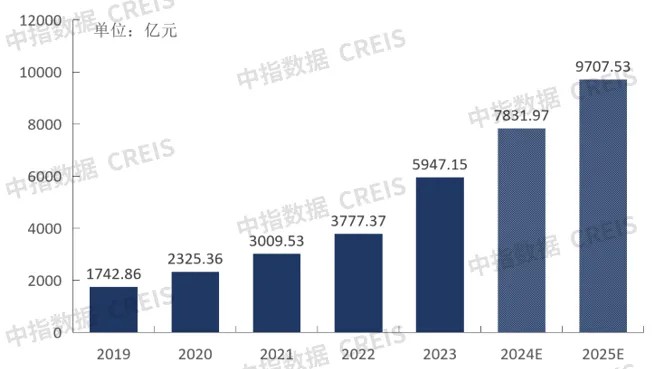
Under the background of refined urban management and the continuous advancement of the "delegating regulation and optimizing services" reform, the urban governance public service market continues to open up, the urban service market space continues to be released, and the market size continues to grow. According to the China Index Research Institute's estimation, by 2023, the market space for property service companies to expand urban services is approximately 594.7 billion yuan. In recent years (2019-2023), the compound annual growth rate has reached 35.91%. It is expected to increase to 970.8 billion yuan by 2025, with a compound annual growth rate of about 27.76% from 2023 to 2025.
Chart: 2019-2025 Property Companies Expanding Urban Service Market Space and Forecast
 Source: China Index Research Institute
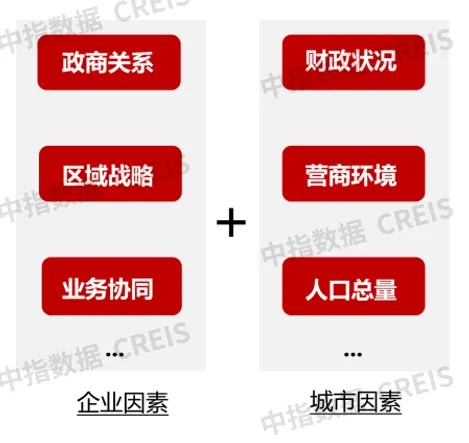
Although property companies are accelerating the implementation of urban service projects, not every region is worth their entry. Some regions face great difficulties in urban management, have tight financial budgets, and entering forcefully may either lead to poor profitability or damage the company's brand reputation. Therefore, when choosing to enter a city, property companies need to consider not only the compatibility of their own resources and business location, such as internal basic conditions like government-business relationships, regional strategies, and business synergy, but also focus on and pay attention to multidimensional indicators of the target city, such as financial conditions, business environment, total population, urban construction, and other external factors.
Image: Factors for companies to consider when entering a target city
Source: China Index Research Institute
Property companies still face some practical issues in the process of carrying out urban service businesses: First, limited service content: currently, it is still mainly focused on municipal environmental sanitation, with a few streets having digital urban management, urban steward "smart platform" services, etc.; Second, business expansion opportunities fall short of expectations: after winning bids for urban service projects, there are very few opportunities for the government to entrust other businesses, making it difficult to expand the business; Third, low profit margins: due to the low gross profit margin of urban service businesses compared to the overall gross profit margin of property companies, urban services still contribute more to revenue than profit at this stage; Fourth, payment collection issues: tight local government budgets and extended payment periods make it difficult for urban service businesses to collect payments.
(V) The industry's technological advancement continues to explore, optimizing the structure of talent demand
- Technological innovation drives enterprise development, enhancing the self-value of employees
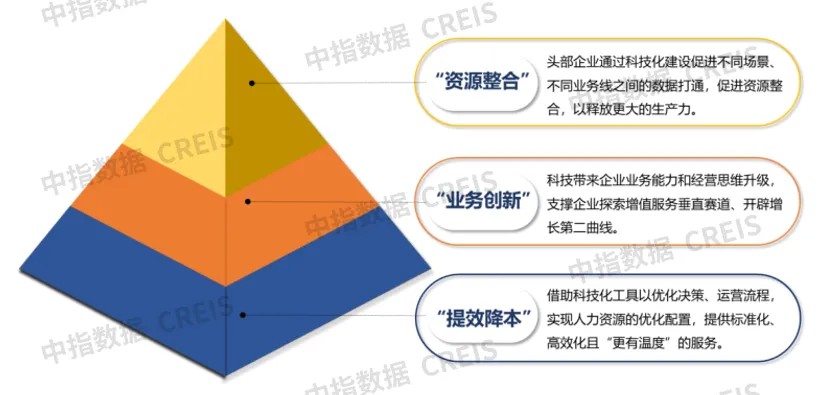
Technological construction is an important option for property companies in the era of industrial internet to reduce costs, increase efficiency, and innovate business. With the widespread penetration of smart technology at the organizational, business, and strategic levels of enterprises, on the one hand, it will drive the innovative development of enterprises from three dimensions: first, technology applications bring about improved operational efficiency for enterprises; second, digital elements bring about the upgrading of business capabilities and management thinking for enterprises; third, the network effects brought about by technological construction promote the integration of enterprise service ecosystem resources; on the other hand, based on smart technology and relying on the unique advantages of being close to "people," "scenes," and "objects," property companies will put forward new requirements for their talent demand and talent structure in the process of pursuing innovative development.
Image: Three dimensions of technological innovation driving the innovative development of property companies
Source: China Index Research Institute
- Diversified talent assurance is a key focus, and compound talents will be more favored
The foundation for enterprise technological innovation and development is talent assurance. Against the backdrop of increasing technological content in the industry and innovative business ecology, benchmark enterprises are actively accelerating the construction of their talent teams, reserving and cultivating more high-quality talents with information technology, intelligence, and innovative management capabilities to drive continuous improvement in enterprise efficiency On the one hand, under the trend of property companies transforming and upgrading into refined and professional service integrators, companies pay more attention to customer experience and market reputation, needing to cultivate professional talents around the needs of owners and the market to drive the continuous improvement of service quality; on the other hand, with innovative technologies represented by AI, IoT, and other cross-industry applications becoming increasingly mature, the innovative development of property companies relies more on composite talents with abilities in innovation, technology, marketing, and management to meet the needs of modern property management and business diversification.
By 2024, property companies have optimized their organizational structure and improved the quality of employees by streamlining the existing team and recruiting more professional talents, accumulating energy for the future development of the enterprise. In terms of educational background, among the employees of the top 100 companies, the proportion of undergraduate and above is 12.16%; the proportion of college diploma holders is 23.15%; and the proportion of high school and below is 64.69%. The average educational level of employees in the top 100 companies continues to rise. On the one hand, the education level of Chinese workers is constantly improving, and the property management industry is also showing a trend of general educational improvement; on the other hand, as the property management industry continues to open up diverse new tracks, more talents with higher education and stronger professionalism are needed; more importantly, due to the deepening development of the property industry in recent years, a group of high-quality talents who understand strategy, management, capital, and technology are needed. In addition, with the further application of intelligent facilities and equipment, the employment of lower-educated grassroots positions has been reduced to some extent.
In addition to traditional positions, there are more and more "emerging" positions in the property management industry, mainly because property service companies are constantly exploring new businesses, whether it is developing community retail, home services, real estate brokerage, elderly care services, or innovative services such as group meals, energy management, urban services, etc., essentially crossing into new professional fields in the property management industry. Developing new businesses across industries is not easy, and a glimpse of the development of value-added services in the industry in recent years reveals this. The biggest advantage of property companies is the "proximity advantage," and the key factor restricting the development of community value-added services is the lack of capabilities in professional fields. The top 100 companies fully recognize the importance of introducing professional talents, have established strict recruitment standards for professional talents, and gradually built talent teams for various business sectors, injecting new impetus into the development and model exploration of new businesses.
As companies increasingly focus on cultivating and introducing professional, high-quality, and composite talents. The property management industry has emerged a group of outstanding professional managers with strong business capabilities, high comprehensive quality, and international perspectives, who, as excellent helmsmen, are achieving mutual success with the industry and enterprises, pursuing win-win outcomes, and may lead the industry's development towards the deep blue.
(VI) Collaborating with national strategies, continuously innovating ESG practices
- Deeply participating in grassroots governance, balancing self-development with social effects
Communities are the nerve endings of the national organizational system, and the logic of community governance profoundly reflects the logic of the national organizational system. As a quasi-public industry serving communities, property management is an important lever for building the country's grassroots governance level. According to the "Opinions of the CPC Central Committee and the State Council on Strengthening the Modernization of the Governance System and Governance Capacity at the Grassroots Level," the goal is to strive to establish, within about 5 years, a system where "Party organizations provide unified leadership, and the government fulfills its responsibilities in accordance with the law." Various organizations actively coordinate and the masses participate extensively, combining self-governance, rule of law, and governance based on virtue at the grassroots level, striving to achieve modernization of grassroots governance systems and capabilities in another 10 years, fully demonstrating the advantages of China's grassroots governance system. Guided by policies, regions across the country are actively exploring the path and model of party building leading community governance participation, and exploring new patterns of property management development.
Property enterprises are increasingly focusing on balancing the relationship between their economic value and social value, implementing industry's high-quality development goals through strategic driving and management innovation. Some property enterprises actively participate in urban renewal projects focusing on the transformation of old communities, carrying out partial renovations, parking lot transformations, installation of elevators, installation of new energy vehicle and electric vehicle charging piles, optimizing waste classification, etc., revitalizing old communities that are dilapidated, poorly managed, and have a relatively poor living environment. This not only improves the quality of community life for residents but also enhances the effectiveness of grassroots social governance. Some property enterprises respond to the national call to build beautiful countryside, actively participate in poverty alleviation through consumption and education, beautify the ecology, promote rural industrial development, and use practical actions to address the sentiment of homesickness.
- Building green properties and pursuing sustainable development
Enterprises are increasingly focusing on building sustainable development capabilities. From a time perspective, the construction of a property project generally only takes a few years, but the later property services may span decades; from a value perspective, compared to the construction costs and operating costs generated around property projects, the former are mostly one-time investments by the development unit, with a relatively fixed scale and small price fluctuations, while the latter has greater value elasticity. Therefore, in the long-term, high-value property service process, how to achieve low-carbon, green, and sustainable development goals is an important issue that property enterprises face in their development.
Green property is an important direction for the industry's future development. Benchmark property enterprises, to meet their own ESG construction and development needs, continue to increase their efforts in green property construction. Enterprises such as Vanke Cloud, CR Vanguard Living, and China Overseas Property have already listed green property management as an important topic for corporate ESG construction, continuously strengthening corporate green operational management; Poly Property, and Country Garden Life Group continue to increase their research and development efforts in green technology to support the implementation of sustainable development goals.
Buildings, communities, and cities will be the three core scenes for property enterprises to develop green properties and implement low-carbon environmental protection. Around the "building" scene, property enterprises must focus on energy management, carry out energy-saving transformation of building infrastructure, including lighting systems, air conditioning, and elevator equipment, fully utilize renewable energy, improve facility equipment energy efficiency, and achieve the unity of environmental and economic benefits; around the "community" scene, property enterprises must focus on service implementation, including waste classification, waste recycling, energy conservation, etc.; around the "city" scene, property enterprises must focus on promoting concepts, extending the green operational concepts of corporate communities to urban services, and inviting more social entities to participate in energy conservation and emission reduction practices.
Energy management will be a key link for property enterprises to implement green, low-carbon, environmental protection, and achieve sustainable development. Currently, the technologies applied by benchmark property enterprises in the energy management sector mainly include: building physical environment systems, envelope structure systems, refrigeration and air conditioning systems, heating systems, renewable energy utilization systems, green lighting and intelligent control systems, electrical energy-saving systems, and other energy management systems Green and low-carbon management in the supply chain will be a key lever for property companies to achieve their sustainable development goals. Property services are highly correlated with end energy consumption and resource utilization, with significant emission reduction potential. In the future, property companies can only achieve sustainable development goals by strengthening green and low-carbon management in the supply chain, enhancing their comprehensive capabilities in greening, cleaning, waste sorting, renewable resource recovery, and hazardous waste disposal
