I can't sell foldable screen phones in the county town

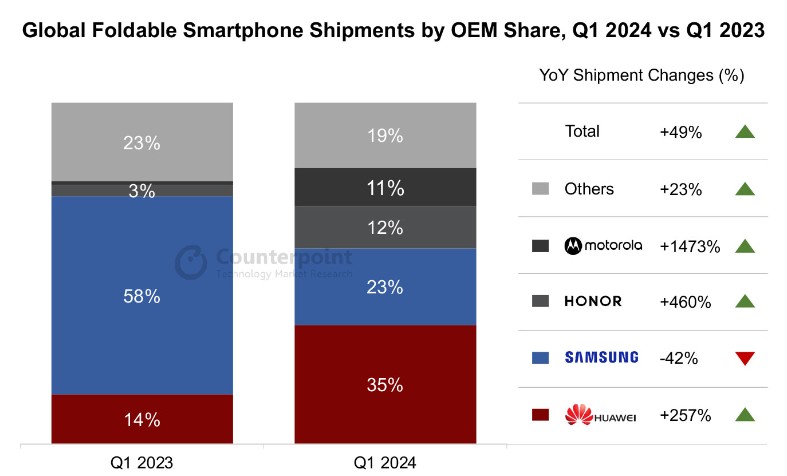
The shipment volume of foldable smartphones from manufacturers such as Huawei, Honor, and Motorola surged, driving a 49% year-on-year growth in the global foldable smartphone market in the first quarter of 2024, reaching the highest growth rate in six quarters. With its strong technological innovation capabilities, Huawei saw a staggering 257% increase in shipment volume, surpassing Samsung to become the manufacturer with the highest market share globally. The Honor Magic V2 became the foldable smartphone with the largest shipment volume in Western Europe, while the Motorola Razr40 became the top model in North America. Currently, the demand for high-end smartphones is still dominated by foldable screen phones, and Huawei and Samsung are set to release new foldable smartphones, which are expected to drive industry order demand upwards

Editor | Yang Bocheng
Caption | IC Photo
Recently, Richard Yu and Dong Yuhui, two top influencers, joined forces, and the strong collision of technology and art sparked a strong response. The online viewers during the live broadcast exceeded 600,000, with over a billion likes, and sales soared to the top of the Douyin e-commerce rankings.
During the nearly two-hour interview, Richard Yu introduced Huawei's breakthroughs in a large number of smartphones and new energy vehicles. In the field of satellite communication, Huawei is the first manufacturer in the industry to completely hide antennas. With its strong technological innovation capabilities, Huawei's foldable screen series has seen a sharp increase in shipments.
According to Counterpoint Research data, relying on the large foldable screen Mate X5 and the small foldable screen Pocket2, Huawei's shipments in Q1 2024 surged by 257%, with a 19% increase in global market share compared to the same period last year, surpassing Samsung and becoming the global leader in shipments.
Not only Huawei, but the Honor Magic V2 has become the largest foldable smartphone in Western Europe, while the Motorola Razr40 has become the top model in North America, with significant increases in global market share. The sharp increase in shipments by manufacturers such as Huawei, Honor, and Motorola has led to a 49% year-on-year growth in the global foldable smartphone market in Q1 2024, marking the highest growth rate in six quarters.

Image Source: Counterpoint Research
Supply chain insiders indicate that the current high-end demand for smartphones is still dominated by foldable screen phones. Samsung has already taken the lead in releasing the new Galaxy Z series, including the Galaxy Z Fold6 and Galaxy Z Flip6. In Q3 this year, Huawei may release the Nova series foldable phones and tri-fold phones, which are expected to drive industry order demand upwards, with overall momentum slightly better than the original base.
Around foldable screen phones, manufacturers are gradually developing two different technological paths. Represented by Honor, manufacturers are focusing on the slim and light route. For example, the Magic V2 reduced the thickness of foldable screen phones to the millimeter era with a body thickness of 9.9mm, while the Magic V3 achieved a thickness of 9.2mm in foldable state, setting a new record for the thinnest inner fold foldable screen.
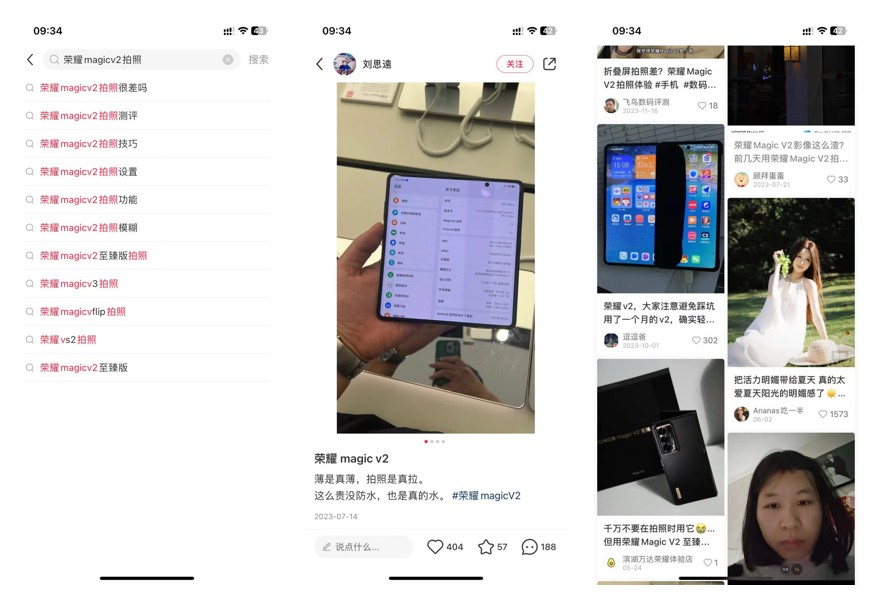
However, the cost of Honor's excessive pursuit of slimness is the lack of some performance. Taking the imaging of the Honor Magic V2 as an example, on the Xiaohongshu platform, there are related search terms such as "Is the imaging of Honor Magic V2 poor?" and "Is the imaging of Honor Magic V2 blurry?" Many Magic V2 users have complained about blurry photos and poor performance

Image Source: Xiaohongshu
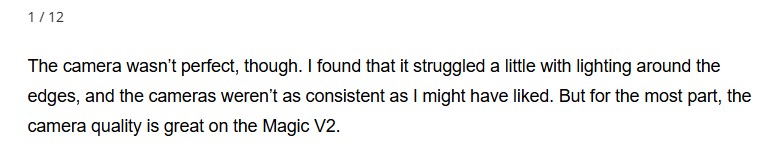
In the overseas market, reviewer Christian de Looper mentioned that although the camera quality of Honor Magic V2 is generally good, it not only has poor edge lighting performance but also fails to reach the level of camera photography.

Image Source: BGR
IDC China's senior analyst Guo Tianxiang pointed out that "thin and light" has become the primary factor affecting consumers' choice of foldable phones. However, if pursuing "thin and light" blindly leads to a decrease in reliability, it will directly impact consumers' long-term choices in the future.
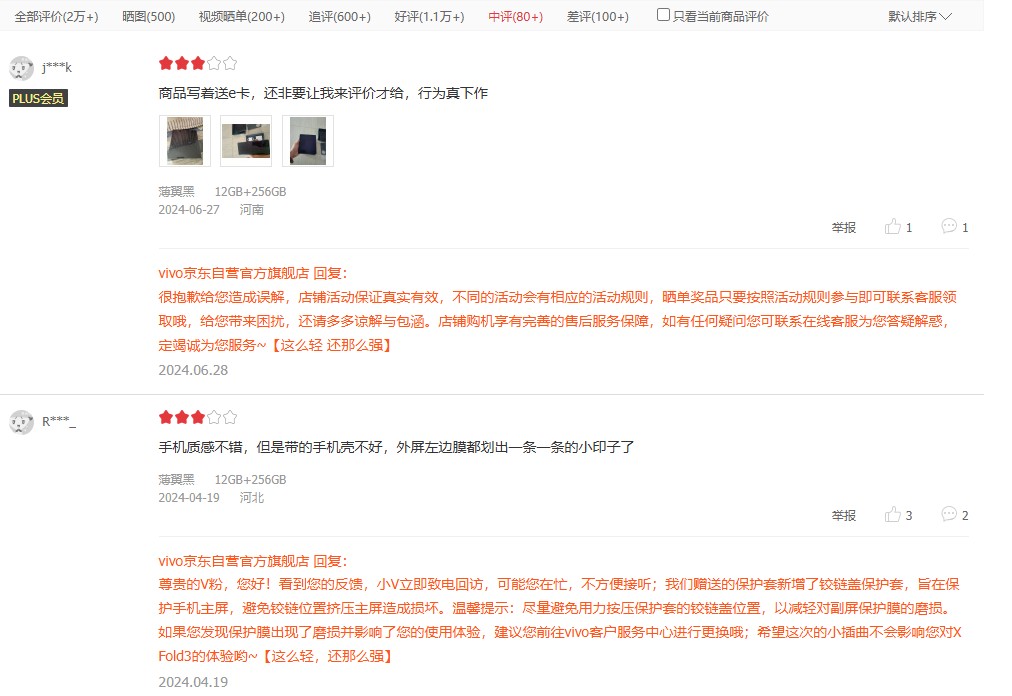
Based on this, manufacturers represented by Xiaomi and OPPO are more focused on imaging rather than thinness. Taking the vivo X Fold3 as an example, although there are over 180 negative reviews on the JD platform, few users complain about the imaging quality of this model.

Image Source: JD
While the two technological paths of manufacturers may seem different, they are essentially "compromise solutions" that cater to reality. Foldable phones require manufacturers to have high technological innovation capabilities, invest high amounts in research and development, and be willing to accept long-term losses. Honor CEO Zhao Ming stated that Honor has accumulated losses of two to three billion yuan in the foldable phone sector.
When foldable phone prices cannot decrease, how will foldable phones, developed over five years, penetrate the markets in county-level cities in China? Can the lower-tier markets contribute more growth to foldable phones?
With these questions in mind, DoNews visited several county-level cities and townships in Fuyang City, Anhui Province, and Zhoukou City, Henan Province, in an attempt to reveal the true situation of foldable phones in the lower-tier markets.
I. Selling ten foldable phone films and cases in three years
After the dust settled from the 2024 National College Entrance Examination, manufacturers seized the market opportunity brought by freshmen purchasing new phones. They launched promotions such as trade-in offers and discounts with the college entrance examination certificate, which indeed boosted foot traffic in offline stores.

Image Source: DoNews
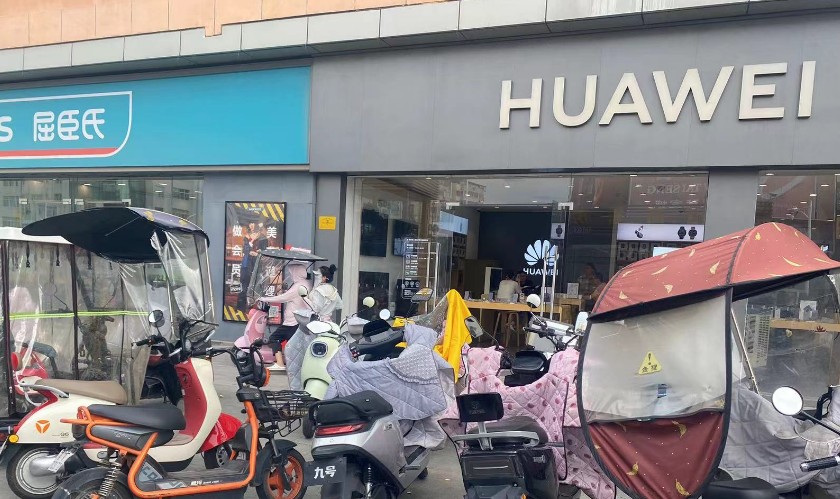
During this wave of student phone purchases, it was observed that in offline stores of manufacturers and cooperating retailers like Dixintong and telecom operators, there was a common phenomenon: after students and their parents listened to the introduction of foldable phones by store staff regarding configurations, weight, camera features, AI, etc., and even tried out the demo models in the store, when they heard the prices of foldable phones ranging from six to seven thousand yuan, or even over ten thousand yuan, they generally chose to look at traditional flat-screen phones instead Store clerks are already accustomed to this situation, often not spending too much time on foldable phones, but rather focusing on recommending traditional flat phones to students and their parents. They are even willing to negotiate with students and parents to facilitate transactions.
Some parents even complained after listening to the clerk's introduction. Consumer Hu Qiang from Linquan County, Anhui Province, told DoNews that a few days ago, after watching the OPPO Find N3 series with his child, even with a configuration of 12GB+512GB, the price was over 8000 yuan. However, such an expensive price does not offer high cost performance.
Firstly, the clerk said that this phone weighs only 245g, but the difference between 245g and 300g is hard to perceive when placed in a pocket or used daily. He feels that apart from the larger screen size when unfolded, there is not much difference between this foldable phone and traditional flat phones.
Secondly, the clerk emphasized how great the camera on this phone is, but he finds that he can still take decent photos with a three to four thousand yuan OPPO model. The key to buying a phone is smooth performance and longevity, without the need to pursue flashy features.
Thirdly, based on the price of the OPPO Find N3, he could buy a mid-range flat phone with good performance and camera for his child, a decent laptop, and a tablet for two to three thousand yuan, which is equivalent to buying three products for the price of one phone. Although his family is not short of money in the local area, they still need to spend money wisely.
Hu Qiang's words actually raise questions that manufacturers need to consider. On one hand, manufacturers focus on making foldable phones lighter in weight under the guise of "thin and light", but can consumers really perceive the difference of a few tens of grams in weight? Similarly, as manufacturers continuously improve the configuration and imaging of flat phones, what is the real difference in imaging between foldable phones and flat phones? Can end consumers perceive it?
On the other hand, whether manufacturers choose to lower prices based on stable market share, clear inventory, or platforms like JD.com and Tmall subsidize prices to compete for market share in the 3C product market, or offline channels lower prices to meet sales KPIs and offer customers a price lower than the manufacturer's official price, this continuous downward pressure on the price of flat phones persists.
Many functions of flat phones are underutilized by consumers, leading to low usage rates. So, what differentiated features do manufacturers need to convince more end consumers to pay a high price for foldable phones?
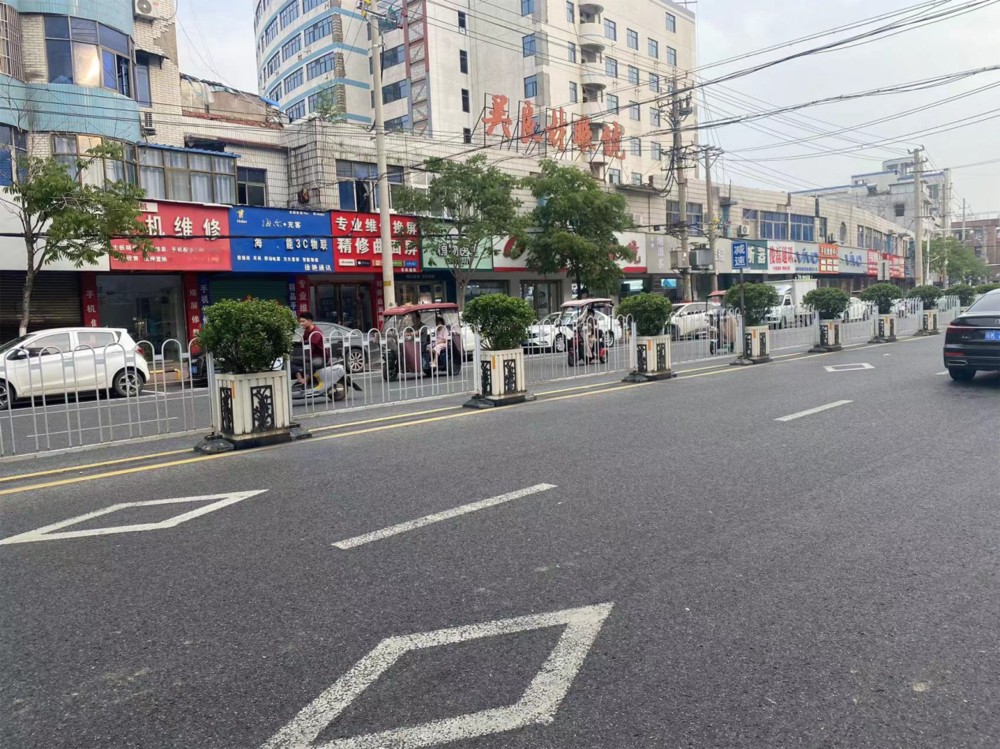
When many consumers in counties make similar choices to Hu Qiang, foldable phones have extremely poor sales in the dozen or so counties we visited. In county streets, parks, large supermarkets, and storefronts, we hardly saw any consumers using foldable phones for payment.

Image Source: DoNews
In many township operator stores, when we asked if they had foldable phones, the answer was always **no one has purchased them, the store does not have stock, and they need to be sourced from other counties or regions **
The foldable screen market in small counties is cold, and the related industry chain business is relatively bleak. Zhao Li, the owner of a mobile phone repair shop in Luyi County, Zhoukou City, Henan Province, said that since 2015, the number of customers who have come to repair foldable screen phones in her store has not exceeded 20 in recent years. Moreover, when these consumers hear the repair price of foldable screen phones, which is often two to three thousand, many choose to give up the repair and continue to buy regular flat-screen phones.
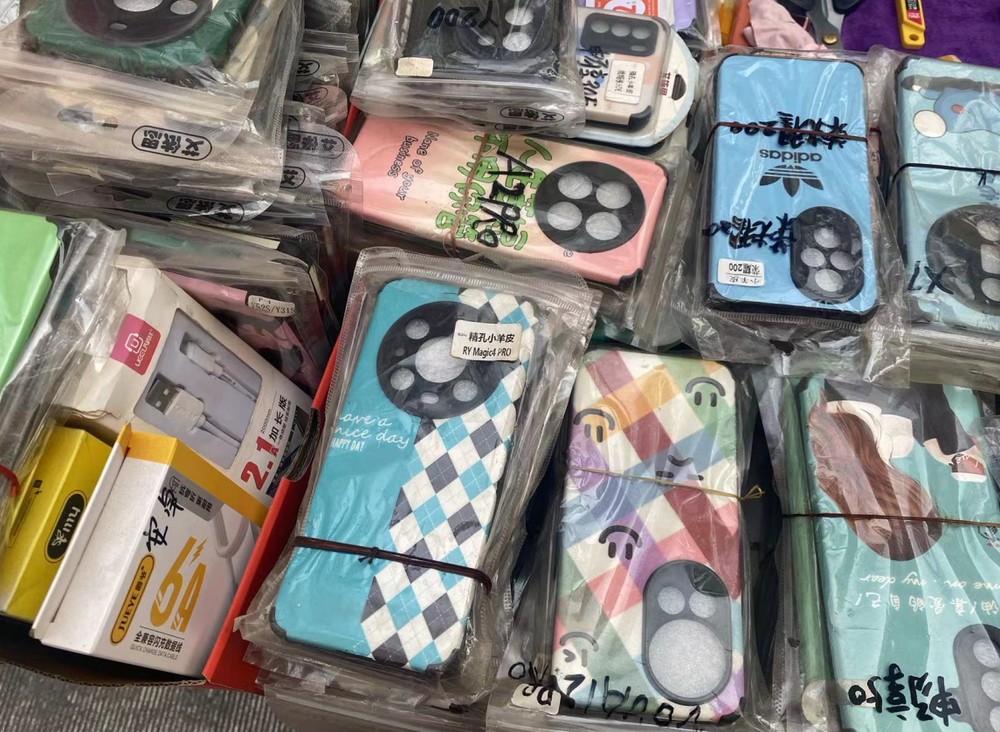
Zhao Li's words were also confirmed by Zhu Ming, the owner of a mobile phone screen protector shop in Funan County, Anhui Province. Zhu Ming told us that he doesn't know how well foldable screens are selling in our county, but he only knows that foldable screen phones are not selling at all in the county.
Since the second half of 2021, Zhu Ming has been selling screen protectors and phone cases on the busy pedestrian street, and in these three years, he has sold tens of thousands of phone cases and applied screen protectors to customers. However, he remembers that the number of customers with foldable screen phones who came to apply screen protectors or buy phone cases does not exceed ten people.

Image Source: DoNews
Perhaps with the standardization of key components such as UTG, hinges, and panels for mass production, as well as the increase in shipments of foldable screen phones, driving down the marginal costs of manufacturers and panel production, there is hope that the cost of foldable screen phones will eventually decrease. However, even with cost reductions, whether the unique social operating rules of small counties can contribute more incrementally to foldable screen phones remains to be seen.
II. Lack of "Seed Users" in Small Counties
In "Jia Wants" by Jia Zhangke, it is written, "Life in small counties, today and tomorrow are no different, a year ago and a year later are still the same... For them, life will no longer have miracles, no possibilities, only a mundane struggle against time."
Behind the "comfortable" life in small counties, on one hand, many counties in the central and western regions of China still rely on traditional industries, with a higher proportion of middle-aged and elderly people, and severe outflow of young people leading to insufficient emerging industries. Limited job opportunities make people in small counties prefer stable civil service jobs.
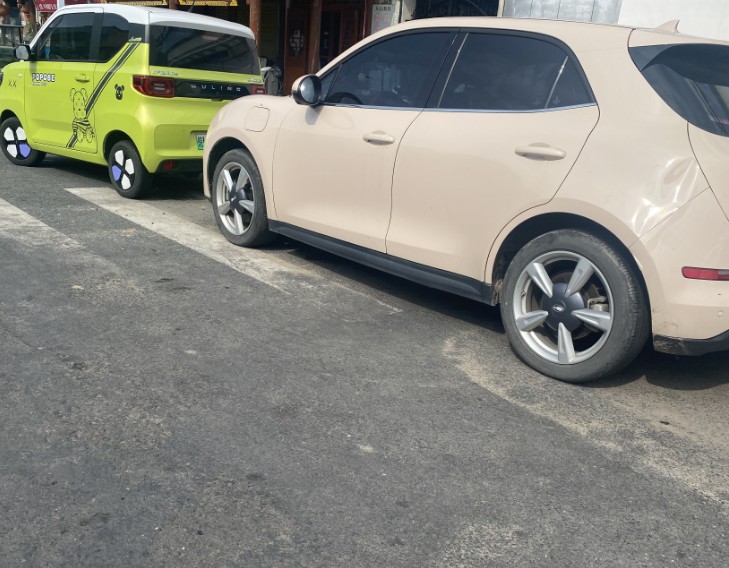
Consumers in small counties have more conservative mindsets, preferring familiar things and being less receptive to new things. Based on this, the new energy vehicle market in small counties is mostly dominated by traditional car companies such as Chery, Wuling Hongguang, and BYD, with new forces having limited penetration.

Image Source: DoNews
On the other hand, the return of young people, the opening of high-speed railways in many counties, and the rapid penetration of short videos represented by Douyin and Kuaishou have broken the information gap between small counties and large cities. However, when purchasing high-priced products such as cars, houses, and foldable screen phones, consumers in small counties prefer to ask for real user experiences from friends and family around them or listen to their opinions, rather than relying on internet platform reviews The development of many emerging things in Qie County basically follows the process of: Manufacturers harvesting the first batch of seed users in the county → Seed users expanding in their own relationship network → Seed users further expanding in their relatives and friends network → Replicating from the county to towns and rural areas → Eventually forming stable sales volume and brand awareness.
The penetration process of large flat-screen phones, WeChat Pay, Douyin group buying, and Jiuhao electric vehicles in the county all conform to this development process. This is not only the reason for the low penetration rate of foldable screen phones in the county currently, but also an important obstacle for future foldable screen phones to increase penetration in the county.
Furthermore, looking deeper, larger foldable screens can facilitate office work. However, on one hand, many consumers in the county are mainly engaged in traditional physical labor, and the management systems and actual office work in many enterprises in the county are not as sophisticated as those in tier-one cities, lacking practical demand for foldable screen phones.
On the other hand, the population in the county system tends to prefer Huawei foldable screen phones. Not only the population within the system, but also according to salesperson Li Na from a mobile phone store in Taihe County, Anhui Province, when local bosses in their forties come to the store to buy foldable screens, even though the staff may recommend OV, Honor related foldable screen phones, and these models are also in stock, these bosses often still choose the Huawei foldable screen series.
Apart from these bosses trusting Huawei technology more, in a sense, Huawei foldable screens are their "identity card" within their circle. In other words, the social attribute of Huawei foldable screens far outweighs the actual usage attribute. However, because these bosses in the county are relatively few among the elite population in the county, the overall shipment volume is limited.
As Li Na said, the county is small, so small that there are always intricate relationships between people, and the county is also big, with all the essential elements necessary for a social system.
In the space between "small" and "big" lies a clear set of operating rules under the familiar system of the county, where consumers in the county are more concerned with face and prefer to demonstrate social status and social identity through high-end products compared to consumers in tier-one cities. This is precisely why new luxury brands find it difficult to penetrate the county, as consumers in the county prefer BBA for deeper reasons.
At the end of the movie "Stop and Go," the protagonist's father once said, many people of our generation have not become the kind of person they want to be. Life is like that, not so good and not so bad, but you get used to it.
When Huawei foldable screens become the social business card of the core high-end population in the county, the challenge faced by other Android brands in truly educating and changing the mindset of this group of people is evident. This is not only a key factor in driving future growth in Huawei foldable screen sales but also a challenge for other manufacturers looking to increase foldable screen shipments in the county.
III. Young people are mostly harvested by Apple
When the brand power of other manufacturers cannot integrate into the high-end population over forty in the county, targeting the "wealthy and leisurely" young people in small towns and the "county ladies" seems to be a wise move for other manufacturers.
Wang Chunguang, Deputy Director of the Institute of Sociology of the Chinese Academy of Social Sciences, once pointed out that the county still retains social forms and lifestyles with rich local characteristics, even in affluent county-level cities in the southern Jiangsu region, where houses and roads are similar to cities, but their internal lifestyles, such as social interactions, dietary habits, living arrangements, and handling of marriage and children issues, still maintain their own characteristics For parents in small towns, their children's marriage is a major event in their lives. Under the pressure of marriage from their parents, women who stay in small towns often get married and have children at an early age. The pressure from family makes them pay more attention to the comprehensive cost-effectiveness of mobile phones and prefer large flat-screen phones.
Manufacturers focus on small foldable screen phones that either emphasize appearance or introduce features such as AI face detection, cute pets, etc., which may appeal to some "wealthy women in small towns". However, as mentioned earlier, the proportion of "wealthy women in small towns" with parents in small towns is already very low, which also affects the shipment volume of small foldable screen phones in small towns.
In addition to young women in small towns, the preference for foldable screens among young men in small towns is also limited. Consumer Hu Yang from Xiangcheng City, Zhoukou City, Henan Province, told us that after seeing many manufacturers' foldable screen phones in July this year, on the one hand, many consumers in small towns still focus on the cost-effectiveness rather than the high-end branding of brands like OPPO, Honor, and Xiaomi. This means that buying an expensive foldable screen phone may not impress others.
On the other hand, when brand strength cannot support a high-end positioning, manufacturers need to have phenomenal features. However, features like slim design, imaging, and larger screens after unfolding seem to have a limited wow factor. With the impact of image technology from apps like Xiaohongshu, AI-generated photos and videos, photography is related to personal skills and aesthetics. Purchasing a foldable screen phone for nearly ten thousand yuan to take photos for social media may not necessarily impress others. Therefore, at the same price point, many consumers ultimately choose to buy iPhone 15 models.
Behind Hu Yang's choice of the iPhone 15 series is the strong penetration of Apple's high-end positioning in the minds of consumers in small towns, as well as the smooth operation of the Apple system and the lack of advertisements leading to strong repurchase rates. As mentioned earlier, the closed and conservative nature of small towns, along with social networks of acquaintances, influence consumers' purchasing decisions, allowing Apple to harvest young consumers.
Zhou Yi, a salesperson at an Apple store in a county in Fuyang City, Anhui Province, told us that on the day the college entrance examination ended on June 8th, a large number of students rushed into the store, and they had to work overtime until 10 p.m. On the day the exam results were released on June 24th and the following days, the store was also full of customers, with some parents directly buying the Apple three-piece set to reward their children.
However, Apple's high-end models are not only attracting "post-05" consumers, but also the "post-10" generation who are growing up with smartphones. Zhang Zihan, a junior high school student from Shenqiu County, Henan Province, asked his parents to buy him an iPhone the day after the high school entrance examination. His parents refused, citing the high price of Apple phones and the distraction from studying in high school.
In desperation, he used his 1800 yuan New Year's money to buy a second-hand iPhone 13. Why insist on buying Apple? Zhang Zihan said that all his classmates use Apple, and if he doesn't, he will appear out of place.
Conclusion:
Behind the artistic and enticing words such as story-like, realistic, nostalgic, and hometown feelings, there is a unique survival rule in small towns in China. Under this set of rules, how foldable screens can launch more targeted strategies and marketing tactics for the county market, how to collaborate with county distributors and channel partners, and accelerate the penetration of foldable screens in the county market are long-term challenges for manufacturers beyond technological advancements Note: At the request of the interviewee, all names in the text are pseudonyms