


After fleeing the motherland

After fleeing his home country, Italian writer ale shares his life and work experiences in China, as well as his insights and confusion about the country. He has held various jobs in China and used writing to document his experiences, exploring personal and cultural identity. Living abroad, ale has realized the meaning of home and has unique perspectives on belonging and happiness. During his six years in China, he has lived like a local and undergone some changes. In Chinese, ale finds that the world seems to be divided into China and foreign countries, and understanding China is often influenced by foreigners' inherent impressions
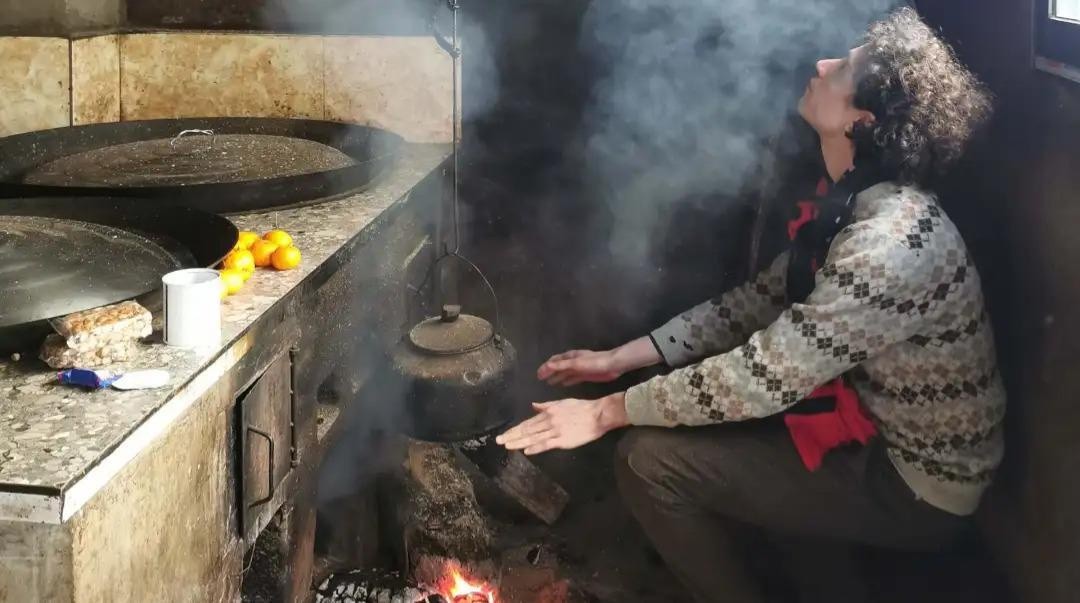
Youthology by wt, edited by oi, featuring ale (photo by Liu Shui)
This article tells the story of Italian writer ale's experiences living and working in China, as well as his insights and confusion during his time in China.
• 💼 ale has worked in various jobs in China, experiencing life in different professions.
• 📚 ale records his experiences in China through writing, exploring personal and cultural identity.
• 🌏 ale finds the meaning of home in his life abroad, with unique perspectives on belonging and happiness.
ale (Chinese name: 亚历), born in 1993, is Italian and writes in Chinese. He has published a new book titled "I Dreamed in Chinese".
In 2014, ale came to China for the first time as a sports journalist at the Youth Olympics in Nanjing; In 2016, he witnessed the prosperity of Chinese cinema, left Italy, came to China to learn Chinese, and was admitted to the directing department of the Beijing Film Academy. Since then, like many other "Beipiao" and "Haipiao", he embarked on a six-year "Zhongpiao" life.
In China, ale has had many jobs: director, actor, model, foreign teacher, writer... From Beijing to Shanghai, Chengdu, Qingdao, Hainan, he has lived like a local and experienced some changes over these six years. If someone were to say that this is a "book about an Italian guy's view of China", he would probably see ale frowning. "I don't know how to explain China to others, I don't want to explain China, I just want to share some experiences with you." But everyone knows what has happened in China in these six years—ale's personal writing has become a collective memory.
Eating and chatting at the coffee shops and restaurants we found on Dianping with ale, it's hard to say who is more familiar with and has a stronger sense of identity towards Beijing, Shanghai, Shenzhen, Chengdu, Anhui, or Hainan. As ale's Chinese proficiency improves, it's even harder to say who has a better grasp of Chinese.
"Foreigner"
"Foreign"—this is the most frequently used word ale has learned in China. After spending a long time in China, he found that in Chinese, the world seems to be divided into China and foreign countries. Outside of China, it's all referred to as "foreign countries". Whether you are Italian or American, you are all foreigners.
Why did you come to China?
Is your hair naturally curly?
Can you eat spicy food?
How much is the price per square meter of housing where you are from?
These are the most common questions that foreigners like ale encounter in China. For a foreigner, this is almost like a required course: getting used to the curious looks of passersby, responding to strangers' curiosity about oneself, and exchanging WeChat with acquaintances. After six years in China, ale has developed some very "Chinese" habits. Once, while eating barbecue with friends, he found himself instinctively standing up and pouring wine for everyone. He had a whim and learned a bit of the "Huangdi Neijing" from a podcast. On certain days, he suddenly worried that there was too much cold air accumulated in his body, so he only drank boiled water. In Beijing, he often went to a blind massage parlor on Zhichun Road for massages and also sought acupuncture from a traditional Chinese medicine practitioner outside the Fourth Ring Road.
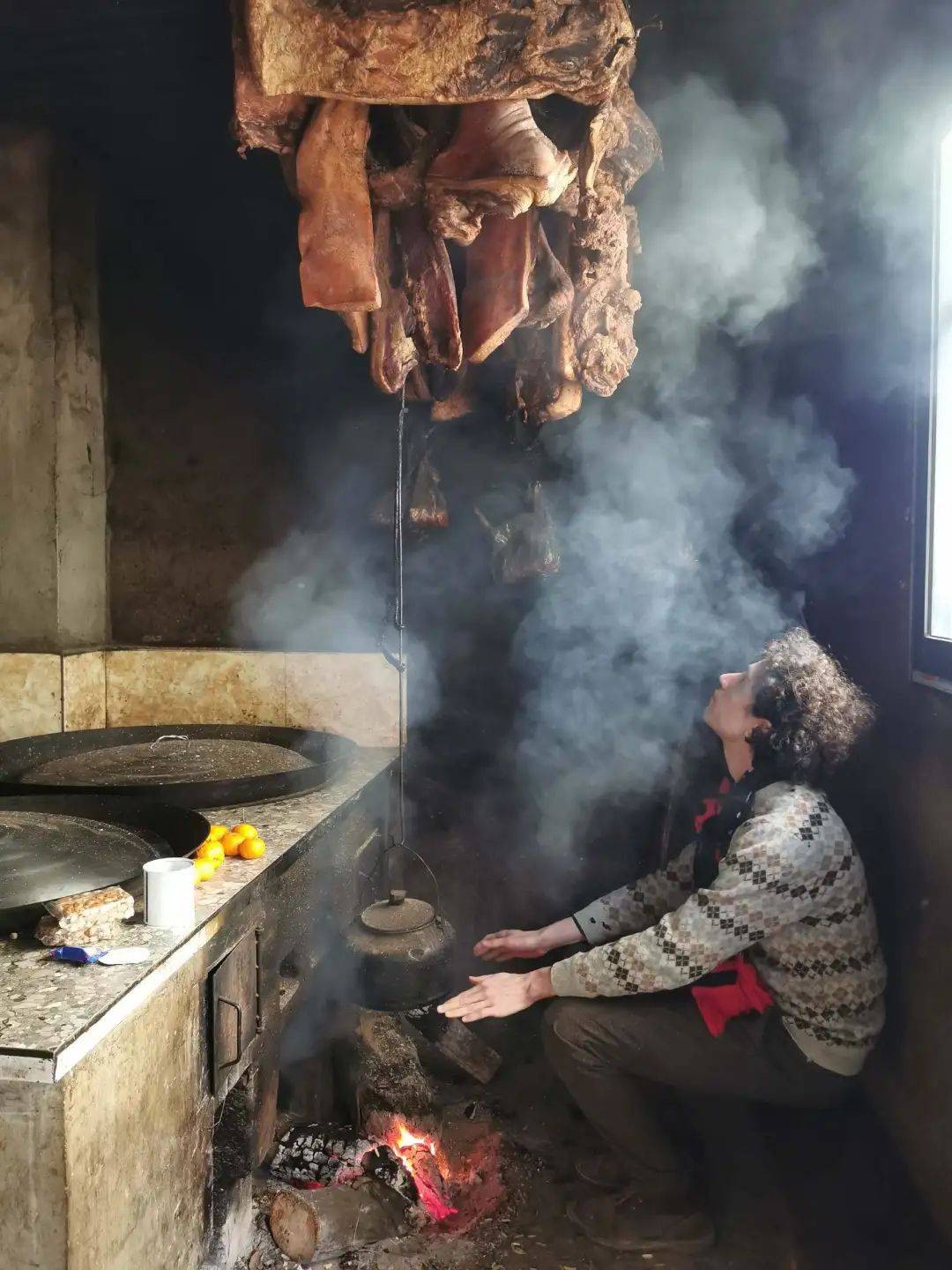
Early 2023 · Wulong, Chongqing (Photo: Liu Shui)
Nevertheless, he still felt troubled by his inability to "truly" integrate.
Contrary to his enthusiasm for being a "global citizen," the reality of foreigner policies was a different story. Every time he rented a place, ale had to go through a special and cumbersome registration process for foreigners living in China, causing many landlords to be unwilling to accommodate him. When looking for accommodation, many hotels did not accept foreigners, and one time, he had to spend the night in a park.
However, upon arriving in China, ale realized that "foreigners" enjoyed many privileges, such as easier access to prestigious schools, better living conditions, and more job opportunities. Hiring foreigners for advertisements was once popular in China, as brands believed it was an effective way to showcase sophistication. For ale, flying thousands of kilometers just to smile in front of a camera was common - someone even specifically brought him from Beijing to Shanghai because they didn't have curly hair models in Shanghai.
In ale's acting career, he played roles from various countries: Mark Zuckerberg, Marco Polo, a Soviet astronaut, and American soldiers. He also received acting invitations for roles simply named "foreigner," implying that as long as you have a white face, anyone can play the role.

In a patriotic movie, ale plays an American soldier
In the expat community, there is a common realization: no matter how many years you spend in China, you will always be considered a foreigner.
Ale knows some people who have been in China for decades, yet they are still denied because they are "foreigners." "Some people will say, 'You're a foreigner, so you wouldn't understand this issue,' even if he is more Beijing than you, born and raised in Beijing, speaking Beijing dialect," ale laughed.
When he was in graduate school, ale played a foreigner in a movie who couldn't speak Chinese. After finally learning some Chinese, he had to pretend not to understand and speak it. In many situations, Chinese people needed him to be a foreigner.
One day after leaving China, ale suddenly found himself using terms like "abroad." Once, when he encountered a Caucasian man at a hotel in Thailand, ale automatically treated him as a foreigner, speaking English to him until he realized the man was speaking Italian Can't be Chinese, nor too much like an Italian
Due to his Italian nationality, ale is often asked, "What do you think of pineapple pizza? What about durian pizza? What is authentic pizza?"
Once in Beijing, a girl he had just had drinks with messaged him, saying he doesn't seem very Italian. ale pondered, "Perhaps she expects me to be more passionate, like spontaneously playing a goodnight song with a guitar at the subway platform?"
Ale feels that he lacks Italian characteristics, not only lacking enough enthusiasm for food, but also not being outgoing enough, not passionate enough, and not dressing in suits often enough. Sometimes he feels insecure about this, as if he doesn't belong in Italy.
The longer ale stays away from Italy, the fewer Italian features he retains—speaking more Chinese, his mother tongue starts to sound like a foreign language—sometimes forgetting words, stumbling, and having a bit of Chinese way of thinking, sounding like a direct translation with a hint of an accent.
In his expat life, ale's few Italian features: a moka pot that can fit into a suitcase (Photo: Liu Shui)
In ale's world, each language has its own personality and function, as for Italian, he jokingly categorizes it as "swearing."
ale's view on languages
ale used to be a staunch supporter of authentic cuisine, crossing half of Beijing for a piece of cheek meat, going door to door in Cambodia to find the right saffron, just to make authentic Italian pasta. But he realized that his idealization of hometown food has become a burden of caution and fear of making mistakes.
To understand what Italian cuisine is all about, ale researched extensively, verifying the history of Italian cuisine. He found that today's Italian cuisine is largely influenced by American culture. Recipes are always evolving, going through various accidents, variables, and taste experiments, before Italian food looks like it does now. Emphasizing the purism of ingredient recipes is not the style of the Italian ancestors, their principle in diet is actually "eating to be full."
Knowing this, ale breathed a sigh of relief and made himself a pasta with doubanjiang.
If someone were to ask ale now what he thinks of pineapple pizza, his answer would be, "It doesn't affect my sleep much."
"Home"
ale has almost decisively left his home in Italy. At 18, in order to live an adult life, he started working early, postponing his undergraduate studies; after graduating from university, he quickly decided to leave his hometown and come to China to start from scratch. On one hand, he feared living with his parents forever and becoming a "mommy's boy," on the other hand, due to his pessimism about the Italian economy, he "decisively and rudely made himself leave home, then told himself not to think about it." As he finally left home, Ale summarized the past decade of wandering as a search for a home.
While roaming around different places, he longed for a completely different life. He lived in cities like Milan, Rome, Beijing, Shanghai... These places gave him a sense of belonging, but also left him confused: where is the real home?
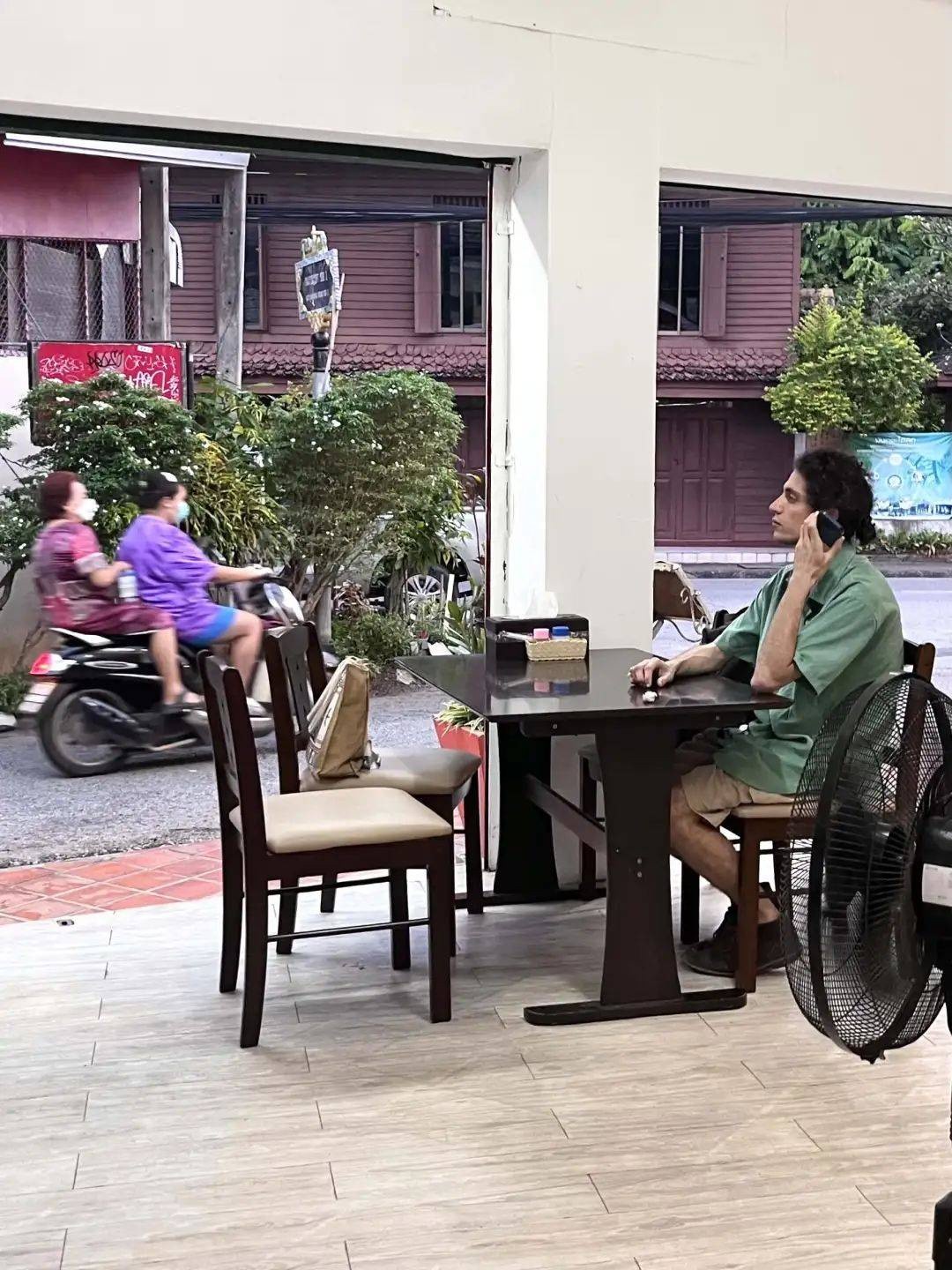
In the summer of 2023, Ale returned to Italy. Initially, everything was wonderful, like a dream come true. However, after getting used to it for a week or two, he realized that the same old problems still existed at home. Returning home was impossible, so Ale had to consider nostalgia as an illusion created by distance.
If Italy is one of Ale's homes, why isn't China?
When we dined and chatted at coffee shops and restaurants in Beijing, Shanghai, Shenzhen, Chengdu, Anhui, and Hainan that we found on Dianping with Ale, it's hard to say who is more familiar with, or has a stronger sense of belonging to, these cities. As Ale's Chinese proficiency improved, it became even harder to determine who had a better grasp of the language. When hosting friends in Italy or treating new friends in Southeast Asia to a meal, Ale often cooked dishes that resembled those of a Chinese host: smashed cucumber, stir-fried pork belly with cabbage, mapo tofu, baijiu...
Compared to his hometown in Italy, while in China, Ale found more resonance with the situations of those around him: a kind of uncertainty similar to his own. For example, on average, young people in China are more mobile than Italians. He saw many people leaving their hometowns, lacking a stable circle of friends, living in isolation in cities with over two million inhabitants. While young people find it easier to achieve economic independence in China than in Italy, many of them only have a small role at work and cannot see the meaning of their efforts, making it difficult to feel their self-worth.
For this reason, while living in Shanghai, Ale hosted a writing club in his rented apartment. Ale felt that young people in big cities were just as lonely as he was, lacking a sense of community. Many people must have felt the same way.
It was the time he felt most like "home" since coming to China. In a small room filled with chairs, sofas, beds, and people, everyone took turns reading their own writings, drinking, eating the cheese and ham prepared by Ale.
In the writing club, many participants did not know each other's professions. Even if someone accidentally revealed their occupation, it was just laughed off as if talking about someone else. There was a guy from Anhui who hardly spoke until Ale tentatively asked him to share his article. After nervously and carefully reading it, he received curiosity and acceptance from everyone. He decided to continue writing, sharing stories about working in Shanghai, his hometown, and high school. Life began to present him with more material for writing, as he paid attention to the conversations of people at nearby tables while having lunch, imagining their lives ale is going to Guangzhou, and a friend from the writing club sent him a guide that would last him for half a year. When they agreed to meet again next week, ale realized that was the home he wanted to return to after his business trip.
Wednesday night reading and writing club. The person holding a tablet in the lower left corner hosting the event is ale, talking about "Ancient Chinese Bloggers" (Illustrator: Zhuo Liu).
After more than a year outside of China, he missed many things: riding a bicycle on Fuxing Middle Road in Shanghai; barbecuing and listening to everyone boast after finishing shooting or discussing scripts; playing football with friends in Chaoyang Park; the wontons and hot pot he had eaten; and meeting new people, chatting for a long time, and understanding each other's experiences.
After staying in China for a long time, the word "overseas" became more and more fluent; even when abroad, he still opened Ctrip; inputting Chinese characters into Google Translate; not liking to order dishes separately when eating out.
Some nostalgia for China—similar to the feeling of homesickness—is also evoked during the journey. During the Mid-Autumn Festival in Georgia, many Russian and Ukrainian people sought refuge, and ale stayed in his room without going out, feeling a bit emo about not having mooncakes for the Mid-Autumn Festival, although he didn't have the habit of eating mooncakes before and felt that he might have exaggerated his emotions. He still opened a video wishing everyone a happy Mid-Autumn Festival on Bilibili to create an atmosphere.
Returning to China in 2024, ale wrote:
"As someone who has lived in China for six years, now going to the visa center to apply for a one-month visa, I feel like Puyi returning to the Forbidden City in the movie 'The Last Emperor' and having to buy a ticket."
Writing for oneself
On social media, foreigners can easily monetize their traffic through several shortcuts: praising China, making a fool of themselves with machine-translated Chinese (such as "The weather in Hangzhou makes me wet and juicy"), analyzing cultural differences, and adding a sentence like "city not city" at the end.
There are unspoken shortcuts for foreigners to monetize in China. But ale doesn't really want to make money this way. Recently, ale opened a Xiaohongshu account, but didn't operate it much, so it was lukewarm. When I mentioned the possibility of becoming a full-time blogger on Xiaohongshu, he shrugged, "It's easy to be manipulated by it, it will play you! It prevents you from earning traffic, making you feel inferior for not having traffic, when in fact it's manipulating you."
"This is just like being a cow or a horse!" ale used the vocabulary I taught him half an hour ago. He knows that certain types of content will definitely get a lot of traffic. He has seen compatriots on Xiaohongshu and Dianping, some busy identifying which Italian restaurant is the most authentic, some exaggerating gestures, magnifying people's stereotypical impressions of Italians. There was a classmate who once spat out a not authentic enough plate of spaghetti like he was poisoned in a short video. ale thinks this is simply clownish. He now only wants to write, to write full-time, and hopes that writing can truly support himself - in his view, attracting real fans is more important than being pushed by unknown traffic every day. He is unwilling to film war movies just because of his skin color. "Being able to make a living by writing would make me feel more at ease, as if I can rely on my own abilities, not my identity."
In 2024, his new book will be published.
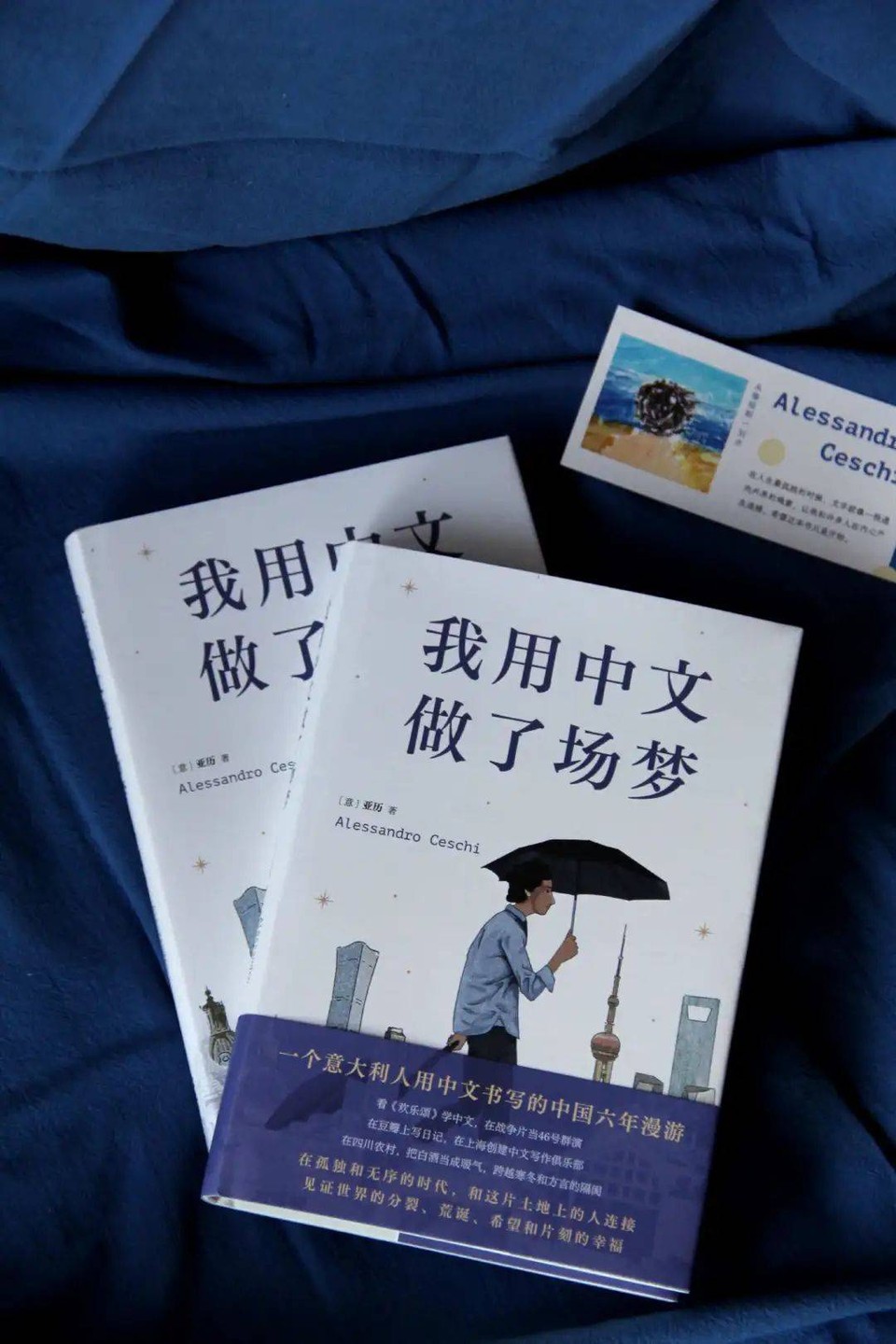
"I Dreamed in Chinese", by Alessandro Ceschi, published by Wen Hui Publishing House, 2024 (Photo: Zhi Chu)
Before the new book is published, Ale starts having nightmares about negative reviews. After having a drink, he mentioned feeling a bit afraid of being cyberbullied, worried about being labeled, and rumors being spread about him. He knows this fear is irrational, like parents suffering from separation anxiety after their children leave home, he advises himself to learn to separate from the new book, let it live its own life, and not worry anymore. But he still can't help but care. Before giving a speech, he was afraid of messing everything up and even decided to give up at one point.
He paused, half jokingly and half seriously, saying that he was already a bit unhappy after seeing a four-star rating on Douban.
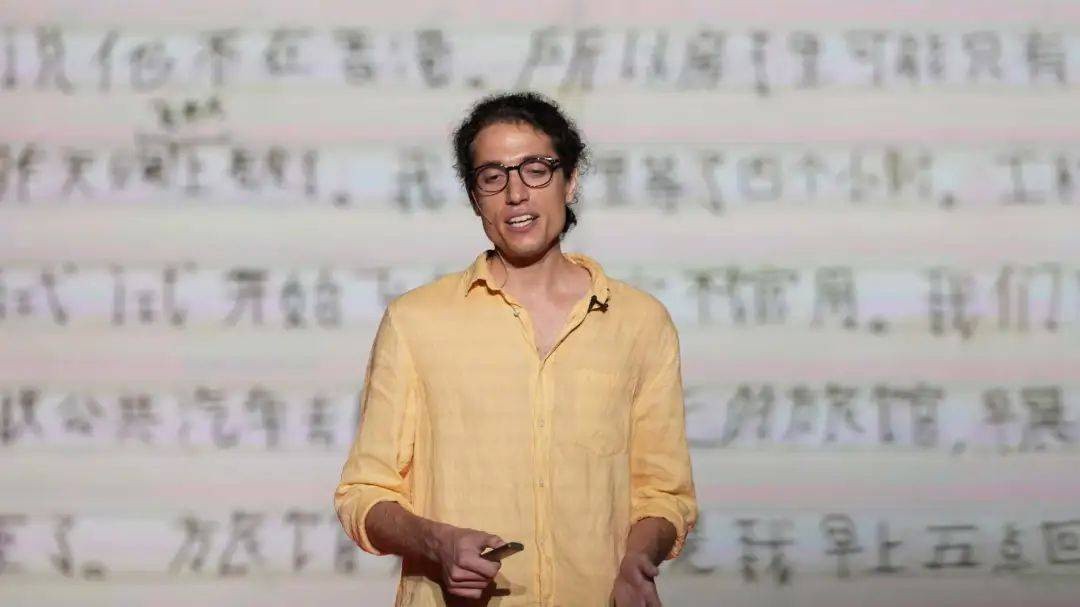
Ale giving a speech (Photo: Lin Nuo)
A foreigner writing a book about China in Chinese is easily categorized as a "foreigner observing China" book. Ale is starting to be compared with the American non-fiction author He Wei, who also "writes about China."
During an interview, when discussing the topic of "how to view Chinese youth," he asked for a break to go to the restroom. When he came back two minutes later, he had clearly washed his face, "not used to such macro topics." A few days later, he told me that he had been continuously asked this question these days, gradually understanding the demands of the Chinese media on him.
However, understanding China from an external perspective, understanding the faces of Chinese youth, these big questions that people vaguely expect, are not Ale's interests.
"I don't know how to explain China to others, and I don't want to explain China," Ale chuckled.
"I just want to share some experiences with you."
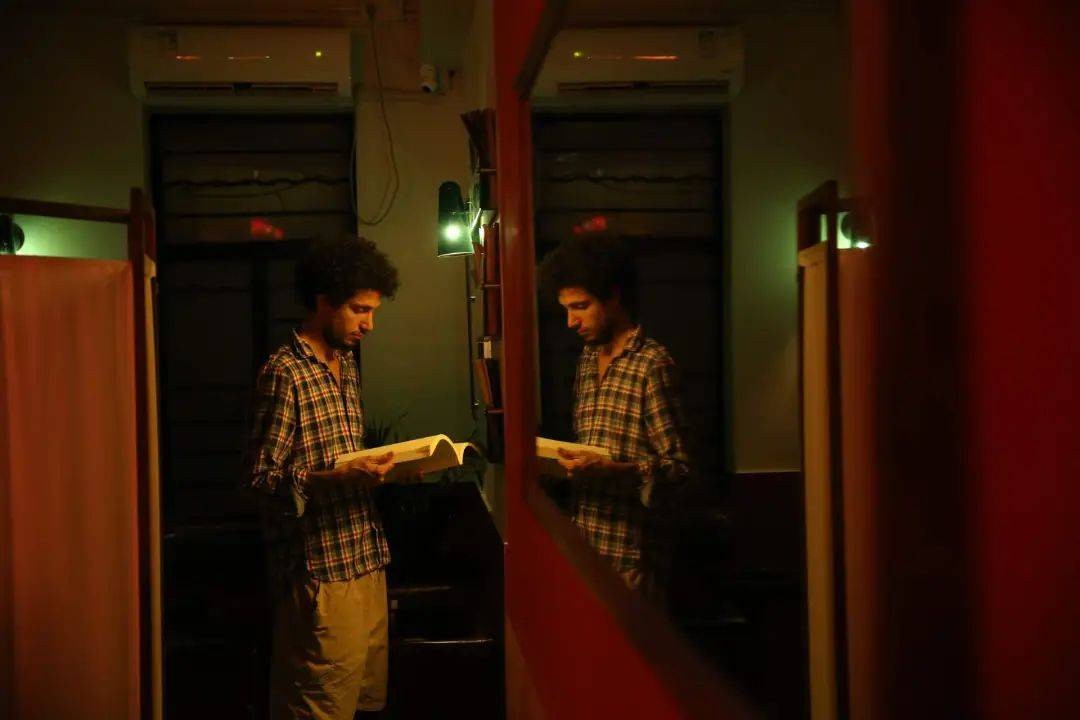
Photo: Jin Sui
In China, he spent the most struggling years - his hometown is long gone, unsure of where the future will be, changing one job after another, feeling uninspired, and finally deciding to turn his interests into work - but this is still a risk. In Ale's words, these are experiences as a "person," not as a "foreign writer." "Being a foreigner is a factor, but it is not the main theme of this book
"
Rather than portraying an objective and real China, **he is more interested in people in various life situations.**
A Swiss media once commissioned him to write an article about the Chinese economic situation. He wrote three stories, one of which was about a masseuse in Fuyang. To attract more customers during the low consumer demand period of the epidemic, the masseuse would bring a folding chair from the massage parlor to the roadside after work, charging only 20 yuan for half an hour.
He documented various characters: a young security guard who wanted to take the entrance exam for Peking University, to whom he sent 62 articles about Tsinghua and Peking University in a row; a businessman he met because of a breakfast, and later they spent the Chinese New Year together; a Chinese teacher who was refused as an apprentice by a rude diplomat. He wrote about Chinese high school students he taught who liked Japanese animation, loved watching videos of Bi Dao on Bilibili, and often dreamed of exams, homework, and school.
Once a reader met him and slightly disappointedly complained that the person in real life was not as vibrant as in the articles. Ale said, **the one who is actually writing is another self. "If I were a cheerful and outspoken person, I might not be a writer."** Ale sees himself as a repressed person, seemingly watertight on the surface, but with a lot of inner activity.
After coming to China, Ale began to write intensively during the epidemic. He wrote about the Beijing Film Academy in the early stages of the epidemic, his experiences of being isolated and wandering in various places, and the alleys of Shanghai under lockdown. He said writing saved him.
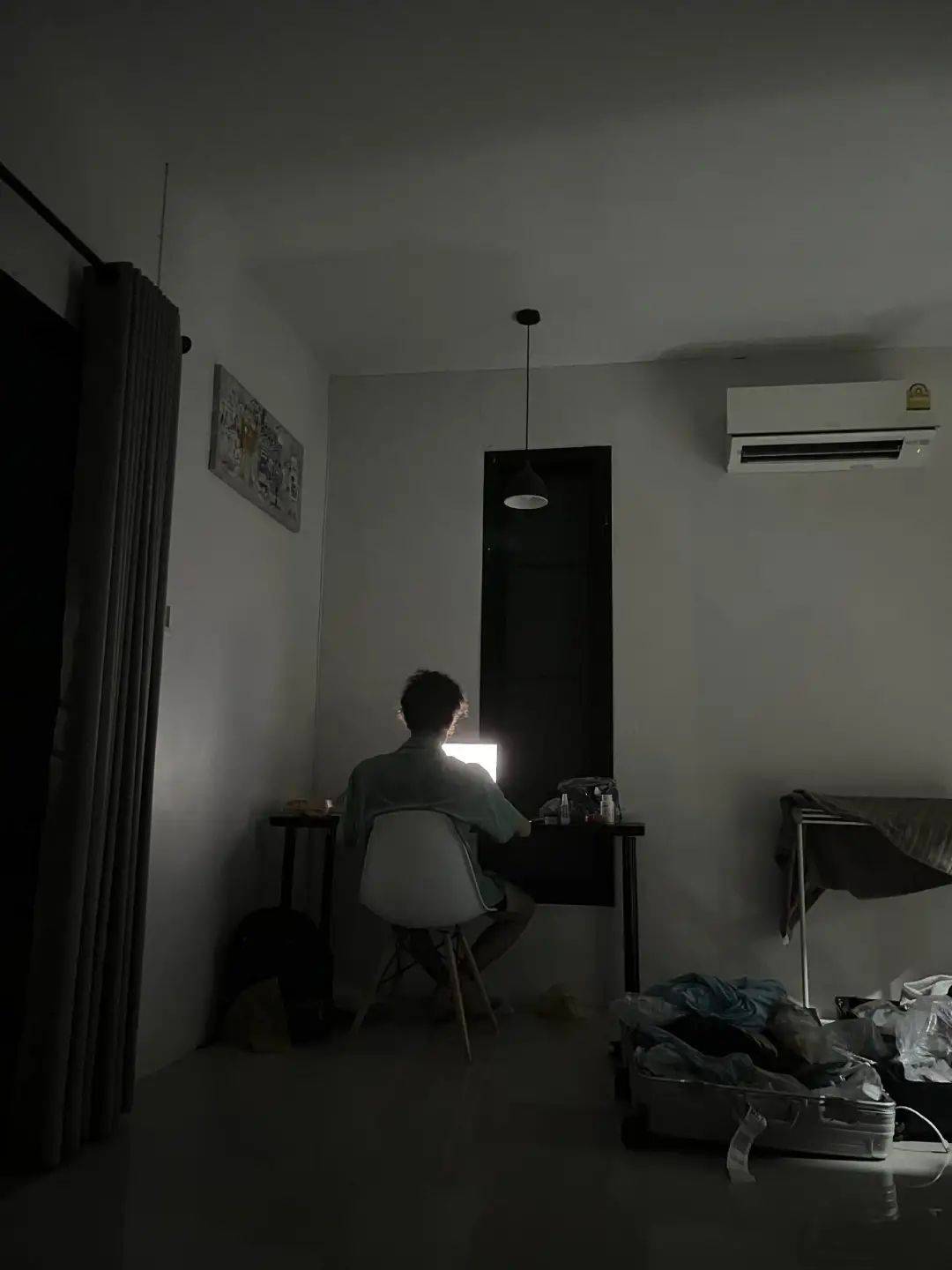
Photography: Liu Shui
In 2022, Ale lived in a pavilion room in an old alley in downtown Shanghai. In early April, he would cook some leftover rice and eat it with frozen meat from the refrigerator, which was left over from impulsive Christmas consumption the previous year and unexpectedly became a lifesaver. However, one time, because the rice he cooked was too hard, it broke his tooth.
At that time, whether Chinese or foreigners, people of all ages were discussing eggs, their stocks and prices touching their hearts - the more eggs, the more secure they felt. Ale served as a group leader in the community, purchasing wine for residents of three adjacent neighborhoods. On a rainy night, bottles of wine were sent out from the narrow gap under the iron gate and the hole where cats were usually fed. The people handing over the wine couldn't see each other's faces, the recipients took the wine, quickly said thank you, and ran back home.
In a group buying chat, Ale listlessly listed his wish list: olive oil, Parmesan, mozzarella, canned tomatoes, Brie cheese... But few of the lists provided by others could actually be fulfilled. Later, the community issued a "List of Essential Items" to regulate group purchases, limiting the purchase of only apples and oranges in the fruit category.
At that time, Ale wrote: Shanghai felt like a faded dream.
On June 30, 2024, more than two years after the epidemic in Shanghai, about 200 meters from his residence at the time, a gathering of about a dozen readers was held. In a damp tavern on a rainy day, readers reminisced about nucleic acid tests and travel codes through Ale's articles.
Soon everyone found that the memories of that period were unconsciously and intentionally fading away. Some felt guilty for forgetting, but discussions eased that guilt - just like what ale believed, revealing the truth is harmless. Private writing has turned into a collective memory.
"Write something related to yourself, and others will be attracted." ale said.
ale, what do you think it takes to be happy?
Living abroad is not always glamorous, ale's life is full of surprises.
In his first month in Shanghai, he couldn't find a job and was too afraid to rent a place, so he spent a month lying on the top bunk in a youth hostel brushing the actor and model WeChat group. He didn't expect any good news, and when he got up, he hit his head on the wooden board, causing a two-centimeter cut. During the examination and stitching, he passed out due to nervousness.
There were many experiences like this, such as:
Being touched on the back by the landlord while viewing an apartment in Shanghai and fleeing in panic;
Since many hotels do not accommodate foreigners, having to spend the night on children's facilities in a park;
After translating 43 episodes of a script for a film crew, suddenly being told that the translation was no longer needed, all the work was in vain.
In high school, ale believed in the ancient Roman saying: "Homo faber fortune suae" (Man is the creator of his own destiny), but in reality, too much uncertainty gradually led him to the opposite of this saying - a proverb from ancient China: "Go with the flow."
There were many misfortunes, but sometimes luck also struck. By going with the flow, he became known to the public and wrote a new book: ale met a girl on Tinder in Beijing who introduced him to a journalist. After the interview and publication, he received an invitation from the public account "Positive Connection" to contribute, and on the same day the article was published, a publishing house approached him with a book writing invitation.
After leaving the Beijing Film Academy at the age of 27, ale has been in a state of living abroad, the mobility fascinated him, but also brought a kind of dizziness: leaving familiar places made him sad; in other countries, constantly applying for visas, finding accommodation, converting prices of goods, and communicating with translation software gradually made him numb. Occasionally, looking back, the stable lives of others also made him feel dazed: others have fixed roles, while he is like an extra, acting out whatever script is given each day.
Once in Chengdu, ale and his friends drank and chatted until dawn. He couldn't help but think how nice it would be if this were his usual life. But he also knew that repetition would make him bored, which is even harder to bear.
Perhaps sensing that this feeling would continue to appear, among the many Chinese idioms he had learned, ale chose "take it step by step" as a way of life - not thinking too much about controlling life, instead, it reduces anxiety. He usually plans his life for two to three months, sometimes not even knowing where he will be a week later.
After turning 30, will ale experience age anxiety?
In his column, he wrote: "I have long dispelled the charm of being thirty, realizing that an age starting with three does not automatically endow a person with extraordinary wisdom and composure. Not to mention turning thirty, a few years ago, my fantasies about being forty were shattered: one night on a shoot, a very respected senior approached me: 'ale, what do you think it takes to be happy? ' I was twenty-seven at the time, and he was forty-four. His question seemed like a prophecy from the future: "When I turn forty, will I still be as lost, searching for direction day by day? Then what about thirty?"
As an adult, ale has had various jobs: journalist, director, actor, model, foreign teacher, writer... He noticed in other foreigners that many people's lives seemed to have stagnated - work, play football, drink, get paid, travel abroad once or twice a year... People can stay forever young, but day by day, it's easy to lose motivation, make no progress, and after a decade, not know what they've been doing.
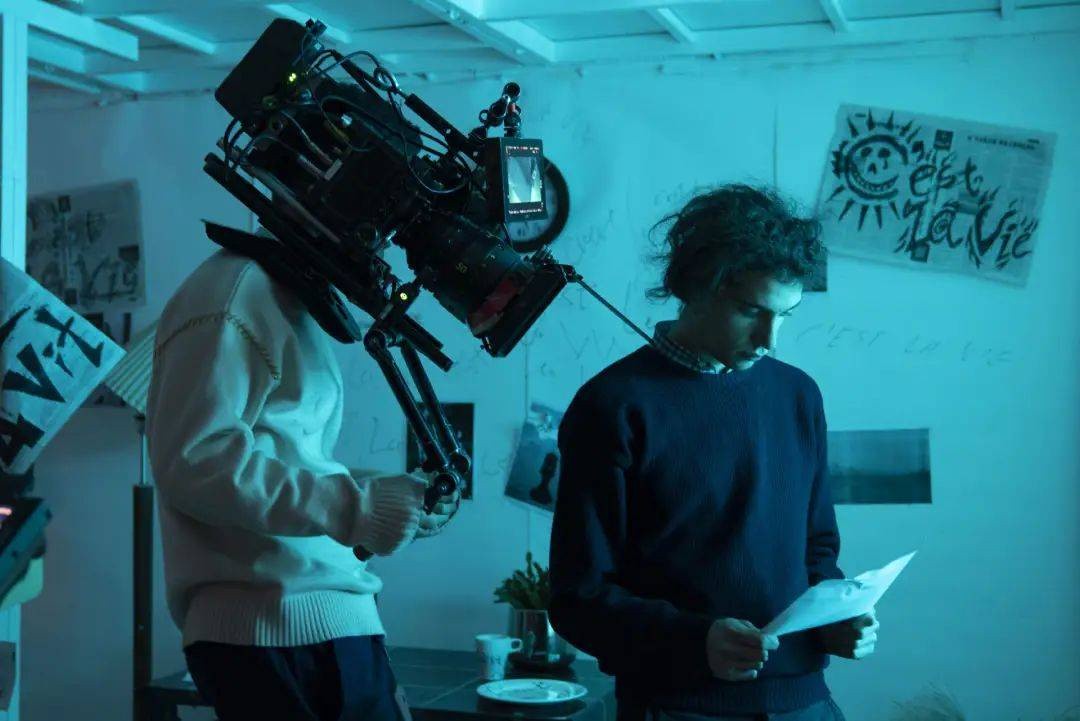
ale's MV work photo
Returning to China this time, ale heard the phrase he heard the most was "the overall environment is not good" - this explanation seemed to cover all difficulties, a bit too much like a panacea. A few years ago in Beijing, he was surprised to find that many highly educated young people believed in tarot cards. In ale's impression, in Italy, this was a hotline fortune-telling activity for middle-aged women on TV shows, basically equivalent to superstition - perhaps young Chinese people need more certainty.
But ale didn't offer any advice because it seemed like "easy for someone else to say." While staying in Anhui, his girlfriend Liu Shui's hometown (also his editor), ale found that everyone pursued stable jobs, almost everyone had a job, living unit by unit. He joined the circle of the tax bureau to play football. A friend of Liu Shui recently left the construction industry to become a prison guard.
But ale still didn't want to have a job.
At the age of 30, after three years of mental fatigue, ale, who had just received a contract from a publishing company, decided to go out with Liu Shui. The column that was supposed to provide ale with a significant source of income currently has less than 70 subscribers, making his decision seem a bit whimsical. But it's okay, after the new book is published, money might come, "let it be." Two suitcases, three bags were all they had, they wore slippers and slightly wrinkled T-shirts, constantly moving between urban and rural areas, they traveled through Thailand, Cambodia, Turkey, Armenia, Georgia, Nepal, Indonesia, becoming "world nomads" completely.
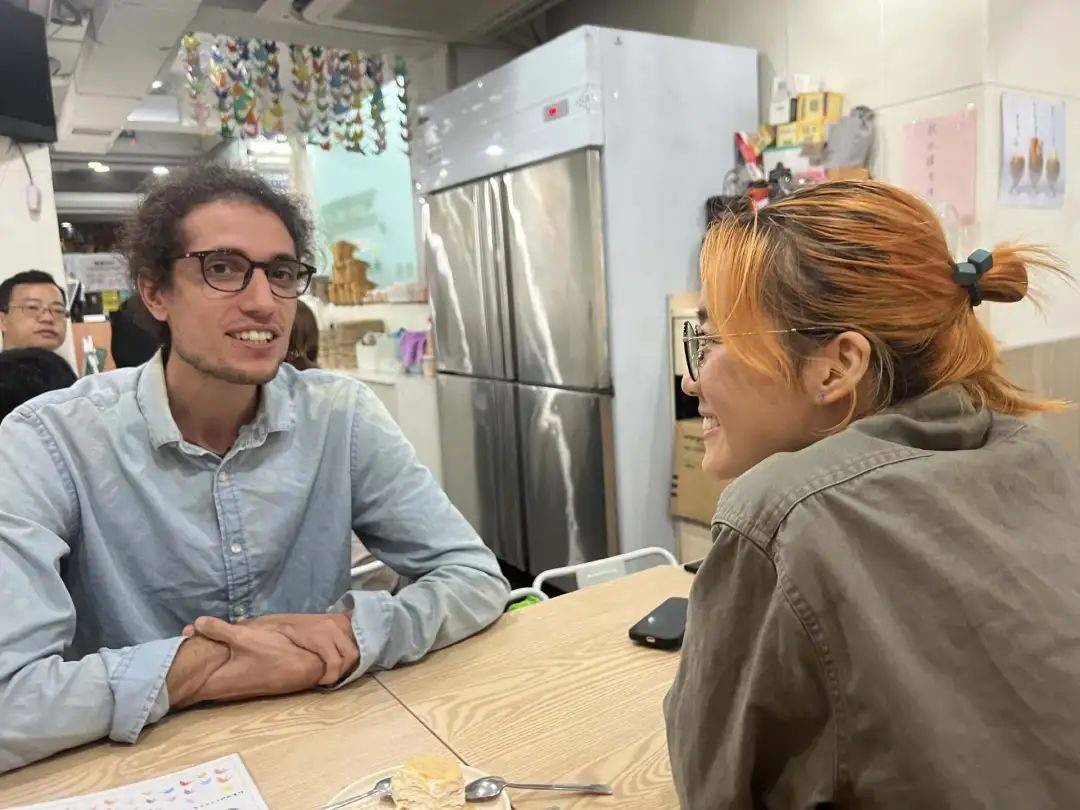
ale and Liu Shui
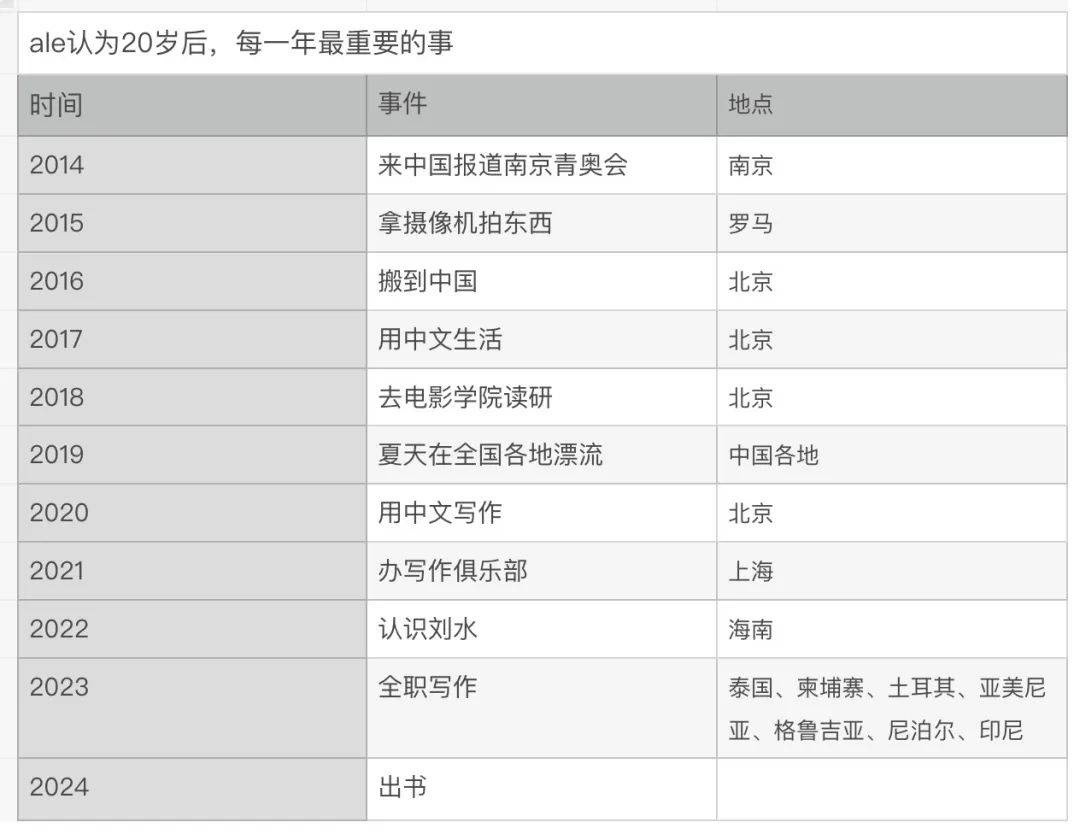
Now, he doesn't want to start from scratch like before, he wants to embrace all experiences and make them a complete self. ale likes the concept advocated in improvisational performances: "yes, and...": say "yes" to the current situation and continue the act (Photos provided by the interviewee)
Youthology by wt, edited by oi
