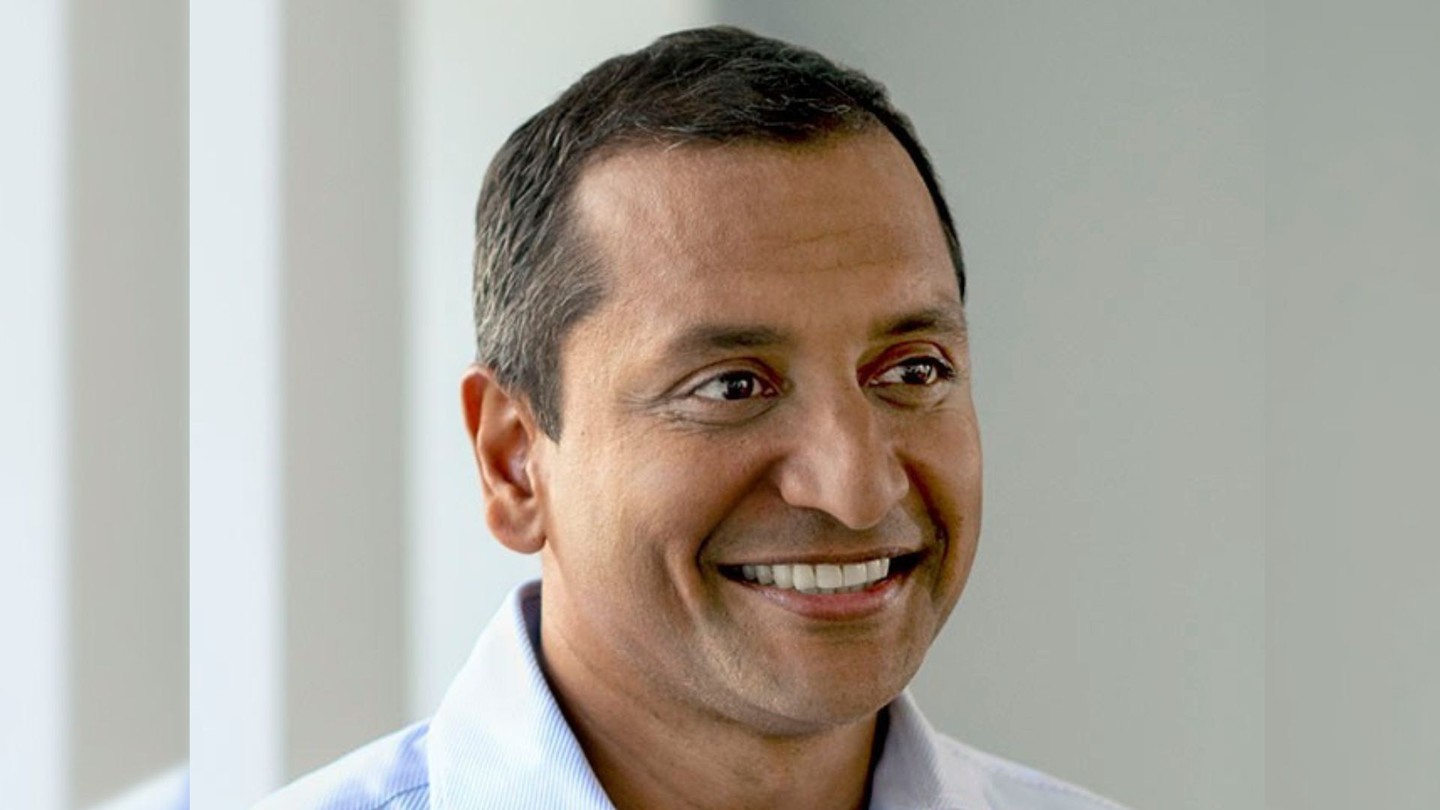
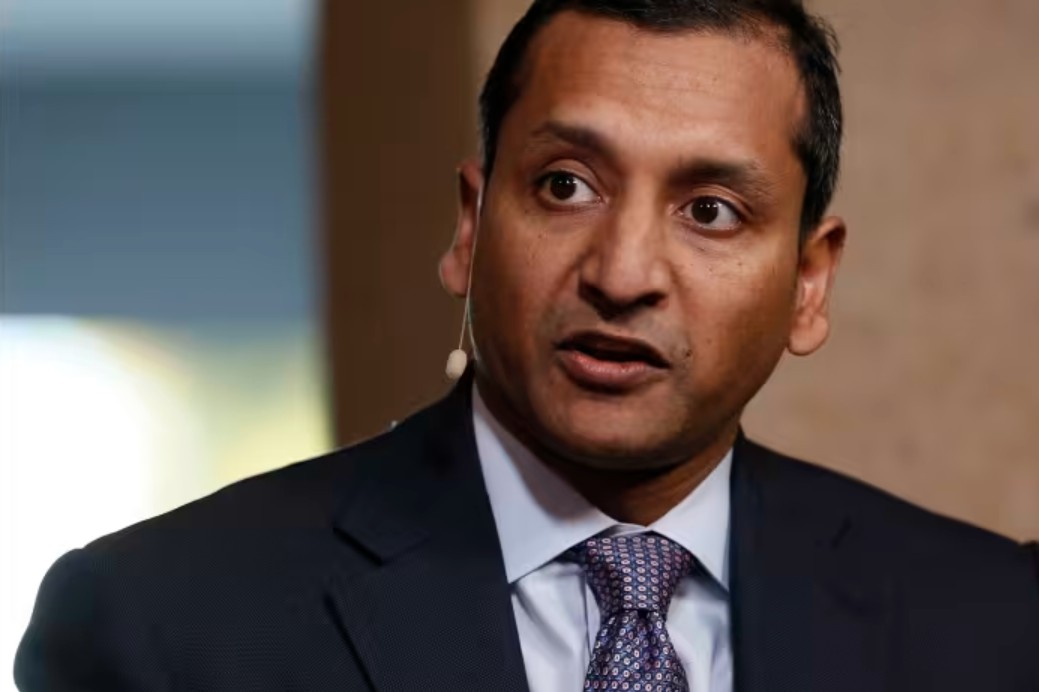
Jain Global - Behind the "massive fundraising" watched by Wall Street is actually an Indian individual

In the white-dominated Wall Street, Indian-American Bobby Jain raised a high-profile $5.3 billion, setting a record for the largest fundraising scale for hedge funds since 2018
Wall Street has never lacked drama, but the "Sky-High Fundraising" drama led by investment guru Bobby Jain has truly made the global financial community restless.
Recently, the hedge fund Jain Global, founded by Bobby Jain, former Co-Chief Investment Officer of the top global hedge fund Millennium, raised an astonishing $5.3 billion, making it the largest hedge fund launch since 2018.

It is rumored that the fund was launched in early July and is currently engaged in commodity derivatives trading, with plans to venture into physical trading in the future.
Amidst the ever-changing global financial markets, hedge funds are generally having a tough time, especially in the United States where hedge funds as a whole significantly underperformed the S&P 500 index in the first half of the year. However, Jain Global managed to successfully raise such a huge amount of capital in such a challenging market environment.
This begs the question: What are investors really looking at?
Indian Heritage Conquering Wall Street?
Unlike the dominance of Indian heritage in Silicon Valley, Wall Street remains predominantly white, making Jain's Indian heritage particularly prominent here.
Jain grew up in Queens, New York, with both parents being Indian immigrants - his mother an accountant and his father an engineer, fitting the stereotype of "numbers people" in the eyes of others.
It is evident that Jain is also proficient in numbers. At 53 years old, Jain has nearly 30 years of experience in the financial industry.
However, he did not come from a finance background, but rather studied political science, a field seemingly unrelated.
In 1992, Jain graduated from Cornell University with a Bachelor's degree in Political Science and Government. During his time at school, he also ran an advertising agency on campus.
It wasn't until four years later that he officially entered the finance industry.
This choice may seem strange, especially for a young man unfamiliar with even Goldman Sachs, but "all the smart kids are going into finance," said the now successful Jain in a media interview, "that's where I belong."
Jain's career began at the Chicago trading firm O'Connor and Associates, where in an era still reliant on shouting trades, he demonstrated exceptional trading talent.
In 1996, Jain smoothly transitioned to Credit Suisse.
At this top global investment bank, Jain steadily climbed the ranks, taking a full 20 years to rise from a regular trader to the head of global assets at Credit Suisse.
This experience not only allowed him to accumulate rich financial knowledge and experience but more importantly, he forged numerous relationships with Wall Street elites, paving the way for his future entrepreneurial endeavors In 2016, Jain's career took a major turn as he joined the global top hedge fund Millennium as Co-Chief Investment Officer.

During his seven years at Millennium, Jain improved the company's core risk control system, closely monitored over 320 internal investment teams, forced managers to cut underperforming positions, and allocated more funds to well-performing teams.
During his tenure, the assets managed by Millennium doubled from $30 billion to $60 billion. In the pandemic-impacted year of 2020, Millennium achieved a return rate of 25.8%, far exceeding the global hedge fund average return rate of 11.6% and the S&P 500 index's 16% increase for the same year.
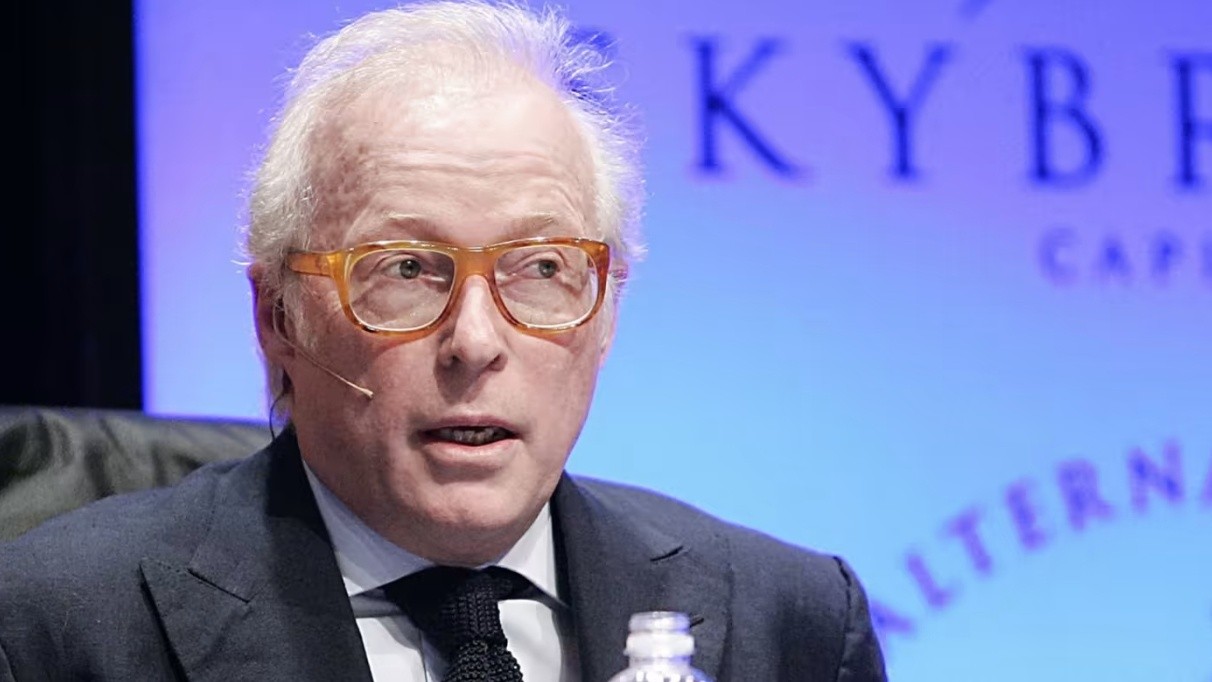
Jain was once seen by many industry insiders as the successor to Millennium's founder and legendary investment guru Izzy Englander, but unexpectedly, he resigned in 2022.
Izzy Englander
Some speculate that an unexpected event in the succession plan made Jain realize that his career at Millennium had come to an end, prompting him to prepare for his own fund company, Jain Global.
Raising $5.3 Billion Against the Trend, Relying on "Pinduoduo-style" Discount Vouchers?
Jain Global started fundraising in September last year.
Jain had ambitious goals, initially aiming to raise $8-10 billion for Jain Global. If successful, Jain Global would set a record for the highest ever global hedge fund launch size.
Despite Jain's top-notch reputation and connections in the industry, Jain Global's fundraising journey was not smooth sailing.
The financial markets in 2023 are very turbulent. High inflation, soaring interest rates, stock market volatility, various "grey rhinos," and "black swans" are all converging.
In this situation, investors have become more cautious, and hedge funds are no longer seen as a "hot cake" in their eyes. Millennium Fund was also affected, with a return rate dropping to around 10% last year.
Faced with an unfavorable situation, Jain had to halve the target and instead aim to raise $5-6 billion. More troubling for him is that, due to the non-compete agreement with his former employer, Jain Global cannot contact Millennium's clients after the subscription opens. This means that a large part of the client resources he accumulated at this fund giant cannot be utilized.
In such a challenging environment, Jain's personal brand and past performance are not enough to convince investors to prove that Jain Global is a wiser choice than the old fund giants.
As a response, Jain has come up with a sincere and generous incentive policy - directly and significantly reducing the fund's commission rate, and it is permanent.
Traditional hedge funds usually adopt a "two and twenty" model, with the fund receiving a 20% commission and the remaining 80% going to clients.
Jain Global has significantly reduced the commission rate, promising a permanent reduction to 10% for clients subscribing more than $250 million; for clients below $100 million, the commission is 15%, and for medium-sized clients between the two, the commission is 13%.
It is also more flexible in terms of redemption, with a lock-up period of only two years, much shorter than competitors like Millennium's five years.
With a series of incentive policies and Jain's personal "charm offensive," the year-long "fundraising marathon" has finally entered the sprint stage. Jain Global has raised approximately $1 billion from key investors, including sovereign wealth funds in the Middle East.
The entry of Middle Eastern tycoons not only supported Jain Global's "massive fundraising" but also boosted the confidence of other investors.
In the end, Jain Global successfully raised $5.3 billion, falling short of the initial target of $8-10 billion but still setting the largest hedge fund fundraising record since 2018.
Multi-Strategy Hedge - Wall Street's Hottest Fund Track
Given the close relationship between Jain and Englander, Jain Global naturally bears many shadows of Millennium, such as multi-strategy hedge.
In recent years, multi-strategy hedge has become one of the hottest fund tracks on Wall Street.
Unlike traditional funds, multi-strategy hedge funds are not limited to a single investment approach but use multiple strategies simultaneously to achieve stable returns in different market environments.
Simply put, it means not putting all your eggs in one basket - stocks, bonds, commodities, foreign exchange, derivatives - as long as it makes money, multi-strategy hedge funds are willing to include it in the investment portfolio.
The benefits of this model are also obvious: risk diversification, significant returns, making it favored by risk-averse investors Top global hedge funds like Citadel and Millennium both adopt a multi-strategy hedge risk approach and have been making significant profits in recent years.
According to Goldman Sachs data, between 2018 and 2022, assets managed by multi-strategy funds grew by an astonishing 150%, far outpacing the industry-wide growth rate of 13% during the same period.
Furthermore, Barclays' previous data shows that over the past 5 years, the average annualized return rate for 42 multi-strategy hedge funds was 8.1%, 2 percentage points higher than other companies in the industry.
Jain Global also employs a multi-strategy hedge fund model and has implemented seven strategies: fundamental equities, commodities, credit strategies, quantitative trading, arbitrage strategies, macro strategies, and a dedicated Asia-Pacific strategy.
Their slogan is "a full-course meal".
In addition, Jain Global is also building a single platform to launch all strategies.
In Jain's own words, "This is a rare feat in the industry."
In an investor document, Jain wrote, "We are building a single, cross-asset, modern operational platform. While this is more intensive at launch, it avoids the inherent challenges, complexity, and costs of building continuously."
A modern multi-strategy hedge fund typically places high importance on technology and risk management. Therefore, Jain is likely to leverage his experience accumulated at Millennium.
Millennium is known for its strict risk control, closely monitoring the performance of each investment team, swiftly cutting losing positions, and allocating more funds to outperforming teams.
Massive recruitment drive, investment managers mostly from Wall Street giants
Among all strategies, fundamental equities may be one of Jain Global's most important strategies.
To this end, Jain has brought in Townie Wells as the Chief Investment Officer for Americas Fundamental Equities. Wells previously served as a portfolio manager at Ashler Capital in Citadel's equities department for two years.
Commodities strategy is also a major focus, reportedly receiving a capital allocation in the double digits from Jain Global.
Behind this allocation, Jain may have identified the increasingly volatile nature of commodities in recent times, especially the rising prices of commodities like gold and cocoa.
In the corporate bond strategy, Jain Global has hired Jeff Bersh from hedge fund giant Venor Capital and Richard Martin, former head of quantitative credit strategies at Man Group, both experienced corporate bond traders.
As for more complex quantitative trading, Jain Global has brought in Peter Bolland, former Managing Director at Morgan Stanley, to serve as Chief Investment Officer for quantitative strategies Besides, the macro strategy and Asia-Pacific strategy will be led by Gerhard Seebacher, former co-head of fixed income trading at Bank of America, and Sam Kellie-Smith, former Managing Director at Morgan Stanley.
As of the launch, Jain Global already has at least 150 employees, including over 40 portfolio managers.
These talents are from top industry institutions, including Citadel, Balyasny Asset Management, Brevan Howard, and major Wall Street investment banks.
Jain also promises outstanding employees the opportunity to start their own hedge funds in the future, and if these employees establish hedge funds, Jain Global will provide funding for them.
Meeting High Expectations from High-Profile Fundraising
Jain Global's ambition is evident - it aims not only to become a successful multi-strategy hedge fund but also to challenge the positions of industry giants like Citadel and Millennium.
However, fundraising is just the first step, and the "newborn" Jain Global faces many challenges.
The hedge fund industry is currently witnessing intense talent wars, with signing bonuses and performance fees reaching historic highs.
Balancing competitive compensation for these top talents without overextending the future will be a key consideration for Jain.
In the current environment of high interest rates, high inflation, and frequent geopolitical conflicts, hedge funds face immense performance pressure. Jain Global needs to demonstrate its ability to consistently generate outstanding returns in various market conditions. Any slight misstep could lead to redemption pressure.
Managing multiple strategies and a large number of portfolio managers poses significant operational challenges. Jain needs to establish a robust infrastructure and management system.
Finding a balance between diversification and specialization, as well as coordinating resource allocation among different strategies, are all challenges that Jain must confront.
High-profile fundraising inevitably brings high expectations. Jain Global needs to showcase its value proposition in the short term and deliver excellent performance to maintain investor confidence.
In addition, Citadel and Millennium manage assets of around $60 billion each and have thousands of employees. They invest tens of millions of dollars annually in technology and data analysis.
Jain Global has a long way to go to catch up.
Regardless of the outcome, Jain Global's "mega fundraising" drama has become one of the hottest topics on Wall Street in 2024.
In the days to come, everyone will be watching this ambitious "disruptor" Jain, to see if he can carve out a path in the fiercely competitive Wall Street and become the next legend of Wall Street