


Cui Dongshu: China's market share of new energy vehicles in the world is expected to reach 65% in the first half of 2024

From January to June 2024, China's market share of new energy vehicles reached 65% globally, with pure electric vehicles accounting for 11%, plug-in hybrids accounting for 5.8%, and hybrid vehicles accounting for 6.3%. Cui Dongshu, Secretary-General of the China Passenger Car Association, stated that the market share of new energy passenger vehicles in China continues to grow, surpassing 63% in 2022, reaching 63.4% in 2023, and maintaining at 64.5% from January to June 2024
According to the financial news app Zhitong Finance, on August 4th, Cui Dongshu, the Secretary-General of the China Passenger Car Association, stated that the recent growth rate of new energy passenger vehicles in China is stronger than the world's average growth rate. In 2022, China's share of the global new energy passenger vehicle market exceeded 63%; in 2023, it reached 63.4%; from January to June 2024, it continued to maintain a 64.5% share, with China's share of the world's new energy passenger vehicles reaching 67% in April to June. China's performance in the global pure electric vehicle market is relatively outstanding, with a 61% share in 2023 and a stable performance of 59% from January to June 2024. China's share in the global plug-in hybrid market continues to strengthen, rising to 69% in 2023 and reaching an exceptionally high level of 74% from January to June 2024, with 78% in the second quarter. China is showing a strong performance in the global plug-in hybrid market.
From January to June 2024, global car sales reached 43.9 million units, with new energy vehicles reaching 7.39 million units. The market share of new energy vehicles from January to June 2024 reached 16.8%, with pure electric vehicles accounting for 11%, plug-in hybrids at 5.8%, hybrid vehicles at 6.3%, and the proportion of hybrid electric vehicles increasing.
In June 2024, global sales of new energy passenger vehicles reached 1.48 million units, a year-on-year increase of 17% and a month-on-month increase of 12%. From January to June, global sales of new energy passenger vehicles reached 7.17 million units, a 21% year-on-year increase. Due to the slowdown in new energy trends in Europe and the United States, the global trend of new energy vehicles from January to June has slowed significantly compared to previous years. In the first half of this year, Europe sold 1.39 million new energy passenger vehicles, with a growth rate of 2%; North America sold 810,000 new energy passenger vehicles, with a growth rate of 10%. Against the backdrop of increasing supply of fuel vehicles, the performance of new energy vehicles in Europe and the United States is average. The slowdown in sales growth of new energy vehicles in Europe and the United States is worth noting. Currently, early adopters and environmentalists have already purchased electric vehicles, but mainstream consumers still have significant concerns about charging infrastructure, battery life, and insurance costs. Even with the use of autonomous driving at relatively high interest rates, the penetration rate of sales has not met expectations.
Recently, the growth rate of new energy passenger vehicles in China has been stronger than the world's average growth rate. In 2022, China's share of the global new energy passenger vehicle market exceeded 63%; in 2023, it reached 63.4%; from January to June 2024, it continued to maintain a 64.5% share, with China's share of the world's new energy passenger vehicles reaching 67% in April to June. China's performance in the global pure electric vehicle market is relatively outstanding, with a 61% share in 2023 and a stable performance of 59% from January to June 2024. China's share in the global plug-in hybrid market continues to strengthen, rising to 69% in 2023 and reaching an exceptionally high level of 74% from January to June 2024, with 78% in the second quarter. China is showing a strong performance in the global plug-in hybrid market. Due to the high base and the withdrawal of subsidies in various countries, coupled with the EU's incorrect tax policy on Chinese electric vehicles, the start of new energy passenger vehicles in Europe and the United States in 2024 was weak, leading to a continued decline in new energy vehicles in Europe. From January to June 2024, China's new energy vehicle exports performed well, with strong performance in the South American and Southeast Asian markets. This is also due to China's strong industrial chain, leading to strong growth in both the domestic market and exports 1. Global New Energy Vehicle Trends
1. Performance of Global New Energy Vehicles in 2024
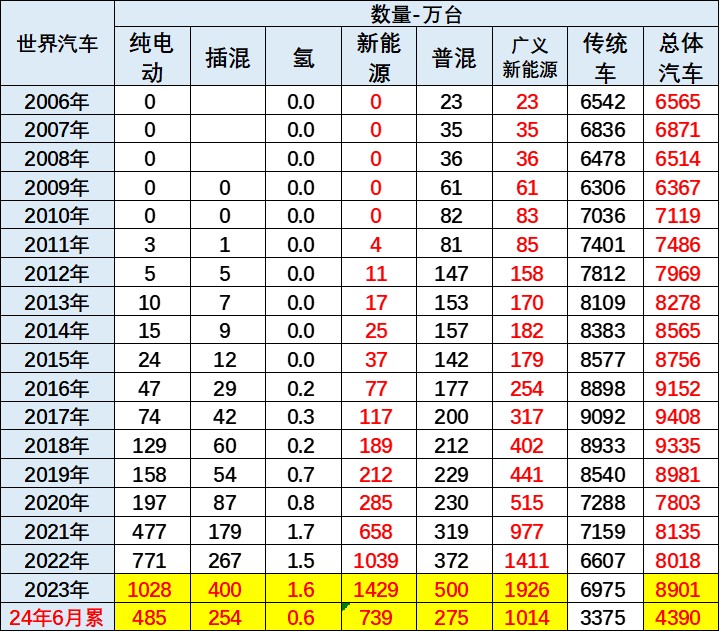
In 2023, the global car sales reached 89.01 million units, with new energy vehicle sales of 14.29 million units, showing a relatively decreased proportion of traditional fuel vehicles. From January to June 2024, global car sales reached 43.9 million units, with new energy vehicles reaching 7.39 million units.
2. Global Automotive Energy Structure
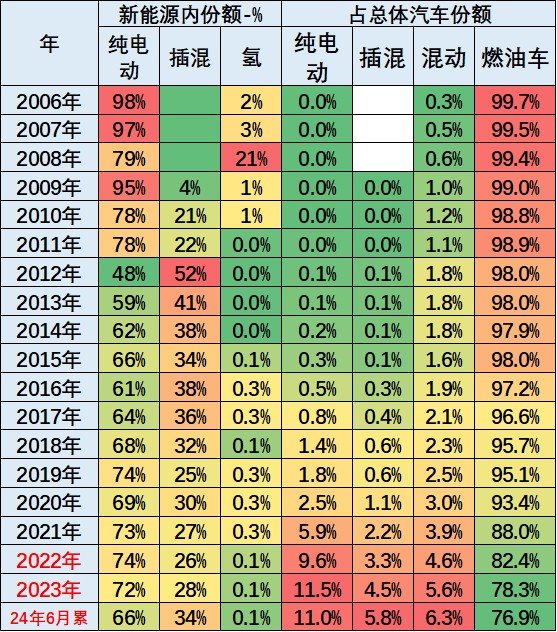
The sales proportion of new energy vehicles globally reached 23.1% from January to June 2024, an increase of 1.5 percentage points compared to 2023. The proportion of pure electric vehicles reached 11%, while plug-in hybrids reached 5.8%, and hybrid vehicles reached 6.3%, showing an increasing trend in the proportion of hybrid vehicles.
3. Global New Energy Vehicle Structure
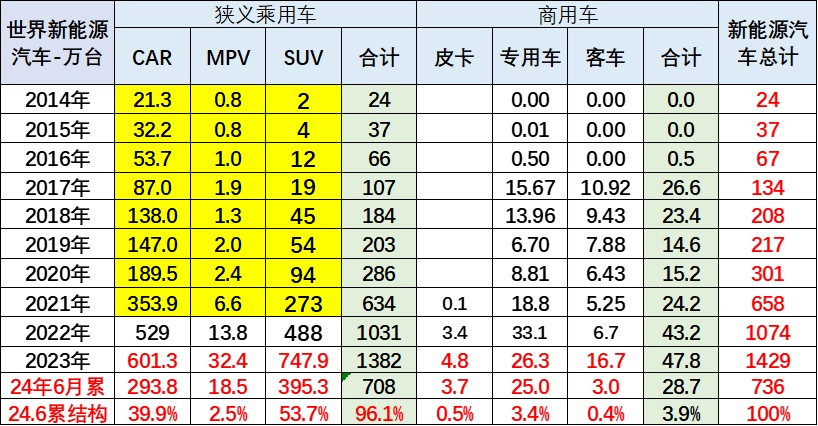
The structure of global new energy vehicles is mainly focused on narrow passenger vehicles, accounting for 96.1% from January to June 2024, while new energy commercial vehicles accounted for 3.9%.
Among new energy passenger vehicles, sedans accounted for 40%, SUVs accounted for 54%, and MPVs had a relatively low proportion. SUVs are currently the main force in the global new energy vehicle market.
2. Global New Energy Passenger Vehicle Trends
1. Performance of Global New Energy Passenger Vehicles in 2024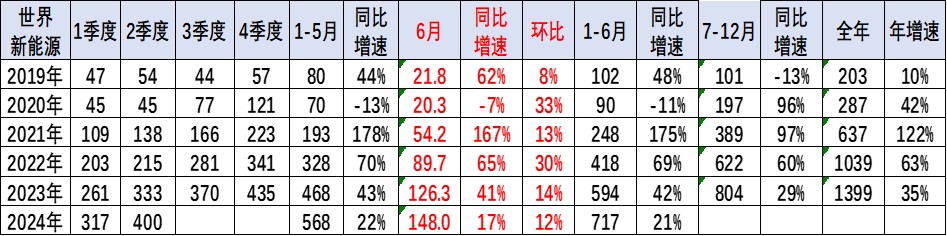
In 2020, the sales of new energy passenger vehicles reached 2.87 million units, showing a 42% increase compared to the same period in 2019. In 2021, the sales of new energy passenger vehicles reached 6.37 million units, exceeding expectations with a remarkable growth of 122% World New Energy Passenger Car Trends in 2022 and 2023
In 2022, the global new energy passenger car market showed a strong trend, reaching 10.39 million units, a year-on-year increase of 63%. In 2023, the global new energy passenger car market continued to show a strong trend, reaching 13.99 million units for the full year, a year-on-year increase of 35%.
In June 2024, global new energy passenger car sales reached 1.48 million units, a 17% year-on-year increase and a 12% increase from the previous month. From January to June 2024, global new energy passenger car sales reached 7.17 million units, a 21% year-on-year increase. Due to the slowdown in new energy trends in Europe and the United States, the global new energy market showed a significant slowdown in the first half of the year compared to previous years.
Global New Energy Passenger Car Market Trends
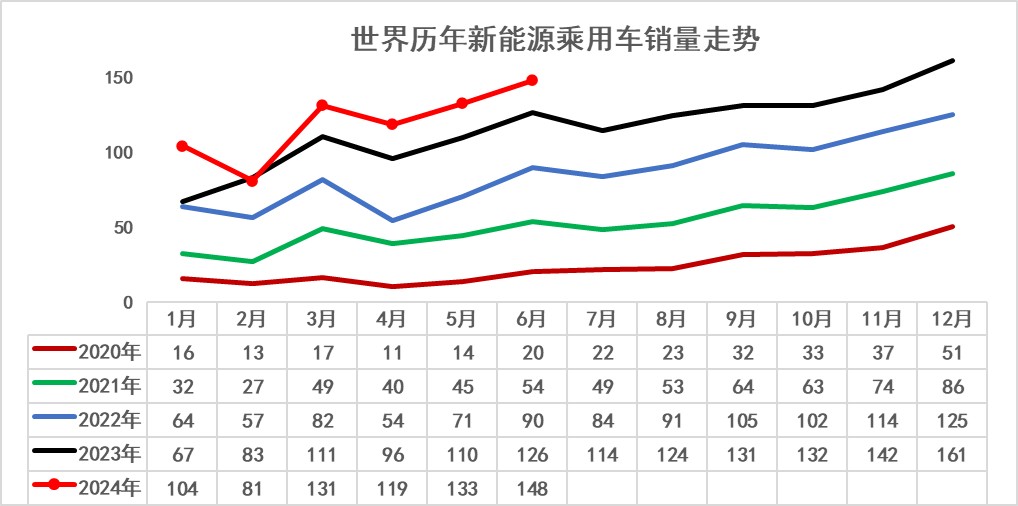
In the first half of 2020, the global new energy vehicle market faced pressure from a high base number, entering a low base number phase in the second half of the year, laying the foundation for the current new energy growth cycle. The years 2021-2022 showed an accelerating upward trend, with stronger growth under the low base number. In 2023, the global new energy vehicle market started at a low point and then recovered to a medium to high growth rate.
The peak of new energy in 2024 showed a clear downward trend after reaching its high point. Due to the late Chinese New Year and no subsidy interference, China's new energy sales were relatively high at the beginning of the year, with a low point in February mainly due to the Chinese New Year factor, followed by growth from March to June.
Global New Energy Passenger Car Market Trends by Region
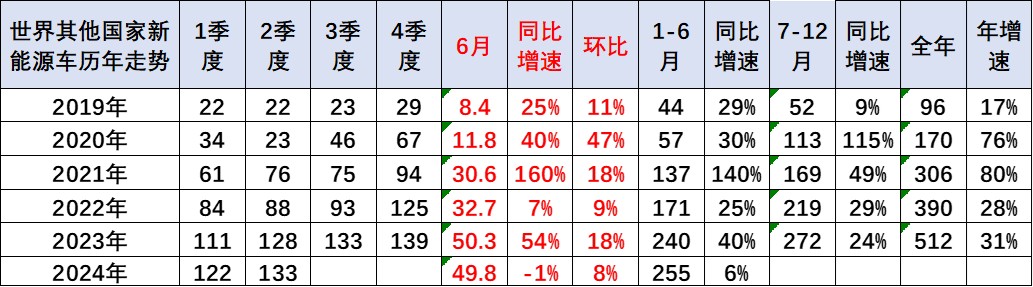
Overall, new energy trends in markets outside of China were relatively weak, with overseas new energy performance relatively lackluster starting this year. Due to the still weak trends in new energy in Europe and the United States in June, the growth rate from January to June dropped to 6%.
After a strong performance overseas in January, the trends for overseas new energy vehicles from February to June were very weak, with poor performance in June facing a high base number from the previous year, resulting in negative growth in June In 2021, China's sales of passenger vehicles reached 3.31 million, surpassing Europe's 2.18 million and North America's 0.7 million, highlighting China's advantage.
In 2022, China's sales reached 6.5 million units, significantly exceeding Europe's 2.48 million and North America's 1.06 million, showcasing China's clear advantage in new energy vehicles.
By 2023, China's sales reached 8.87 million units, continuing to significantly surpass Europe and North America, further solidifying China's lead in total new energy vehicles.
In the first half of this year, Europe sold 1.39 million new energy passenger vehicles, with a growth rate of 2%; North America sold 0.81 million new energy passenger vehicles, with a growth rate of 10%. Against the backdrop of increasing supply of fuel vehicles, the performance of new energy vehicles in Europe and America is relatively average.
From the regional market trends of new energy vehicles, in 2020, Europe consistently accelerated and surpassed China. From 2021 to 2023, the overall market for new energy vehicles in Europe remained stable at a high level, while China's market for new energy vehicles has shown strong growth in recent years, with the slight decline in February this year being temporary. The development of new energy vehicles in Europe and America lags behind China, with the U.S. market growing slightly faster than Europe. In January 2024, China's new energy vehicle sales were strong, and the U.S. showed a clear rebound at the beginning of this year. The U.S. new energy market stabilized this year, while Europe continues to struggle.
In the first half of this year, U.S. new energy vehicle sales of 0.75 million units grew at a slower rate of 8%, with negative growth in June. Mainstream consumers still have significant concerns about charging infrastructure, battery life, and insurance costs, leading to high inventory pressure and clear complaints from dealers.
Currently, early adopters and environmentalists in Europe and America have already purchased electric vehicles. However, electric vehicle manufacturers now face skepticism from mainstream buyers, and even with the use of autonomous driving technology, the increase in sales penetration has not met expectations European new energy passenger car sales from January to June this year totaled 1.39 million units, with an increase of only 30,000 units compared to the same period last year, up 2%. In June, European new energy passenger car sales reached 288,000 units, a decrease of 4%. European consumers are facing high interest rates, slowing economic growth, gradual phasing out of financial subsidies for new energy vehicles, and insufficient charging infrastructure, which continue to be important factors constraining their widespread development, leading to weak market demand.
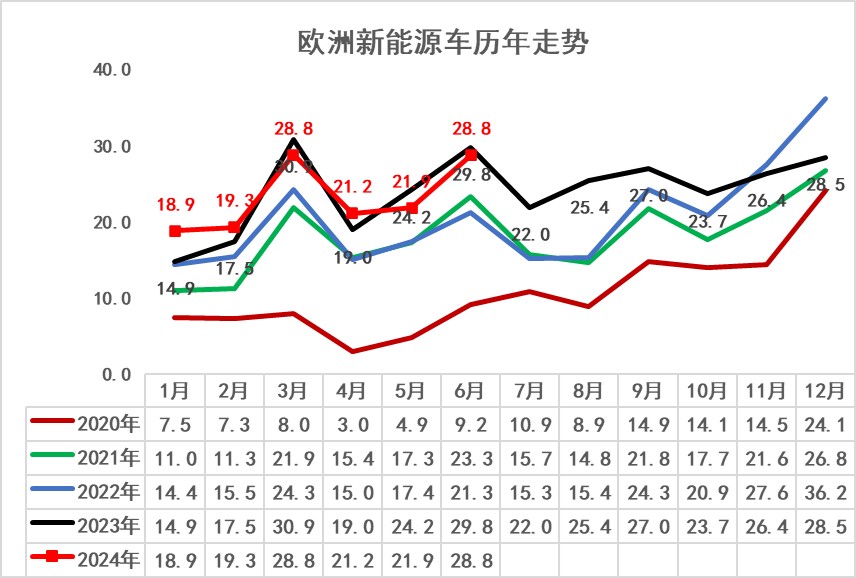
Historically, European new energy vehicle sales in June have been relatively high. Currently, due to the backdrop of economic and consumer downturn, the growth pressure on European new energy remains significant.
4. Penetration Rate of New Energy Vehicles Worldwide
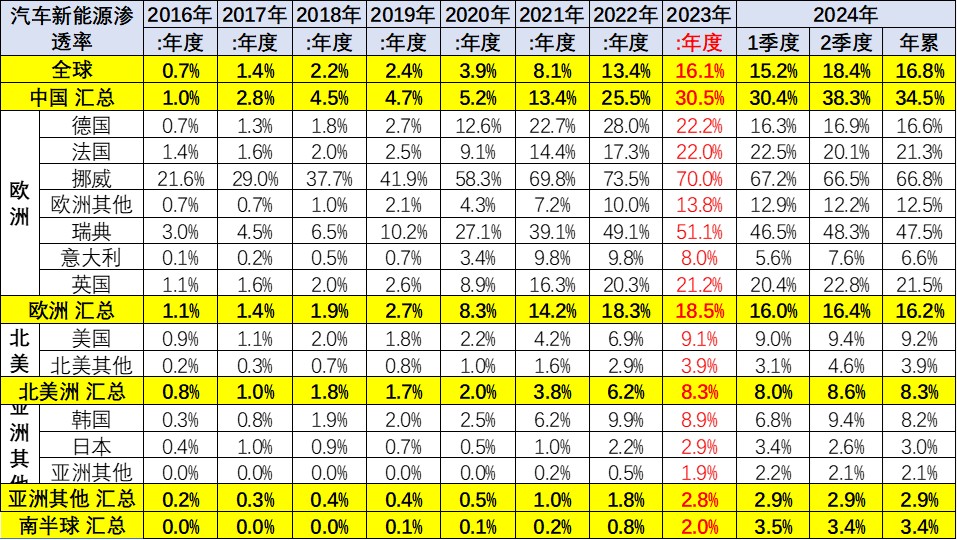
The overall penetration rate of new energy vehicles worldwide is showing a rapid upward trend, reaching 13% in 2022, 16% in 2023, slightly lower in early 2024 with 15% in Q1 and 18.4% in Q2, resulting in a penetration rate of 16.8% in the first half of the year. In 2024, the penetration rate is 34.5% in China, 16.6% in Germany, 66.8% in Norway, 9.2% in the United States, and 3% in Japan, highlighting the significant imbalance in the global development of new energy.
As China continues to strengthen its new energy development, while Europe and the United States weaken their incentives for new energy, the world's new energy vehicles are entering a new stage of differentiated development.
3. Structural Characteristics of New Energy Passenger Cars Worldwide
1. Market Trends of New Energy Passenger Cars Worldwide
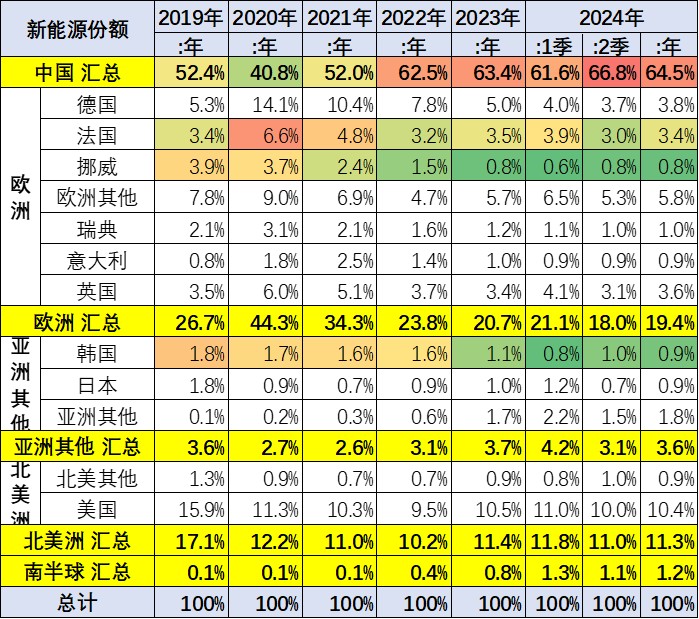
The European new energy market in 2021 was weak due to the impact of the pandemic. In 2022, still affected by the pandemic, Europe's market share decreased significantly compared to 2021, with a slight decrease in 2023, and a noticeable decline in the first half of 2024.
Recently, the growth rate of China's new energy passenger cars has been stronger than the world average, with China's world market share of new energy passenger cars experiencing a significant reversal in 2020. In 2021, China maintained a strong level of 52% for the whole year. In 2022, China's world market share of new energy passenger cars exceeded 63%; in 2023, China accounted for 63.4% of the world market share; in the first half of 2024, China continued to maintain a 64.5% market share, with China's world market share of new energy passenger cars reaching 67% in the months of April to June 2. Trends in Market Share of New Energy Vehicles by Various Manufacturers
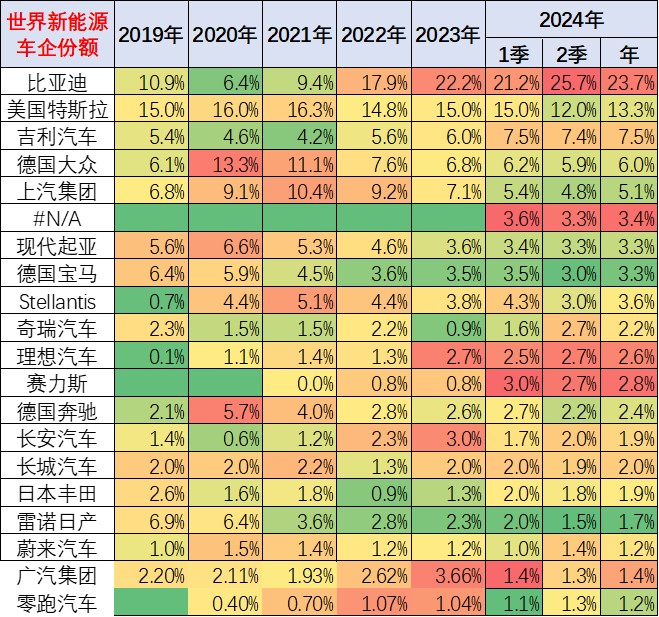
Looking at the historical sales share, BYD from China leads globally, while Tesla's performance is not strong, and Geely from China is rapidly rising. SAIC Group's new energy vehicles had a good performance in the early stages, with both SAIC Passenger Cars and SAIC-GM-Wuling performing well, but recently weakened due to the impact of the European market. Geely Auto and Changan New Energy have shown significant recent strength. Germany's Volkswagen has shown strong performance in new energy vehicles, while BMW Group and Hyundai from South Korea are maintaining a second-tier level.
Competition in the luxury car segment for new energy vehicles is relatively intense, with a slowdown in performance for American Tesla. Currently, BMW and Mercedes-Benz's performance cars are average, and Tesla's sales are currently driven by the Model 3 and Model Y.
Overall, the performance of China's new forces is strong, especially with outstanding performance from companies like Li Auto.
5. Trends in the Market Structure of Pure Electric New Energy Vehicles
1. Global Structure of Pure Electric Vehicles
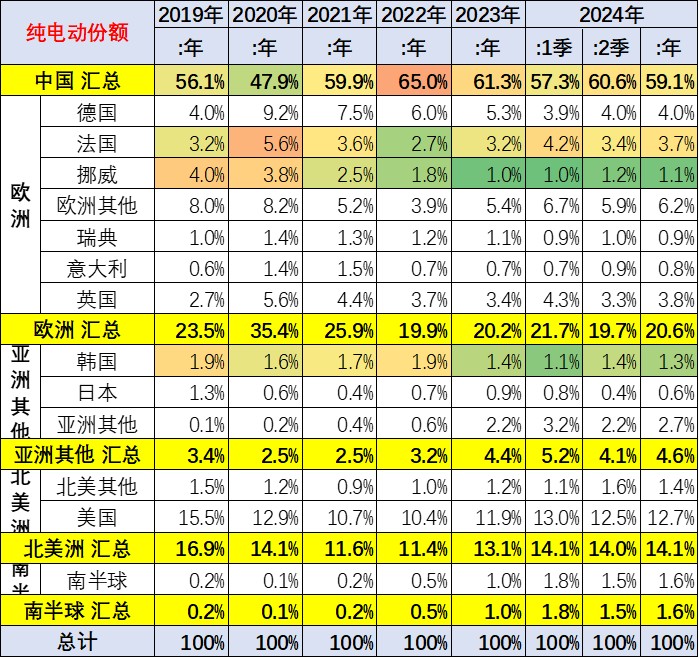
China's performance in the global market share of pure electric vehicles is relatively outstanding, with a share around 60% in 2017-2018; the share slightly decreased in 2019-2020 to 48% in 2020; it then rose again to 65% in 2022; reaching 61% in 2023, and maintaining a stable performance at 59% in the first half of 2024.
Recently, China's plug-in hybrid vehicles have shown strong performance, while pure electric vehicles have performed moderately. The share of pure electric vehicles in Europe increased from 16% in 2018 to 23% in 2019, rose to 35% in 2020, then decreased to 20% in 2023, and stabilized and rose to 20% in the first half of 2024. The share of electric vehicles in the U.S. this year has increased to 13%, showing slight improvement.
2. Trends in Market Share of Car Manufacturers
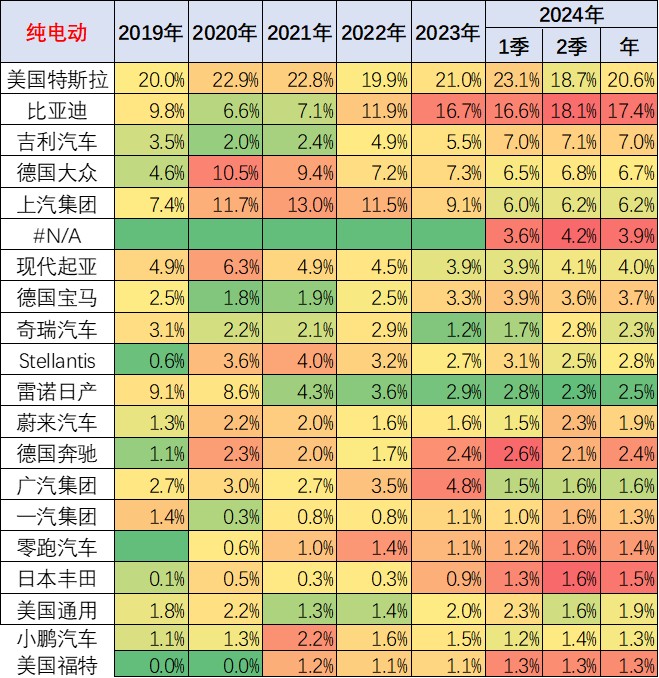
Looking at the market share of car manufacturers in pure electric vehicles, BYD's share has continued to rise overall. From 2017 to 2021, it maintained a share of over 7%, but in 2022, the share rose to 12%, in 2023 to 17%, and in 2024, it maintained a good performance at 17.4% In the pure electric vehicle sector, Tesla's market share performance is relatively strong, maintaining its world-leading position in pure electric vehicles. In 2020, Tesla held around 23% of the market share, and currently maintains a strong trend at 21%.
Geely Group's market share has risen from 4% in 2019 to 7% in 2024. SAIC Group and GAC's pure electric vehicle market share has slightly declined recently.
VI. Market Trends of Plug-in Hybrid Electric Vehicles
1. Global Structure of Plug-in Hybrids
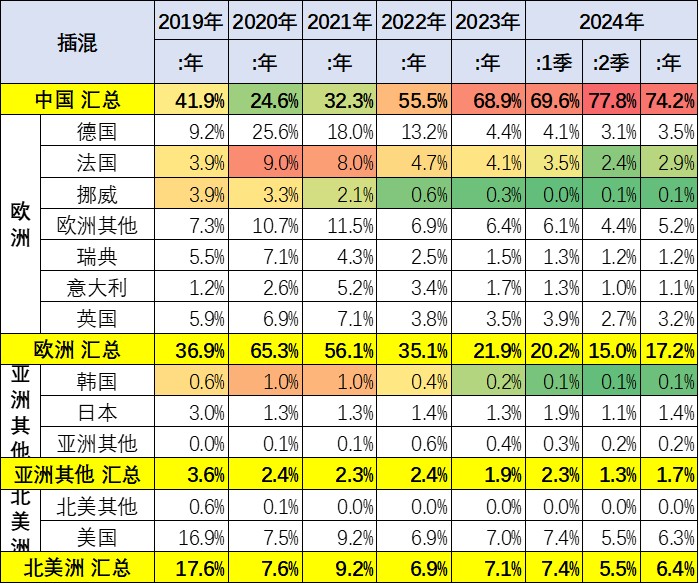
China's performance in the global plug-in hybrid market has been consistently strong, ranging from 30% to 50% in 2017-2018, dropping to 25% in 2020. In 2021, China's market share in the global plug-in hybrid market reached 32%, rising to 56% in 2022, 69% in 2023, and a high of 74% in the first half of 2024, with 78% in the second quarter. China has shown exceptionally strong performance in the global plug-in hybrid market.
Europe's plug-in hybrid market share rose from 28% in 2018 to 65% in 2020, then dropped to 17% in 2024.
2. Market Share Trends of Automotive Companies
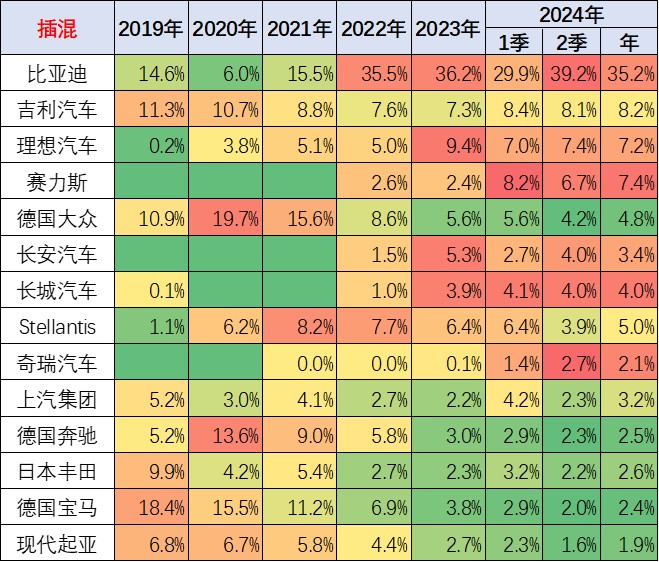
Looking at the market share of automotive companies in plug-in hybrids, BYD stands out. BYD's global plug-in hybrid market share dropped to a low of 6% in 2020, but rose to 16% in 2021, 36% in 2023, and maintained a good share of 35% in 2024, reaching 39% in the second quarter, demonstrating BYD's leadership in the plug-in hybrid market.
Volkswagen's plug-in hybrid market share surged to 20% in 2020, then dropped to 4.8% in 2024. BMW has also seen a significant decline in plug-in hybrid market share in the past two years, dropping to 2.4% in 2024, while Geely Volvo holds 8% of the global plug-in hybrid market.
VII. Market Trends of Hybrid Electric Vehicles
1. Global Structure of Mild Hybrids
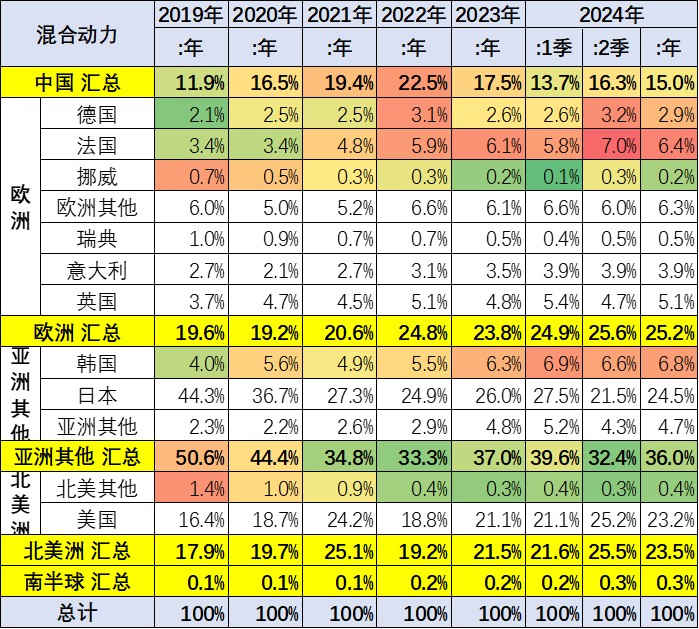 In the past two years, China's hybrid market has developed rapidly. In 2022, it became the largest hybrid market in the world. In 2023, the market share of hybrid vehicles declined, while the hybrid markets in the United States and Japan rebounded.
2. Trends in the market share of traditional hybrids
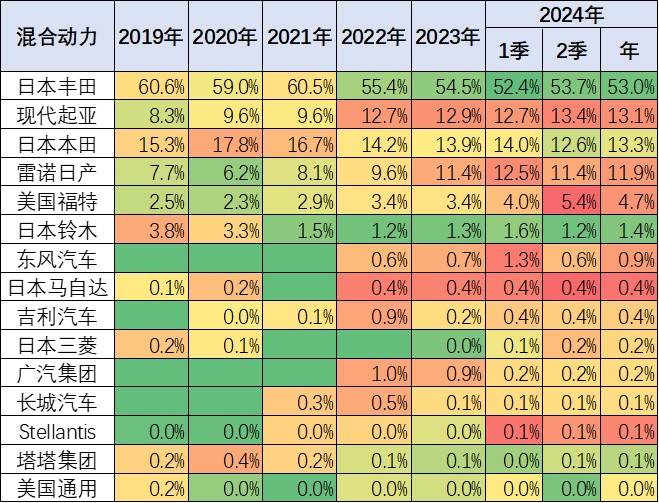
The hybrid market is dominated by Japan and South Korea, with Toyota, Honda, Nissan, and Hyundai performing strongly, occupying 91% of the market share. The hybrid market share of most other companies does not exceed 1%. Recently, Dongfeng and Great Wall have shown strong performance in the hybrid market in 2024
