


The loss hole is still expanding, SINOSYNERGY plunges more than 13%!

SINOSYNERGY announced that its first-half loss widened, causing its stock price to plummet by 13.15%, with its market value dropping to HKD 6.227 billion. Stocks related to hydrogen energy concept all declined, with Jingcheng Machinery and Electric experiencing the largest decrease. Hydrogen energy, as a green and low-carbon energy source, is receiving strong policy support, and the industry outlook is optimistic. SINOSYNERGY operates in the middle of the hydrogen energy industry chain, mainly selling hydrogen fuel cell systems. Despite the great potential for industry development, SINOSYNERGY has had poor performance in the past. According to forecasts, the market size of China's hydrogen fuel cell system is expected to grow
On August 5th, Sinosynergy (09663.HK), known as the "second stock of hydrogen fuel cells" in the domestic market, plummeted by 13.15%, currently trading at HKD 12.02 per share, with a market value of HKD 6.227 billion.
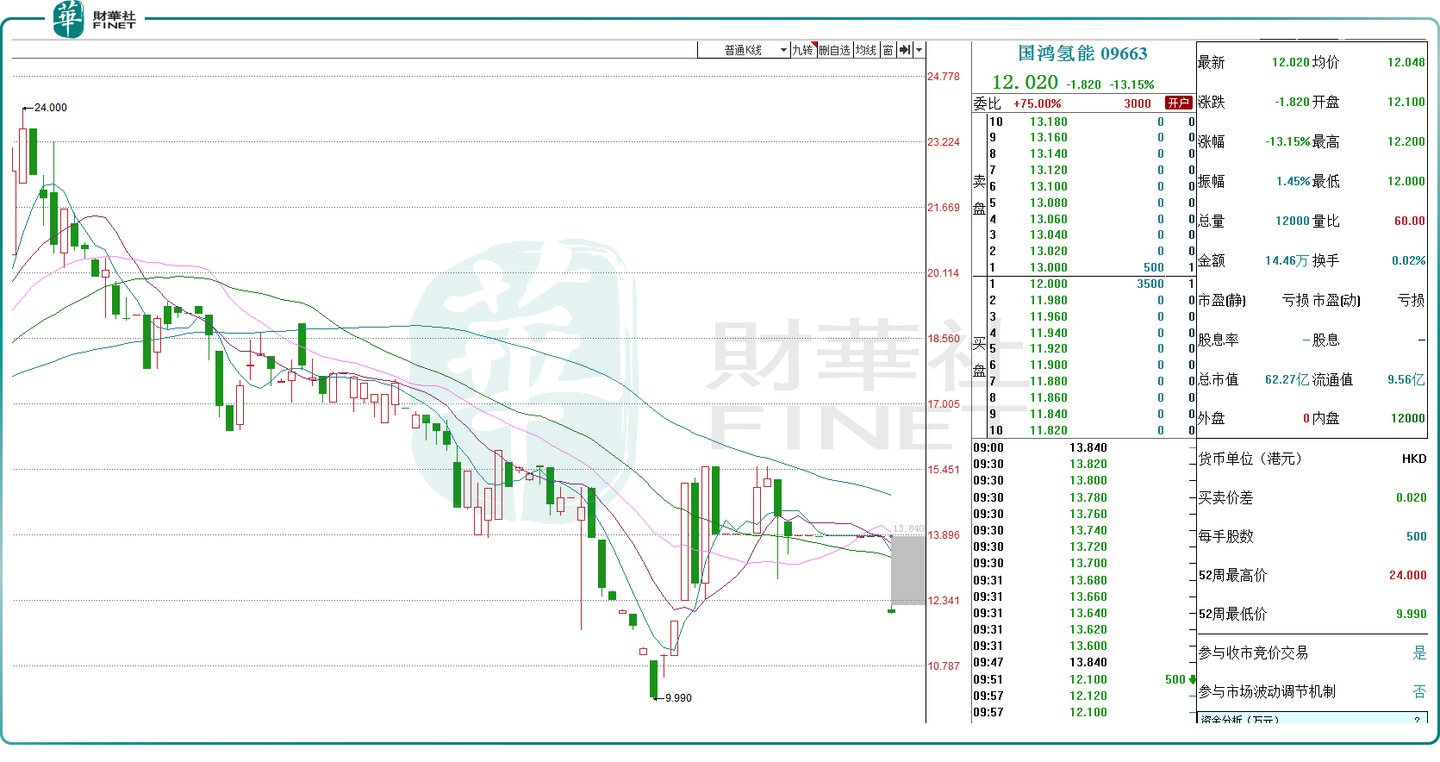
In addition, influenced by market sentiment, stocks related to hydrogen energy have been declining. Among them, Beijing Jingcheng Machinery Electric Co., Ltd. (00187.HK) fell by 4.9%, Yihuatong (688339.SH) dropped by over 4%, Dongyue Group (00189.HK) fell by 3.53%, Shanghai Electric (02727.HK) and Dongfang Electric (01072.HK) dropped by nearly 2%.
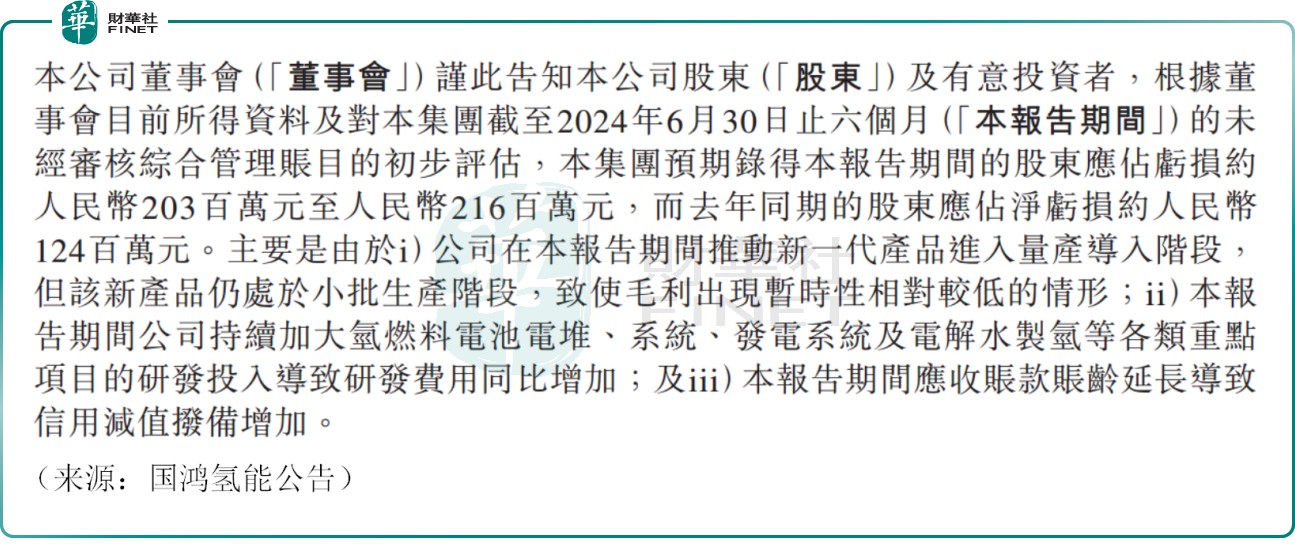
In terms of news, Sinosynergy announced that the company's attributable loss for the first half of this year is approximately RMB 203 million to RMB 216 million, compared to about RMB 124 million in the same period last year, indicating a further widening of the loss gap.
Hydrogen energy, as a green and low-carbon energy source, has always been highly valued by the authorities. Especially this year, various regions have been increasing their support for the hydrogen energy industry through policies, including Shandong Province and Sichuan Province exempting hydrogen energy vehicles from highway tolls, and Inner Mongolia Autonomous Region allowing hydrogen production outside of chemical industrial parks.
Industry insiders believe that with the continuous cost reduction of hydrogen energy and ongoing policy support, the future development of the hydrogen energy industry is promising in the long term.
The hydrogen energy industry chain is divided into three main parts: upstream hydrogen production, midstream hydrogen storage and transportation, and hydrogen refueling, and downstream hydrogen applications. Sinosynergy is positioned in the midstream of the industry chain, with its main products being hydrogen fuel cell systems, mainly sold for buses, logistics vehicles, heavy trucks, trams, and ships.
According to Frost & Sullivan, the compound annual growth rate of China's hydrogen fuel cell systems is expected to be 99.2% from 2023 to 2027, and 46.3% from 2028 to 2030. In terms of sales value, the expected market size of China's hydrogen fuel cell systems is projected to grow from RMB 6.2 billion in 2023 to RMB 45 billion in 2027, and RMB 116.7 billion in 2030.
Although it may seem like a challenging journey, hydrogen energy is still in the early stages of industry development. Sinosynergy is facing difficulties in its operations, and its past performance has been quite disappointing.
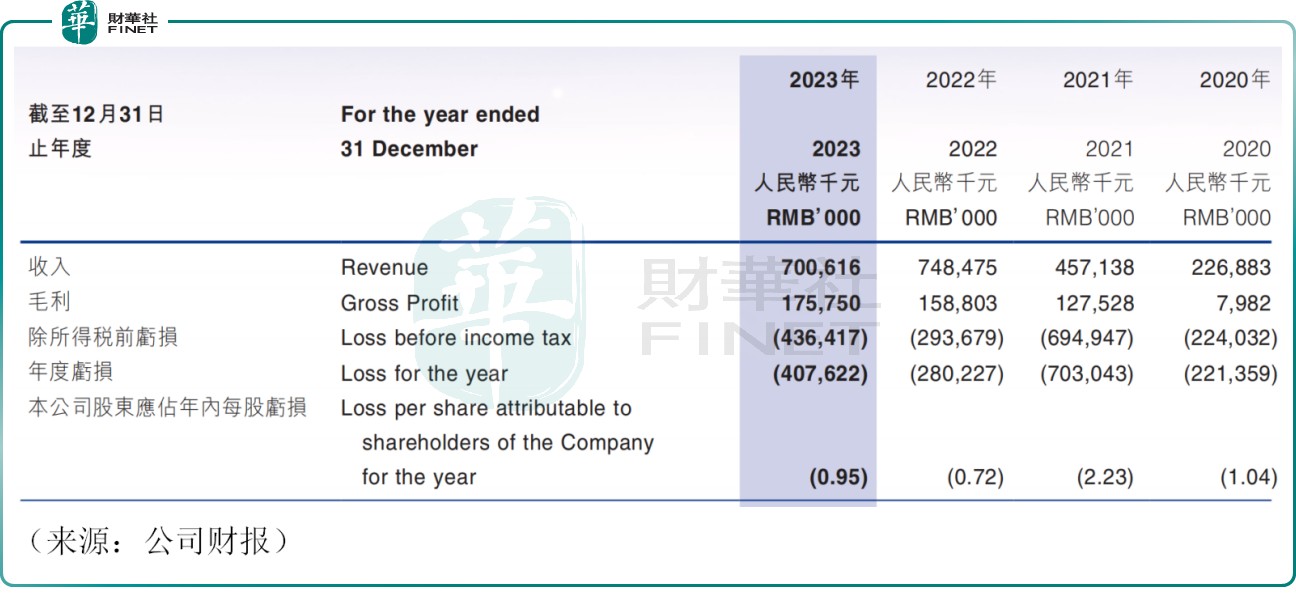
Data shows that from 2020 to 2023, the company's revenue was RMB 227 million, RMB 457 million, RMB 748 million, and RMB 701 million respectively, while the corresponding annual losses were RMB 221 million, RMB 703 million, RMB 280 million, and RMB 408 million. Profitability has always been a major issue for the company
For the decline in performance in the first half of this year, detailed disclosure has not been made yet. However, the company mentioned in the announcement that the new generation of products has entered the mass production introduction stage. The company continued to increase research and development expenses for various key projects such as hydrogen fuel cell stacks, systems, power generation systems, and electrolytic water hydrogen production in the first half of the year, leading to an increase in research and development expenses compared to the same period last year. Additionally, the extension of the accounts receivable aging in the first half of the year led to an increase in credit impairment provision.
It is worth mentioning that since the peak in April, SINOSYNERGY's cumulative decline has approached 50%. The market is voting with its feet, and it remains to be seen when the company's stock price can "put on the brakes", requiring investors to continue to track
