


ByteDance took a "detour" for half a year

ByteDance adjusts its e-commerce strategy, no longer blindly pursuing low prices, but shifting focus to sales growth. The growth rate of Douyin e-commerce is slowing down, requiring strategy adjustments. Promoting the development of "Douyin Brands" to enhance platform competitiveness. Throughout July, mainstream e-commerce platforms have "changed course" from betting on "price power" to pursuing GMV growth. Douyin's attempt at a low-price strategy with "Douyin Shopping Edition" and the overall e-commerce business have seen a significant slowdown in growth over the past few months. This is a situation that ByteDance is unwilling to see. Douyin's e-commerce GMV target is set at a high level of 35 trillion, requiring another strategy adjustment

Produced by: Huxiu Huang Qingchun Youth Channel
Author: Huang Qingchun, Business Consumer Chief Writer
Cover Image: Movie "Dunkirk"
ByteDance adjusts its e-commerce strategy, no longer blindly pursuing low prices, but shifting focus to sales growth.
• 📈 Douyin e-commerce growth slows down, urgent need for strategy adjustment
• 📉 Low-price strategy has unsatisfactory results, affecting brand ecosystem
• 🛍️ Promoting the development of "Douyin brands" to enhance platform competitiveness
After half a year, ByteDance finally stops blindly pursuing "low prices".
Throughout July, the media began intensively reporting on mainstream e-commerce platforms such as Taobao, Pinduoduo, and Douyin shifting their focus from continuously betting on "price competitiveness" to returning to "pursuing Gross Merchandise Volume (GMV) growth" one by one. In other words, mainstream e-commerce platforms are collectively entering a phase of recalibrating their business strategies.
In fact, compared to traditional e-commerce platforms, Douyin has long coveted the lower-tier market.
Sources close to Douyin revealed that in 2023, discussions were held internally to prioritize enhancing the price comparison feature, and in early 2024, "price competitiveness" was temporarily set as the top priority for the year. Following Pinduoduo, Alibaba, and JD.com, Douyin became the fourth e-commerce platform to explicitly elevate "low prices" to a core strategic focus. What was once an implicit strategy has now become explicit, as "low prices" became a hurdle that all e-commerce platforms could not avoid.
However, the "Douyin Mall Edition" that experimented with low-price strategy and the evident slowdown in the overall e-commerce business growth in recent months are undoubtedly warning signs:
According to a report by "LatePost," the year-on-year growth rate of Douyin e-commerce exceeded 60% in January and February (considering the Chinese New Year holiday period), but dropped to below 40% in March, and further declined to below 30% in the second quarter.
This is clearly a situation that ByteDance is unwilling to see and must quickly reverse:
-
Firstly, insiders have indicated to Huxiu that the actual scale of Douyin e-commerce in 2023 may exceed 25 trillion yuan, driving Douyin to set a high GMV target of 35 trillion yuan in 2024. With the growth rate slowing down in Q2, in order to sustain the momentum of Douyin e-commerce GMV, a rapid adjustment is necessary.
-
Secondly, from Zhang Yiming to the entire ByteDance management, they are adept at finding commercial opportunities from data and ultimately letting growth speak. Even though the trial-and-error period of "low prices" was only six months, feedback from the business side indicates that adjustments have become "urgent." Caught in the "Fire and Merge" of Low Prices
In theory, starting with "trendy" content and actively embracing young people on Douyin does not quite fit the label of "low prices"; however, in the past two years, influenced by the fierce growth of Pinduoduo in the external environment, business decisions inevitably had to undergo some "transformation".
An undeniable background is that in 2022-2023, with consumer downgrading and the counter-cyclical growth of Pinduoduo causing the entire industry to be engulfed in growth anxiety, growth has become a "demon" for many platforms. As a result, the "full-network low prices" comparison system has become a standard feature on platforms - all platforms are "gritting their teeth" to sacrifice profits for user subsidies, hoping to seize more market share in close combat.
Turning back to Douyin, after the e-commerce business has passed the climbing and explosive stages, the business is currently striving to sustain its growth momentum. To catch up with Pinduoduo, it must leverage the market share of small low-price merchants. The core logic is to lower the threshold for merchant advertising, thereby reducing the operating costs for merchants and stimulating more low-price supply.
It is worth noting that the aggressive offensive of Douyin e-commerce in 2023 is largely due to traffic recommendations and industrial layout driving the growth of various segmented categories, thereby grasping the budgets of a considerable number of white-label merchants and small to medium-sized brand merchants.
During this period, Douyin began to focus on promoting low-priced goods (even launching a low-price strategy trial independent app "Douyin Mall Edition"). Incentives include: reducing commissions, weakening top influencers, controlling pit fees, supporting merchants to self-broadcast, introducing service providers, etc., in the hope of achieving long-term operation and merchant retention.
It must be acknowledged that to some extent, low prices have stimulated the release of the potential of Douyin's shelf scenes (Douyin Mall, store showcases, etc.) - Douyin e-commerce president Wei Wenwen once revealed that in the past year (May 2022 - May 2023), the platform's GMV increased by over 80%, including:
-
E-commerce search GMV increased by 159% year-on-year;
-
Mall GMV increased by 277% year-on-year;
-
Shelf scene GMV overall proportion increased to over 30%;
-
Over 30 billion items were sold on the platform throughout the year.
Behind the data, Douyin Mall carries essential consumer needs, with stronger certainty, and the gradually enriched SKUs (Stock Keeping Unit, the basic unit for inventory in and out) also facilitate search comparisons, subtly cultivating users' search and browsing scene mentality.
According to sources close to Douyin Mall, the factors influencing the mall's ranking include product popularity, sales volume, store DSR rating, logistics, reputation, risk control, etc., but some advertising collaborations may also rank higher; however, the commercialization tools of the mall are still in the testing phase, and only some major clients can currently place ads.
In simple terms, for some brands, an invitation system is adopted. Hu Xiu learned that only about 10,000 customers received platform invitation tests, aiming to optimize adjustments based on the test results of these customers. It is worth mentioning that although Douyin e-commerce started with live streaming e-commerce, it has mixed the model of traditional shelf e-commerce, leading to the emergence of various component channels, including: brand pavilion, low-price flash sale, billion-yuan subsidy, live selection, Douyin supermarket, etc. Therefore, there are also many advertising spaces, covering search ads, brand ads, live room ads, etc. Data obtained by Hu Xiu shows that over 90% of Douyin's advertising revenue from the e-commerce industry is from internal circulation ads.
It is evident that Douyin's plan for the mall is to build it into a large gathering place for shelves, locking in more users for certain consumption. Therefore, when formulating the annual targets for the e-commerce business in 2024, low price rates and MAC (monthly active buyers in e-commerce) were key indicators of focus.
In response to this, an internet analyst believes that Douyin Mall has become an indispensable piece of the puzzle for Douyin's commercialization. "The mall is the fulcrum for leveraging shelves, while live streaming is the 'vanguard' for capturing territory."
However, sources close to Douyin have indicated that the surging Douyin e-commerce has penetrated the main site traffic too aggressively, with estimates suggesting that Douyin e-commerce traffic share may have exceeded 10%. Coupled with the impact of low-price strategies on the entire brand ecosystem, this has raised some internal concerns, prompting efforts to control the e-commerce traffic share (planned to be reduced to around 8%) and refocus attention on GMV moving forward.
An interesting aspect is that some brand live streaming users have a longer conversion chain, and the conversion data is not ideal. Exclusive data obtained by Hu Xiu shows that the user viewing ratio (entry rate) for Douyin live streaming (divided into display PV and watch PV) is less than 10%, and the order conversion rate (watching - ordering) is less than 5%.
In addition, advertising revenue and commission income from sales are different, and the monetization rate cannot always remain high. For example, many brands have high initial investment costs, making it difficult to sustain later on. Some merchants may even use false pricing or hang low-price flash sale links to attract traffic, prompting Douyin to no longer focus on "price power" and instead re-emphasize GMV (transaction volume) growth, giving a sense of "decision being revoked".
Douyin Brands Growing Stealthily
While most people's perception of Douyin e-commerce still remains focused on big brands, Douyin has already entered the sinking market. Unlike previous bets on big brands, Douyin is now supporting the growth of more "Douyin brands" through subsidies. In 2023-2024, Douyin Mall's investment promotion strategy has changed, mainly focusing on small and medium-sized brands with some white-label products.
For a long time, Douyin e-commerce would classify brands according to the P sequence, dividing brands into different levels from P1 to P6. Products below P4 are classified by Douyin e-commerce as white-label, even if they may be domestic second-tier brands or well-known brands in their categories. During peak brand seasons like November, December, and January, the sales proportion of white-label products may be relatively low (higher brand sales), but if the time frame is extended to the whole year, the sales proportion of white-label products remains relatively stable In terms of operational strategy, brands are divided into two groups, A and B. Group A consists of brands, including P5, P6 brand stores, and official flagship stores; Group B covers all dealers and specialty stores. In 2023, Douyin e-commerce transferred the dealers of P5 and P6 to Group A to provide more low-price supply, and in 2024, Group A still covers dealers.
Hu Xiu obtained data showing that the brandization rate of Douyin e-commerce is approaching 60%, and the share of the entire e-commerce ecosystem "Douyin brands" is steadily increasing. To achieve the goal of reducing high prices and increasing the supply of low-priced products, Douyin has taken various measures:
- On the one hand, Douyin introduces new merchants and cultivates industries to introduce a large number of white-label products.
- On the other hand, Douyin enhances the visibility of white-label products through influencer sales and industry traceability activities.
For example, in the past two years, Douyin has been continuously providing resources to the "Dou Two Thousand" (Douyin's one-on-one business cooperation with the top two thousand manufacturers) brand, including e-commerce business, beauty business cooperation, and signing framework agreements. This action has stimulated domestic well-known beauty brands such as Weinuo Na, Pechoin, Huaxizi, Perfect Diary, Hanshu, etc., to increase their advertising budgets on Douyin this year compared to last year. However, in the past, beauty brands only had one account, but now each product has its own account because vertical category operations have precise traffic and high conversion rates.
This is largely due to Douyin's strong content ecosystem foundation. According to third-party data statistics, there are now over 2.8 million active creators on Douyin (Douyin's internal definition of active creators is creators with effective submissions and live broadcasts), with the most number of creators having less than 1 million followers, and over 2,000 creators with 10 million or more followers.
This massive creative team has given rise to a diverse content supply ecosystem: Douyin generates approximately 50 million effective submissions per day (referring to submissions with playback volume higher than a certain threshold), and in 2022, the peak daily number of effective submissions on Douyin almost reached 60 million. It is worth noting that even though the number of short video creators far exceeds that of live broadcasts, active live broadcasters also post short videos. According to monthly active statistics, the overlap between the two exceeds 90%.
Therefore, in a horizontal comparison, Pinduoduo has the best performance in terms of ROI (Return-on-investment, i.e., return on investment) (low gross profit). Its low-price strategy + successful community fission has attracted price-sensitive consumer groups. The traffic aggregation effect of Douyin is more about product long-tail conversion compared to the brand marketing of Tmall and JD.com. For example, on the Douyin platform, merchants can promote and sell products through various forms such as reaching broadcasts, stores, and malls.
Specifically, Douyin categorizes products into non-standard products, fast-moving consumer goods, and durable consumer goods, and formulates corresponding growth strategies for each category: for non-standard product categories (such as clothing, jewelry), Douyin focuses on supporting advantageous brands and enriching SKUs; for fast-moving consumer goods categories (such as beauty, food), it vigorously develops dealer channels to enhance price competitiveness In the consumer goods category (such as home furnishings, major appliances), the focus is on promoting new brands and introducing low-priced products.
However, even for Douyin, it is difficult to quickly complete the brand's sinking compatibility in a big step:
-
Firstly, the information redundancy on Douyin will significantly weaken the service attributes, and ByteDance's previous leverage has been in light business, strictly speaking, without proving offline capabilities;
-
Secondly, the low shelf stocking volume during Douyin's major promotions, businesses are more inclined to participate in major promotions on platforms like Taobao—worth mentioning is that Douyin's mall is not zero commission, but through mall activities to release some commission-free opportunities, this commission collection method can ensure the sustainable development of the Douyin platform and provide businesses with a stable sales channel.
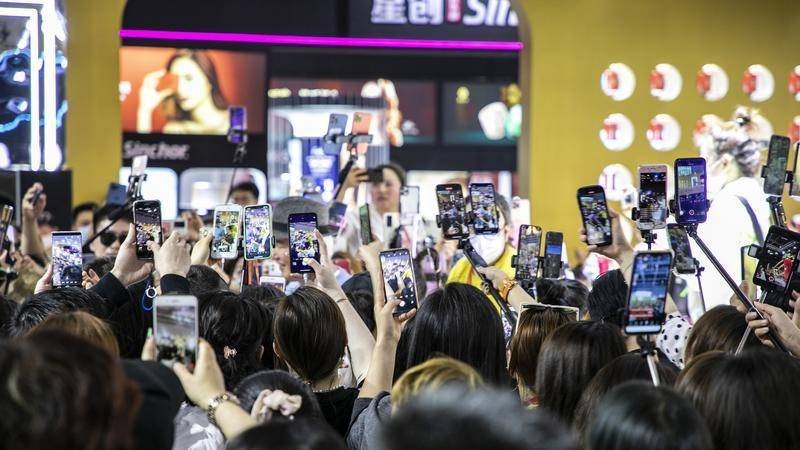
Therefore, the solution for Douyin e-commerce is: since Douyin excels in content, focus on videos and live streaming as the battleground, by increasing the frequency of platform promotions and increasing operational bias to enhance users' mental perception of Douyin's shelf scene—specific indicators include:
-
(Increase) the number of new entrance payment users in the mall;
-
(Increase) the number of search payment users;
-
(Optimize) user negative feedback rate;
-
(Reduce) high price rate.
A source close to Douyin told Huxiu that the Douyin business once proposed to hold a major promotion event every month to normalize promotions. "To implement this proposal, internal discussions have explored using graded and regional resource inputs to ensure the effectiveness of a single promotion."
#Huxiu's commercial consumer chief editor Huang Qingchun, Huang Qingchun channel producer, focuses on multiple areas such as entertainment social, gaming video, etc. Industry professionals can add WeChat for communication: 724051399, news tips can also be emailed to huangqingchun@huxiu.com
