


SAMSONITE: Stable profit growth, sharp drop in stock price! Why is the market sentiment so pessimistic?

After enjoying a recovery in the tourism industry in 2023, SAMSONITE faced growth pressure in 2024. The half-year performance announcement released on August 14th showed a decrease of 0.4% in net sales, while the attributable net profit to shareholders increased by 7.7%. Despite having sufficient working capital, no interim dividend was distributed, leading to a pessimistic market sentiment. The stock price plummeted by 12.43% after the performance announcement. The management adjusted the full-year sales guidance from high single digits to low single digits, citing reasons such as a weak global market and intensified competition
After enjoying the tourism industry recovery dividend in 2023, the global luggage leader Samsonite International S.A. (01910.HK) found itself in a growth anxiety in 2024.
After the market closed on August 14, Samsonite released its performance announcement for the first half of this year, achieving a net sales revenue of USD 1.769 billion, a decrease of 0.4% year-on-year (an increase of 2.8% based on constant exchange rates); the profit attributable to equity holders was USD 164 million, an increase of 7.7% year-on-year; the gross profit margin was 60.2%, up 1.4 percentage points from the same period last year, setting a record for the first half of the year.
Following the performance disclosure, Samsonite's stock price suffered a Waterloo on August 15. As of the time of writing, the company's stock price plummeted by 12.43%, hitting a new low since November 2022.
Furthermore, despite holding a strong liquidity of USD 1.6 billion and achieving decent profits, Samsonite still did not distribute interim dividends to shareholders as usual, leading some netizens to jokingly call Samsonite a "rooster that doesn't lay eggs."
Performance Lower Than Previous Estimates
Samsonite experienced weak growth in the first half of this year, mainly influenced by several factors: first, the high revenue base in the same period last year due to strong demand in the tourism market; second, the global tourism market performed poorly in the first half of this year due to economic weakness and inflation; third, the company faced significant competitive pressure in some markets.
In the second quarter of this year, Samsonite's revenue fell far short of management's previous expectations.
During the performance meeting in the first quarter report this year, Samsonite's management was confident, believing that the second quarter performance would be better than the first quarter, expecting a revenue growth of close to 10% or more in the second quarter and achieving high single-digit to low double-digit growth for the whole year.
However, things turned out differently. Wind data shows that while Samsonite had a 0.9% year-on-year increase in net sales revenue in the first quarter, the net sales revenue in the second quarter did not increase but instead decreased slightly by 1.64% to USD 909 million year-on-year, a significant difference from the management's expectations. This was also the first time since the first quarter of 2021 that the company recorded a year-on-year decline in net sales revenue for a single quarter.
Considering the decline in net sales revenue in the first half of the year, it is almost impossible for Samsonite to achieve high single-digit to low double-digit growth for the whole year.
Bank of America Securities stated in its latest report that Samsonite's second-quarter performance fell short of expectations, prompting the management to revise the full-year sales growth guidance from high single digits to low single digits, as third-quarter growth stagnated, overall consumer sentiment weakened, last year's base was high, industry competition increased, and discounts rose were the main drag factors.
In addition, Samsonite's operating profit in the first half of this year increased slightly by 0.8% year-on-year to USD 315 million, mainly driven by the enterprise segment, while several other markets lagged behind.
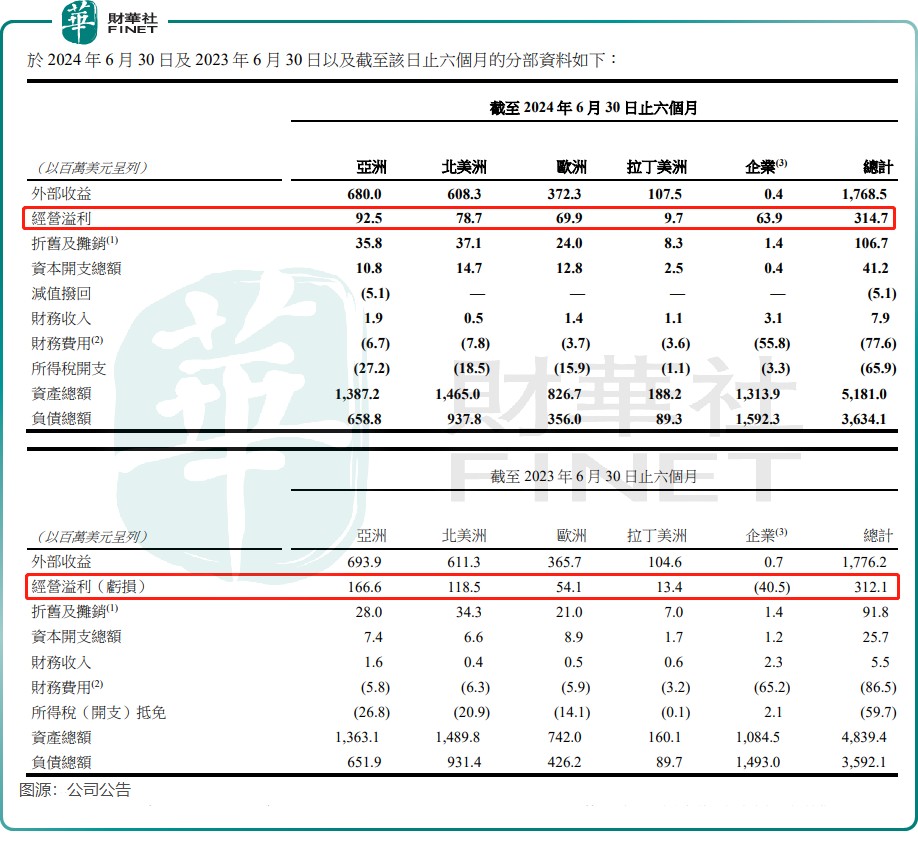 Samsonite International S.A.'s corporate divisions mainly include several groups engaged in franchise operations based on brand licensing and corporate headquarters functions and related expenses. Performance reports show that the operating profit of the corporate divisions in the first half of the year rebounded strongly to $63.9 million, but the operating profit in the Asian, North American, and Latin American markets all saw significant declines, with the operating profit in the Asian market at $92.5 million, a year-on-year decrease of 44.5%.
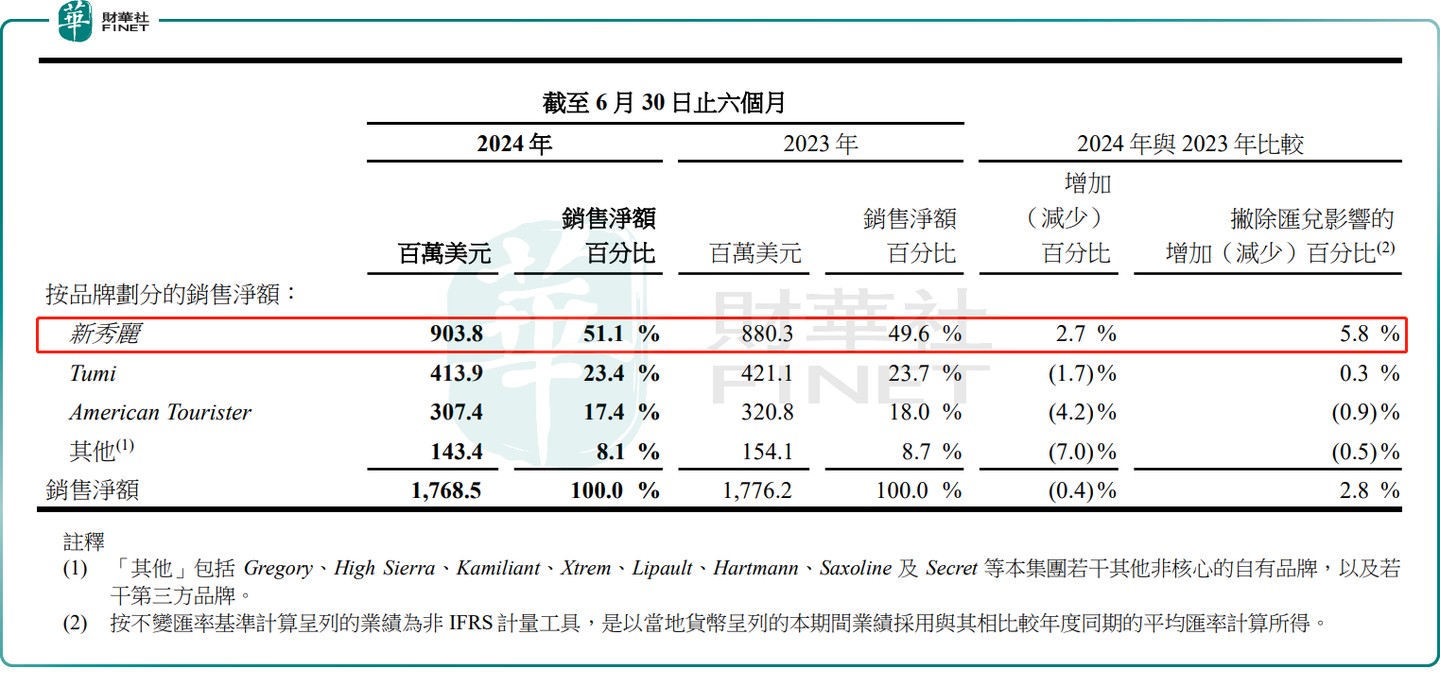
In addition, the Samsonite brand benefited from its reputation and popularity, showing a relatively strong performance in the first half of the year, with net sales increasing by 2.7% year-on-year to $904 million. However, sales of Tumi, American Tourister, and other products all declined, with American Tourister's net sales dropping by 4.2% year-on-year, mainly due to significant discounts by competitors leading to reduced sales in India and a decrease in sales to major wholesale customers in North America.
Weak consumer spending in Asia and North America, cautious outlook
Samsonite's business spans across Asia, Europe, and America, with Asia and North America being the two main sources of revenue for Samsonite. However, as we enter 2024, consumer spending in these two continents has been weak, dragging down revenue growth for Samsonite.
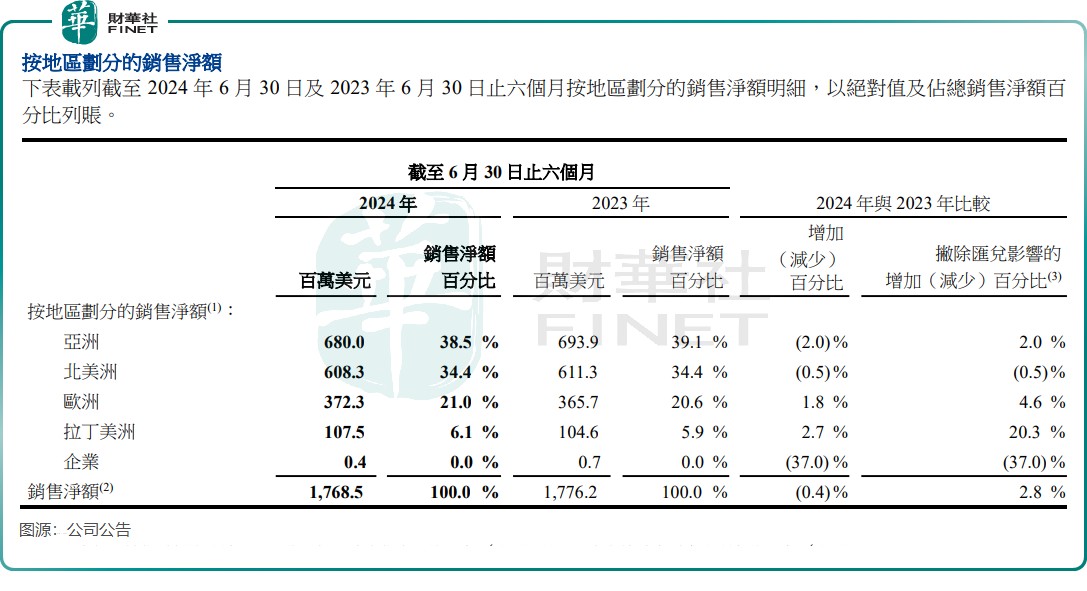
In the first half of this year, net sales from Asia and North America were $680 million and $608 million respectively, down by 2% and 0.5% year-on-year, respectively. Excluding the impact of exchange rates, the Asian market recorded a 2% growth. Sales in Europe and Latin America continued to grow, increasing by 1.8% and 2.7% respectively.
In the Asian market, Samsonite faced challenges in China and India. In China, net sales only grew by 3.8% year-on-year in the first half of the year, compared to a 23% year-on-year increase in the first quarter. The company pointed out that the net sales in China in the second quarter slowed down due to weakening consumer confidence. The tourism market in China performed strongly in the first half of the year, with total domestic tourist spending reaching 2.73 trillion yuan, a 19.0% year-on-year increase according to data from the Ministry of Culture and Tourism.
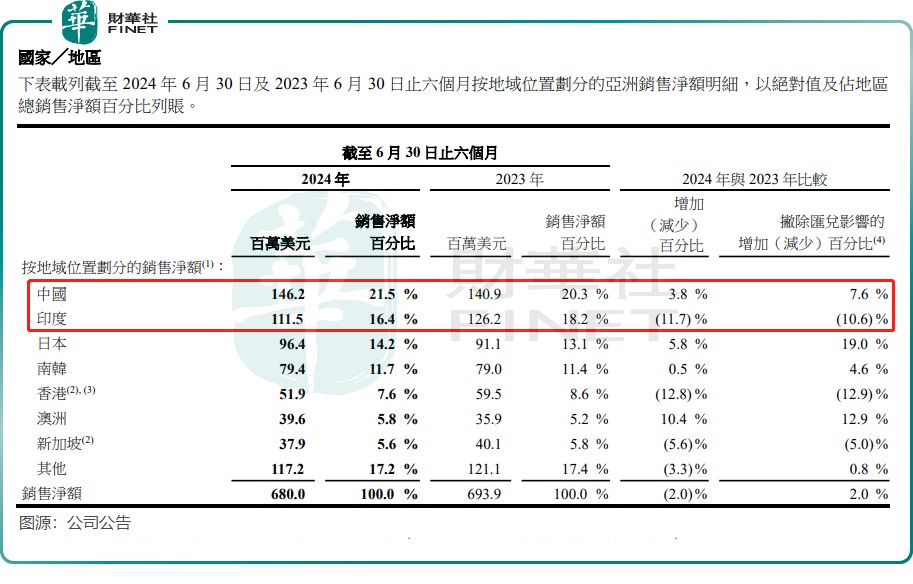
The performance in the Indian market was also not optimistic, with net sales in the first half of the year plummeting by 11.7% to $112 million year-on-year, mainly due to the impact of increased promotional activities by competitors. Sales in the Indian market also declined by 9.9% year-on-year in the first quarter, attributed to the slowdown in customer traffic Looking ahead to the second half of the year, SAMSONITE feels increasing pressure, stating, "In the second half of 2024, the company continues to see a slowdown in sales trends. Promotional activities in the market have increased, especially in the entry-level price range." The company also mentioned facing greater challenges this year, including more challenging macroeconomic conditions in China, intensified price competition in India, and decreased consumer confidence and reduced retail customer traffic in multiple markets.
Due to lower-than-expected performance in the second quarter, SAMSONITE's board approved a share buyback plan of up to USD 200 million in June, planning to initiate the buyback after the end of the lock-up period following the first-half performance announcement.
Regarding the company's plan to list in the United States, SAMSONITE stated in the semi-annual report that after a comprehensive evaluation of global operations, growth drivers, and strategic focus, the board and the company believe the United States is the ideal location for a dual listing
