Why couldn't Chinese smartphones conquer this "isolated island" of Japan? | DoNews Finance

DoNews
2024.08.19 05:00
portai
I'm PortAI, I can summarize articles.

Chinese smartphone brands still have limited performance in the Japanese market. Although Xiaomi's shipment volume grew by 359% in the second quarter of 2024, its market share is only 6%, far below the 56% of iPhone. The preference of Japanese consumers for iPhone and cultural differences make it difficult for Chinese brands to penetrate the market. In addition, local Japanese brands are also facing challenges, with companies like FCNT declaring bankruptcy, making the market competition even more intense

Editor | Li Xinma

Photo | DoNews

Chinese smartphones have long been heading towards the world, but in the Japanese mobile phone market, Chinese brands are almost invisible.

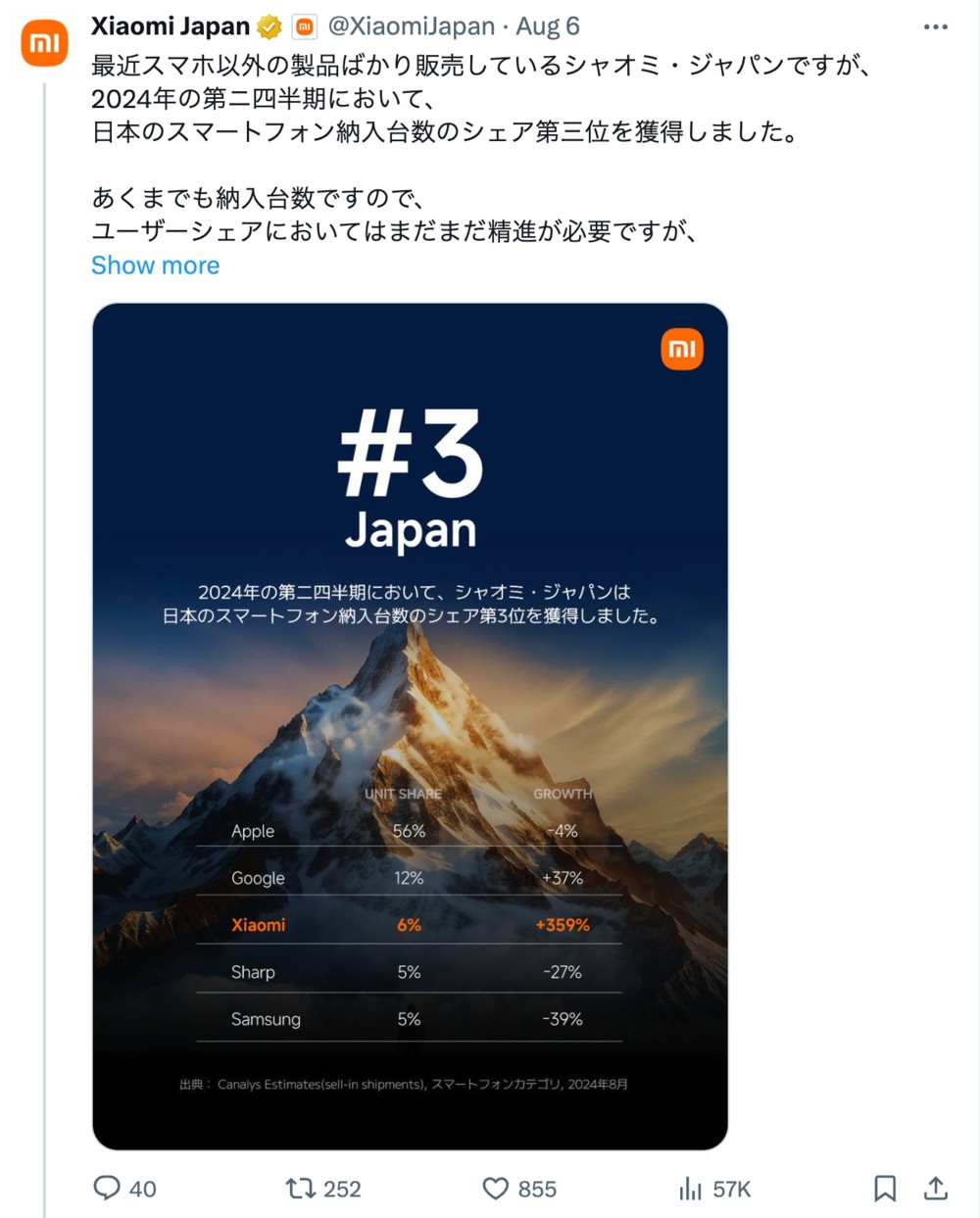
Recently, Xiaomi's data is eye-catching. In the second quarter of 2024, Xiaomi's smartphone shipments in the Japanese market achieved a growth rate of 359%, ranking among the top three in the Japanese market. Lu Weibing, Xiaomi Group partner/president, international department president, and Xiaomi brand general manager, also reposted the relevant data, saying, "Breaking through the Japanese market is still very difficult, let's continue to work hard!"

Image Source: X

However, looking closely at this ranking, Xiaomi, ranked third, only has a market share of 6%, while the top-ranked iPhone has a market share of as high as 56%, more than 9 times that of the former.

A Le, studying in Tokyo, told DoNews that almost 90% of the people around him use iPhones, and "it was the same five years ago." Xiaomi's offline stores are rare, "there are Xiaomi booths in department stores, but not many people."

Wen Li, who also works and lives in Tokyo, said that true "Mi fans" are very few in Japan, "although more and more Japanese consumers are beginning to understand this brand, overall, its popularity and recognition still cannot compare with brands like Apple and Samsung."

iPhone dominates in Japan, and the reasons behind it are complex, including local consumer concepts, regional cultural differences, and unique local operator environments. This has made Japan a "lonely island" that is difficult for Chinese smartphones to conquer.

I. Japan's Love for iPhone

It's not just Chinese brands that are being neglected by Japanese consumers, even Japan's own mobile phone brands are being overshadowed by the iPhone.

Japanese mobile phone brands have also had their moments of glory. Nokia, at its peak, entered the Japanese market but was defeated by Sony and Sharp, suffering a complete defeat and exiting the Japanese market in 2008. However, now they are gradually falling into trouble.

In 2023, FCNT, based on Fujitsu's mobile phone business in Yamato City, Kanagawa Prefecture, declared bankruptcy. BALMUDA has exited the mobile phone business, and Kyocera has stopped selling personal mobile phones.

Sony and Sharp, remaining in the market, are also facing strong headwinds. According to the statistics from the Japanese research company MM Research Institute, looking at the mobile phone shipments (including smartphones) in the first half of 2023 (April to September), Sony's shipments decreased by 49% year-on-year, and Sharp's shipments decreased by 39%.

In Wen Li's view, people who currently buy domestic brands mainly do so out of a sense of "support," "they accept the long-standing settings of the past and have great trust in old brands." Japanese people love the iPhone for two main reasons: their emphasis on quality consumption philosophy and a strong need for identity recognition.

Wen Li told DoNews that Japanese people tend to buy high-quality and durable products, where even design details, packaging, and labels can affect their inner sense of satisfaction. Therefore, even if the price is higher, they are willing to pay for it.

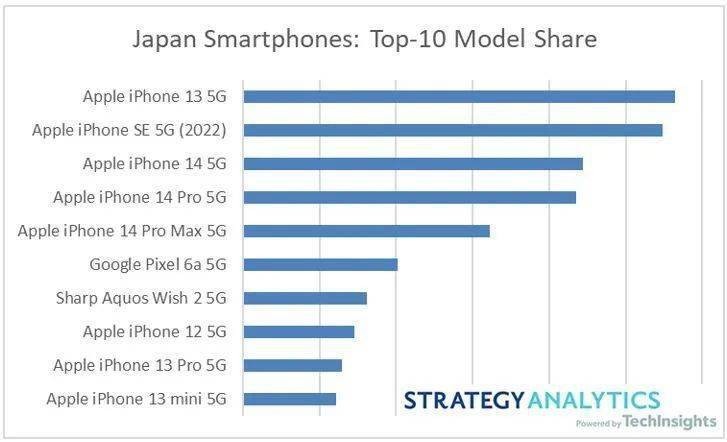
The introduction of the iPhone to Japan was seen as a disruptive innovative product, with its fashionable technology positioning and tone matching the aesthetic needs of the Japanese. In 2023, StrategyAnalytics released a TOP 10 list of best-selling smartphones in Japan for the third quarter of 2022, all dominated by the iPhone.

"When they have identified a certain product, they will establish a high level of brand loyalty, and the repurchase rate is also very high," Wen Li added.

In addition to the high quality requirements, the social attributes of the iPhone also resonate well with Japanese consumers. "The cultural environment in Japan requires people to establish identity needs. If most people around them use iPhones, the iPhone will become a social identity and symbol, which will also increase the brand's user stickiness," Wen Li said.

Furthermore, Apple has adapted and optimized the system and services of the iPhone according to Japan's network environment and payment methods. For example, supporting Japan's unique FeliCa payment function on Apple Pay, and supporting the always-on ProMotion technology.

It is with these characteristics that the iPhone has established a deep "moat" in the Japanese market.

According to research firm BCN, in June of this year, smartphone sales in the Japanese market increased by 29.3%, with Apple taking over half of the market share, showing a growth trend for 4 consecutive months.

Second, the "tough" Japanese market

Lu Weibing said that "breaking through the Japanese market is still very difficult," a sentiment shared by other Chinese smartphone brands.

Before Xiaomi, other Chinese smartphone brands also found it challenging to enter the Japanese market. In 2018, OPPO launched the OPPO R11s in Japan and established OPPO's sixth global research and development center in Japan; the same year, Huawei entered the Japanese market with the flagship Mate 20 Pro... Now, these brands are gradually losing their presence in the Japanese market.

In addition to Japanese consumers' love for the iPhone, Japan's unique operator environment has offset the price advantage of Chinese smartphones.

In Japan, phones are often sold bundled with services, and users need to purchase a plan to enjoy phone discounts. This method makes consumers feel like they are getting the phone at a lower price. Japanese SIM cards cannot be deactivated at any time like in China; users and operators need to sign a contract. If terminated early, a certain amount of penalty must be paid. According to Wen Li's recollection, "generally, the phone is provided at a discounted price, but it is bound for two years "

In other words, Japanese carriers have significant control over the sale of mobile phones, being able to determine the phone's features, configuration, and even pricing strategy. Japanese carriers often offer high-end phones or discounts on high-end phones to customers, with the iPhone being a typical example. As a result, all phones have good value for money, and the advantages of domestic phones compared to the iPhone are almost "blocked".

Image Source: IC photo

Domestic phone brands' strategy for entering the Japanese market lacks deep integration with telecom carriers. For example, Xiaomi initially entered Japan through independent sales channels like online sales, while Huawei's market share in Japan increased to 5% in 2019 due to breakthroughs with channel partners like NTT DoCoMo.

Additionally, Japanese carriers have high requirements for phone customization, often pre-installing their own applications, services, ads, or adding special features and interfaces to phones. Therefore, domestic phones in Japan can only exist as hardware manufacturers, finding it difficult to operate localized systems or even compete with some local manufacturers in terms of core competitiveness.

An industry insider told DoNews that domestic brands find it challenging to rise in Japan due to brand image and local perceptions. "Japanese consumers still have stereotypes about Chinese brands, believing that their quality and service are not high. The overall market competition is fierce, with low-end brands lacking visibility and high-end brands facing competition from Apple and Samsung, making it difficult for domestic brands to establish themselves."

III. Dawn and Long Road

On October 1, 2019, the "Revised Telecommunications Business Law" was officially implemented in Japan, bringing several major changes to the Japanese mobile phone market:

  • Requiring carriers to offer separate packages for phones and communication fees
  • Abolishing high contract termination fees
  • Prohibiting the sale of phones with SIM card locks
  • Lowering inflated phone bills

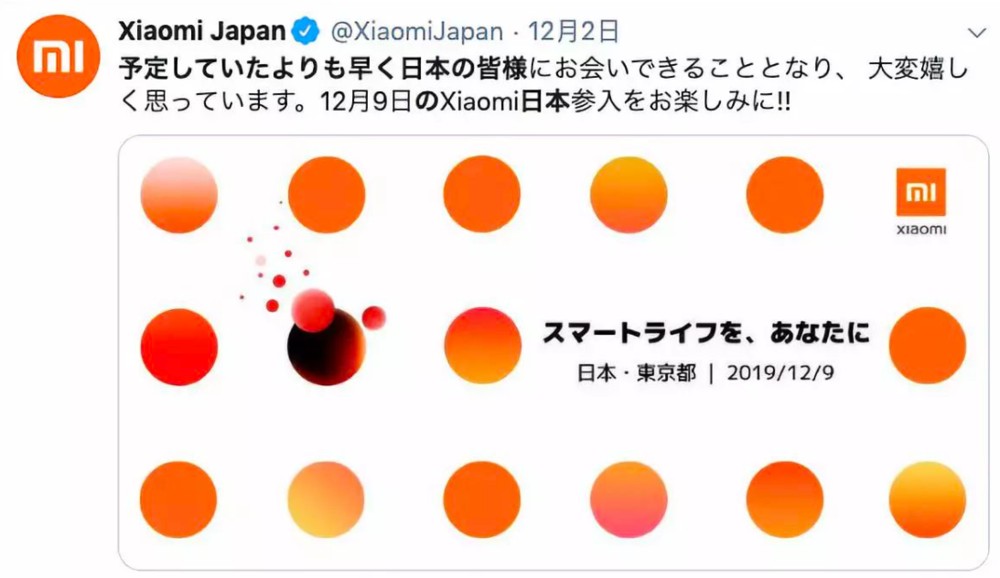
At that time, these measures provided consumers with more choices, making the market more "relaxed", and Xiaomi took the opportunity to expand into the Japanese market. In early December 2019, Xiaomi held its first product launch event in Tokyo, with the Mi Note 10 becoming the first product to enter the Japanese market.

Image Source: X

However, despite the introduction of the "Revised Telecommunications Business Law" and further market liberalization, factors such as brand market strategies, service quality, pricing, and personal preferences still influence consumer choices, and Xiaomi's entry into the Japanese market has been relatively flat.

It wasn't until 2023 that Xiaomi first collaborated with SoftBank to launch the Xiaomi 12T Pro (a variant of the Redmi K50 Supreme Edition), and then opened the first Xiaomi store in Shibuya, Tokyo.

" In May this year, the Xiaomi 14 Ultra was officially launched in the Japanese market with a price of 199,900 yen, equivalent to RMB 9,295.

While Xiaomi was stocking up, it further strengthened its promotional efforts. Not only did it have offline advertisements in cities like Tokyo and Osaka, but it also placed many online advertisements. During that time, many YouTubers would test and experience the imaging features of the Xiaomi 14 Ultra.

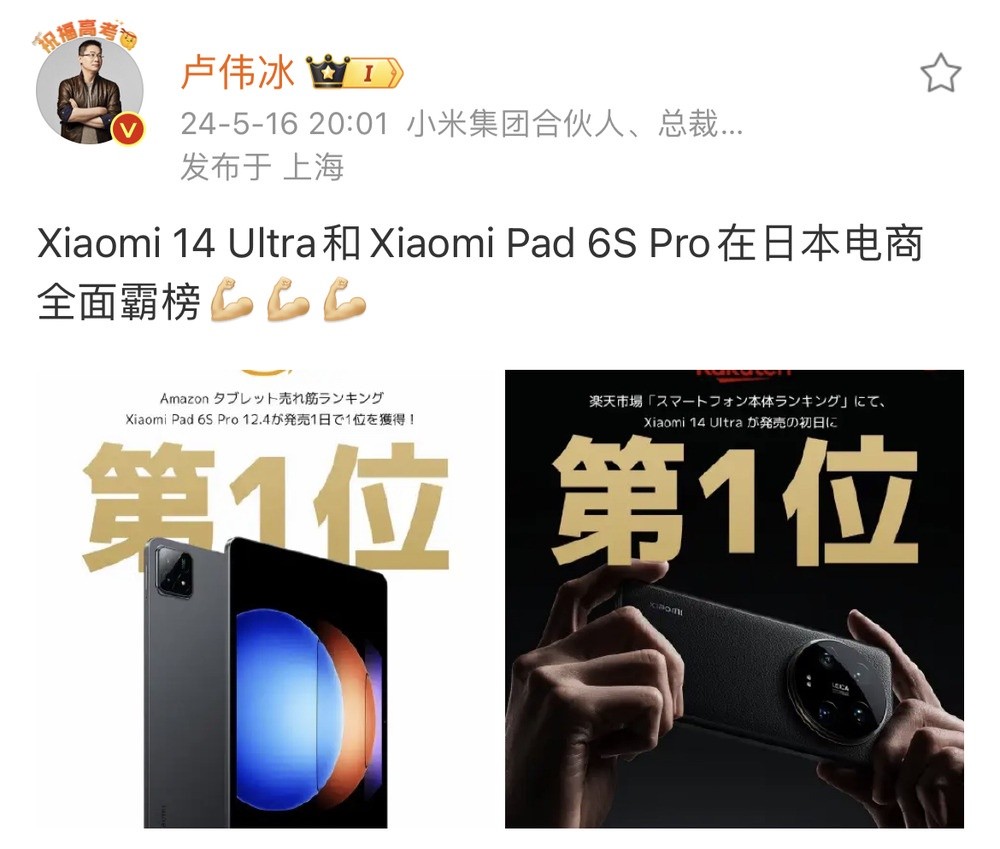
The intensive promotion eventually paid off in sales. Even though the Xiaomi 14 Ultra in Japan only offers one configuration, with the battery capacity reduced from 5300mAh in the domestic version to 5000mAh, and the price far exceeding the mainland market pricing, it still sold well on Japanese e-commerce platforms, indicating that its strategy in the Japanese market is working.

Image Source: Screenshot from Weibo

However, Wenli believes that Xiaomi has not yet established user loyalty in the Japanese market.

"To win the Japanese market, it is necessary to focus on the Internet of Things. However, Xiaomi's ecosystem is not rich enough overseas, with limited choices. Relying solely on smartphones makes it difficult to build brand awareness. It feels like there is still a long way to go."

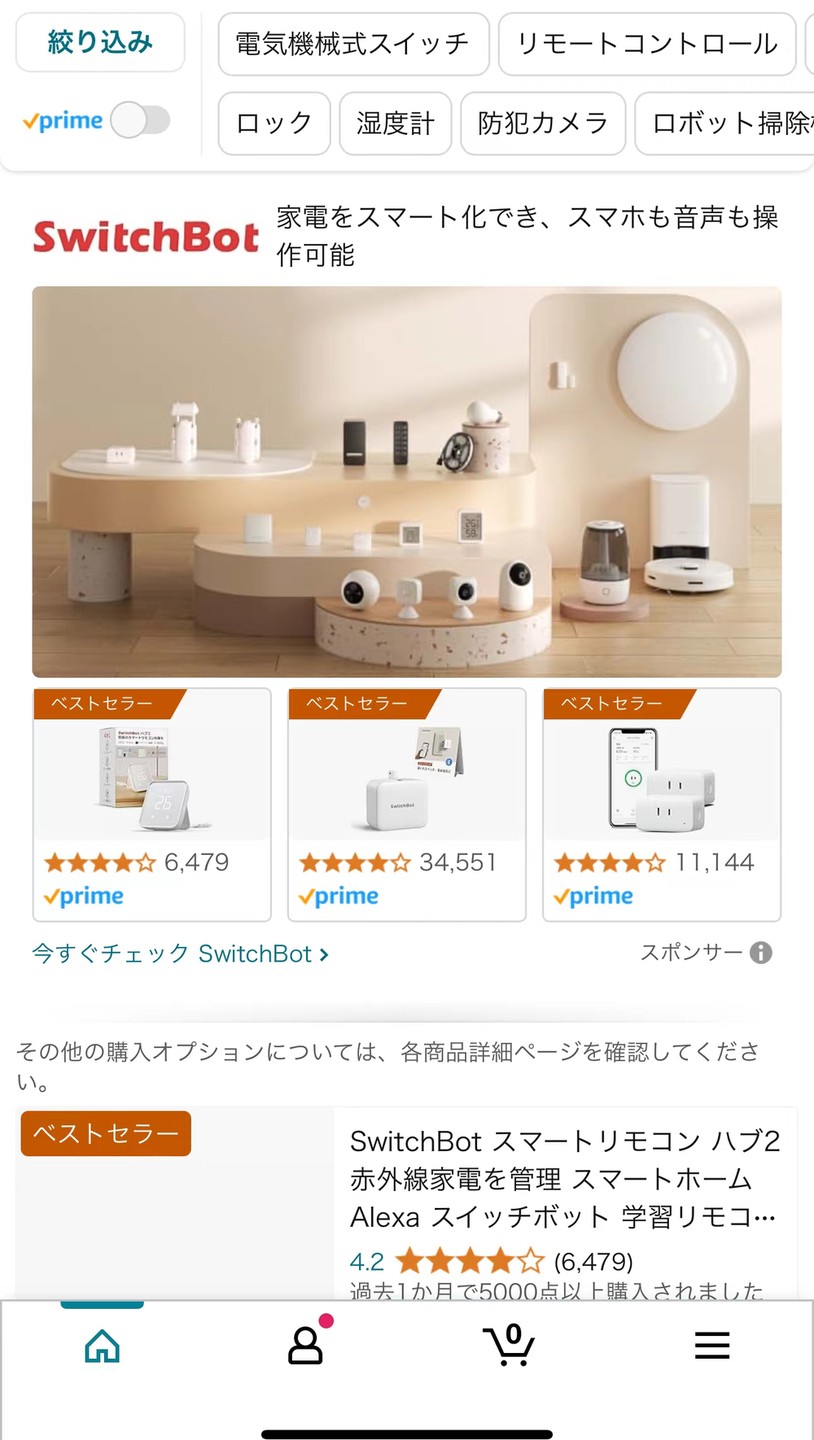
Currently, the majority of the Japanese smart home market is dominated by SwitchBot. Interestingly, DoNews found in its research that the reason this brand has captured the hearts of the Japanese people to some extent is due to its iPhone-like style.

SwitchBot's founder and CEO, Li Zhichen, stated in a media interview that despite the continuous emergence of electronic products and the increasing speed of iteration, what still impresses him is the early iPhone. "In that era, the iPhone demonstrated how to seamlessly integrate product, technology, and aesthetics, and how to provide users with a smooth interactive experience. This also drove me to work in this industry."

Image Source: Provided by the interviewee

Epilogue

The "hard nut to crack" of the Japanese mobile phone market has gradually made mobile phone manufacturers avoid discussing Japan. Coupled with the recent weakness of the Japanese yen, it has become a "chicken rib" market.

However, for Chinese mobile phones to seek to conquer the global market, the neighboring Japanese market is unavoidable. As the saying goes, overcoming one difficulty after another, this is also the significance of brands going global.

All characters in the article are pseudonyms

References:

"Imaginative 'Going Global' Journey: Interview with Li Zhichen, Founder and CEO of SwitchBot | CEO TALK"