Why is it said that the biggest selling point of iPhone 16 is a mirror?

Apple is set to release the iPhone 16 series next Tuesday, with the biggest selling point possibly being the upgraded 5x zoom lens. Previously, the iPhone 15 Pro Max received praise for its 5x zoom, enhancing the shooting effect, especially performing well in low-light conditions. The new model may continue this advantage. In addition to the lens, the iPhone 16 series will also introduce new colors and a design with new titanium alloy materials. Although the upgrade speed is relatively slow, the technical update for the telephoto lens has attracted widespread attention

爱范儿(ID:ifanr),作者:肖凡博,题图来自:AI 生成
The iPhone 16 Pro series will adopt quadruple prism technology to achieve better telephoto shooting.
• 📸 Significant improvement in telephoto photography effects
• 🔍 Quadruple prism increases focal length and reduces body thickness
• 🧠 Combining AI with new lens technology to enhance shooting experience
Next Tuesday, Apple's autumn launch event is coming, and the iPhone 16 series will also unveil its "mysterious" veil.
Putting "mysterious" in quotation marks because this unreleased device has already been exposed in various aspects: new blue-green-pink colors, new shooting buttons, vertically arranged new lenses, and new titanium alloy colors.
Perhaps the most anticipated aspects are only the price, as well as the long-awaited updates to AirPods and Apple Watch. However, a recent leak from MacRumors has sparked some discussion:
The iPhone 16 Pro and higher models will be equipped with 5x zoom.
After the release of the iPhone 15 Pro Max last year, the exclusive 5x zoom became the focus of major media imaging evaluations. A year has passed, and although opinions on the 5x zoom vary, the positive feedback predominates, as the longer focal length offers more versatility.
Has this 5x telephoto lens truly brought a qualitative leap to the iPhone's imaging capabilities? Why has it become the exclusive lens for the 16 Pro? While the expansion of focal lengths is not unique to Apple, why is its discussion the most prominent?
All of this can be traced back to a specific technology: quadruple prism.
Regarding Telephoto Shooting
To start with the conclusion: after upgrading to a telephoto lens on the 15 Pro Max, the photography effects have significantly improved.
Over the past year, many friends and colleagues who bought the iPhone 15 Pro Max have started showing off on social media, boasting that their iPhones can finally capture the moon. Compared to the big light bulb captured by the 14, the moon captured by the 15 Pro Max is more detailed and closer to reality.

Image source: Reddit.
Many aviation enthusiasts and birdwatchers have used the new iPhone to capture fleeting and exciting moments, even without professional equipment, making good use of their Apple devices in times of need Last year, when we conducted the initial review, we found that this 5x telephoto lens can take photos normally even in low light conditions, and also supports night mode. With powerful algorithms, pressing the shutter in a preview frame full of noise, you can get a color-accurate, clear, and clean photo.
Although Apple's telephoto lens update progress seems to be a bit slower compared to its peers, it has also caught up and provided a good answer. When Apple finally remembered to put effort into telephoto lenses, the development of mobile phone lenses has actually gone through several stages, with different trends almost every year:
In 2021, ultra-wide-angle lenses are becoming stronger, and super telephoto views are no longer the focus;
In 2022, large sensors are overwhelming, ushering in a new era of computational photography;
In 2023, high pixel periscope lenses are ready to compete, and glass-plastic hybrid lenses may become the future;
This year, with the joint development of hardware and software, one hand stacking materials, one hand AI, stylized photography is starting to stand out.
In recent years, the telephoto lens has experienced a "focus - neglect" phase and has ushered in its second spring. VIVO even directly promotes the periscope lens as the core selling point of the X100 Ultra.
So why do mobile phones need longer focal lengths? It's worth discussing, and it can also help us understand the "black technology" of the iPhone's quad-reflection prism.
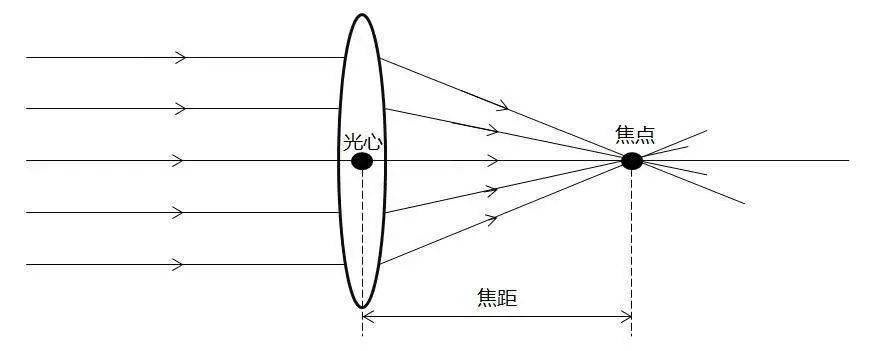
When talking about telephoto lenses, we need to first understand the impact of focal length on imaging. In traditional cameras, "focal length" refers to the distance from the center of the lens to the focal point where light converges; while on a mobile phone, it is the distance from the optical center of the lens to the imaging plane such as CMOS (or CCD).
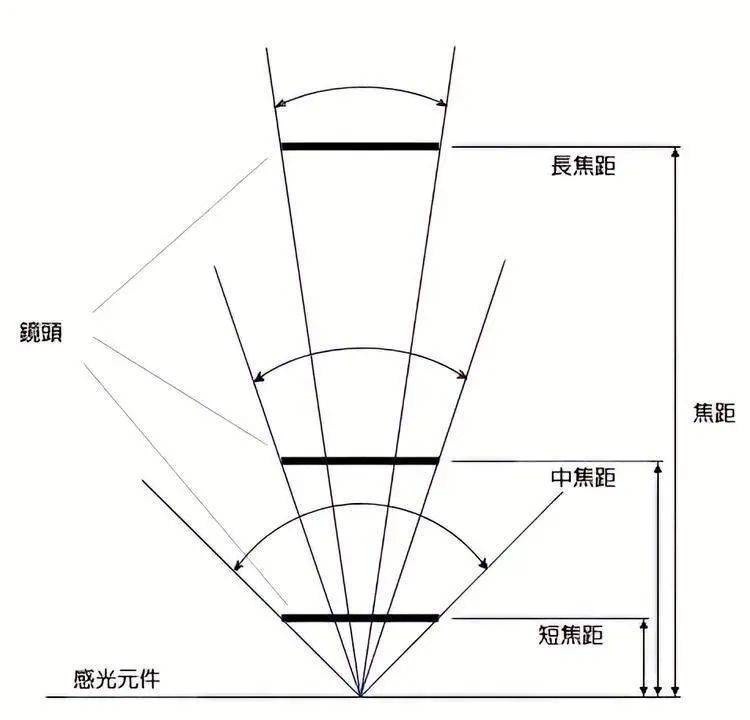
The length of the focal length directly affects the size of the imaging target. A short focal length corresponds to a wide field of view, with more elements in the frame; a long focal length corresponds to a narrow field of view, focusing on one or a few objects, but it can also capture distant objects clearly.
In traditional cameras, zoom lenses adjust the focal length by extending and retracting the lens to meet different shooting requirements. Compared to fixed-focus lenses, zoom lenses are more versatile. More work means more strength - larger volume and inconvenience in carrying have become the frustration of photographers with zoom lenses.
The telephoto lens on a mobile phone is actually the combined result of the constraints and development of zoom technology.
On the one hand, with technological advancements, components such as lenses and sensors can be made smaller, allowing more bulky traditional lens technologies to be miniaturized and integrated into mobile phones.
On the other hand, due to the limitations of mobile phone size and the pursuit of portability, a single zoom lens has to be split into several fixed-focus lenses with different focal lengths to indirectly achieve the effect of optical zoom The division of labor for the lens has been settled, the size has been reduced, but another difficult problem has emerged: the refraction path of light in the mobile phone lens has become shorter, the focal length is not enough, and it cannot meet the requirements of a telephoto lens for the focal length.

Therefore, among the multiple lenses in mobile phones, the most difficult to handle is often the telephoto lens with the longest focal length and optical path. If the traditional upright telephoto lens used in conventional cameras is adopted, it will indeed save more effort, but it will bring two tricky problems:
- Severe optical distortion and chromatic aberration;
- The thickness of the lens module will be "elevated".
Now it seems that the "full of problems" upright telephoto solution is the first generation telephoto lens on mobile phones, first used by the iPhone 7 Plus, later used on models such as Huawei P20 Pro, and finally gradually abandoned by manufacturers due to the need to shorten the focal length for better imaging, and the many derivative problems that arise when extending the focal length.
While manufacturers have abandoned the solution, the exploration of telephoto lenses has never stopped. The second generation telephoto lens - periscope lens, started to appear on smartphones at this point.
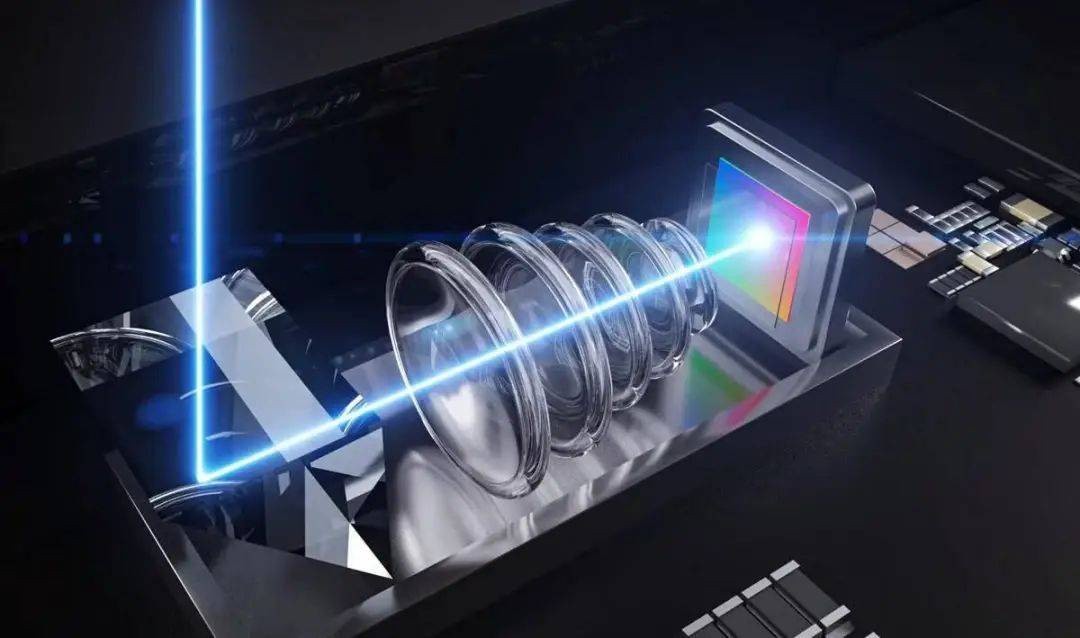
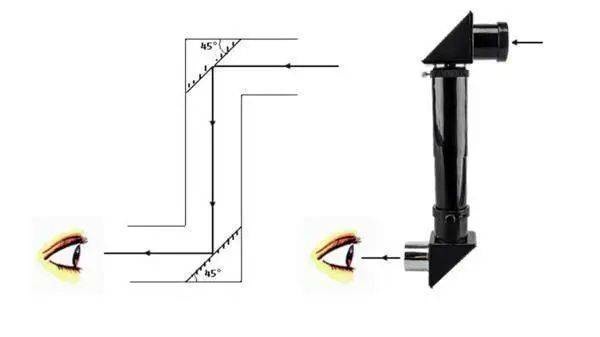
The periscope telephoto lens uses two prisms (some use one), allowing light to reflect once or several times, changing the propagation of light in the vertical direction of the phone to horizontal propagation, thereby increasing the optical path length and consequently increasing the focal length of the telephoto lens.

Because this solution is based on the working principle of periscopes on submarines, it is also called "periscope".

It is not an exaggeration to say that "periscope is to solve the shortcomings of the upright type", because the expansion in the horizontal space has solved the troubles of the first generation telephoto lens:
- With a larger focal length, a larger sensor can be used;
- With enough space, more complex optical systems and stabilization modules can be equipped, improving image quality;
- In the same thickness module, the focal length of the periscope can be longer than that of the upright type.
After Huawei P30 Pro was equipped with a periscope telephoto lens, it gained the ability of 5x optical, 10x hybrid, and 50x digital zoom, and imaging became one of the biggest selling points of Huawei phones.
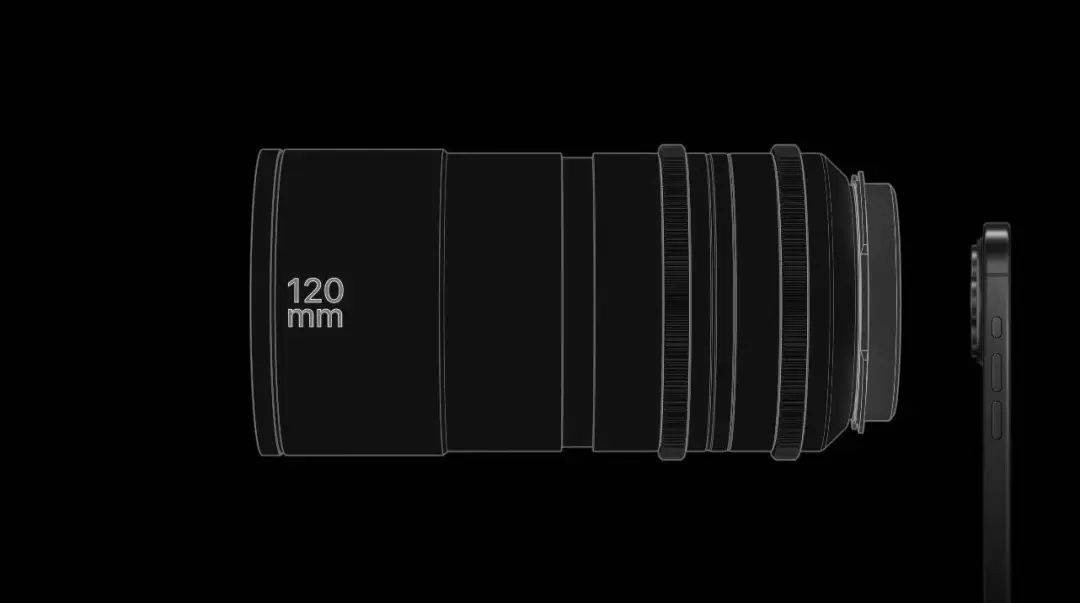
Subsequently, almost every flagship model followed suit with periscope telephoto lenses, but the large span between the main lens with a maximum focal length of 48mm and the telephoto lens of 120mm resulted in poor imaging effects at 3x and 4x zoom, and the field of view was too small when switching to the 5x telephoto perspective
In response to the feedback on moving towards improvement, manufacturers have optimized two technical routes based on the original periscope telephoto lens: periscope optical zoom lens and dual telephoto lens.
First of all, it should be noted that almost all manufacturers' promotion of "optical zoom" is actually not a true continuous optical zoom, but more like digital zoom. Only at specific focal lengths such as 0.6x, 1x, and 5x, when the lenses switch work, it can be considered optical zoom.
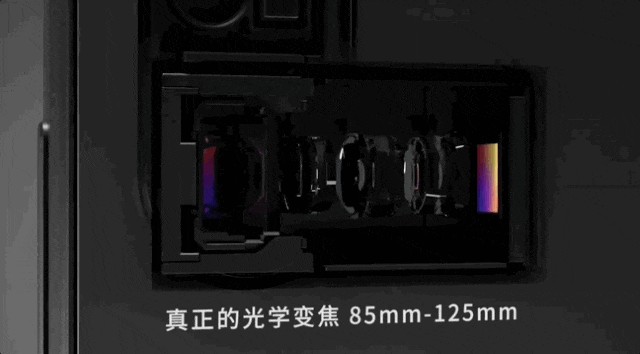
The Sony Xperia 1 IV is one of the few models on the market that truly achieves optical zoom on a mobile phone. Its periscope telephoto lens supports continuous zoom equivalent to 85-125mm.

On the other hand, the OPPO Find X7 Ultra adopts the dual telephoto lens route, using more fixed-focus lenses to indirectly achieve the shooting capability of long focal lengths in multiple segments.

If the periscope lens is a solution that tends towards perfection, manufacturers would not gradually lose interest, give up, or even neglect telephoto lenses. This is because size, large sensor, and focal length form another impossible triangle for mobile phone periscope lenses - unable to simultaneously satisfy all three.
Even though Sony has achieved true optical zoom, due to cost constraints, it cannot become the choice for the majority. Last year, the iPhone 15 Pro Max gained popularity for this reason.
Quad-reflective prism
Let's summarize the logic above:
For mobile phones to pursue a more comprehensive shooting effect, they must have telephoto lenses → Telephoto lenses require more space to extend the optical path and increase the focal length → Periscope lenses are more suitable for telephoto lenses than upright lenses because the horizontal space of the phone is more spacious.
However, from the current flagship models' weight and the thickness of the lens module, the periscope lens is still not the optimal solution.
As mentioned earlier, the periscope lens uses one or two prisms to first deflect light by 90° parallel to the phone horizontally, correct it through the optical system, then deflect it by 90° to reach the sensor for imaging (some brands have only one prism, so the light is deflected only once, and the sensor is vertically placed inside the phone).
The iPhone 15 Pro Max has taken a different path: quad-reflective prism.
In traditional periscope lenses, each prism can only deflect light once, but Apple has applied the principle of total internal reflection in prisms at a certain angle of incidence, directing the incident light into the interior of a four-prism, allowing the light to undergo four deflections and reflections within the prism.

From the traditional periscope-style 90° reflection to a single prism with four reflections, there are several obvious benefits:
- The more reflections of light, the easier it is to increase the focal length to meet the requirements of telephoto lenses;
- A four-sided prism is thinner than a three-sided prism, reducing the thickness of the device body;
- The sensor "lies" on the mainboard of the phone, providing more horizontal space.
Of course, this is just a simple overview of the basic principle. There are many complex processes in the prism, such as coating to prevent light leakage, slotting to prevent glare, and other technologies that are essential elements in a four-fold reflection prism.
When we were reviewing this patent document, we found another interesting fact. The inventor of the four-fold reflection prism is not surprisingly not Apple, but a Japanese optical engineer named Takeyoshi Saiga. Apple had acquired this technology earlier through financial means, once again marveling at the company's forward-looking vision and technological layout.
Moreover, in another patent document, Takeyoshi Saiga upgraded the four-fold reflection prism.
Just by looking at this patent diagram, it is easy to see that the main body of the prism remains, but the new design splits the reflective prism in half, and the part in the middle is not a flat cut but an uneven spherical surface.
Yes, Takeyoshi Saiga integrated the prism module previously placed directly above the prism into one, eliminating the thick lens combination, leaving only one lens in the new design, making the phone thinner.
One cannot help but admire the ingenuity of the improved version of the four-fold reflection prism.
I wonder if the upcoming iPhone 16 Pro will use the same technology. However, based on the parameters that have been exposed, the thickness of the 16 Pro and 15 Pro is exactly the same (8.25mm). It is estimated that this cutting-edge technology is still a distance away from actual commercial use.
Moreover, this type of telephoto lens structure is not without its drawbacks. For example, while the four-fold reflection prism can balance focal length and thickness well, the amount of light reaching the CMOS after multiple reflections will attenuate more. How to solve the problem of excessive noise in night scene shooting may be a major challenge for the 16 Pro In addition, the single prism is a very new creative idea, but it is not yet advanced because it is a compromise technology that Apple has made for weight, thickness, and long focal length. For this prism and thickness control, the bottom of the 15 Pro Max is still relatively small compared to other brands.
Moreover, many users of the iPhone 15 Pro Max have gradually provided feedback over the past year that the trigger distance of this telephoto lens is too strict. It needs to be close to the target by nearly 90cm to switch to the telephoto lens. If the distance is less than this, the iPhone will most likely automatically switch to the main camera for shooting.
Telephoto macro is the new trend this year. Let's see what Apple will do next week.
Although these issues can be easily solved by changing the main camera sensor and adding a module, we must remember that smartphones are a balance of technology and art. In the pursuit of performance and feel, there will always be compromises.
However, what can be confirmed is that the iPhone 16 Pro and Max will both adopt quadruple reflective prisms. As consumers, we generally pay little attention to the technical process, and what we care more about is what improvements new technologies will bring in the end.
At least from the feedback of using the iPhone 15 Pro Max for nearly a year, the quadruple reflective prism has brought more possibilities to the telephoto lens of the phone.
Especially this year, Apple has also started to talk a lot about AI. They should combine new hardware technologies and software algorithms more closely. With the support of quadruple reflective prism technology, we look forward to new breakthroughs in portrait mode for the iPhone 16 Pro (Max) and a new experience for telephoto photography