


WeChat "Hard Steel" Apple, why are the tech giants fighting?

Recently, rumors about iPhone 16 not supporting WeChat have strained the relationship between Apple and WeChat. Apple has increased pressure on Tencent and ByteDance, demanding to plug the payment loophole in WeChat to impose a 30% "Apple tax," namely channel fees. This dilemma forces users to choose between Apple and WeChat. Although the "Apple tax" brings substantial revenue to Apple, developers are generally dissatisfied, believing that the high tax affects their survival space
Recently, the rumor that "iPhone 16 does not support WeChat" has been circulating.
It is reported that once the iPhone is upgraded to the iOS 18.2 system, WeChat will not be usable. Consumers of Apple and WeChat may face the awkward situation of "choosing one out of two." Some netizens even suggested that "Apple and WeChat will eventually have a showdown," and related topics quickly made headlines on various social media platforms.
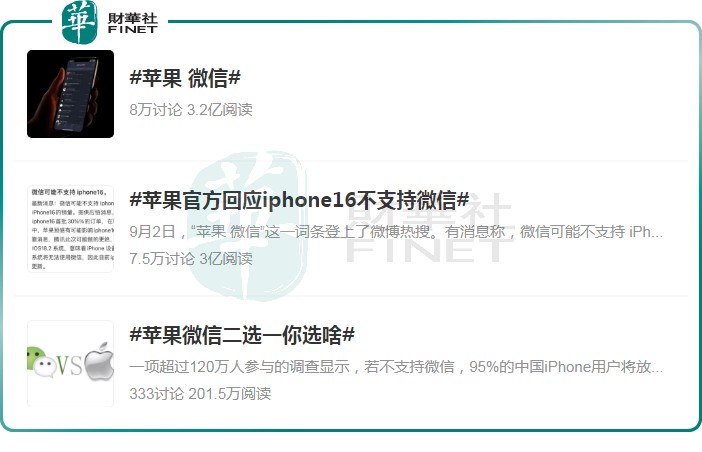
The cause of this incident is as follows. Earlier, there were reports that Apple (AAPL.US) increased pressure on Tencent (00700.HK) and ByteDance. Apple hoped to "block" the loophole in small game payments to prevent developers from directing users to external payment systems. Apple had warned Tencent that if they did not stop developers and users from bypassing the Apple ecosystem, they would refuse to provide WeChat updates in the future.
The reason Apple is asking WeChat to block payment loopholes is to force a 30% "Apple tax" on the WeChat ecosystem.
The so-called Apple tax is essentially a "channel fee." Historically, to list software on the Apple Store, developers may need to pay a certain fee to Apple before they can list or download it.
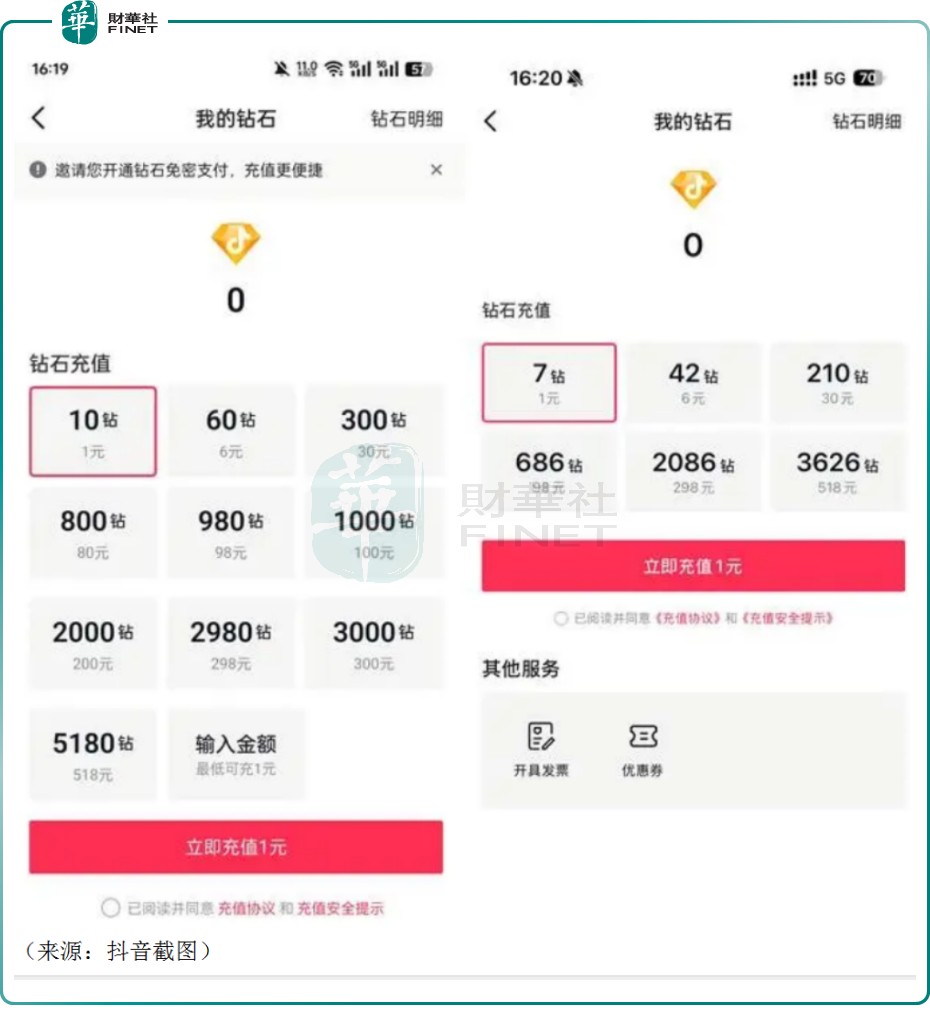
In the process of using many video apps, if you want to recharge to give gifts to influencers, Apple phones give you 7 diamonds for 1 yuan, while Android phones give you 10 diamonds for 1 yuan, with the deducted portion being the 30% Apple tax. Many gaming apps are similar.
The reason for the existence of the Apple tax is, of course, due to Apple's excellent ecosystem. This ecosystem is closed, secure, provides a smooth user experience, and Apple users have higher loyalty, which are among Apple's core competitive advantages. For many app developers, listing their apps on Apple's App Store allows them to easily reach a large number of Apple users and is a more efficient and effortless approach According to Sensor Tower data, in 2023, Apple's "Apple Tax" global revenue reached approximately RMB 160.8 billion, bringing a continuous cash flow to Apple, with a contribution of over RMB 40 billion from the Chinese market, highlighting its significance.
However, this has also been criticized by many developers, who believe that the tax is too high, saying "the Apple Tax has been bitter for a long time." Previously, it was reported that many mini-program developers feel that the 30% Apple Tax is squeezing their survival space. Most of them are small and medium-sized enterprises, with an average of around 10 employees and a profit margin of less than 12%.
Informed sources have revealed that WeChat currently does not take a cut on the iOS side. Behind the dispute between WeChat and Apple, WeChat is mainly aiming to protect the rights of small and medium-sized (game) developers in the ecosystem.
It is worth noting that in recent years, WeChat mini-games have developed rapidly. Data shows that in the first half of this year, the actual sales revenue of the domestic gaming market was RMB 147.267 billion, a slight increase of 2.08% year-on-year. Among them, the total revenue of mini-program mobile games was RMB 16.603 billion, accounting for as high as 11.27%, and a significant year-on-year increase of 60.5%.
The prospects of the mini-program mobile game market are enticing, and WeChat is undoubtedly the dominant platform in this field. If these game developers bypass the "Apple Tax," they are clearly touching Apple's "cheese."
The escalating disagreements between the two tech giants are a spectacle for onlookers. There are rumors that users will be forced to "choose one of two," similar to the past e-commerce companies being forced to choose between Taobao or JD.com, as well as the business game between QQ and 360.
Tencent and Apple are clearly both tech giants, each with deep moats. According to Tencent's 2023 financial report, the combined monthly active accounts of WeChat and WeChat reached 1.343 billion. Tencent has deeply penetrated various aspects of Chinese life, giving it the confidence to challenge Apple.
In China, there are over 250 million users using iPhones. The stickiness of Apple products has always been high, and the accumulated data and usage habits over the years make it difficult for many Apple users to switch to the Android platform. As a "top holding stock" for investment masters like Buffett and Duan Yongping, Apple's moat needs no further explanation.
The disagreements between the two companies involve various interests, with far-reaching implications for users, developers, Apple, and the entire mobile ecosystem.
In fact, regarding this event, relevant parties have made some responses—
Previously, Tencent management stated that Tencent is not currently commercializing mini-games on iOS through internal purchases (bypassing payments). During the second-quarter financial report meeting, Tencent openly admitted that they are negotiating with Apple regarding revenue sharing for WeChat mini-games.
Recently, a technical consultant from Apple China mentioned that issues related to whether the iOS system or Apple devices can continue to use WeChat require mutual communication and discussion between Apple and Tencent He said that Apple is currently actively communicating with Tencent to confirm whether Tencent will continue to provide software downloads to Apple's App Store. Both companies will make certain arrangements for their respective benefits, so there is no need to worry for now.
Industry insiders point out that the most likely outcome of this event is for Tencent and Apple to each compromise, with Apple reducing the revenue sharing ratio and Tencent accepting a certain percentage.
Some analysts believe that the dispute between Apple and WeChat mainly focuses on the disagreement over in-app payment policies. Although there is a certain amount of interest at play, both sides have enough motivation and reasons to continue cooperating. Therefore, the situation of choosing between Apple and WeChat is unlikely to occur.
Perhaps compromise is the eternal game rule in the business world. Both companies are huge in size, with a wide range of cooperation areas. A scenario of either black or white, or being forced to take sides, may not actually happen in the real business world.
In the long run, the emergence of conflicts between these two giants has also prompted the entire industry to think about how to balance innovation and regulation, openness and closure in the rapidly evolving technology field, in order to build a healthier ecosystem and bring real convenience to users.
It is worth mentioning that when it comes to the Apple tax issue, Apple has faced similar games not for the first time.
For example, music streaming service Spotify and game company Epic Games have both had legal disputes with Apple. In March of this year, the EU imposed a huge fine of 18.4 billion euros on Apple, forcing the latter to adjust its "Apple tax" in some regions.
Later, Apple made a series of adjustments in the EU region, reducing the Apple tax from the original 30% and 15% (for small and medium developers with annual revenue of $1 million) to 17% and 10%, respectively
