


iPhone 16 released, Apple's first AI phone in history, Apple's AI assistant to support Chinese next year

iPhone 16 released, Apple's first AI phone, will support Chinese in the future; new camera control function added, equipped with A18 Pro processor, achieving longer battery life. Although the appearance is similar to 15, the screen is larger, and the camera arrangement has changed. The new color options include white, deep cyan, etc., with pre-order starting from September 13th
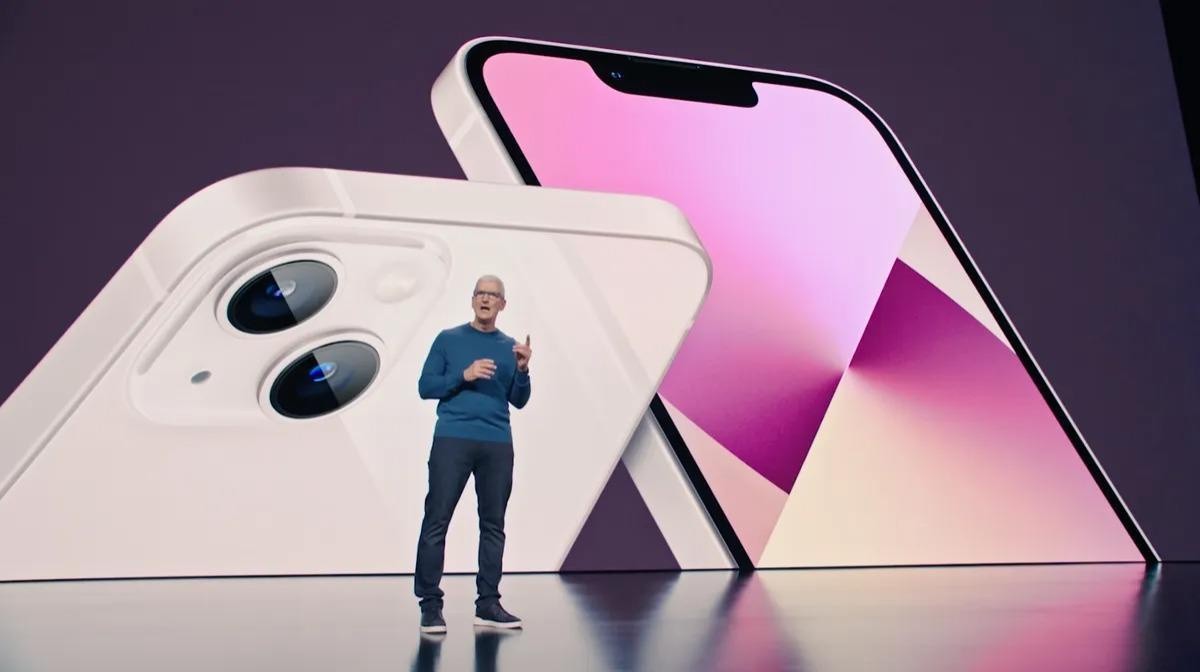
APPSO (ID: appsolution), Authors: Li Chaofan, Su Weihong, Mo Chongyu, Cover image from: Apple Keynote
iPhone 16: Apple's first AI phone debuts, Chinese-supported Apple Intelligence coming soon.
• 📸 New "Camera Control" feature for smarter photography
• 🌐 Apple Intelligence to support Chinese next year, launch date TBD
• 💡 Performance boost, A18 Pro processor, long battery life
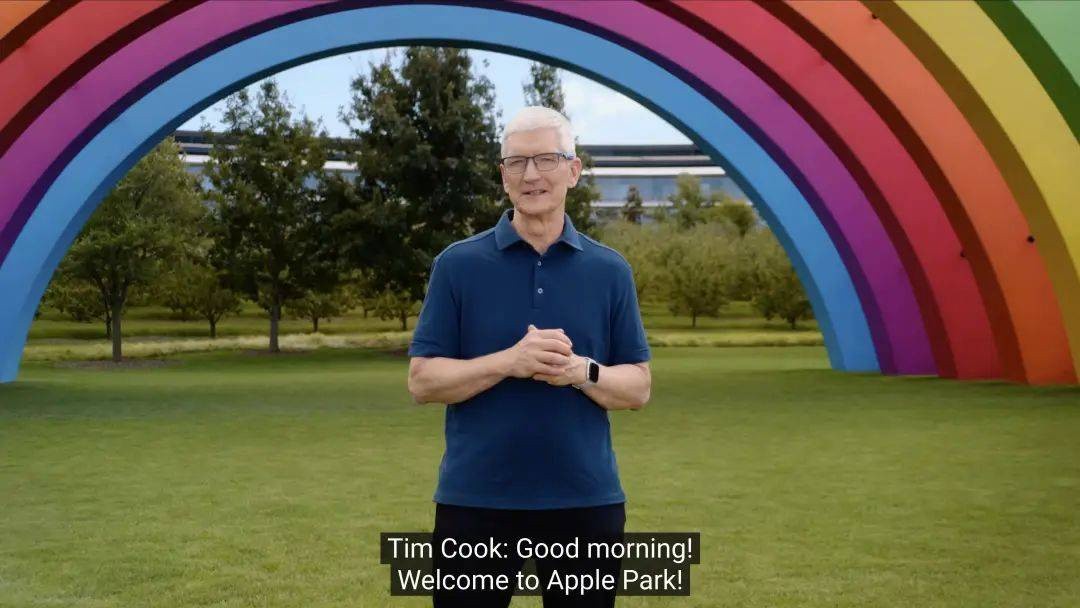
Good Morning! Cook once again delivered this classic opening at Apple Park.
Unlike previous years, Cook mentioned Apple Intelligence and Machine Learning at the beginning of the keynote, showing Apple's emphasis on AI this year.
The all-new iPhone 16 series is Apple's first truly AI-powered iPhone.
For the most concerning questions about iPhone 16, we have prepared a quick Q&A session to give you a practical guide in the most concise and direct way.
Q: How does the iPhone 16 Pro differ from the 15 in appearance?
A: Larger screen size, equipped with "Camera Control", narrower bezels
Q: What is the most intuitive change in the appearance of the standard version of the iPhone 16?
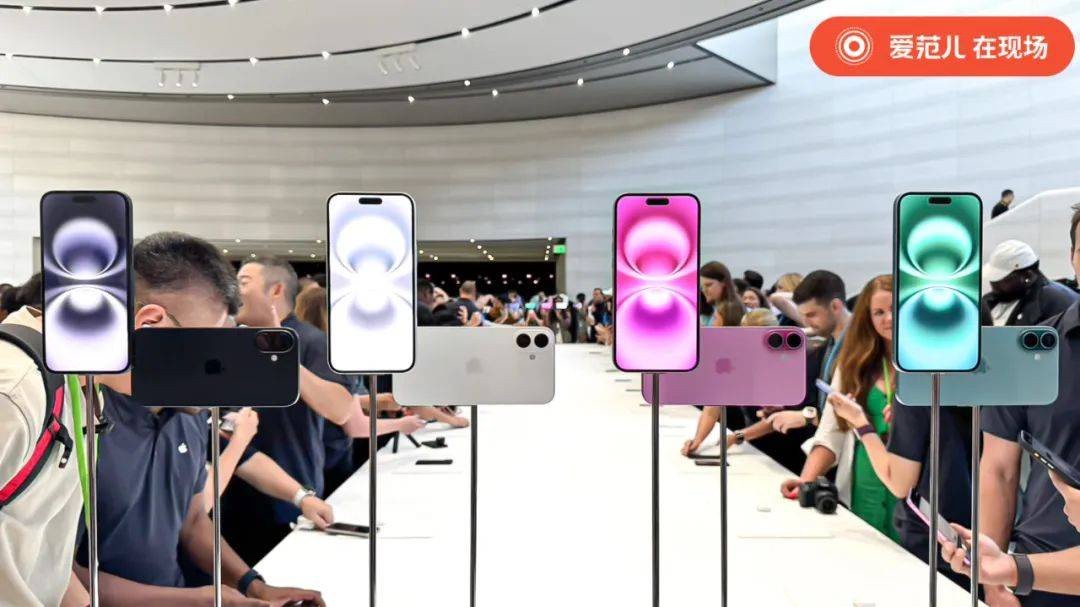
A: The camera layout has changed from the previous "bathhouse" diagonal arrangement to a vertical arrangement, reminiscent of the iPhone X
Q: What are the new color options for the iPhone 16 series?
A: iPhone 16 adds white, deep cyan, and indigo colors, while iPhone 16 Pro adds a desert titanium metal color option
Q: What is the use of the new "Camera Control"? Is it exclusive to the Pro series?
A: It is supported across the series. In addition to serving as a shutter button, it can control zoom, depth of field, shooting styles, and activate visual intelligence.
Q: Can Chinese versions of the iPhone 16 utilize Apple Intelligence?
A: Apple Intelligence will support Chinese next year, with the launch date yet to be determined.
Q: How much is the price difference between the iPhone 16 series and the previous generation? A: Unchanged
Q: Pre-order and release date for iPhone 16 series?
A: Pre-orders start at 8 p.m. on September 13th, with the release on September 20th.
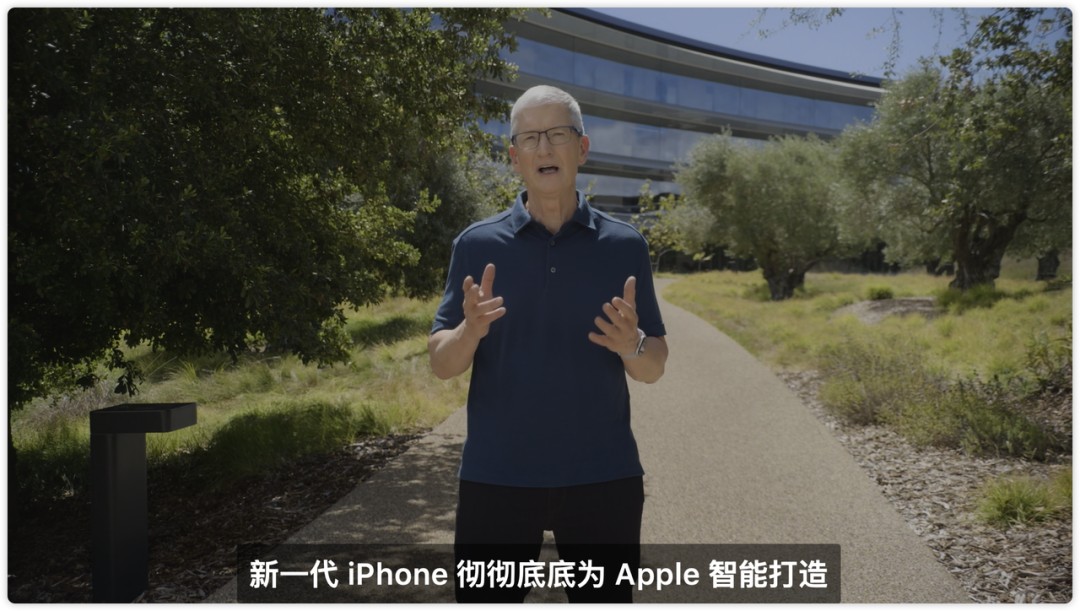
For the first time in history, the first iPhone created for AI.
The new generation iPhone is completely tailored for Apple's intelligence.
This statement by Cook will go down in the annals of Apple's press conferences.
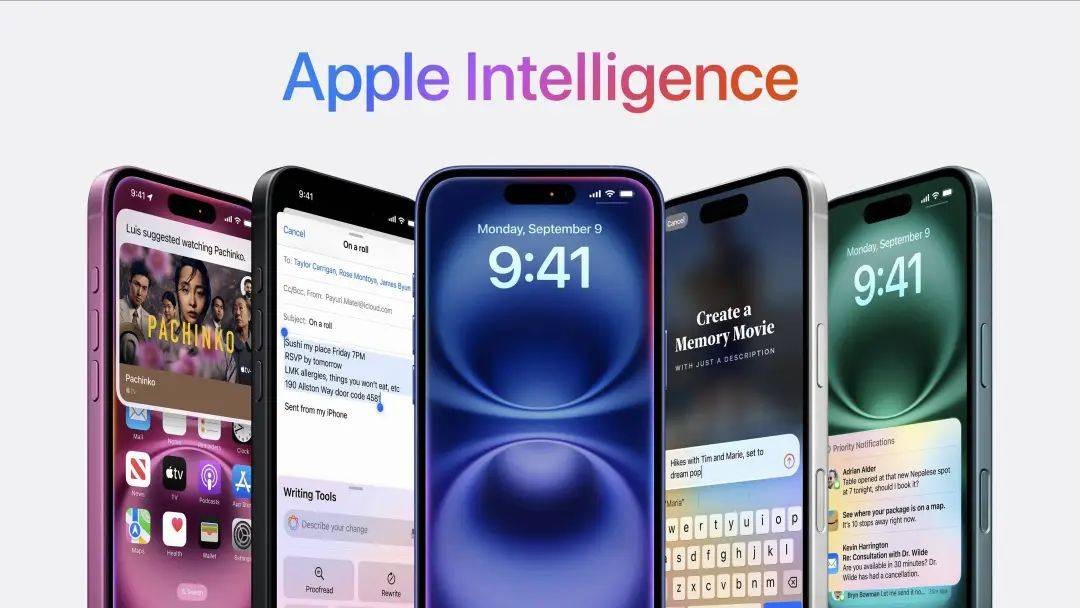
As the biggest highlight of the iPhone 16 series, the Apple Intelligence that was not delivered as scheduled will be launched next month, initially limited to the U.S. English region.
Apple stated that the Apple Intelligence feature will gradually support more languages.
In December of this year, English dialects in Australia, Canada, New Zealand, South Africa, and the UK will be the first to use Apple Intelligence, with Apple planning to gradually increase support for other languages such as Chinese, French, Japanese, and Spanish by 2025.
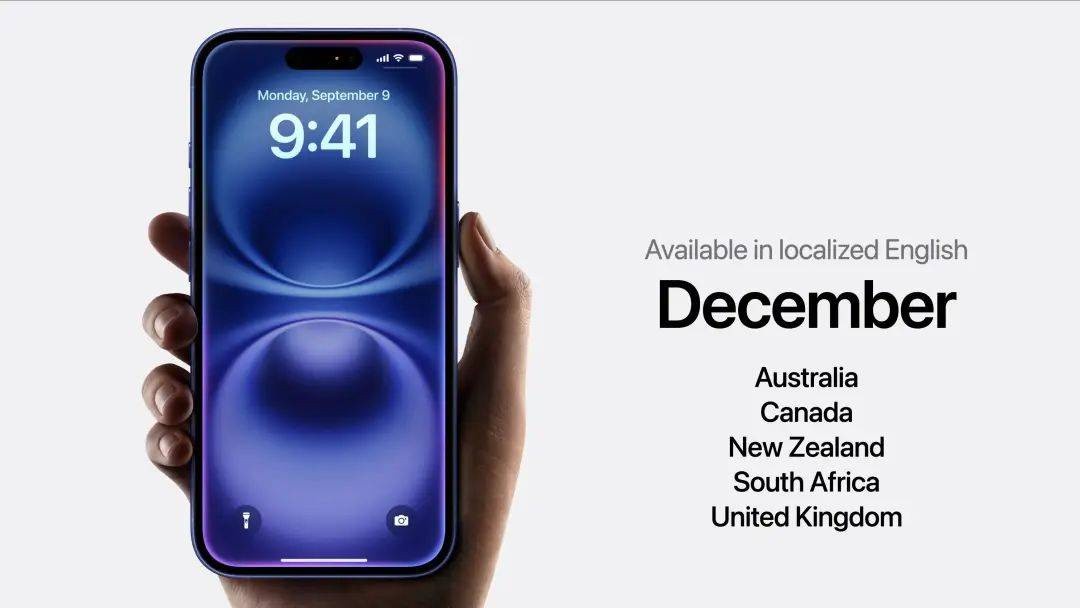
As for Chinese users, whether you purchased the iPhone in mainland China or whether your Apple ID country/region is set in mainland China, you currently cannot use Apple Intelligence until it is launched in mainland China and activated.
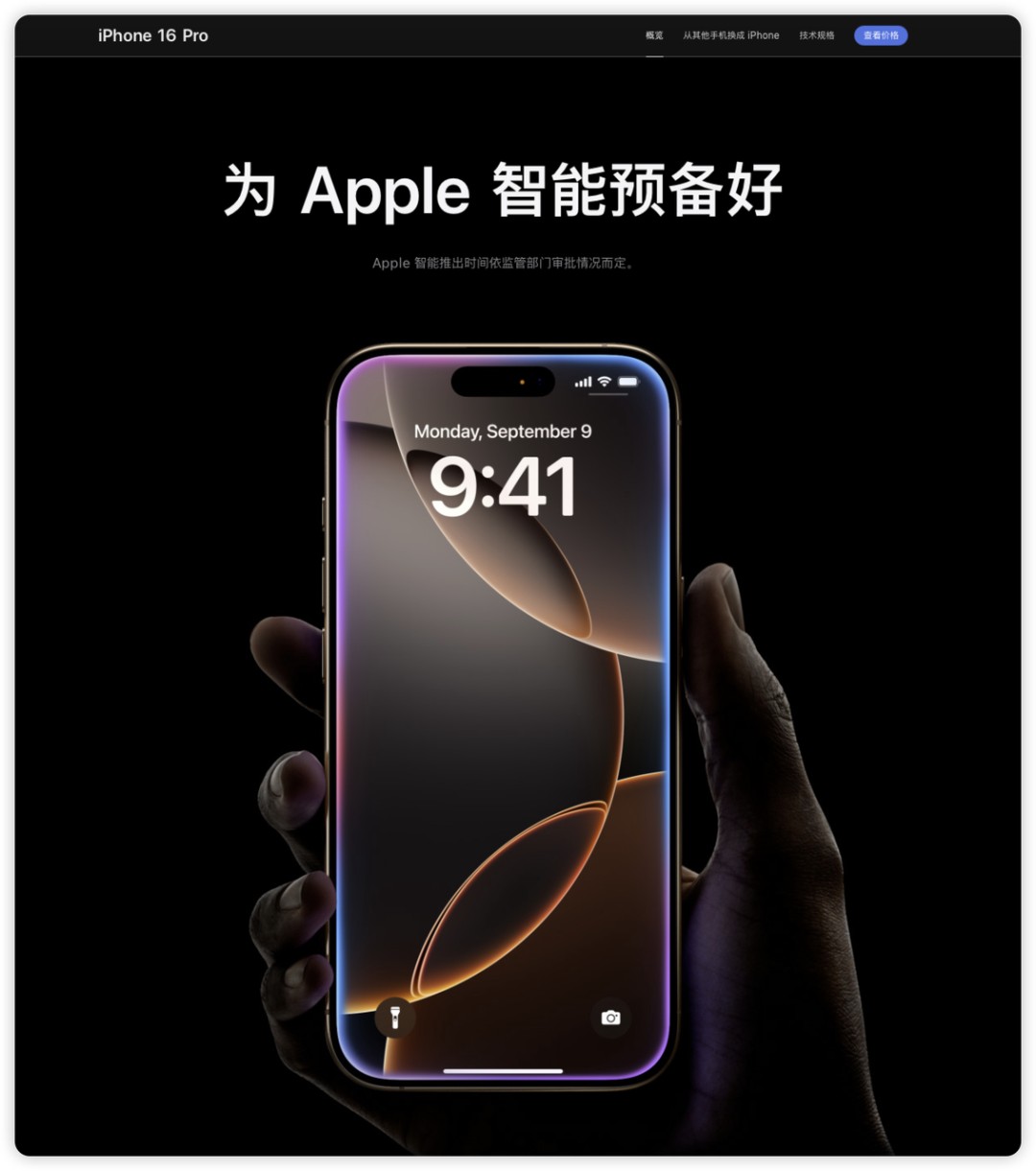
Last month, many overseas users have already experienced some simple system-level functions of Apple Intelligence, such as writing (proofreading and rewriting content), text summarization, email replies, etc., but more AI functions are still "half-hidden".
In other words, this also means that the push timing for the highly anticipated ChatGPT integrated service, Image Playground image creation function, and Genmoji emoji creation function remains a mystery.
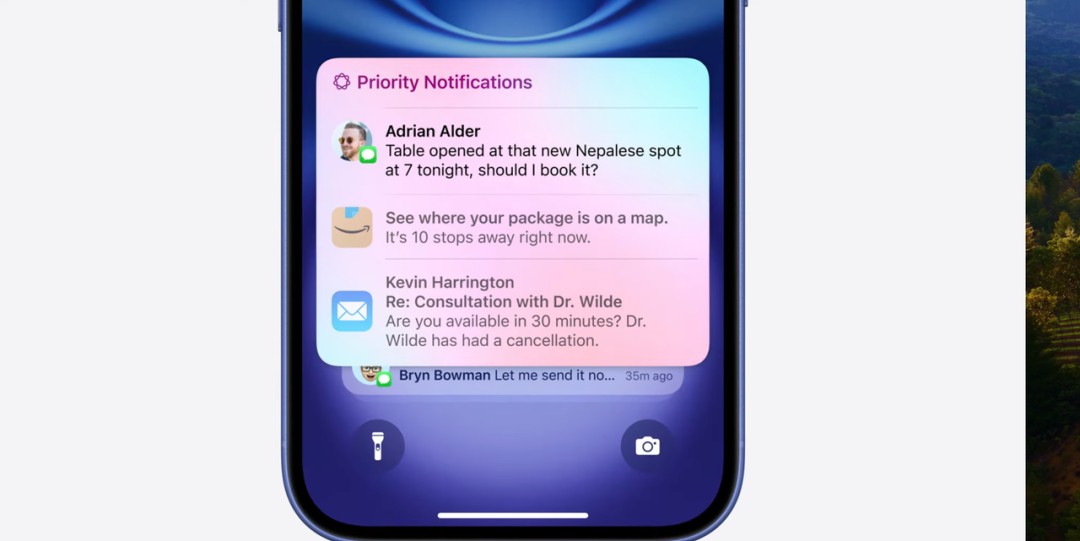
Apple seems to be less than halfway to fulfilling its AI promise made at WWDC, and Apple has announced more features/news about AI at this conference One of the most important things is to enable visual intelligence through "camera control".
For example, when you see a restaurant, you can press "camera control" to take a picture of the restaurant, and then you can instantly obtain the business hours and ratings of the restaurant through Apple's intelligent system, allowing you to view the menu or make a reservation.
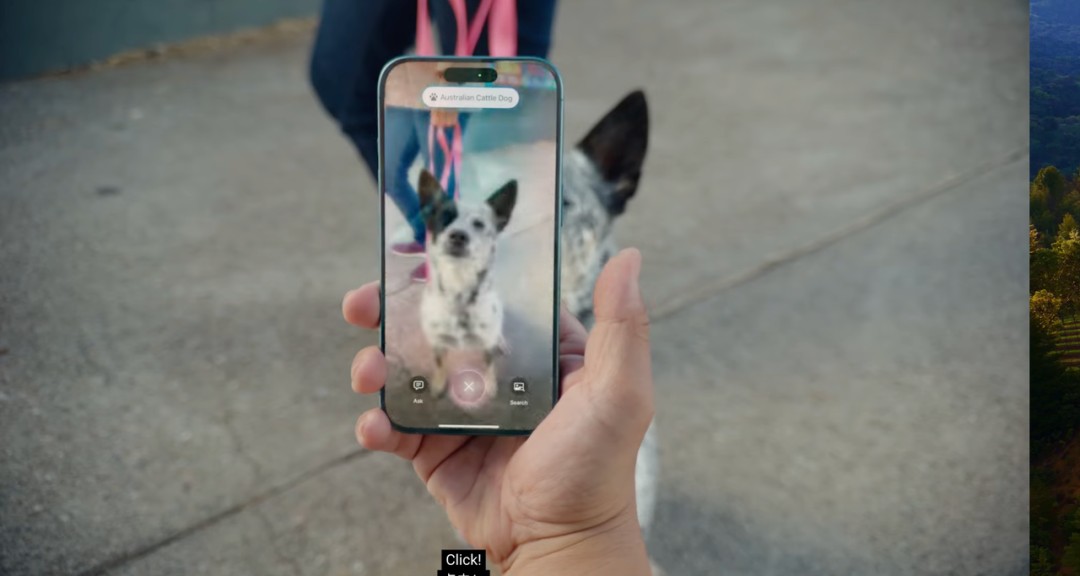
When you see an interesting flyer, a similar operation can add the event to your calendar with the location, allowing you to learn more details about the event, or if you see a cute dog, a gentle tap can identify the breed of the dog.
This feature can also be linked with third-party apps. If you see a bike you like, simply click to search on Google and quickly find similar bikes.
iPhone 16 Pro with "external attachment" for imaging, Pro Max with the largest screen in history
Now let's take a look at the highlight of the Pro series. Although the appearance has hardly changed, in terms of imaging and performance, the Pro series still maintains a high standard, with highlights as follows:
-
Newly equipped with "camera control," the Pro version uses a periscope telephoto lens.
-
4K 120 fps Dolby Vision video recording + 4 studio-grade microphones.
-
The narrowest smartphone bezels globally, with a larger screen size.
-
A18 Pro powerful performance.
-
Added "Desert Titanium" color option.
-
Price remains unchanged, with the starting price of the Pro version at 7999 yuan and the Pro Max version at 9999 yuan.
More professional imaging, with "external attachment" support
Every year, Apple never compromises on the imaging capabilities of the Pro version of the iPhone. This year, with the upgrade of three cameras together, not only can better photos be taken, but Apple's strong suit of video recording is once again "far ahead."

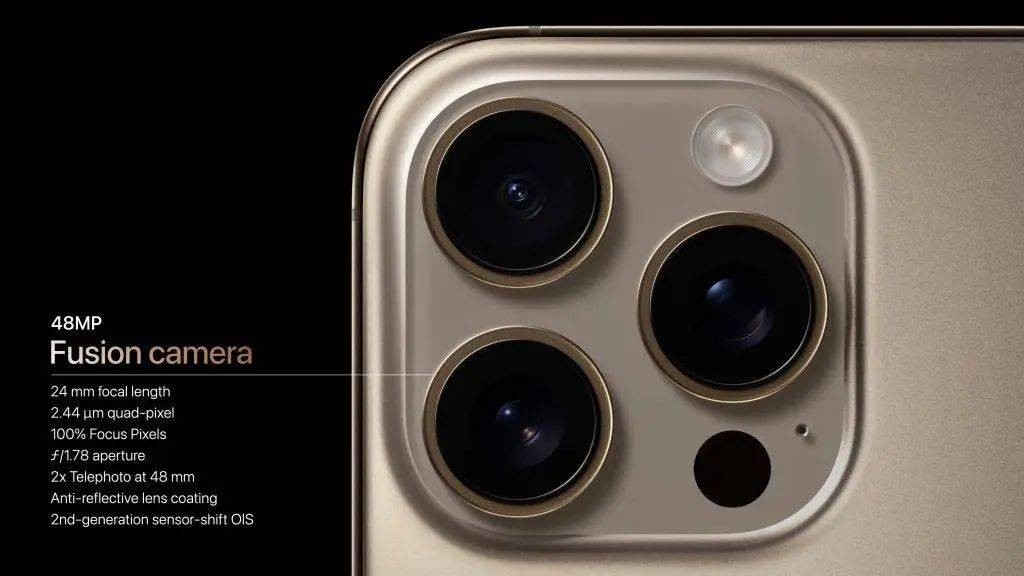
Let's first look at the upgrade of the three rear cameras. The main camera is a 48-megapixel "fusion" camera, equipped with a second-generation quad-pixel sensor, supporting 48-megapixel ProRaw and HEIF photo shooting, with zero shutter delay.
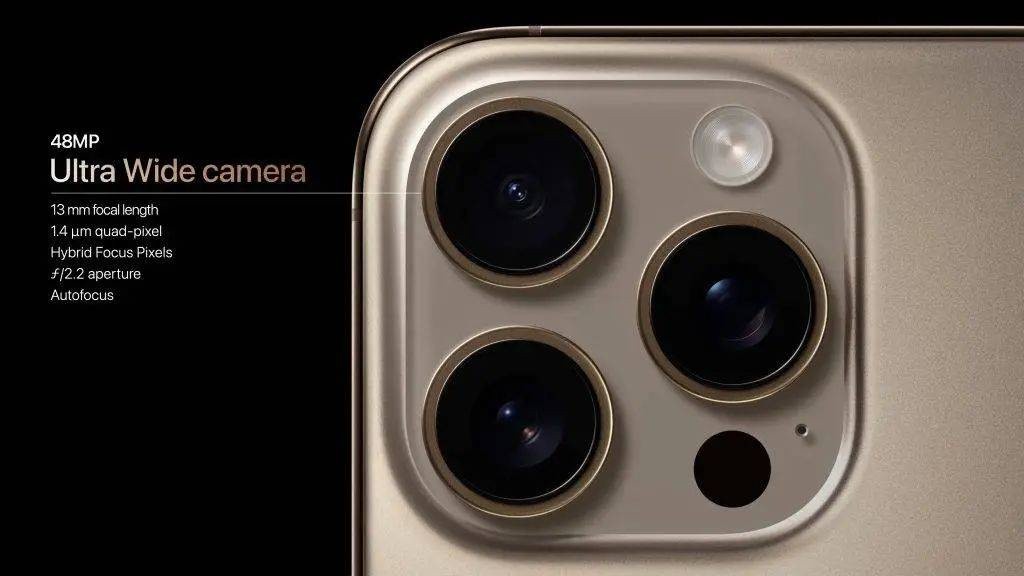
The major update is the ultra-wide-angle lens, with the pixel count increased from 12 million to 48 million. Equipped with a quad-pixel sensor with autofocus function, the aperture has been upgraded from f/4.4 to f/2.2, enhancing the ability to capture more light in low-light conditions, highlighting the "highlights" of the event
On the telephoto lens side, the iPhone 16 Pro matches the Pro Max version, using the same "fourfold reflective prism telephoto" lens, supporting 5x optical zoom, maintaining 12 million pixels, and an aperture of f/2.8.
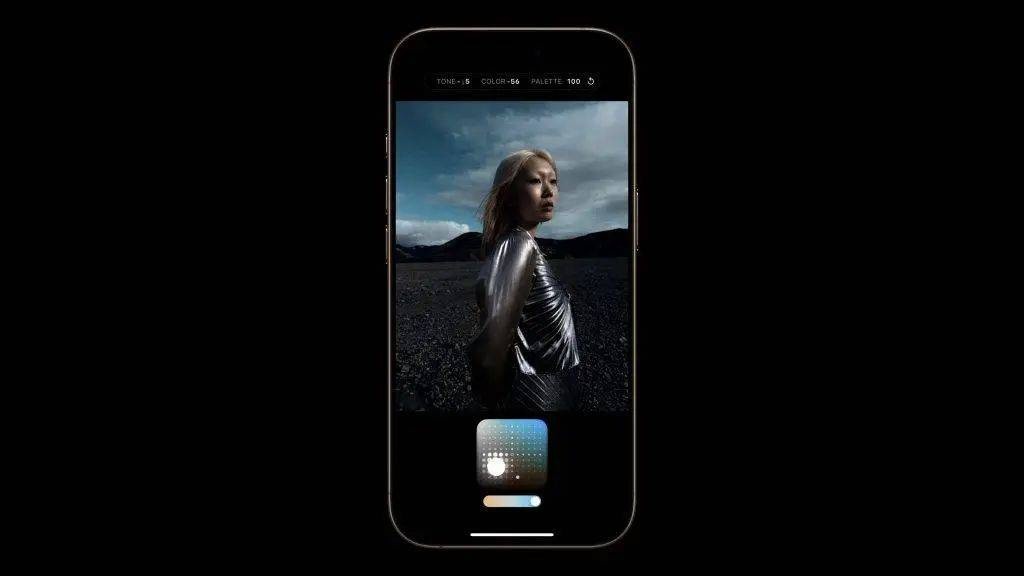
To capture stunning photos, relying solely on hardware parameters is not enough. The first "accessory" for iPhone imaging is the all-new "Photography Styles" feature.
Apple has prepared a series of new styles for the iPhone 16 Pro series. This is not simply adding a filter to the final image, but through machine learning, adjusting colors in real-time based on the shooting subject. Due to the powerful chip performance, these stylized shooting effects can be previewed in real-time in the camera, allowing users to adjust specific style expressions.
Apple's strength lies in its video shooting capabilities, which have been further enhanced on the iPhone 16 Pro.
The more powerful lens and processor bring new support for 4K 120fps Dolby Vision video format, making the video image clearer and more delicate. With a frame rate of 120 FPS, more details can be captured when shooting dynamic scenes, reducing blurriness or stuttering, and enabling the capture of more visually impactful slow-motion videos.
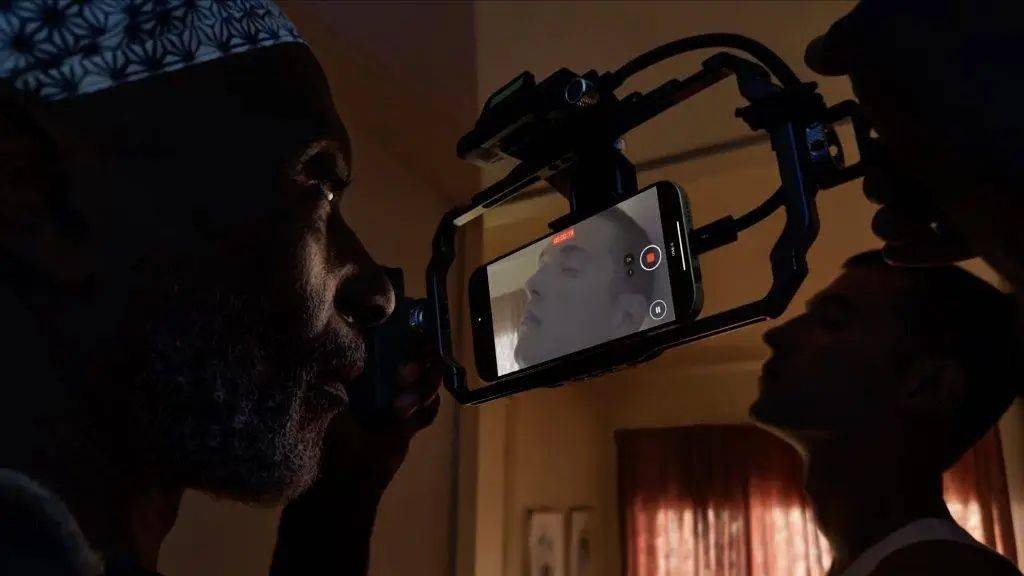
The Photos app also supports editing of 4K 120fps Dolby videos, allowing frame-by-frame "cinema-quality" color grading and slowing down normal-speed videos to 24fps playback, providing ample post-production space. The camera is fully equipped, and Apple has also designed a new photography interaction "Camera Control," which can be considered a physical "accessory" for the iPhone 16 series shooting.
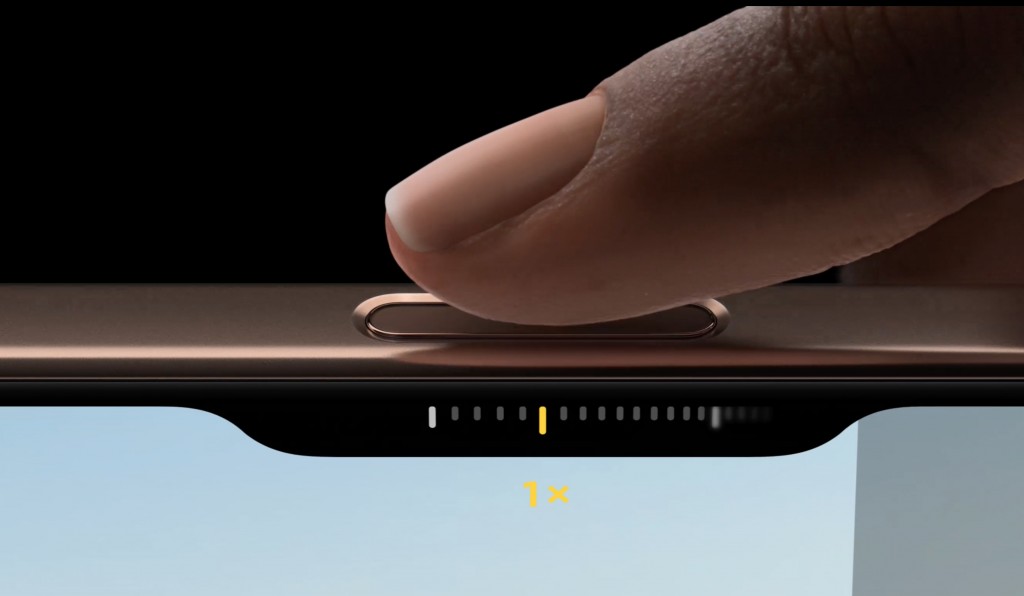
Below the iPhone lock screen button, there is an additional button similar to a camera shutter. With this "Camera Control," you can easily:
- Press to open the camera app
- Single-click to take a photo
- Long press to start recording a video
- Lightly press + slide to zoom
- Double-tap to switch to other camera settings: exposure, depth of field, camera, style, tone
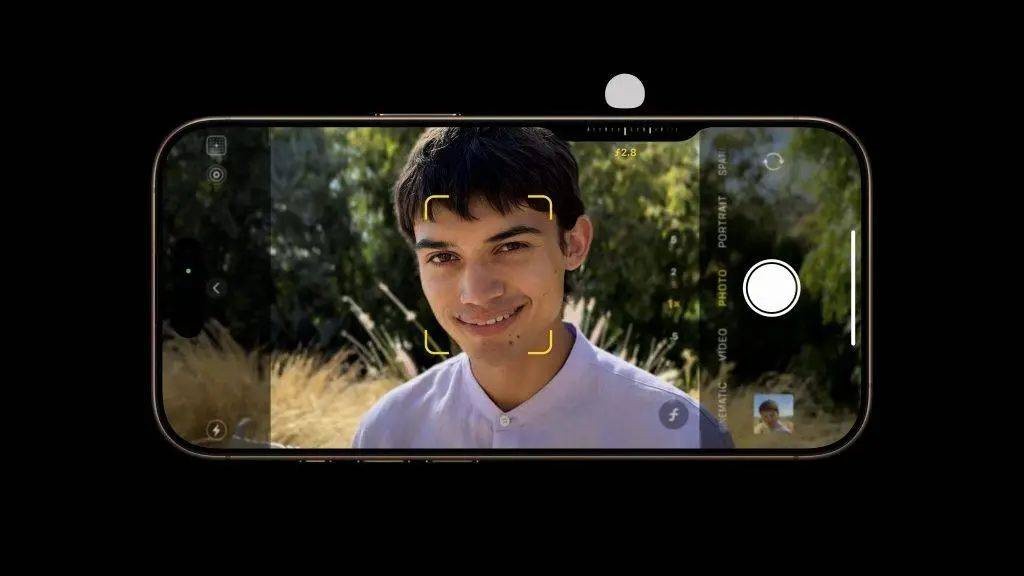
In addition to being able to be used in the iPhone's built-in camera app, "Camera Control" also supports third-party apps to call.
A18 Pro with stronger performance and lower power consumption
There is a major change in processors this year, that is, both the standard version and the Pro version are equipped with Apple's latest A18 processor.
However, no one understands "swordsmanship" better than Apple. The A18 Pro with full blood GPU and CPU is the true representative of Apple's top performance.
The A18 Pro maintains a configuration of 6 CPU cores + 6 GPU cores. The 6-core GPU has a 20% performance improvement over the A17 Pro, and the hardware-accelerated ray tracing capability can be up to twice as fast as the previous generation. It is worth noting that the ray tracing performance of the A17 Pro is already sufficient to run large-scale console-level games.
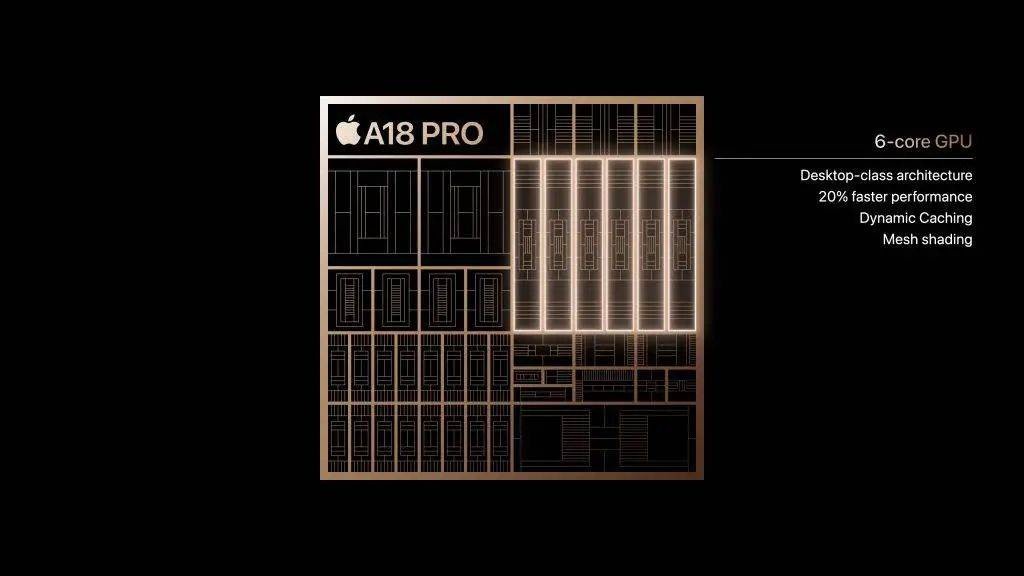
The 6-core CPU has a 15% performance improvement over the A17 Pro, while reducing power consumption by 20%. Apple directly states: "The fastest CPU on any smartphone".

The A18 Pro, born for AI, is also equipped with a 16-core neural network engine, increasing the ability to run Apple's intelligent features by 15% compared to the previous generation.
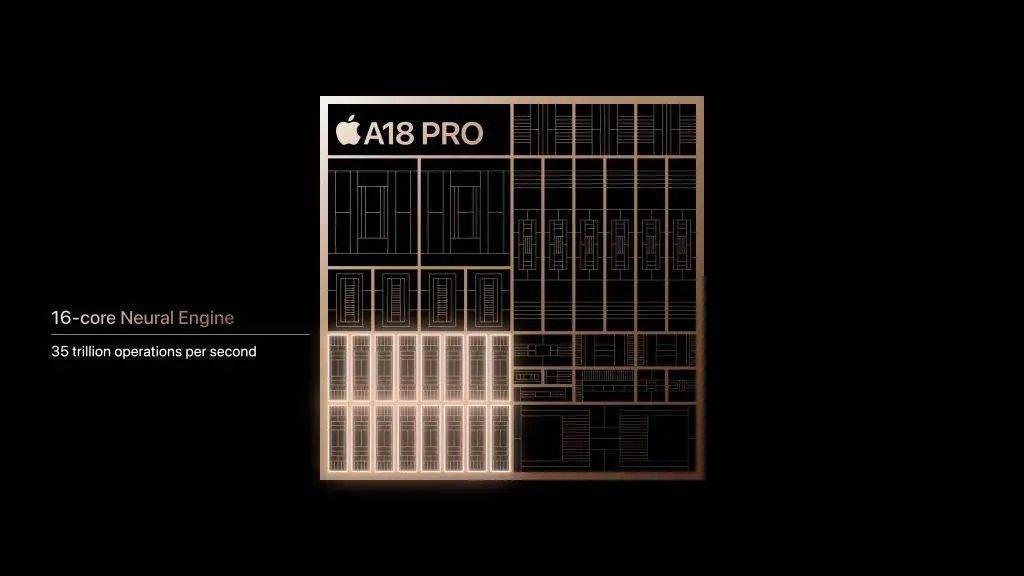
In the past, iPhones have always been limited by their heat dissipation capabilities, unable to sustain the powerful performance of the chips. This year, the iPhone 16 Pro series adopts optimized metal heat dissipation structures and glass back panels. Apple claims that compared to the iPhone 15 Pro, it brings up to a 20% improvement in sustained performance.
Bigger size, stronger battery life
There are also some details worth paying attention to.
Both Pro versions have seen an increase in screen size: the iPhone 16 Pro has expanded from 6.1 inches to 6.3 inches, and the iPhone 16 Pro Max has expanded from 6.7 inches to 6.9 inches, becoming the "largest ever"
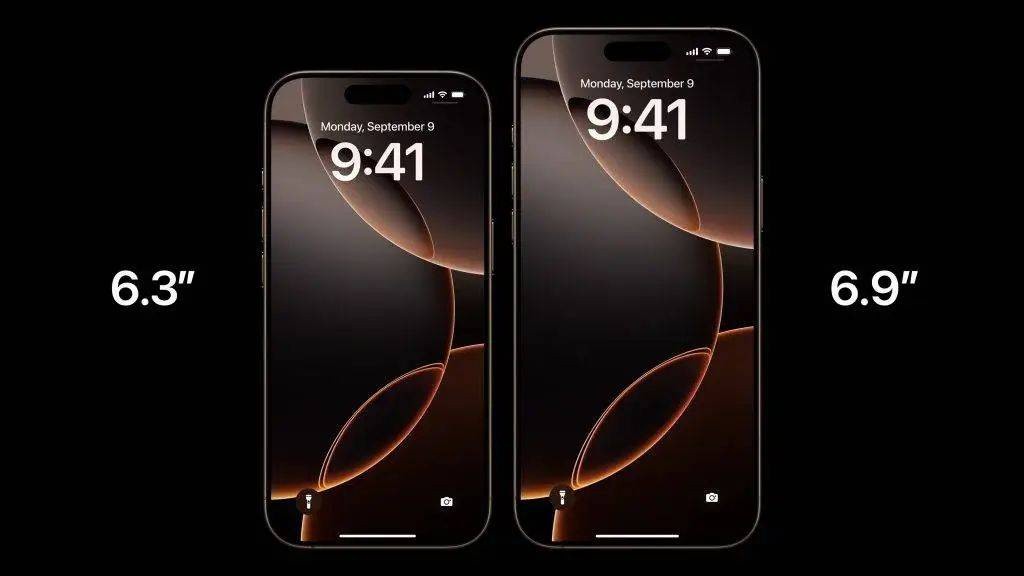
With a further narrowed border, the display effect of the iPhone 16 Pro is even more stunning.
The rumored new color "Desert Titanium" in the Pro series has finally revealed its true colors: darker than the previous "Champagne Gold," closer to brown or deep khaki, it can be considered Apple's most understated luxurious gold color, and it is also the flagship color of the iPhone 16 Pro this year.
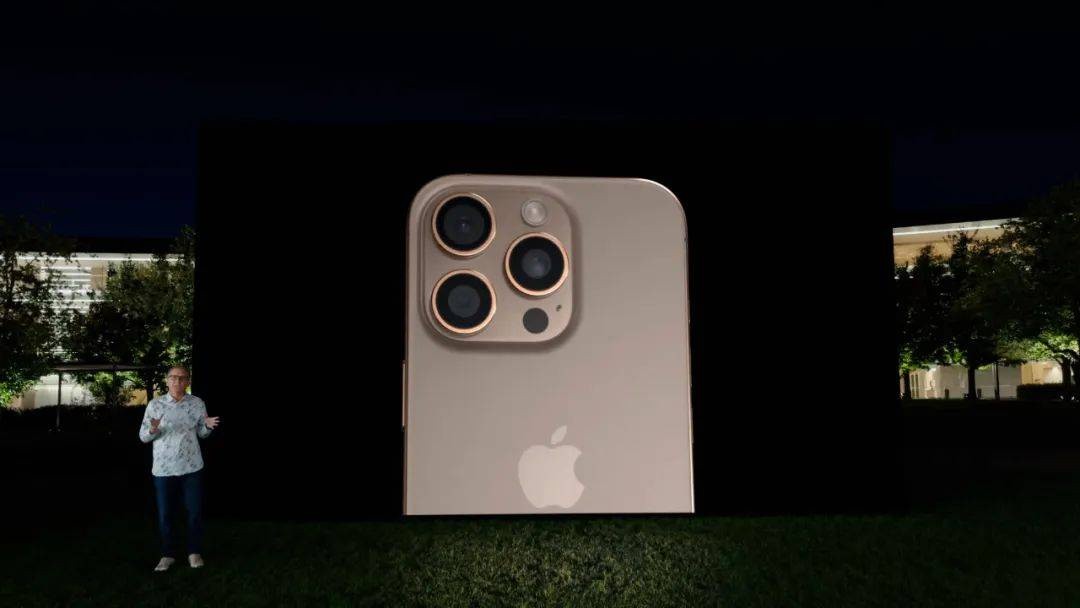
After internal space optimization, the iPhone 16 Pro can accommodate a larger battery. Coupled with the A18 Pro chip optimizing energy efficiency, the iPhone 16 Pro Max can play videos for up to 33 hours, while the iPhone 16 Pro can reach 27 hours.
More capacity without a price increase, the most worthwhile standard version iPhone in recent years.
Before discussing the standard version iPhone 16, let's first look at its key features:
-
Introducing spatial video recording and support for Apple Intelligence for the first time
-
Equipped with "camera control" for the first time, supporting macro photography
-
Upgraded processor from A16 to A18, using the second generation 3-nanometer process
-
Rear cameras return to the vertical dual-camera design from the diagonal design
-
The starting prices for the iPhone 16 and 16 Plus in China are 5999 yuan and 6999 yuan, respectively
This year, the iPhone 16 aims to turn the tables with strong cost performance, while holding the key to Apple's future ecosystem, giving it a more strategic position.
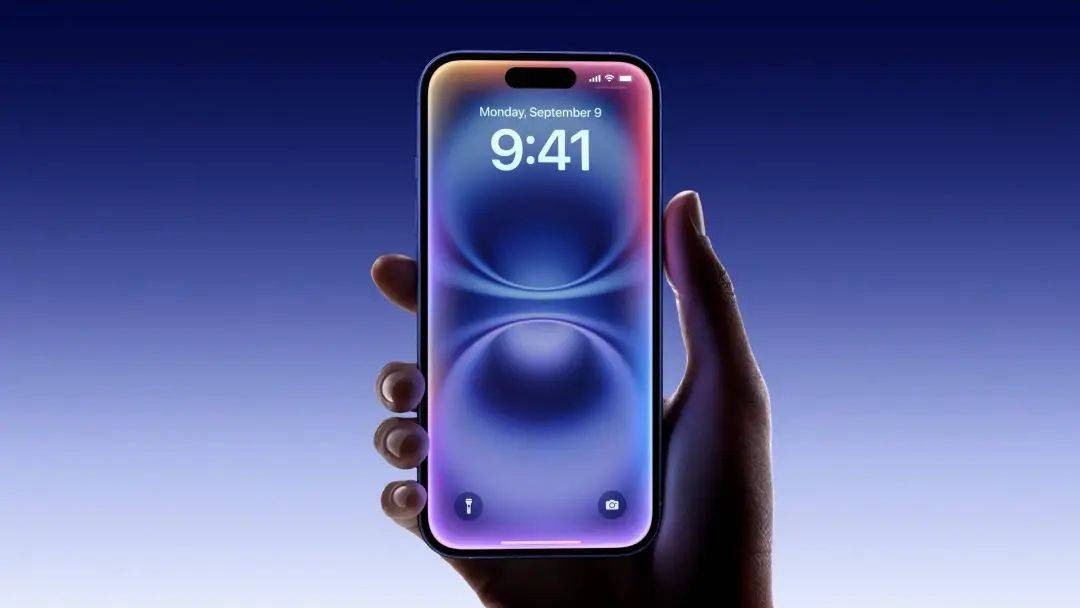
This is first reflected in the support for their own AI functions.
The standard version iPhone 16 this year makes up for the regrets of the iPhone 15 and successfully catches the fast train of Apple Intelligence.
In order to "become smarter," the iPhone 16's memory processor has also been upgraded, from the A16 chip of the iPhone 15 to the all-new A18 chip this year.
Compared to the N3B process used on the A17 Pro last year, this year's second-generation 3-nanometer process has greater advantages in improving energy efficiency. The neural engine speed has doubled, the memory subsystem has been upgraded, and the bandwidth has increased by 17%
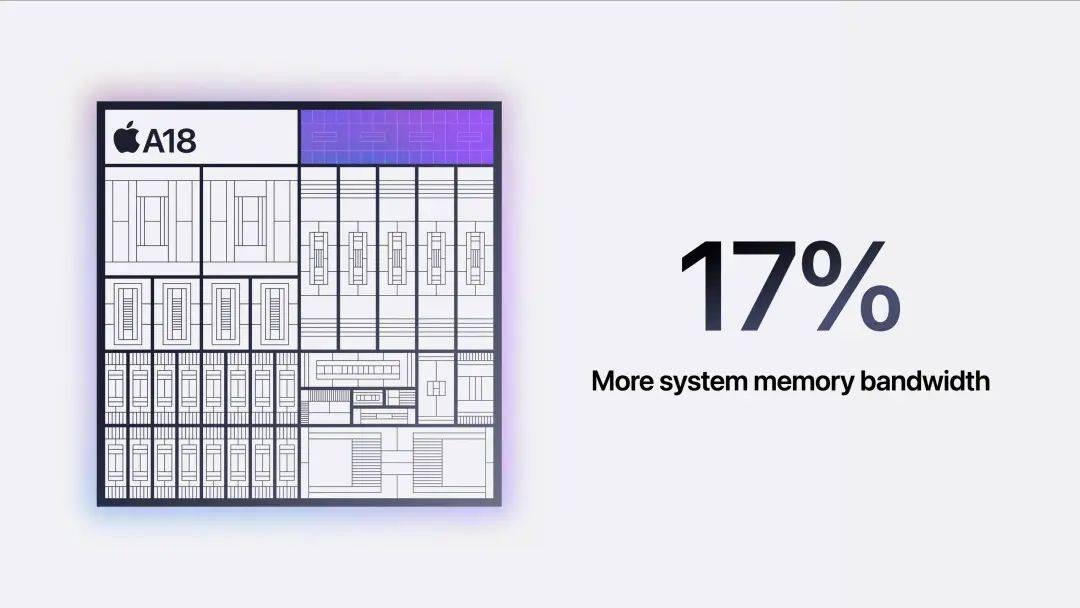
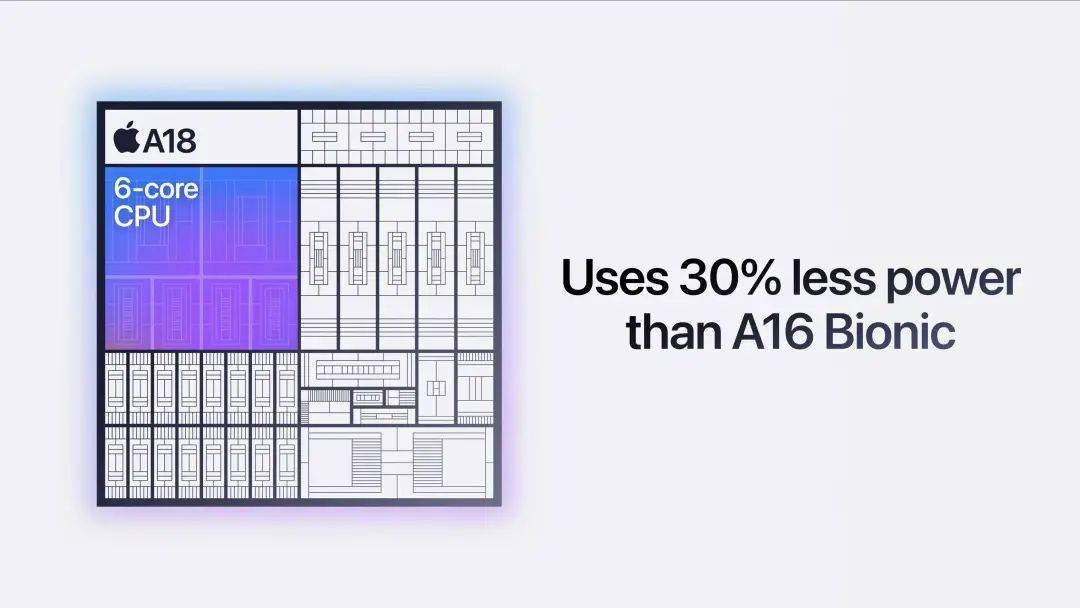
Moreover, the A18 has a 6-core CPU, including 2 performance cores and 4 efficiency cores, which is 30% faster than the CPU in the iPhone 15. At the same performance level, power consumption can be reduced by 30%.
It can even compete with high-end desktop PCs.
Thanks to the A18, the iPhone 16 supports ray tracing, making it easy to play 3A games that only the iPhone 15 Pro could run before. Interestingly, the RPG game "King of Glory World" also made an appearance at the conference, which can be considered a small surprise.

There are many factors that affect the user experience of a smartphone, but the most fundamental updates to the processor and memory are still important determinants of the phone's "lifespan".
In terms of the screen, this year's iPhone 16 features a 6.1-inch screen, while the iPhone 16 Plus features a 6.7-inch screen.
After sticking to three generations of square and diagonal camera modules, this year's iPhone 16 once again returns to the vertical dual-camera design. Whether it looks good or not is a matter of personal preference, but at least it has increased recognition compared to the old model.
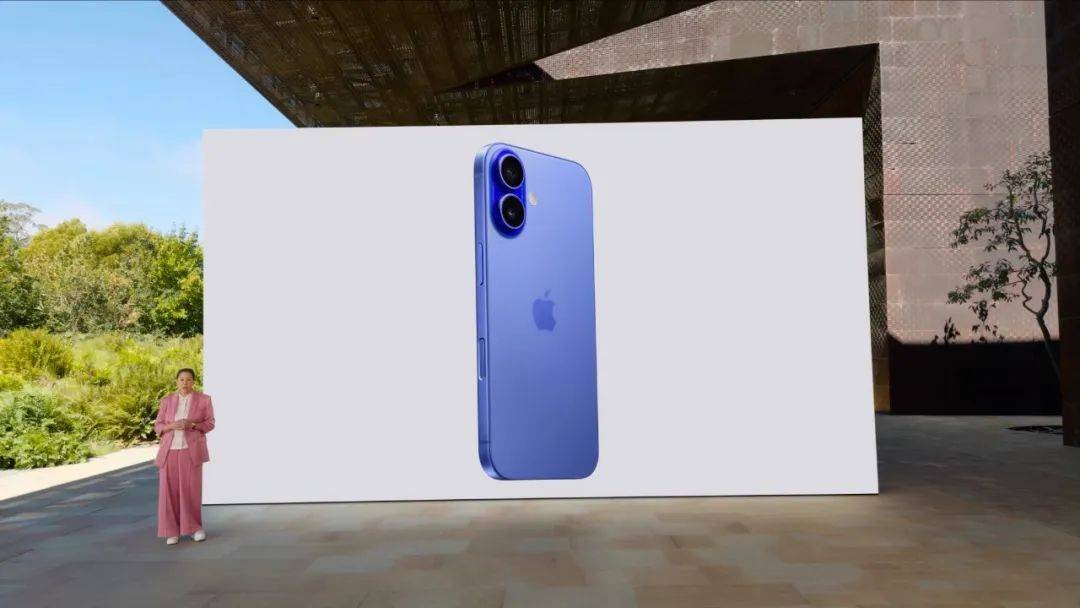
Some may joke that "changing from vertical to diagonal, and from diagonal to vertical, it's another year of innovation", but the return to vertical alignment by the iPhone 16 is actually related to "fighting for the future" - bringing back the spatial video shooting capability that was exclusive to the Pro model last year.

By changing to the same ultra-wide and main camera vertical layout as the iPhone 15 Pro, the iPhone 16 also has the ability to shoot spatial videos, further lowering the barrier to this "magic of recording".
In line with the Pro model, the standard version's imaging capabilities are mainly focused on the ultra-wide-angle lens.
The lens aperture has also been upgraded from f/2.4 to f/2.2, allowing the sensor to capture more light, thereby improving shooting performance in low-light environments

In addition, don't stare eagerly at the "macro photography" feature of the Pro version. Now, this feature is finally available on the iPhone 16, allowing you to take photos of objects at a closer distance, such as flowers, insects, textures, etc., providing more creative space for photography enthusiasts.
The front camera remains unchanged, still with a 12-megapixel specification.
In terms of colors, this year the iPhone 16 comes in five colors: black, white, pink, deep cyan, and indigo. It adopts a colored matte glass back panel that is not easy to get fingerprints on, making it resistant to dirt and durable.
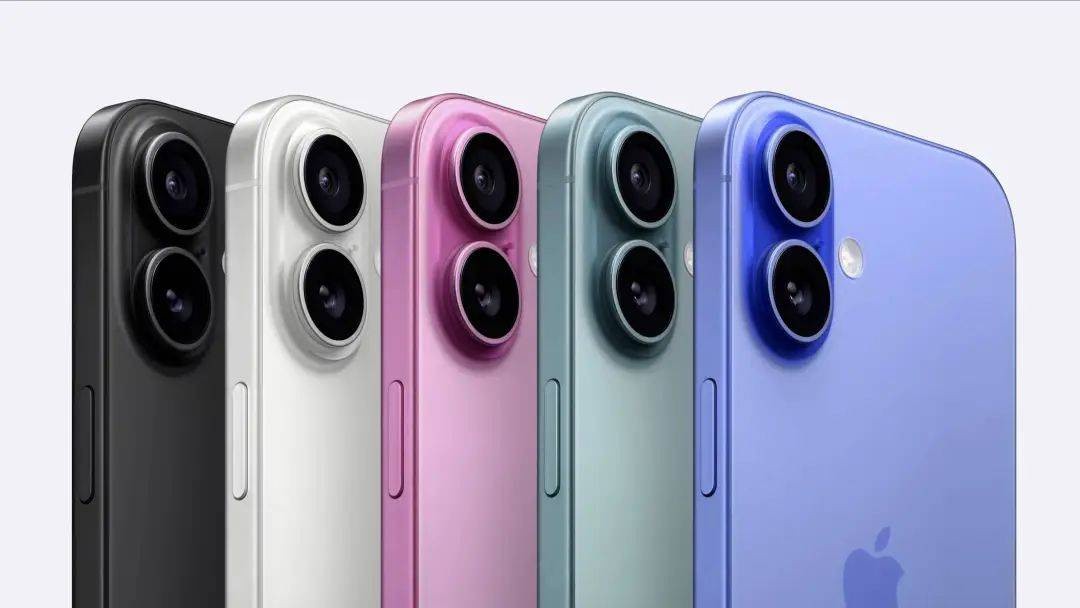
Compared to the previous generation with a more "fresh" style, the blue and green colors on the iPhone 16 are richer, and the reintroduced white version is expected to be the most popular color.
When it comes to pricing, the standard version of the iPhone 16 is "more for the same price." The starting price for the iPhone 16 in China is 5999 yuan, and the starting price for the iPhone 16 Plus is 6999 yuan. Pre-orders will be accepted starting at 8 p.m. on September 13, with sales starting on September 20.
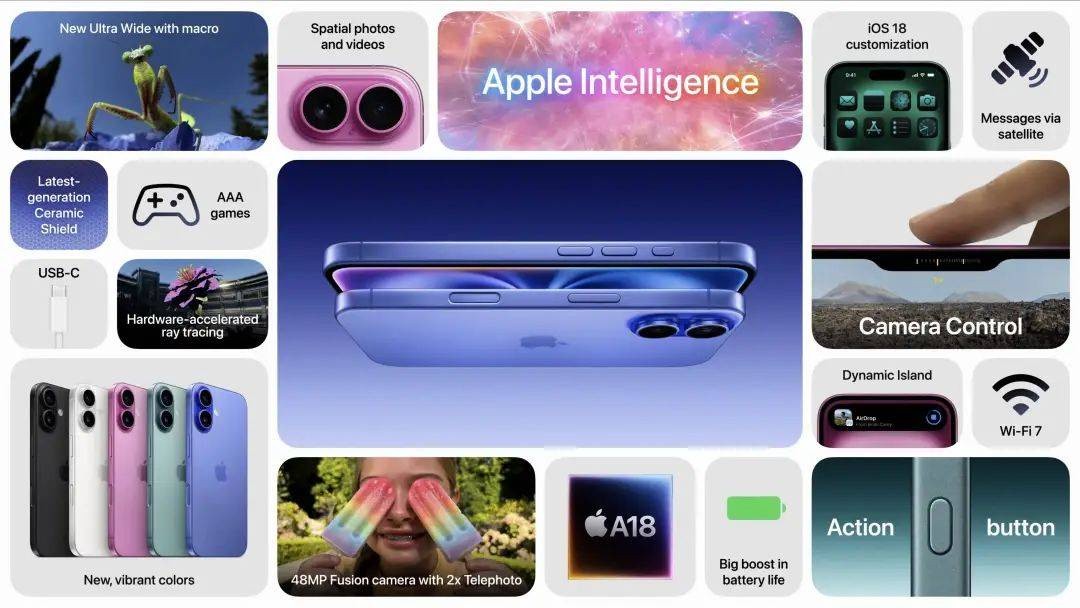
What drives the new cycle of iPhones?
If last year's biggest update for the iPhone 15 was undoubtedly the USB-C port, it's hard to come up with a unified answer to what the biggest change for the iPhone 16 is this year.
Apart from the camera button and narrower bezels, the new iPhone's hardware form factor has hardly changed much. AI has been elevated to unprecedented heights, with Apple almost bluntly telling you from the beginning of the event that this is the first-generation AI iPhone.
Like the iPhone 15, the iPhone 16 doesn't bring surprises through any earth-shattering changes in form.
Although the addition of the camera button has made the long-awaited fully enclosed iPhone with no openings gradually fade away for many people. But as Apple demonstrates that it can also serve as a shortcut for AI functions, it also answers a big question we had before the release:
Why did Apple introduce a camera button when the learning curve for the Action button on the iPhone 15 was already high enough? This button can reduce the operational threshold for Apple's intelligence, after all, whether it's Apple or other models' AI functions, there is still a certain learning curve, even conflicting with the usage habits of the original device and system.
More importantly, through this button, users can cultivate a new interactive habit: one tap for instant response, one button for direct access.
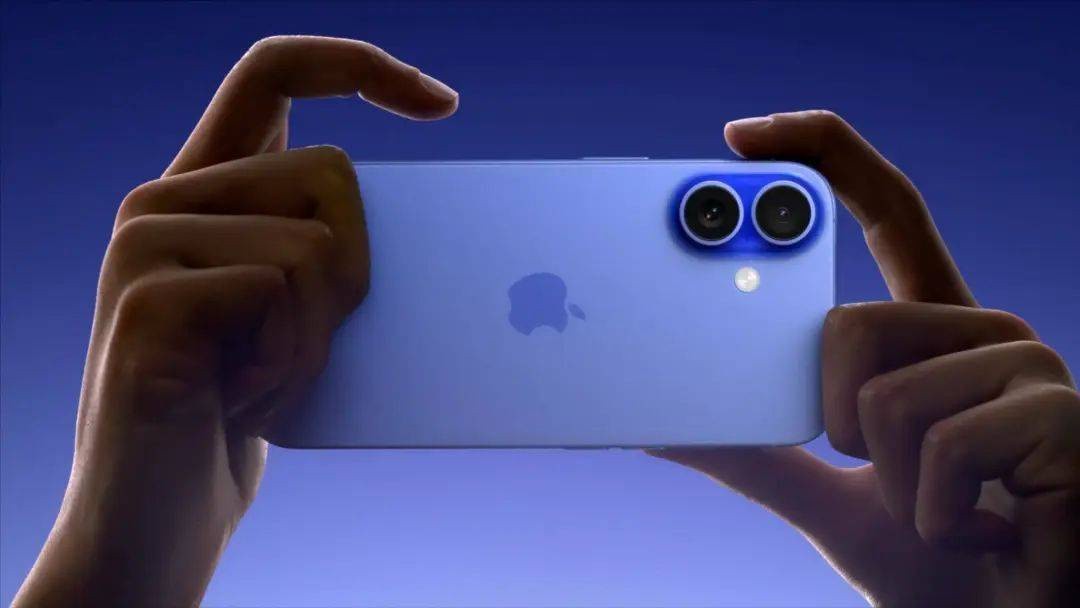
A simple operation that allows the iPhone to open the eye of AI, just like the slide to unlock demonstrated by Jobs back then, hoping to bring users a natural and instinctive operating experience.
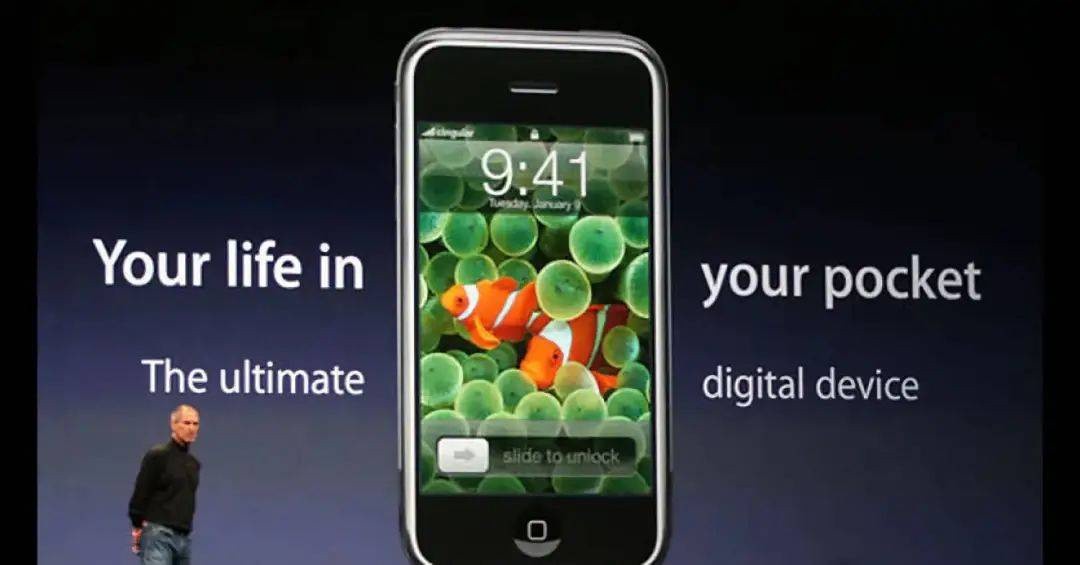
With no major changes in hardware form, what can the iPhone rely on to usher in a new cycle? In fact, before today's launch event, Cook has already provided the answer on multiple occasions: Apple's intelligence.
Some analysts even believe that the iPhone 16 will usher in an AI-driven super cycle, with iPhone sales in the 2025 fiscal year possibly exceeding 240 million units.
What does this number mean? The highest-selling iPhone series, the iPhone 6 series, sold 220 million units. With sales of 240 million, it means that Apple needs to create a new sales myth during the longest replacement cycle, while the global macroeconomy is still recovering.
At this point, you are likely to be confused. For most users who have only seen Apple's AI functions in launch events and media reports, especially Chinese consumers, it is difficult to imagine what AI functions have such charm.
In fact, if Apple wants to open up a new cycle for the iPhone, AI is indeed the biggest X factor, and the core of AI hardware lies in how software and hardware are integrated.
After Apple introduced Apple Intelligence at WWDC24, we put forward a point of view that this hardware-less event may have a significant impact on hardware.

Apple Intelligence showcases a new way of human-computer interaction, a system that supports multimodal interaction, which belongs to the natural language API of humans, allowing the operating system to call operations through models, coordinate work based on user query demands, and run in a highly seamless, fast, and always-online manner.
This is also the watershed where we view AI as a product or a feature. Most large-scale applications, including ChatGPT, or some AI hardware, fundamentally present themselves as a feature to users.
So far, no manufacturer has been able to prove that AI phones can become the main factor influencing purchasing decisions However, the progress of edge-side models has quietly exceeded expectations. In June, Apple engineers once stated that Apple's intelligent use currently has the best edge-side model. However, a few days ago, domestic Facing-Wall Intelligence released an edge-side model that can run ChatGPT on mobile devices with only 2.2GB of memory.
Of course, Apple is only sketching out the blueprint now. The ultimate form of Apple's AI is unlikely to be completed in these two generations of iPhones. This has already far exceeded Steve Jobs' expectations, as he said in a speech in 1983:
I think, as we look ahead to the next fifty to one hundred years, if we can truly develop a machine that can capture some kind of potential spirit, set of principles, or potential way of looking at the world, then when the next Aristotle appears, maybe if he carries such a machine with him throughout his life and inputs all this content, then perhaps one day, when this person has already passed away, we can ask this machine: "Hey, what would Aristotle say? Any thoughts on this?"
Maybe we won't get the right answer, but maybe we will. This really excites me. This is also one of the reasons why I do what I am doing.
Jobs would not have imagined that we can now communicate with him like this in front of the screen
