


AKESO's Class 1 new drug Inunisumab Injection approved for listing

Kangfang Biotech's Class 1 new drug Inclisiran Injection (AK102) has been approved for listing by the National Medical Products Administration (NMPA) of China. This drug is suitable for adult patients with primary hypercholesterolemia and mixed dyslipidemia who, despite treatment with statins on top of dietary control, still cannot achieve the target low-density lipoprotein cholesterol (LDL-C) levels. Inclisiran works by binding to PCSK9, blocking its interaction with LDL-R, and enhancing the clearance ability of LDL-C
According to the Zhitong Finance and Economics APP, on September 30th, the National Medical Products Administration (NMPA) of China officially announced on its website that Kangfang Biotech (09926) has received formal approval for the market application of the Class 1 new drug Inclisiran Injection (AK102). The indications include: in combination with statins, or with statins and other lipid-lowering therapies, for adult patients with primary hypercholesterolemia (including heterozygous familial and non-familial hypercholesterolemia) and mixed dyslipidemia who have not achieved the low-density lipoprotein cholesterol (LDL-C) target after receiving moderate to high doses of statins while controlling their diet.
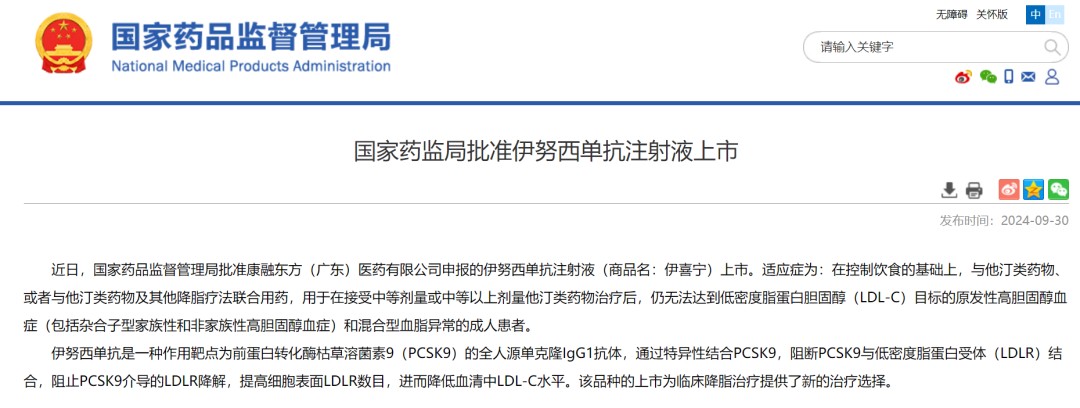
Screenshot Source: NMPA official website
Research has shown that active expression of the PCSK9 gene promotes the degradation of low-density lipoprotein receptors, thereby reducing the liver's ability to clear cholesterol from the blood. This may lead to long-term elevation of LDL-C levels, increasing the risk of atherosclerotic cardiovascular disease (ASCVD). Studies have shown that reducing PCSK9 levels can reduce the occurrence of cardiovascular events, making it a strong target for preventing ASCVD.
Inclisiran Injection is an innovative PCSK9 monoclonal antibody independently developed by Kangfang Biotech, mainly used to treat primary hypercholesterolemia and mixed hyperlipidemia, including patients with HeFH and hypercholesterolemia who also have atherosclerotic cardiovascular disease. By specifically binding to PCSK9 and blocking its interaction with LDL-R, it restores the expression level of LDL-R to enhance the clearance ability of LDL-C in the plasma
