Relying on Chinese companies, Japanese mobile games thrive in China

Huxiu
2024.10.10 01:37
portai
I'm PortAI, I can summarize articles.

The Japanese mobile gaming market is facing a collapse, with negative growth for three consecutive years, shrinking from $4.9 billion to $4.1 billion. The revenue-generating ability of top products has declined, with only two games generating over $100 million in revenue. In contrast, Chinese mobile games such as "Genshin Impact" have shown strong performance, attracting a large number of Japanese players. Although Chinese companies are slowing down their expansion in the Japanese market, there are still opportunities to explore new paths through innovative products

Is the Japanese gacha mobile game industry in trouble?

Ten years ago, this might have been considered an exaggeration. Today, similar pessimism is gradually becoming a consensus in the Japanese mobile game industry. Several Japanese media outlets have indicated that the overall gacha mobile game market in Japan is facing collapse, experiencing negative growth for three consecutive years, with disappointing performances from domestic manufacturers.

According to Sensor Tower's data for the first quarter of this year, the size of the Japanese mobile game market has declined from $49 billion last year to $41 billion, making it the only market among the top five global mobile game markets to experience a decline. At the same time, the ability of top products to generate revenue has decreased, and the popular product rankings have become stagnant. Only two games have generated revenue exceeding $100 million, a 50% decrease compared to last year, far below the level in 2021.

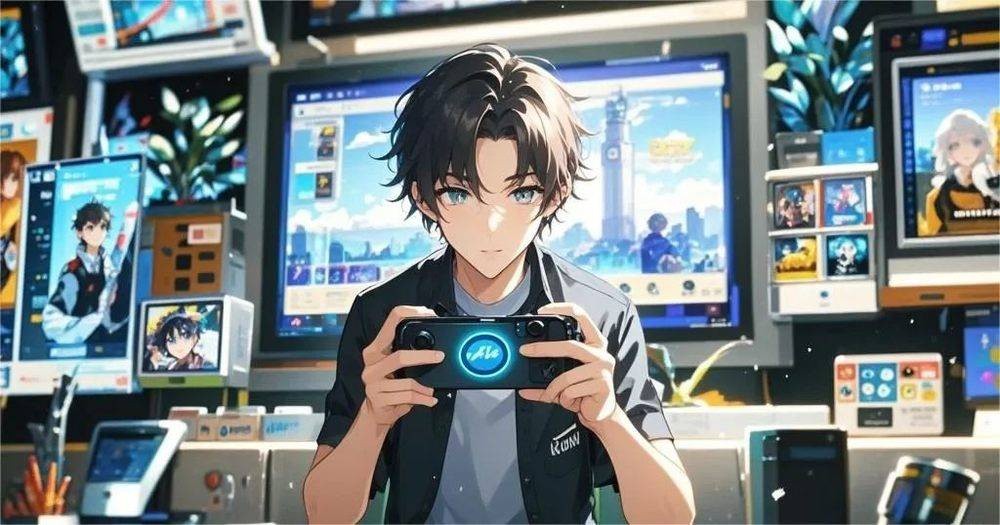
AI illustration by Entertainment Capital

In contrast, Chinese mobile games have continued their strong momentum starting from "Genshin Impact," taking more of Japanese players' time and money. For example, "Arknights" has accumulated revenue of up to $500 million, with Japanese players contributing 40% of it.

Japanese players prefer non-domestic games over domestic ones, as evident from this year's Tokyo Game Show. TGS had nearly half of the popular booths showcasing foreign games, with queue times for games like "Naraka: Bladepoint," "Arknights: Endfield," "Blade of God: Zero," and national-level games like "Monster Hunter: Wildlands" being equally competitive.

This year, there were significantly more Chinese exhibitors at TGS compared to last year. Companies like Perfect World and Paper Fold left information about their key products to be released during TGS. Outside the exhibition, casual games like "Mushroom Warrior Legend" and "Fat Goose Gym" have become effective money-making tools targeting Japanese players.

However, some Chinese gaming giants have slowed down their expansion into the Japanese market. NetEase's Sakura Studio recently announced its dissolution. Tencent has begun reevaluating the speed and scale of its investments in Japan, reportedly backing out of several new financing commitments.

For Chinese mobile game manufacturers, the overseas expansion into the Japanese gaming market has entered a new phase. Japanese domestic manufacturers are gradually relinquishing their market share. Can Chinese gaming companies, especially those relying on the "Xiaomi rifle" style of mini-game gameplay, explore new avenues and further penetrate the Japanese market with innovative products? This may become a new challenge that all Chinese manufacturers need to face.

Domestic exhibitors shine at TGS with medium to heavy games

There are two main characteristics of Chinese exhibitors at TGS this year, one being the large number and the other being the comprehensive industry chain.

The large number is self-explanatory. According to incomplete statistics, a total of 111 domestic game manufacturers set up booths at TGS this year, accounting for nearly one-tenth of all exhibitors. Perhaps only Japanese game manufacturers had a higher number of exhibitors than China At the same time, the game developers participating in the exhibition cover a wide range of gaming businesses. There are game developers such as Tencent, NetEase, Perfect World, Yingjiao, and Diezhi, as well as accessory manufacturers like Hanwang Youji, Guli Technology, and Liulian Technology. The Guangzhou Game Industry Association even set up a booth on-site to exchange and promote with Japanese developers.

Game developers have brought their flagship works to TGS. Single-player games like "Blade of Shadows Zero" are naturally very popular among Japanese players, and the cooperative game "PomPom" is also well-received. Some new product information is being revealed to global players for the first time.

A typical example is the well-established Beijing company Perfect World. This year, Perfect World has experienced some turbulence with large-scale layoffs, but the number of new products is not lacking. The open-world supernatural new game "Yihuan" provided a demo at TGS, attracting a large number of players queuing to play on-site. At the same time, they also launched the "Singularity Test" recruitment. According to the feedback from participating players on-site, the distribution speed of "Yihuan" demo tickets is similar to "Monster Hunter: Wilderness", both being popular games at TGS.

For Perfect World's overseas business, "Goddess of Revelation: Nightfall" is clearly more strategically significant. "Goddess of Revelation: Nightfall" is a derivative mobile game of "Goddess of Revelation 5", with the overall worldview and UI style derived from this globally sold 10 million copies game. During TGS, Perfect World officially announced that the game will be launched in the Japanese region.

Games available for demo play on-site such as "Yihuan", "Goddess of Revelation: Nightfall", "Mingchao", and "Infinite Warmth" are mainly focused on medium to heavy gameplay, but in the past two years, domestic casual games have been a dominant force in the Japanese market.

According to Qimai data, in the first quarter of 2024, two games launched in 2023 made it to the Top 10 list of Japanese mobile game revenue, namely the fifth-ranked "Honkai: Starry Sky Railway" and the seventh-ranked "Mushroom Warrior Legend". Along with the ninth-ranked "Genshin Impact", three domestic mobile games entered the Top 10 in the Japanese market in the first quarter.

It is not surprising that miHoYo's games made it to the list, but for a casual game like "Mushroom Warrior Legend" to achieve high revenue in Japan reflects a certain degree of market change.

The core gameplay of "Mushroom Warrior Legend" revolves around equipment collection and enhancement loops, combined with various random elements, similar to mainstream mini-games like "Seeking the Great Thousand", featuring a series of pay-to-win elements such as mounts, artifacts, and relics. 4399 converting such mini-games into App games and releasing them into the more traditional Japanese mobile game market can be seen as a form of strategic maneuvering.

The same situation also occurred with "Fat Goose Gym". On February 27th this year, "Fat Goose Gym" landed in Japan and topped the overall iOS download chart on the first day of its launch. In its first month online, "Fat Goose Gym" was able to consistently rank in the top thirty of the download chart, with a total of 630,000 downloads.

Unlike "Mushroom Warrior Legend", although "Fat Goose Gym" originated from WeChat mini-games, the core gameplay system of the game is still a more standard synthesis game. These games have exquisite art styles and solid gameplay systems, hitting the pain points of the Japanese market. **

It is worth mentioning that at this year's TGS, 4399 set up a dedicated booth for "Mushroom Warrior Legend". Several well-known cosplayers appeared at the "Mushroom Warrior Legend" booth, and the on-site activities were relatively simple, with the core goal of further enhancing the influence of "Mushroom Warrior Legend".

Gaming giants withdraw from Japan due to low return on investment

Chinese game developers have made a big push into the Japanese market, aggressively expanding the presence of domestic mobile games in Japan. However, with expansion comes contraction. In the past few years, some domestic gaming giants established research and development centers and studios in Japan, making large-scale investments and acquisitions. Now, due to factors such as project timelines, development costs, and game content planning, these gaming giants are gradually scaling back their operations in Japan.

In August of this year, Bloomberg reported exclusively that Tencent and NetEase are reducing their investment in the Japanese market. NetEase disbanded the previously established Sakura Studio, while Tencent also passed up multiple opportunities to acquire stakes in Japanese game companies. The main reason behind this decision is the low return on investment for Tencent and NetEase in the Japanese market. Faced with a downturn in the industry and the economy, Tencent and NetEase had to make the decision to reduce their investments in Japanese game developers.

Until 2024, Tencent and NetEase had made significant investments in the Japanese market.

In 2020, Tencent invested 4.9 billion yen in the well-known Japanese game company Marvelous, becoming Marvelous's largest shareholder. Marvelous will draw on Tencent's experience and technology to expand into overseas markets. Prior to acquiring shares in Marvelous, the "Story of Seasons" mobile game had already been planned, indicating that Tencent clearly saw the potential for continued cooperation between the two parties.

However, four years have passed, and there has been no announcement regarding the launch of the "Story of Seasons" mobile game. While the "Story of Seasons" series and the "Rune Factory" series have released several new titles, sales have not met expectations, with very few games exceeding a million copies in global sales. Currently, Marvelous's market value is only 37.516 billion yen, a 31.9% decrease from the 55.1 billion yen at the end of 2020.

In the same year as the investment in Marvelous, Tencent also invested in PlatinumGames. PlatinumGames originated from Capcom's Clover Studio and brought together well-known action game developers such as Hideki Kamiya. Looking back at 2020 from the current perspective, PlatinumGames had just released the new title "Babylon's Fall", and "Bayonetta 3" was also eagerly anticipated, making Tencent's investment seem promising.

While it is commendable that "Bayonetta 3" has sold over 1 million copies on the Nintendo Switch platform, aside from this game, PlatinumGames has not released any new titles for a long time. Meanwhile, several developers including Hideki Kamiya have left PlatinumGames, causing the already struggling studio to further decline.

Game outsourcing is one of the important businesses of PlatinumGames. However, Tencent has never entrusted PlatinumGames with the production of its own games. In the past two years, PlatinumGames has neither produced noteworthy new products nor contributed to Tencent's product line In the eyes of the outside world, this is obviously also a failed investment.

After these two failed investments, Tencent's reduction in investment in Japanese game companies is not surprising. Tencent officials have responded to similar questions before, stating that they will continue to focus on their partner studios and business development in Japan. However, the reality is that Tencent has not made any new investment moves in the Japanese market yet.

The closure of NetEase's Sakura Studio is an even more lamentable case.

In June 2020, NetEase established the Sakura Studio in Guangzhou, led by former Bandai Namco Development Department Director Akatsuki Tetsuya, and set up a branch in Shibuya, Tokyo the following month. The core goal of Sakura Studio was to develop high-quality console games, which is something Japanese producers are good at.

According to Famitsu's public interview information, Sakura Studio had already started three games, including an open-world action RPG made with UE, a new action game in a popular series, and a multiplayer cooperative action game similar to "Monster Hunter." However, even though Sakura Studio has been closed down, there is still no further news about these three games.

According to some industry media reports, many of the games being developed by Sakura Studio were outsourced from Japanese manufacturers. The only output of Sakura Studio was "Legend of Mana Visions," subcontracted for SE. This game received higher media ratings and player reviews than many expected. However, the sales performance was mediocre and could not offset the various costs incurred by the studio.

In fact, if Sakura Studio were a purely Japanese or Chinese studio, project development might have been smoother. Under the current organizational structure, the Tokyo and Guangzhou branches needed to collaborate. Despite being equipped with various translation tools, language communication issues between the two branches were inevitable.

Some industry media also mentioned that Sakura Studio allowed remote work. While this certainly increased employee flexibility, it also affected the efficiency of game development.

The studio's head, Akatsuki Tetsuya, did not adapt well to NetEase's management system. He is relatively reclusive in character, making it difficult to make quick decisions, and employees easily became confused about the direction of research and development. In addition, Akatsuki Tetsuya did not focus on project cost control, and the outsourced fees received could not cover the expenses. With multiple factors combined, the closure of Sakura Studio was only a matter of time.

In need of innovative games, casual games remain a powerful tool for overseas expansion

Whether it's the ups and downs at TGS or the exit of game giants from investments, these all indicate that Chinese game companies have reached a crossroads in their development in the Japanese market.

The Japanese market still has unlimited commercial potential worth exploring, but the old methods seem to no longer apply. The Prophet Game Report believes that if Chinese game companies still want to make a mark in the Japanese market, they need to provide more innovative games.

"Legend of the Mushroom Warrior" and "Fat Goose Gym" are two games that are genuine WeChat mini-games in the Chinese market. The gameplay pace and user stickiness advantages of mini-games make it hard for ordinary players to resist. Compared to regular casual games on the app side, "Legend of the Mushroom Warrior" and "Fat Goose Gym," born from mini-games, certainly have a certain level of innovation By combining in-app purchases with advertising monetization and TikTok marketing, small game developers can achieve much higher revenue in the Japanese market than regular casual games. Products like "Mushroom Warrior Legend" have proven that similar business models are still very effective.

On the other hand, some game tracks face fierce competition in the domestic market, even if developers offer high-quality products, they still struggle to compete with stronger opponents. In such cases, game companies may consider a different approach by launching these high-quality games that do not suit the domestic market's taste in the Japanese market, which may have a chance to revive the projects.

Currently, two-dimensional games and female-oriented games are two highly competitive tracks in the domestic market. Over a dozen two-dimensional games have shut down this year, and a large number of female-oriented games like "Black Cat Mysteries Society," "Shining Star Path," and "Lingyun Nuo" are nowhere to be found. These games, when introduced to the culturally similar Japanese market, may avoid the fate of early shutdown or complete disappearance.

In the foreseeable future, the overseas expansion of domestic games to Japan will remain a hot topic in the gaming industry. Game developers need to find new ideas and solutions to establish a strong presence in the Japanese market and recreate the success of games like "Wilderness Action" and "Genshin Impact."