


Intensified reshuffling, continuous complaints, how will Rong 360 recreate the "myth" of getting rich?

Rong 360 faces user complaints and high interest rate issues. Despite its advertising claiming high credit limits and low daily interest rates, users have reported on the Hei Mao complaint platform that the annualized interest rates generally exceed 35%, with some even exceeding 36%. In addition, Rong 360 has been accused of excessively collecting user information, leading to violent debt collection practices and high guarantee fees. Users have reported that borrowing 9000 yuan requires paying over 1800 yuan in guarantee fees, with the guarantee fee ratio exceeding 20%
Editor | Yang Bocheng
Caption | IC Photo
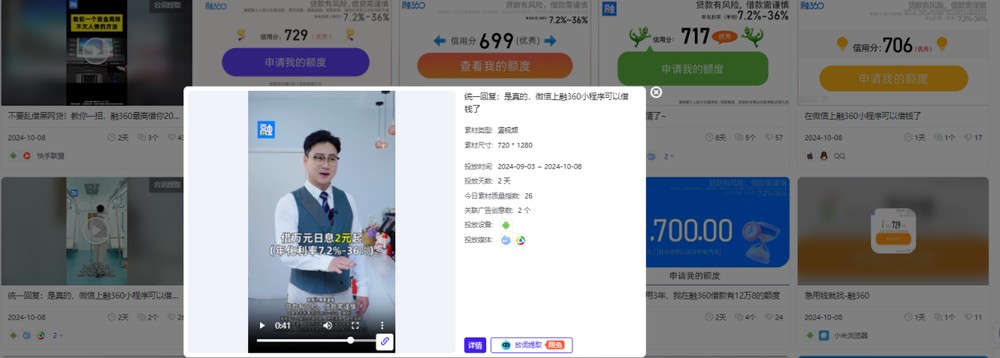
High credit limit, long installment, low daily interest rate, these are the key words for Rong 360's internet advertising that was criticized by the 315 Gala for its high interest rates. However, based on complaints from users on Hei Mao Complaints, the annualized interest rates for various types of small loans directed to Rong 360 are still relatively high.
Source: App Growing
- I applied for a loan on the Rong 360 platform and was redirected to the Yi De Hua platform. Borrowed 10,000 yuan, need to repay 13,585.44 yuan, corresponding to an annualized interest rate of 35.85%.
- I borrowed from the stable Rong Hua system pushed by the Rong 360 loan system, borrowed 3,000 yuan to be repaid in 12 installments, total repayment of 4,077.93 yuan, corresponding to an annualized interest rate of about 35.93%.
- I borrowed 5,000 yuan from Rong 360 and need to repay 6,792.36 yuan, borrowed 2,000 yuan and need to repay 4,122.96 yuan, corresponding to annualized interest rates of approximately 35.85% and 106.15% respectively.
However, according to the Supreme Court regulations: the annual interest rate of financial loan contracts is legal if it does not exceed 24%, falls within the natural debt zone if it exceeds 24% but not 36%, and is invalid if it exceeds 36%. In other words, the small loan platforms that Rong 360 cooperates with either lend within the industry's red line of 36%, or significantly exceed 36%.
In addition to high annualized interest rates, based on over 10,000 complaints on Hei Mao Complaints, Rong 360 also faces several major issues:
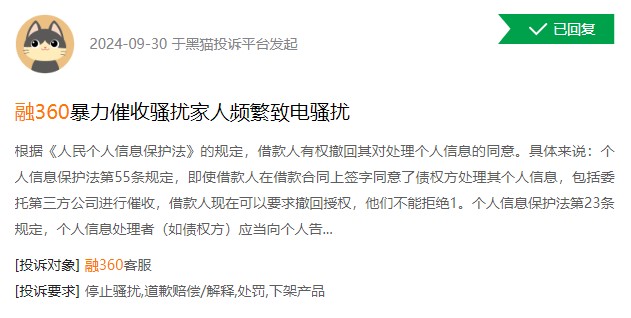
First, violent collection of user information leading to violent debt collection. This is because many Chinese people have a habit of saving face. Collection agencies threaten to publicly disclose the borrower's debt information, even harass the borrower's family and friends, and use the borrower's reliance on social networks to psychologically pressure them, in order to make debtors repay a platform's debt in advance. Collection agents receive commissions, while lending platforms can reduce overdue rates and attract more "first-party dads."
Source: Hei Mao Complaints
Second, high guarantee fees, management fees, and membership fees. Based on user complaints, borrowing 9,000 yuan incurred over 1,800 yuan in guarantee fees, borrowing 15,886.03 yuan incurred 3,133.49 yuan in guarantee fees, indicating that the proportion of guarantee fees on the Rong 360 platform is over 20% Another user complained that in the case where the user did not open a membership, there was actually a monthly membership fee of up to 1080 yuan in the repayment process.
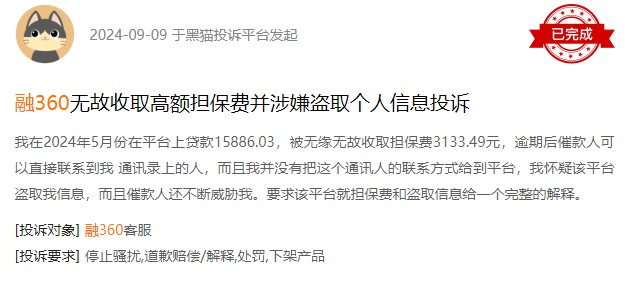
Image Source: HeiMao Complaints
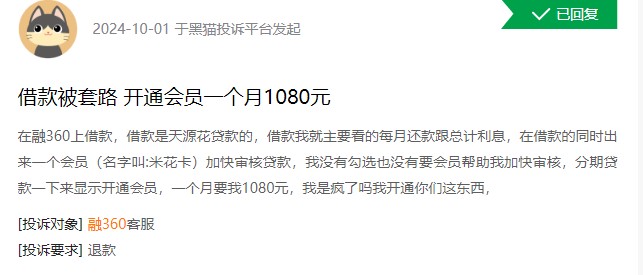
Image Source: HeiMao Complaints
Thirdly, various fees are charged under various pretexts. Some users complained that borrowing 15,000 yuan from Rong 360 resulted in a monthly repayment of 1520 yuan, but without their knowledge, the first three installments accumulated a total of 3435 yuan in installment fees.
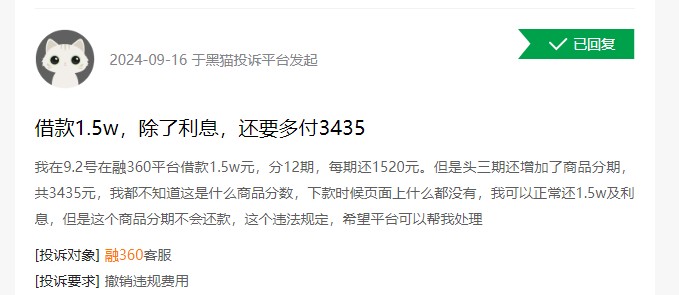
Image Source: HeiMao Complaints
Behind all these chaos lies the continuous transformation of the online lending industry, with Rong 360 facing unprecedented anxiety.
1. Difficulty in Lending and Collection Becomes the Norm
How profitable are lending platforms really? Taking Qifutong's representative product, 360 Jietiao, as an example, the well-known U.S. short-selling institution Grizzly Research pointed out in the article "We Believe Qifutong is a Chinese Fraudulent Company with Completely False Financial Information, Fraudulent Funders, and a Vulnerable Business" that Qifutong engages in financial fraud in various ways.
Image Source: Grizzly Research
The net profit declared by the company to the State Administration for Industry and Commerce in 2023 was 3.08 million yuan, while the net profit disclosed in the financial report was 4.3 billion yuan, a difference of 1384 times. Even with different accounting treatments, such a large profit difference cannot be concealed.
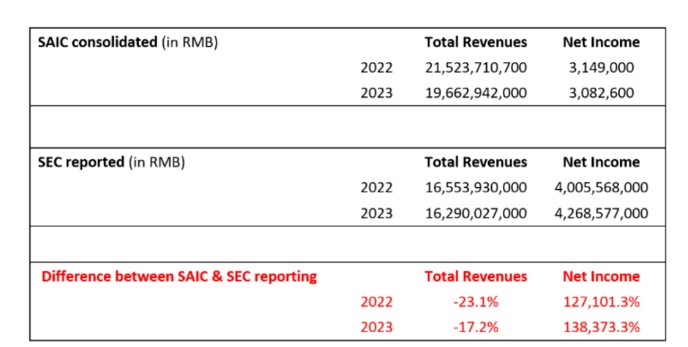
Image Source: Grizzly Research
Although the controversy surrounding Qifutong continues, from 2018 to 2023, Lufax, Xinye Technology, Yiren Jinkong, Jiayin Jinkong, and Xiaoying Technology made huge profits of 65.7 billion, 14 billion, 5.7 billion, 4.3 billion, and 3.2 billion respectively. In just one year, 2023, the original P2P platforms Lufax, Yirendai, Paipaidai, Niwodai, and Xiaoying Technology made a total net profit of nearly 8 billion yuan.
However, on the one hand, the existence of various problems such as ubiquitous online lending advertisements, high interest rates, violent debt collection, young people robbing Peter to pay Paul, and the vicious cycle of borrowing to repay debt have led lending companies to be labeled as "usurers" for a long time, and public doubts about lending have never ceased On the other hand, the entire online lending industry has deviated from the high-tech development advocated by the senior management and the solution to technical bottlenecks. Based on this, the capital market believes that the investment value of lending assistance companies is relatively low.
In 2023, including Qifutech, Lufax Holdings, Xinye Technology, Jiayin Technology, Yiren Digital, and Xiaoying Technology, the market value of 6 companies is generally lower than their total assets, and even companies like Lufax Holdings and Jiayin Technology have a market value lower than their revenue. The PE ratios of Yiren Digital and Xiaoying Technology are less than 2 times.
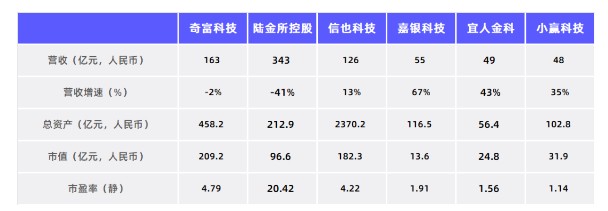
Image Source: Compiled based on public information by DoNews
However, not all lending platforms are making huge profits. This can be indirectly confirmed by the fact that the stock price of Simplified Technology under Rong 360 has been less than $1 per share for a long time and is on the brink of delisting. In 2024, as the online lending industry continues to face difficulties in lending and collection, Rong 360's profitability is facing a major challenge.
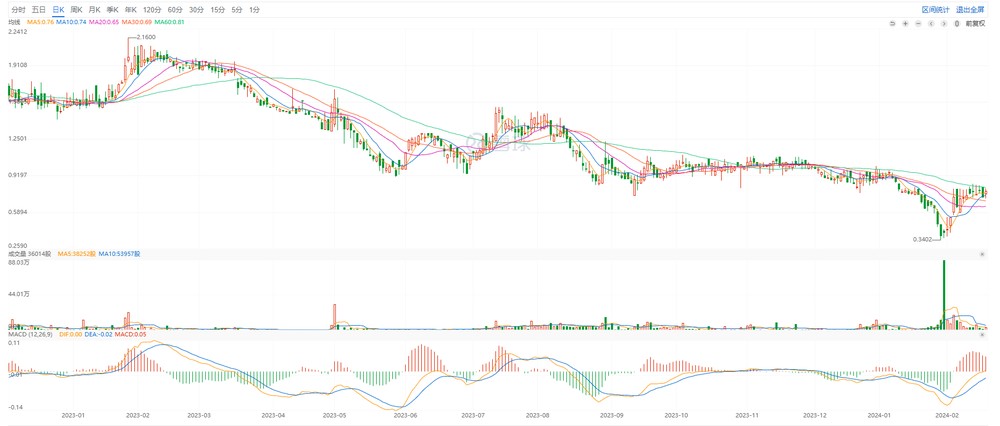
Image Source: Snowball
On one hand, Lufeng (pseudonym), who owes hundreds of thousands of debts, mentioned to us that due to the long overdue period of credit cards and online lending platforms for more than a year, he has been sued by 10 credit card centers of banks, as well as a dozen online lending platforms including Du Xiaoman, Alipay, Weilidai, and 360 Jietiao. His Alipay, WeChat Pay, and bank cards have all been frozen. Now, any incoming funds will be forcibly withdrawn by the court to repay the debts within less than a minute. However, almost no company will pay employees in cash now.
On the other hand, the anti-collection agency he contacted repeatedly emphasized that there is no need to repay the debt in his current situation.
Apart from unexpected windfalls, even if you can find a job, calculating based on a monthly salary of 5000 yuan means it will take eight to nine years to fully repay the loan. This is under the premise of credit card centers and compliant online lending platforms agreeing to suspend the account. In this case, you might as well just lie down. If the collection center continues to collect, they can respond in various ways, and even help with "credit repair" and continue to borrow from other "sources".
Lufeng's situation may be a true reflection of the current situation of many debtors in China. As more and more debtors are unable or unwilling to repay their debts, the overdue and bad debt rates of lending assistance platforms and financial institutions continue to soar.
Among private banks, on September 29 alone, Shanghai Huarui Bank had 49 financial loan contract dispute cases simultaneously heard in court. As of October 8 this year, Shanghai Huarui Bank had a total of 2752 cases involving the plaintiff, far exceeding the total for the entire previous year.
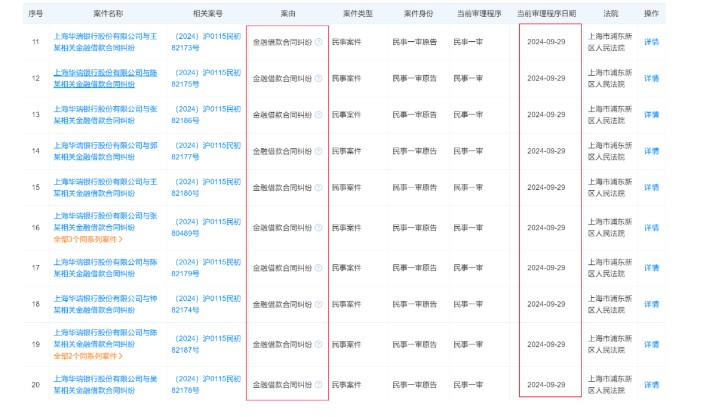 Image Source: Tianyancha
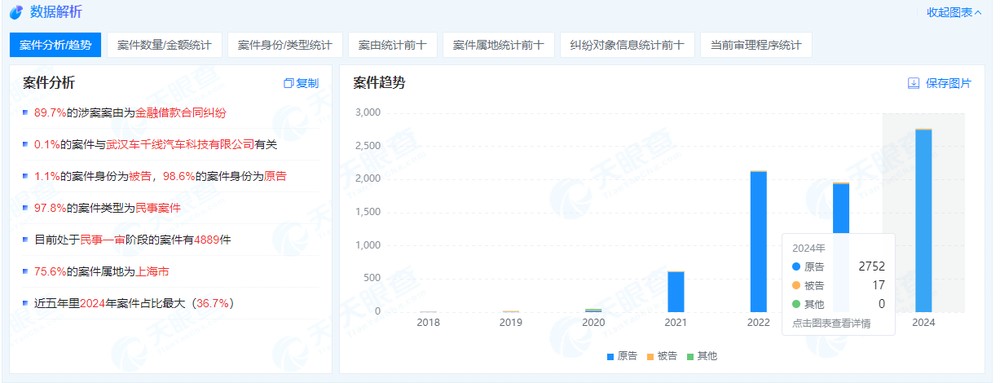
Image Source: Tianyancha
In the P2P lending platform, in Q2 2024, the 90-day+ overdue rates of five companies including Qifu, Lexin, Xinye, Xiaoying, and Jiayin have been increasing compared to 2023. Zhang Qiang, a former employee of 51 Credit Card (alias), mentioned that currently, the risk control level in the consumer finance industry is high. The non-performing asset ratios of general institutions are around 4%, over 7%, and those with poor risk control levels reach 15% or even over 20%.
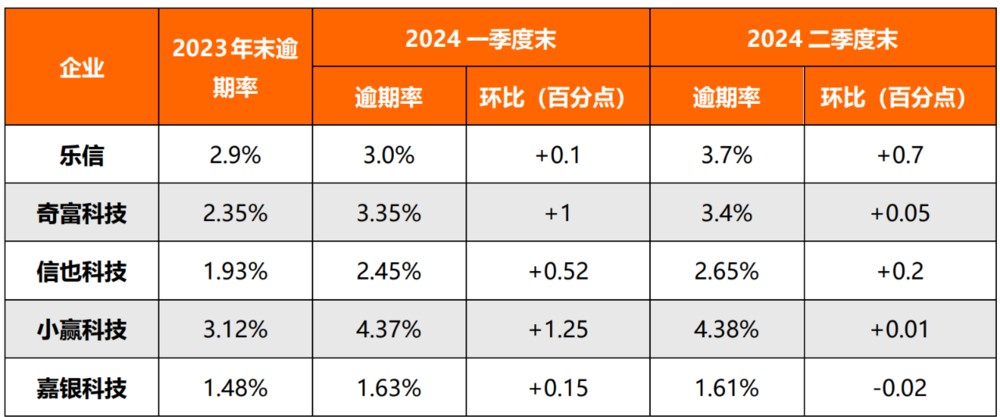
Image Source: Compiled based on public information of various companies
Apart from difficulties in collections, factors such as the integration of online lending with personal credit, the increasing rationality of the consumer and investment markets, and the reckless growth of the online lending industry have made many young people hesitant to easily engage in online lending. Considering Qifu, Lexin, Xinye, Xiaoying, and Jiayin, these five companies in Q2 2024, the issue of difficulty in loan disbursement is also faced by P2P lending platforms.
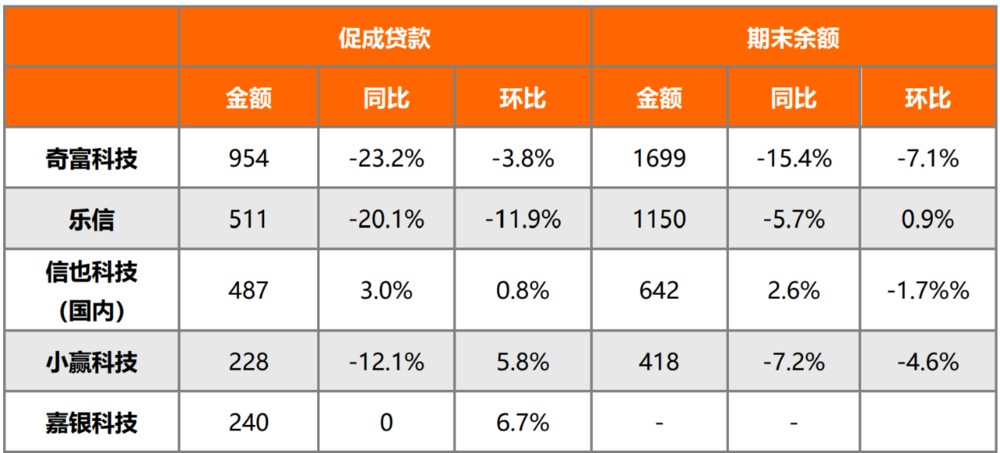
Image Source: Compiled based on public information of various companies
Under the challenges of difficulties in collections and loan disbursement in the online lending industry, the root cause of various issues exposed by Rong 360 mentioned earlier lies. After all, it is through various "hidden charges" that the "maximum value of individual borrowing users" can be achieved. However, the difficulty lies in how to deal with increasingly strict industry regulations in the future and encourage users to engage in repeat purchases.
Furthermore, Zhang Qiang pointed out that due to the high interest rates on P2P lending platforms, many debtors dare to borrow money because many of them are already in debt across multiple platforms or banks, making it difficult to borrow from legitimate platforms or banks.
As Zhang Qiang and Lu Feng mentioned, since the second half of 2023, especially from Q4 onwards, the pressure on the user quality and asset quality of online small loans has been increasing. Many platforms have detected an increasing number of users engaged in "multiple borrowing," leading to a decline in overall user quality. The difficulty of improving user structure and increasing the proportion of high-quality users is becoming greater.
As mentioned by Zhang Qiang and Lu Feng, the rise of P2P lending platforms is essentially a product of the contradiction between financial exclusion and financial inclusion. The modern financial system is not open to everyone, and many low-income individuals, those with poor credit records, or no fixed income are excluded by traditional financial institutions. These groups lack channels to access formal financial services, hence turning to more flexible and loosely regulated P2P lending platforms.
These platforms try to compensate for the high risks brought by these groups through high interest rates and aggressive debt collection. P2P lending platforms attempt to fill this market gap through internet technology, but due to the high credit risk of the target user group, platforms assess risks by collecting more data and reduce default rates through aggressive debt collection methods. However, with the increasing crackdown on violent and illegal debt collection by various departments, this poses a greater challenge for Rong 360 in regulating its subsequent debt collection practices 2. Intensified Industry Shuffling, Increased Transformation Pressure on Rong 360
After years of shuffling and integration, domestic lending institutions have formed the first echelon represented by Lufax, Douyin, Du Xiaoman, Meituan Financial, Qifutech, Lexin, and JD Finance. Among them, the TOP3 occupy 58.5% of the overall scale of the first echelon, showing a certain oligopoly feature.
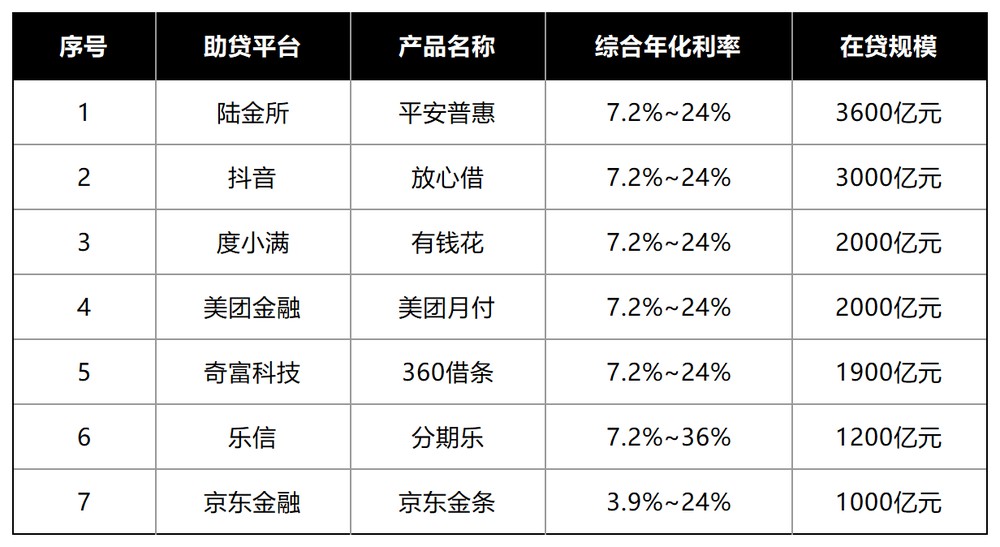
Image source: Compiled based on public information by DoNews
Platforms represented by XinYe Technology and Lingyue Technology are in the industry's second echelon, with the TOP3 in the interval accounting for 63.3% of the total. Platforms represented by Youxin, Kuainiu Intelligent, and Rong 360 are in the industry's third echelon, with the TOP3 in the interval accounting for 24% of the total. The trend of oligopoly is not obvious, and competition is the most sufficient.
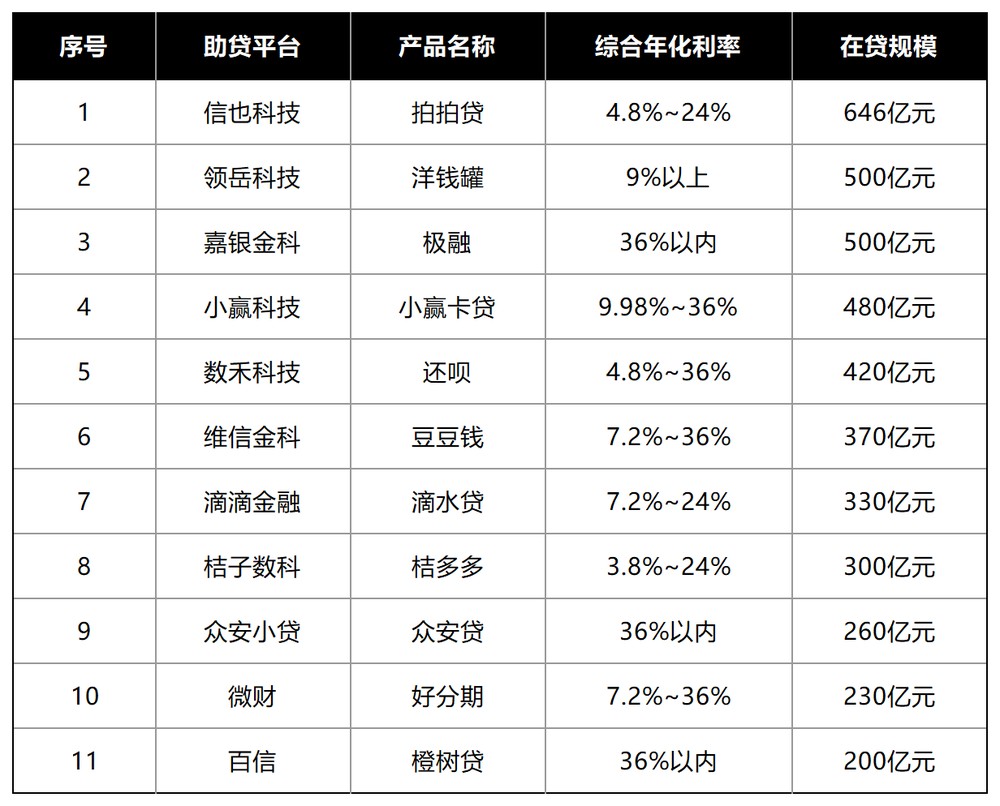
Image source: Compiled based on public information by DoNews
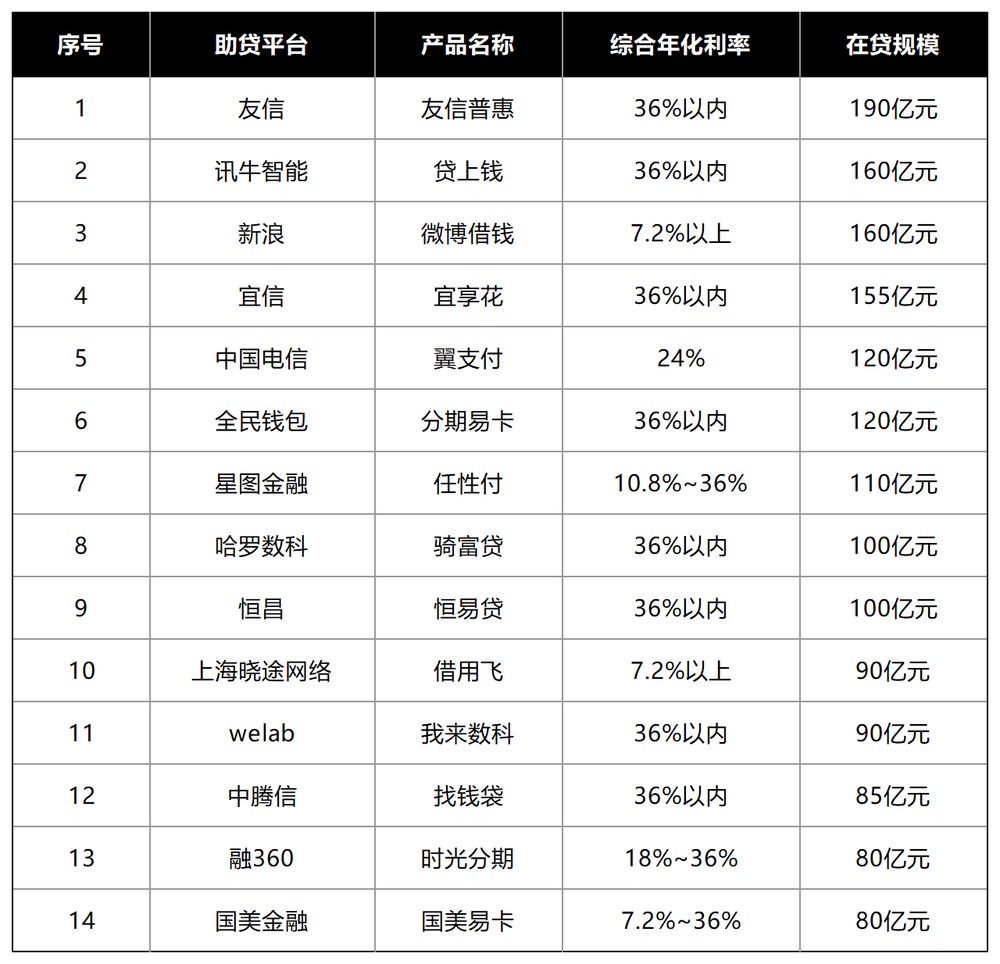
Image source: Compiled based on public information by DoNews
However, with the intensification of industry shuffling, players in the industry's third echelon represented by Rong 360 are facing greater transformation pressure. On the platform side, in recent years, the term "light capital model" has been frequently mentioned in the lending industry. In this model, lending institutions provide diversion services to financial institutions + financial institutions provide risk control + post-loan management and other auxiliary services, without unlimited capital risk.
The difficulty lies in the reduction of loan-intending customers, and the high and expensive online investment costs brought about by the repeated cleaning of internet traffic. 360 Jietiao and Du Xiaoman only spent 387 million yuan and 229 million yuan on internet advertising in the first 9 months of this year, respectively. This is based on the 90% re-borrowing rate of 360 Jietiao in Q4 2023 and Du Xiaoman relying on Baidu search traffic diversion. Not only the online market, but the offline market also faces the problem of difficult customer acquisition.
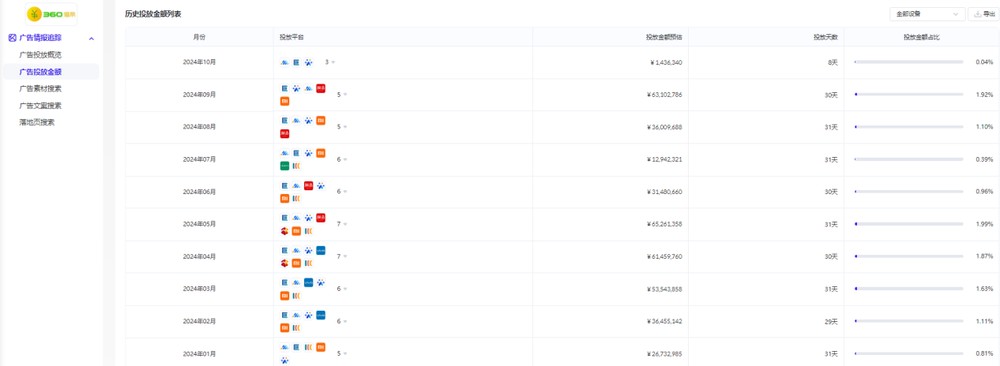
Image source: App Growing
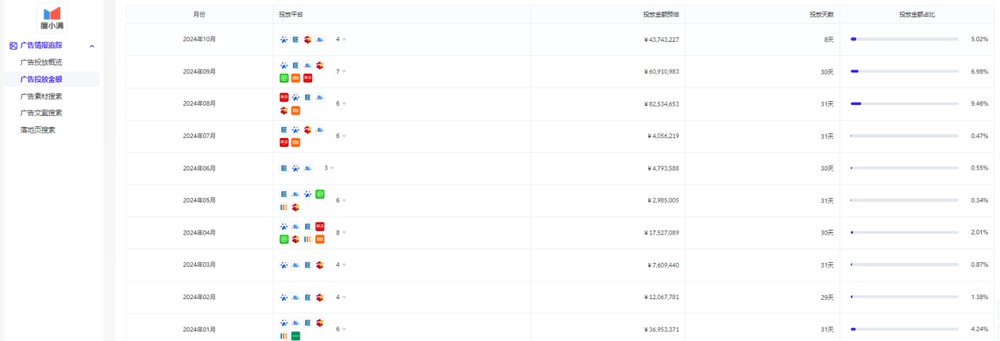
Image source: App Growing
Secondly, does the traffic recommendation of lending platforms need to bear financial risks? From the requirements of the China Securities Regulatory Commission during the Himalaya listing process, it is required that Himalaya provide a complete explanation of the business form, source of funds, qualifications, whether it involves credit business, whether it involves post-loan collection services, and the scale of financial business related to lending intermediaries. Therefore, traffic recommendations also need to bear all the obligations of online lending intermediaries Based on this, including Himalaya and Huolala had to scale down their business during the listing process. The traffic-based approach failed to IPO three times due to the lending business.
Thirdly, the light capital business of lending platforms needs to find a balance between approval rates and risks. Zhang Qiang further stated that if the approval rate of the lending platform is too high, resulting in a high non-performing asset ratio, the "first-party investors" basically do not consider cooperation unless the lending platform is willing to provide financial support. If the approval rate is too low, the lending platform will face low ROI due to the high cost of massive investment in traffic, which will not only lead to waste of traffic and funds but also seriously affect the revenue growth of the lending platform.
In the downstream client end, under the joint influence of rising overdue rates and investment costs, the increasing penetration of financial institutions in inclusive finance, the passive downward movement of lending towards secondary customer groups, and the gradual release of various risks accumulated during the rapid expansion of the industry, the survival space for lending continues to shrink.
From the beginning of this year, enterprises represented by Zhongwang Xiaodai and Sogou Input Method have successively closed down small loan companies, while enterprises represented by Wanda and Lakala have reduced capital, and enterprises represented by YTO Express and Orange Number Technology have successively acquired or invested in companies.
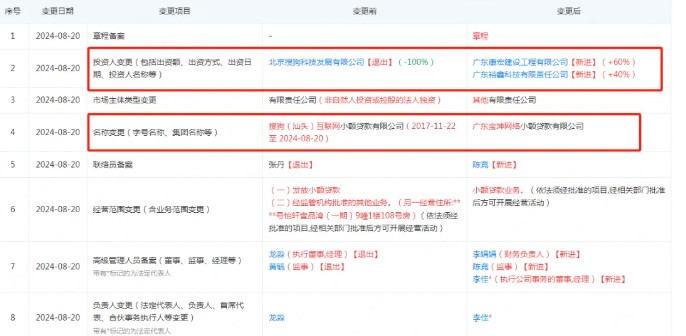
Image Source: Tianyancha
Wang Fei, Secretary of the Party Committee and President of the China Microfinance Association, stated that after going through the exploration period, growth period, and stabilization period, the microfinance industry has now entered a period of "institutional total integration and optimization, small-scale diversification of loan structure, and transformation and innovation of product services." During this integration period, a large number of microfinance platforms are still being cleared out. According to data from the People's Bank of China, the number of microfinance companies nationwide has decreased from 5,500 at the end of December 2023 to 5,428 at the end of June 2024.
On the policy and regulatory front, from the "Interim Measures for the Management of Internet Loans by Commercial Banks" and the "Notice on Further Regulating the Internet Loan Business of Commercial Banks" to the "Notice on Further Regulating the Internet Loan Business of Joint-Stock Banks and Three Other Types of Banks" and the recent "Notice on Strengthening the Management of Internet Lending Business of Commercial Banks," the direction of these policies is clear: the banking industry needs to strengthen its self-operating capabilities in internet lending, which will inevitably bring greater panic to the lending industry.
III. AI Large Models, Rong 360's Lifesaver?
Rong 360 may also be aware of the above issues and hopes to complete its transformation under the current wave of AI large models.
According to Rong 360's official WeChat account, its subsidiary Rongshuke has launched a credit installment model, which is a credit scoring product developed using machine learning algorithms. Through advanced AI technologies such as deep learning, transfer learning, knowledge graph, small-sample unsupervised learning, etc., it assists in online loan decisions and is applied to pre-loan risk identification. This credit scoring product has been applied to hundreds of financial institutions including state-owned banks, joint-stock banks, city commercial banks, consumer finance, and trusts.
However, whether AI large models can help Rong 360 complete a magnificent transformation remains to be seen. Firstly, in this round of commercialization of AI large models in the TOB sector, there is a core and prominent issue, that is, how enterprises measure the production-to-investment ratio of AI large models Basic large-scale model manufacturers may still be trying early business models, but their pricing may be out of touch with market reality, leading them to have to cooperate with large hardware manufacturers. This is the most realistic bottleneck in the current market. Based on this, many financial institutions are not willing to invest even 500,000, let alone millions.
Secondly, the essence of risk control models is not a very mysterious thing. Looking at it from the perspective of lending platforms and financial structures, customer credit directly affects risk control. At the same time, customer-reported education, income, credit scores, and education all affect system judgments.
Thirdly, the price war that has occurred in general large-scale models will also happen in financial large-scale models in the future. Especially as the price war in consumer loans intensifies, it is posing a continuous impact on the profits of financial institutions.
For example, in September, some branches of China Merchants Bank lowered the annual interest rate of "Flash Loan" to 2.88%, Minsheng Bank's Minyi Loan in Guangdong lowered the minimum interest rate to 2.85%, Ping An Bank, Industrial Bank, Huaxia Bank, and others launched consumer loan products with minimum interest rates below 3%, while Jiangsu Bank directly lowered the consumer loan interest rate to 1.88%.
A more realistic issue is whether Rong 360 can have sufficient cash reserves to wait for the moment when the commercialization of financial large-scale models truly explodes as the online lending industry continues to change. Perhaps Rong 360 can continue to wait, but for young people today, whether considering personal credit or long-term personal development, caution is still needed when it comes to various online lending products and platforms, including Rong 360
