ETF version of "Widowmaker Trade": TLT

Wallstreetcn
2024.10.23 01:40

As US Treasury bonds face a major sell-off, funds continue to flow into US Treasury ETFs. In the past week, TLT has attracted $1.45 billion. Going against the economic and election situation, persistently betting on long positions in US Treasury bonds to profit from declining yields has become a new "widow trade"

In the strong US economy, with the continuous cooling of rate cut expectations, persistently betting on long US treasuries to bet on the decline in yields has become the new "widow trade".

For a long time, the "widow trade" referred to the market operation of traders fiercely shorting Japanese government bonds against the Bank of Japan's ultra-loose policy maintained for decades, a high-risk trading strategy that caused numerous traders to suffer heavy losses.

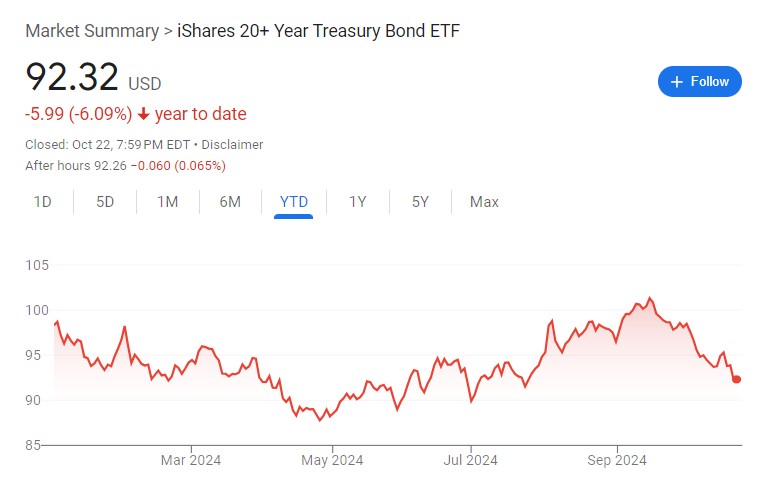
The latest popular "widow trade" is to go long on US treasuries through ETFs, especially through the $60 billion iShares 20+ Year Treasury Bond ETF (TLT) for long-term US treasuries.

After the Federal Reserve announced a significant 50 basis point rate cut last month, investors' expectations of a soft landing increased, coupled with the possibility of Trump's re-election, US treasuries experienced unprecedented massive selling since the beginning of the 21st century.

This led to a 9% decline in TLT since mid-September, turning negative for the full year 2024, with a 6% decline year-to-date.

Nevertheless, there are still a large number of investors persistently buying TLT. Data from Koyfin shows that in the past week, the ETF attracted another $1.45 billion, with fund inflows over the past 12 months increasing to $17.5 billion.

The three times leveraged version of TLT - Direxion's 3x Long 20+ Year Treasury Bond ETF (TMF) - has plummeted nearly 20% in the past month. Last week, TMF still recorded a $133.4 million fund inflow.

The more they buy, the more it falls. How many "widows" will the long US bond trade create? As long as the US economy remains strong, this pain is likely to continue.

Stable economic data has led to a repricing of the bond market, with investors significantly reducing rate cut expectations. There is also uncertainty about whether there will be further rate cuts in November. On Tuesday, pricing of swap contracts showed that traders expect the Fed to cut rates by a total of 128 basis points by September next year, down from the 195 basis points they expected a month ago.

Furthermore, the recent sell-off in US treasuries is also part of the "Trump trade", as investors hedge the possibility of Trump's re-election in November and the Republican Party winning a majority in both houses of Congress. According to Trump's policy plans, he will implement tax cuts and increase fiscal spending domestically, which could boost US inflation.

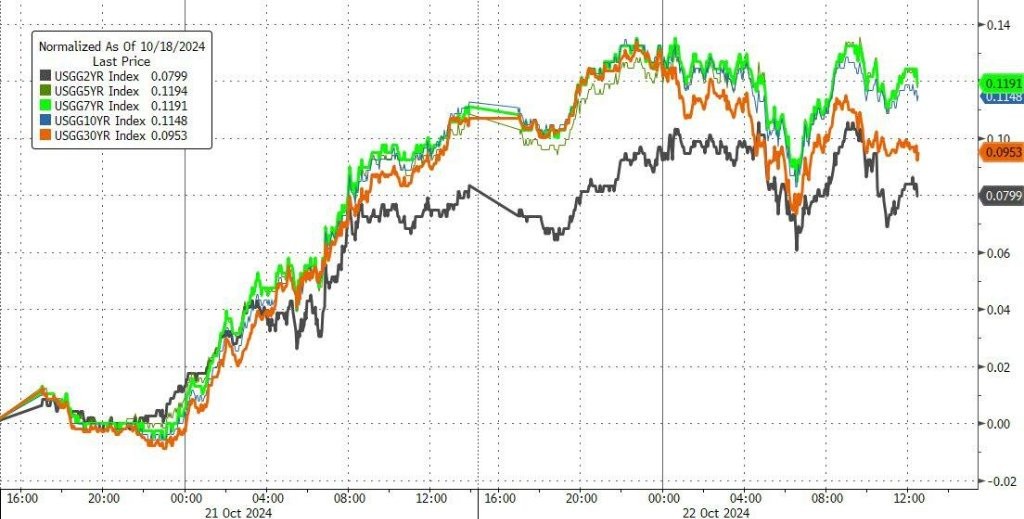
On Monday, the yield on the US 10-year benchmark treasury rose more than 10 basis points, reaching over 4.20% intraday, and on Tuesday it briefly approached 4.22%, continuing to refresh intraday highs since the end of July.