


[Economic Observation] "U.S. Election + Federal Reserve Meeting" Affects Capital Flow, Institutions Expect Hong Kong Property Market to Remain Stable

The Federal Reserve will hold a meeting on November 7, affecting the local property market. The results of the U.S. election will bring uncertainty, with the market generally betting on Trump winning, which may lead to capital inflows into the U.S. and impact the recovery of the Hong Kong property market. Analysts point out that if Trump is elected, he may continue to implement pro-business policies, support a stronger U.S. dollar, and lower expectations for interest rate cuts, putting pressure on the Hong Kong property market. Bank of East Asia expects the U.S. to cut rates by 0.25 basis points, with Hong Kong potentially reducing by up to 0.125 basis points. While rate cuts may provide some assistance to the property market, inventory levels still need to be monitored
The Federal Reserve will hold its interest rate meeting on November 7 local time, and the trend of U.S. interest rates will affect the local property market. Additionally, the U.S. election on the 5th will also bring uncertainties to the financial market and the property market. Currently, the financial market is generally betting that Donald Trump will win the U.S. election, especially as the "Trump trade" has heated up again recently, including the surge in Bitcoin. If we assume Trump wins, will it be a further blow to the local property market, or will there be opportunities amidst the crisis?
The global focus is on the U.S. election, and regardless of who wins, it will have a certain impact on the global political and economic situation. Currently, the financial market is betting on a Trump victory, while the Hong Kong stock market seems to show little reaction to the possibility of Trump winning, as it has been fluctuating within a narrow range in recent days.

The results of the U.S. election and their impact on the global economy have drawn widespread attention. The picture shows election-related merchandise sold by souvenir vendors in Times Square, New York. (Photo by China News Service)
Slowing down interest rate cuts is detrimental to property market recovery
However, Trump's policies advocating for increased tariffs and tax cuts are expected to drive up U.S. inflation, potentially leading to a stronger dollar and a significant reduction in interest rate cut expectations, which means that expectations for interest rate cuts in Hong Kong will also decrease, bringing uncertainty to the local property market. Chan Hoi-chiu, head of the research department at Ricacorp Properties, told our reporter that the results of the U.S. election are likely to have a certain potential impact on the local property market. If Trump is re-elected, he may continue to promote his pro-business policies, stimulate U.S. economic growth, and capital may flow into the U.S. market, drawing away some funds from the Hong Kong property market.
"In terms of interest rate policy, the market expects the chances of U.S. interest rate cuts to decrease, which will support a stronger dollar and may affect the pace of interest rate cuts in Hong Kong, hindering the recovery of the property market," Chan said. He further pointed out that it is important to note that the election results may affect U.S. foreign policy, thereby impacting the geopolitical situation and bringing more uncertainties, and we must also guard against the effects of these factors on Hong Kong and its property market.
Lee Chun-ho, chief investment strategist at Bank of East Asia, told our reporter that the bank expects the U.S. to still cut rates by 0.25 basis points, which will cause the dollar to adjust slightly, but it will not plummet rapidly, as it is within market expectations. As for Hong Kong, the bank expects a maximum cut of 0.125 basis points, as the last cut was 0.25 basis points. Lee stated that if Hong Kong follows the U.S. rate cut, it may provide some help to the property market, but it will not lead to a significant decrease in inventory levels in the local property market, as the current issue is that major developers have high inventory levels, and the rate cut may provide some assistance to the property market.
Homebuyers' confidence gradually recovering
Zhuang Tailiang, executive director of the Global Economic and Financial Research Institute at Chinese University, told our reporter that he believes that regardless of who wins the election, the dollar is expected to adjust after this round of upward correction As for whether the U.S. will cut interest rates, it depends on economic data. If U.S. inflation falls back to the 2% target, the Federal Reserve will cut rates, which cannot be interfered with by the president. He personally estimates that the U.S. has entered a rate-cutting cycle and expects further cuts in the future. If the U.S. cuts rates, the Hong Kong property market may gradually stabilize, and property prices may stabilize or rebound, but it will still take some time to confirm.
HSBC Global Research's latest report also indicates that local buyers and investors with housing demand are gradually returning to the Hong Kong real estate market, driving up costs in the local property market in October. The recently launched new projects have also seen strong sales. Compared to the "small spring" in April, it is believed that this round of real estate recovery can be sustained. HSBC Global expects property prices to stabilize in the second half of this year and rise by 5% next year, reversing the decline since 2022.
HSBC Global also pointed out that real estate developers are currently under significant pressure from a large amount of completed inventory, so they are focusing on asset turnover. Although the situation is concerning, the positive factors such as the rate-cutting cycle and expected wealth effects have largely alleviated related issues, and market sentiment is expected to gradually improve. HSBC Global believes that the government intends to restore the property market to a healthy state and continues to focus on land development, which means that the policy risk for the real estate industry is low. Additionally, the government recently announced a series of supportive measures, including relaxing mortgage loan ratios, so even if the market faces challenges, it will still help gradually restore buyers' confidence, and the Hong Kong property market is expected to remain stable.
Focus on Two Major Trends Among Executives of Multinational Financial Institutions
After sorting through the information, reporters found that several positive signs for the property market in Hong Kong are gradually emerging.
From the perspective of capital flow, since the U.S. began its interest rate hike cycle in 2022, with rates rising from 0.5% at the beginning of 2022 to 5.75%, global capital has been flowing back to the U.S., negatively impacting major economies worldwide and causing some capital originally in Hong Kong to flow into the U.S. However, on September 18 of this year, the Federal Reserve began its rate-cutting cycle, leading some capital to flow out and seek investment opportunities globally, indirectly benefiting Hong Kong.
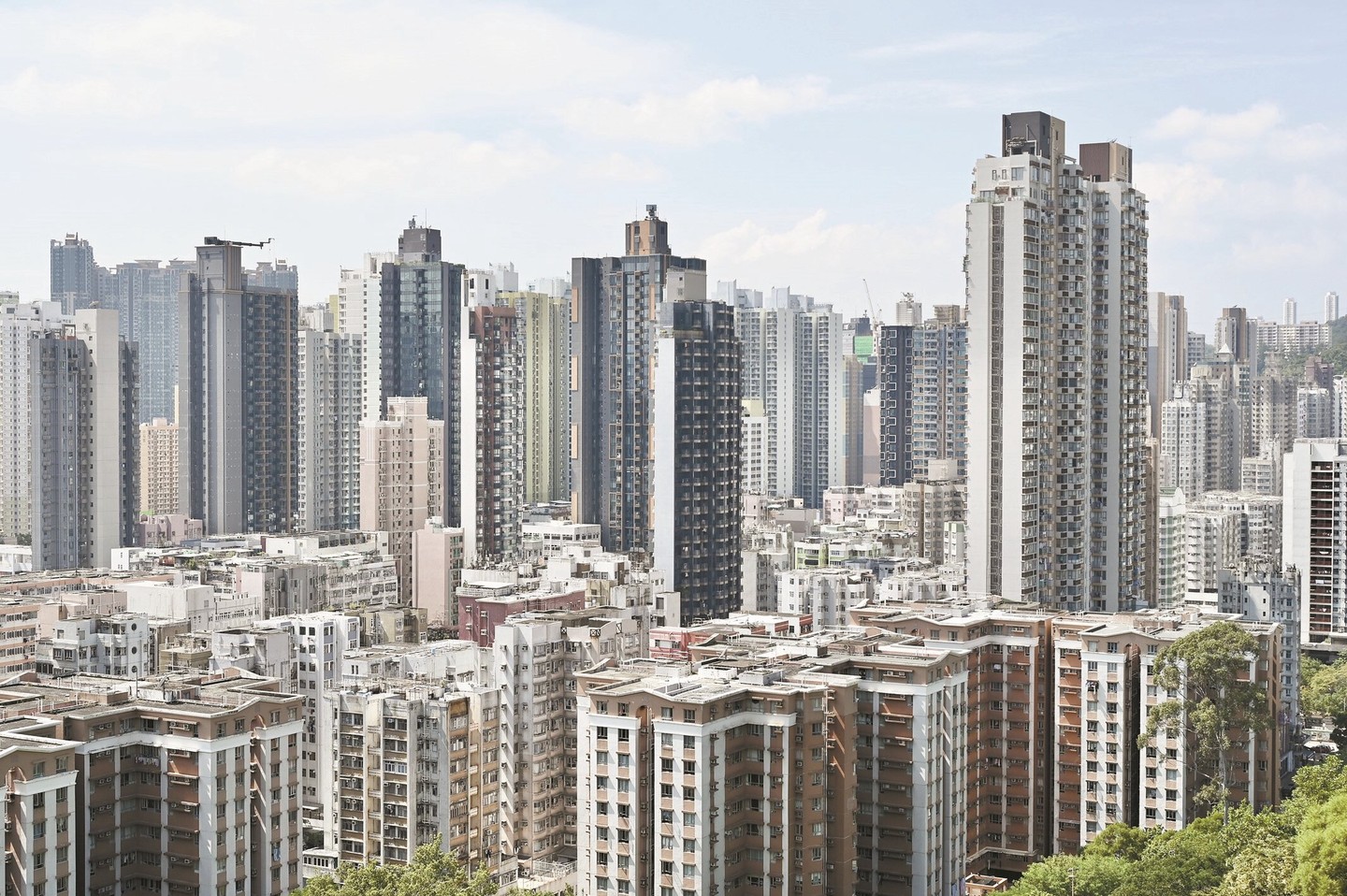
Data from various sources shows that the Hong Kong property market has recently shown signs of bottoming out and stabilizing. With the introduction of several favorable policies for the property market in the new policy address, along with the mainland's "combination punches" to boost the economy, trading in the Hong Kong property market has become more active, especially with large buyers frequently appearing in new projects. For example, the recent collaboration between Cheung Kong Group and the Urban Renewal Authority for the "Yuyue" project in Cheung Sha Wan sold all 198 units on the first day of sale, with the largest buyers being two related parties who spent approximately HKD 44.8546 million to purchase 9 one-bedroom units Return to Hong Kong
On the other hand, the financial industry, closely tied to the real estate market, is also showing signs of recovery, with two major phenomena worth noting. First, many multinational financial institutions are gradually redeploying their overseas senior executives back to Hong Kong, including some senior executives from major banks relocating their Asian offices to Hong Kong. For example, Marc Luet, the head of Citigroup's Japan, North Asia, and Australia regions and banking operations, who was originally based in Tokyo, has recently moved his office to Hong Kong; three senior executives from Standard Chartered have shifted their base from Singapore to Hong Kong; UBS has sent Iqbal Khan, the co-president of the group's global wealth management, from Switzerland to Hong Kong; UBS CEO Sergio Ermotti previously predicted that the asset size of Hong Kong's wealth management industry would surpass that of Switzerland by 2027 or earlier, claiming the global championship.
Purchasing Luxury Homes
Second, many senior executives from multinational financial institutions have recently purchased luxury homes in Hong Kong. This includes Nicholas Moreau, the Global CEO of HSBC Investment Management, who spent HKD 50 million in early October to buy a three-bedroom unit in Century Tower, Mid-Levels, which is 17% lower than the transaction price of similar units five years ago; Sebastian Paredes, the CEO of DBS Hong Kong, purchased a top-floor unit at THE ASTER in Happy Valley for HKD 49.397 million in September, with a price per square foot of HKD 39,500, both of which are new highs for the project. Additionally, in June of this year, Ulysses Lau, Managing Director of JP Morgan Private Bank Asia, and Bryce Wan, Head of North Asia Market for HSBC Global Private Banking, also entered the market, spending HKD 67.5 million and HKD 17.269 million, respectively, to purchase units of 1,839 square feet at ST. GEORGE'S MANSIONS in Ho Man Tin and 553 square feet at Yung Hoi in Wong Chuk Hang. (Reporter: Lin Defen)
