


Against the trend, the configuration value of XTALPI-P continues to be released after the lifting of the lock-up period for the first stock of 18C

XTALPI performed well on the lifting of restrictions date, successfully passing the test of restricted stock release, and the key turning point for the stock price rebound may have arrived. As the first domestic AI pharmaceutical stock, XTALPI has attracted market attention since its listing, with trading amounts exceeding HKD 1 billion consecutively. The 18C rule introduced by the Hong Kong Stock Exchange provides listing opportunities for high-growth technology companies, attracting investors with internationally leading technologies
As the first domestic AI pharmaceutical stock and the first specialized technology company listed under the Hong Kong Stock Exchange's 18C rules, XTALPI has received widespread acclaim from the industry and the market since its debut on June 13 this year. On the day of its listing, the Financial Secretary of Hong Kong, Paul Chan, the Secretary for Innovation and Technology, Sun Dong, and the Chairman of the Hong Kong Stock Exchange Group, Charles Li, were all present at the scene. Now, six months after the company's listing, some restricted shares have been unlocked. The trading volume exceeding HKD 1 billion for two consecutive days also reflects investors' special attention and enthusiasm for this first 18C stock.
18C Lock-in New Regulations: Strategic Investors Optimistic in the Long Term
In March last year, the Hong Kong Stock Exchange launched the 18C reform, allowing "specialized, sophisticated, and innovative" technology companies without revenue or profit to list in Hong Kong. This is another significant reform following the 18A reform in 2018. Specifically, the five major industries targeted by the Hong Kong Stock Exchange's 18C include next-generation information technology, advanced hardware and software, advanced materials, new energy and energy conservation, as well as new food and agricultural technology, covering the highest "hard technology" content production capacity tracks currently available.
The 18C reform introduced by the Hong Kong Stock Exchange has high requirements for the technological attributes and market capitalization thresholds of companies, tailored for truly capital-favored unicorn technology enterprises. It is evident that the primary intention of 18C is to attract high-growth specialized technology companies with internationally leading technologies and high barriers, which have not yet fully realized their enormous commercial value, to have the opportunity to enter the capital market. To assist small and medium investors in making judgments, 18C has introduced the concept of "lead senior investors" with considerable thresholds. To meet the threshold for such lead senior investors, investors need to have assets/fund management scales of HKD 15 billion or more, or investments of HKD 5 billion or more in the specialized technology field, or be leading enterprises in the industry with significant market share and scale.
According to the existing 18C rules, for non-commercialized companies, the lock-up period for lead senior independent investors can be as long as 12 months, rather than the traditional 6 months. The requirements for lead senior independent investors in the 18C rules are to lock in 2-5 companies, holding at least or exceeding 10% of shares or a total investment of at least or exceeding HKD 1.5 billion within 12 months prior to the listing application. According to XTALPI's prospectus, the currently locked lead senior investors have reached the maximum of 5, including Imaginary Architecture (Tencent), Sequoia Capital China, Wuyuan Capital, China Life, and China Pacific Insurance, with a total holding ratio of 39.13%, far exceeding the requirements of the Stock Exchange. The additional lock-in of these influential investors also reflects their confidence in XTALPI's long-term development as a leader in this track.
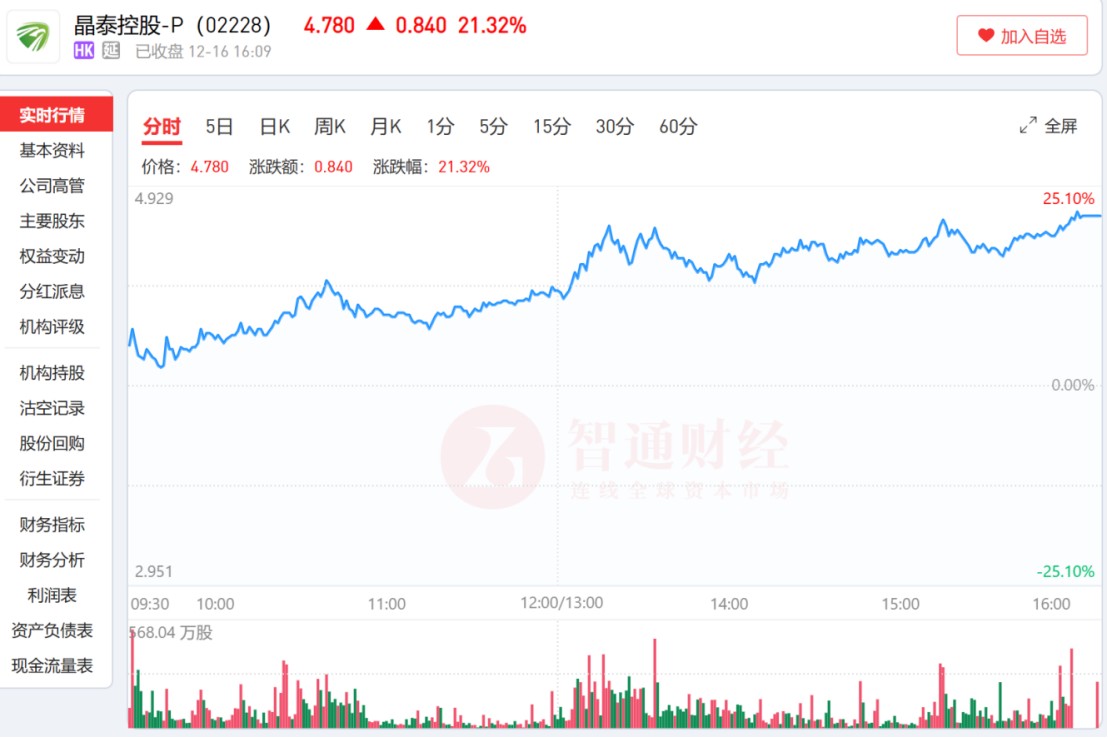
Therefore, on December 13, in addition to the aforementioned lead senior independent investors and the company's founding team, XTALPI will unlock a total of 63.923 million shares, including cornerstone investors, with a cost price equal to the company's IPO issue price of HKD 5.28; and 1.155 billion shares from pre-IPO investors. Based on the trading volume level currently exhibited by XTALPI, the number of shares unlocked this time does not constitute a "flood beast." In terms of funding, since December, XTALPI has been actively traded in the secondary market. For example, on December 12, XTALPI's trading volume reached 168 million shares, with a single-day transaction amount of HKD 749 million; on December 13 and December 16, the transaction amounts for these two consecutive trading days reached HKD 1.644 billion and HKD 1.409 billion, respectively. Over the past month, the average turnover rate of the company's stock has significantly increased to 2.25%, with the turnover rates on December 13 and December 16 reaching around 10%. In the month leading up to the lock-up expiration, the average daily transaction amount was HKD 353 million, peaking at HKD 984 million, ranking among the top compared to other newly listed stocks in Hong Kong in the past two years before their lock-up expiration.
In addition, after being included in the Hang Seng Composite Index and Stock Connect on September 9 and September 10, 2024, respectively, the company was again included in the Hang Seng Biotechnology Index on November 22, 2024, which provides strong support for the company's subsequent trading volume.
Previous market sentiment concerns were mainly about potential short-term fluctuations in stock prices before and after the cornerstone lock-up expiration. However, XTALPI's stock price is currently at a relatively low level. After the negative impact of the lock-up expiration is cleared, the company has shown a strong rebound trend based on its solid fundamentals, reflecting the market's enthusiasm for this "18C" first stock.
Based on the performance on the "lock-up expiration day" of December 13 and the market on the 16th, XTALPI seems to have successfully passed the lock-up test and may have reached a key turning point for the next stage of stock price rebound.
Long-term value recognized by the market, currently has allocation potential
In terms of quality core assets, long-term value is far more important than short-term fluctuations, and XTALPI is a prime example.
According to Zhitong Finance APP, XTALPI is referred to as the "first domestic AI pharmaceutical stock" and "first AI+robotics stock" because one of its main businesses is to comprehensively empower the pharmaceutical industry chain from drug research and development to pre-clinical trials through AI technology, enhancing the research and development efficiency and success rate of biopharmaceutical clients, achieving innovative breakthroughs.
Having a strong technology and investment team is an important foundation for XTALPI's steady development. The three founders of XTALPI are all postdoctoral researchers from the Massachusetts Institute of Technology (MIT), and one of them is an alumnus of this year's Nobel Prize in Physiology or Medicine, closely collaborating with MIT's research team, such as working with Professor Bradley L. Pentelute to advance peptide chemistry and molecular biology research. In August of this year, the company's co-founder and chairman, Wen Shuhao, was invited by the school to join MIT's External Advisory Committee, becoming the youngest member of the committee's chemistry division.
With the solid technical background of the founding team, the company has established a unique technological advantage in quantum physics, AI, and large-scale robotics experimentation, establishing a business model for the AI+robotics drug development platform, and successfully forming a technology-commercialization ecological closed loop, including a USD 250 million contract signed with Eli Lilly for a single pipeline AI drug discovery collaboration in 2023 Become one of the most successful examples in the domestic AI pharmaceutical field.
For an innovative technology company entering the commercialization stage, the company's investment value is reflected not only in the continuous signing of cooperation agreements with domestic and foreign pharmaceutical companies for R&D pipelines but also in its ability to transform R&D results. From a business model perspective, unlike AI biotech companies that need to personally engage in drug development, JingTai Technology mainly undertakes orders from downstream clients, completing the agreed preclinical R&D phases and confirming revenue accordingly. This model is relatively safe, as it does not bear the risks of new drug development failures and can avoid the predicament of having no income during the R&D phase, while also having the opportunity to enjoy substantial sales shares after successful transfer or listing of drug pipelines.
Public information shows that JingTai Technology has provided services to over 300 institutions worldwide, including many of the world's top biotechnology and pharmaceutical giants. According to Frost & Sullivan, the company has served over 300 biotechnology and pharmaceutical companies and research institutions globally, including 16 of the top 20 biotechnology and pharmaceutical companies in the world.
Benefiting from this, JingTai Technology has seen relatively steady performance growth in recent years, with a compound annual growth rate of 66.7% from 2021 to 2023. In the first half of 2024, JingTai Technology's revenue was 103 million yuan, a year-on-year increase of 28.3%, with the drug discovery business growing nearly 70% year-on-year. Notably, JingTai Technology has also achieved remarkable results in continuously expanding its technology into new technology and business areas.
On October 10 of this year, JingTai Technology signed a macromolecule drug discovery AI platform licensing agreement with Janssen Biotech, Inc., a subsidiary of Johnson & Johnson. According to the agreement, JingTai Technology commercially licenses Janssen Biotech to use the company's self-developed XtalFold™ AI platform for the discovery and engineering design of macromolecule drugs. As an AI-based software platform, it can model the interactions between biological macromolecules using sequence information, thereby providing rapid and accurate structural information for macromolecule drug development. This cooperation also fully demonstrates that the company's innovative value is increasingly recognized by the global industry and peer companies.
In addition to its core business in AI + pharmaceuticals, JingTai Technology has also begun to leverage its leading advantages in AI and robotic automation to invest in new materials, agriculture, petrochemicals, and daily chemicals, unlocking more new industrial cooperation blue oceans, gradually growing from "AI pharmaceuticals" to becoming a representative in the "AI for Science" track.
For example, in August of this year, JingTai Technology signed a five-year cooperation agreement with GCL Group, expecting to receive approximately $135 million (about 1 billion yuan) in phased R&D payments to jointly develop a series of differentiated new materials with industry competitiveness and industrial application potential, and to create a model-driven AI + automated intelligent creation system in the materials field for GCL.
From a market perspective, according to data from the Ministry of Industry and Information Technology, it is expected that by 2025, China's new materials industry will reach a market scale of 10 trillion yuan, with a compound growth rate of 13.5%. The empowering effect of AI technology on materials science is significant, and the growth rate of the AI materials science market is expected to reach 36.76% As a key player in the development of AI + new materials, XTAL Technology is accelerating the empowerment of leading enterprises in the new materials field through collaboration, improving the commercial conversion efficiency of its innovative technologies, and promoting the gradual growth of AI + new materials into another important growth curve for the company.
Valuation Growth Potential Continues to Be Released
From the current global industry development situation, AI in pharmaceuticals is still in its early stages.
Currently, multinational corporations (MNCs) have begun to embrace AI technology on a large scale. According to Zhitong Finance APP, in 2023, the number of AI-related cooperation transactions among multinational pharmaceutical companies was only 11, while in the first three quarters of 2024, this number reached 21, with a total amount exceeding $12 billion. Among them, AbbVie acquired an AI small molecule company, Landos Biopharma, for $213 million, marking the first acquisition of an AI pharmaceutical company by a multinational pharmaceutical company.
In China, in the first half of 2024, there were six AI pharmaceutical companies with overseas financing exceeding $100 million, including well-known investment institutions such as a16z, ARCH Venture Partners, Sequoia Capital, as well as MNCs like Eli Lilly, Amgen, and Sanofi.
In the U.S. stock market, AI pharmaceutical targets have gained widespread favor among Wall Street investors. Taking the well-known AI pharmaceutical company Roivant Sciences as an example, although the company experienced a downturn after its IPO in 2021, with its market value dropping to $1.8 billion, in recent years, supported by the AI concept, Roivant's stock price began to soar in 2022, with a cumulative increase of 148.14% in Q4 2022 alone, and its stock price has continued to rise since then. According to public information, the company's revenue in 2023 was $61.28 million, with an operating loss of $1.078 billion, but its market value once reached as high as $9.639 billion, with a maximum increase of 4.18 times in market value over two years.
In addition to Roivant Sciences, other Hong Kong-listed AI-related companies have also shown strong performance recently. For example, Fourth Paradigm's stock price has increased by 85.91% since October this year; meanwhile, Huilyang Technology and Innovation Qizhi's stock prices have also risen by 400% and 56.76%, respectively. Coincidentally, AI-related companies in the A-share market have also received widespread recognition from investors, such as Cambricon, Yuncong Technology, and Langma Information. This undoubtedly reflects the consistent optimism of domestic and foreign investors regarding the development of the AI field.
As a leading enterprise in AI pharmaceuticals, XTAL Technology, which is currently the only AI for Science company listed in Hong Kong, has significant room for valuation adjustment after the uncertainty brought by the lifting of restrictions is eliminated, and it has high long-term allocation value
