


Huawei's "Luxury Car Alliance" Strikes Back

Continue to break through
Author | Chai Xuchen
Editor | Zhang Xiaoling, Wang Xiaojuan
From no one willing to cooperate to everyone rushing to seek collaboration, Huawei transformed itself into a top player in the automotive industry in just three years.
Last year, Huawei's smart car business, leveraging the Aito brand, surpassed the annual sales threshold of 100,000 units. After all four models of the "Four Realms" were launched in 2024, total sales tripled, elevating HarmonyOS Smart Drive above BBA, becoming the No. 1 in terms of unit price in the domestic automotive market.
Traditional players like SAIC, which once issued the "soul theory," GAC, which downgraded cooperation two years ago, and luxury camp players like SAIC Audi have once again extended olive branches to Huawei, seeking to strengthen smart cooperation.
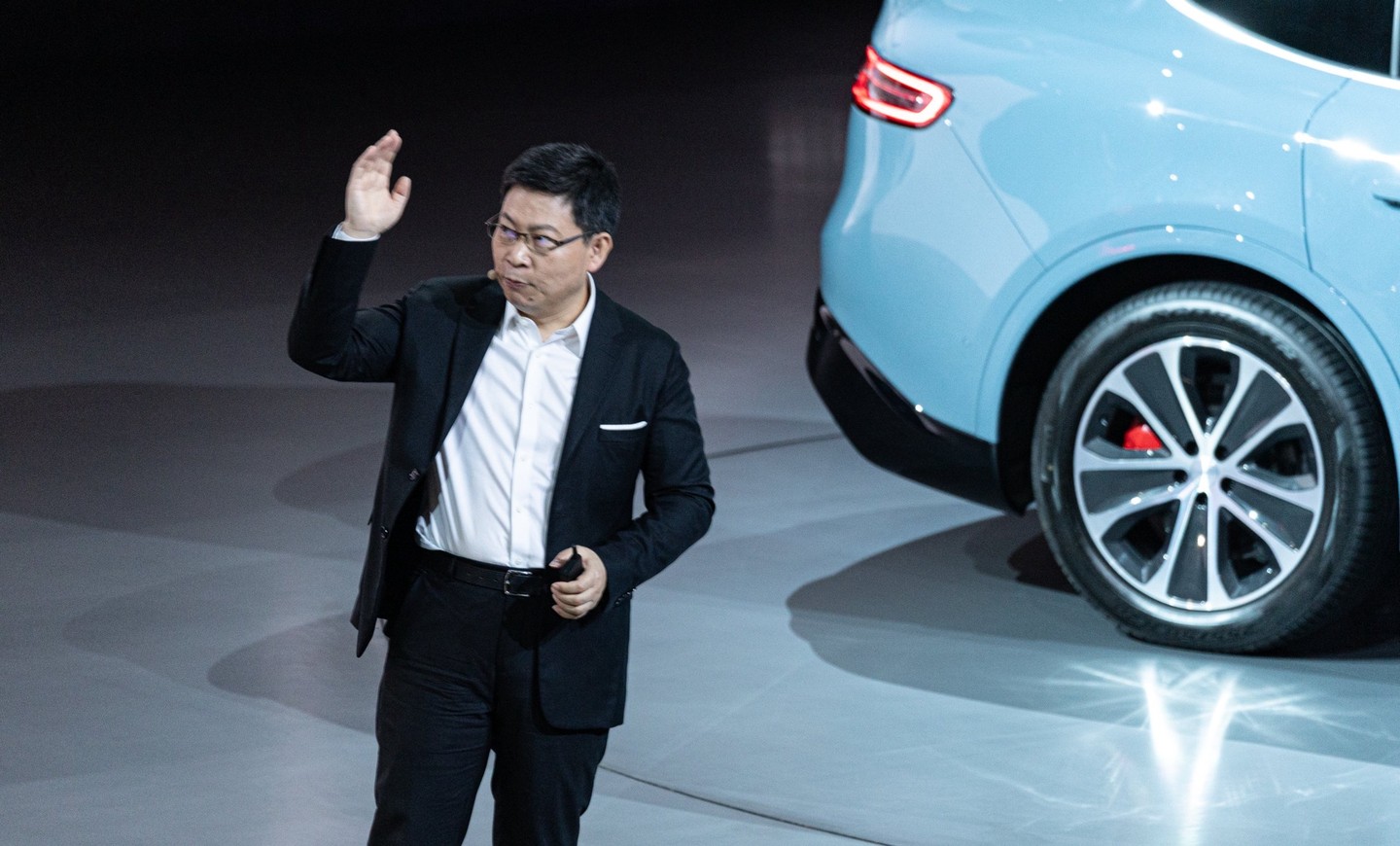
Led by Richard Yu, Huawei's "Luxury Car Alliance" achieved a remarkable comeback, conquering car manufacturers with its strong technical capabilities, and its transformative magic is continually solidified. However, while Huawei shines under the spotlight, it also faces immense upward pressure, with many challenges still to be addressed by Richard Yu.
Huawei's HarmonyOS Smart Drive team has become an undeniable force among new car manufacturers. It is also very likely to survive in the competition of new energy vehicles, changing the competitive landscape of the global automotive industry alongside other survivors.
Slaughtering the Rankings
Describing Huawei's automotive business this year as a comeback is not an exaggeration; "slaughtering the rankings" has become a portrayal of its offensive.
On December 26, HarmonyOS Smart Drive announced that the Aito M9 had surpassed 200,000 units in sales within a year of its launch, not only maintaining its position as the sales champion for luxury models priced over 500,000 yuan in China for eight consecutive months but also exceeding the total sales of the other top 20 models on the list, capturing one-third of the market share.
It is worth noting that last year, the market volume was only 560,000 units, with the BMW X5L ranking first with sales of 93,800 units, accounting for 15.7% of the market share over 500,000 yuan; the combined market share of the three BBA brands in this segment was only 38%.
In terms of monthly delivery volume, since its official delivery in February this year, the M9 has consistently delivered 15,000 to 17,000 units per month, contributing 50-60% of Aito's scale. The high-priced M9's explosive popularity not only breached the fortress of BBA but also provided significant support for Aito and the entire HarmonyOS Smart Drive.
Driven by Aito, the ZhiJie R7 broke through the market dominated by the Model Y this year, achieving monthly sales of over 10,000 units after delivery; the XiangJie S9, which competes with BBA's flagship sedan "78S," is also preparing to release 480,000 units over its five-year lifecycle, invading BBA's comfort zone; the ZunJie S800, positioned at the "million-level," has not yet been launched but received 2,108 orders within 48 hours of its listing, equivalent to two months of sales for the Mercedes-Benz S-Class.
The Huawei "Luxury Car Alliance," composed of the "Four Realms," achieved a remarkable comeback, uniquely becoming an "outsider" in the automotive price war.
According to statistics from the Yiche Research Institute, HarmonyOS Smart Drive's November sales reached 41,800 units, with an average price of 379,000 yuan, ranking first and significantly leading luxury brands like Mercedes-Benz, BMW, Li Auto, and Nio Data shows that Hongmeng Intelligent Driving has risen from an average transaction price of less than 300,000 yuan at the beginning of the year to a peak of over 400,000 yuan, followed by slight fluctuations within that range; in contrast, BBA, Nio, and Li Auto have all shown a downward trend throughout the year, primarily exchanging price for volume.
Richard Yu spent three years defining, developing, and producing, coupling the Tuling platform, the Whale 800V high-voltage battery platform, ADS advanced driving assistance, and the Hongmeng intelligent cockpit in one vehicle. Coupled with Huawei's decades of experience in the consumer market, Hongmeng Intelligent Driving successfully navigated the unmapped territory of domestic high-end cars and achieved coverage from the 200,000 to 1 million yuan segmented market through the "Four Realms."
With hundreds of billions in resources aggressively attacking, Huawei's automotive business has become a leader in the domestic luxury car market.
However, it is worth mentioning that Hongmeng Intelligent Driving has not been smooth sailing. In the turbulent industry, Richard Yu has adjusted strategies repeatedly to defuse challenges posed by competitors.
Firstly, as the top-selling models, the Aito M7 and M9 series frequently face competition from emerging brands, and the "passively reduced" product strength has led to fluctuations in sales; on the other hand, the newly launched Zhijie and Xiangjie brands have yet to establish a foothold in consumers' minds, with the Zhijie S7 and Xiangjie S9 undergoing a long cold start.
At a time when M9 and M7 sales were adjusting, Richard Yu quickly launched the M7Pro with a lower price and standard ADS driving assistance, while the M9 introduced a new five-seat version to expand its customer base; for the lukewarm Zhijie S7, Richard Yu even iterated it twice within a year; the recently popular Zhijie R7 also launched an extended-range version to maintain momentum.
It can be said that Richard Yu's management is becoming increasingly sophisticated, and Hongmeng Intelligent Driving is gradually entering a favorable situation. With the simultaneous increase in volume and price of Zhixuan cars, Huawei's automotive BU and Seres have also achieved profitability this year, and the market's attitude is subtly changing.
Positioning
In the context of industry clearing and intensified elimination rounds, the "flash crash" of HiPhi, ZEEKR, and the "critical condition" of Nezha have kept the market and consumers on edge.
Nio Chairman Li Bin emphasized that the Chinese automotive industry has now entered "the most intense and brutal stage, with competition at a higher dimension." If car manufacturers do not reach a certain scale in terms of size and operational quality in two to three years, it will be difficult to participate in subsequent competition.
However, Huawei, which has achieved a "class leap" in the automotive circle, is quietly winning hearts, with dealers and partner car companies flocking to it.
Starting in the second half of the year, luxury car dealers in multiple regions began to "switch sides," from Tianjin's largest Audi brand 4S store Yonghao Audi to Beijing's first global BMW 5S store Xingdebiao, and to 4S stores in Xiamen, Chongqing, Harbin, and other places, they have started doing business with Aito after withdrawing from BBA.
Not only are dealers extending an olive branch, but even established car companies like SAIC, Dongfeng, Toyota, Audi, and GAC are coming to "embrace" Huawei, confirming the use of Huawei's intelligent cockpit or intelligent driving configurations in their future models. Some car companies even want to join Hongmeng Intelligent Driving and become part of a new "realm."
Industry insiders believe that as market competition intensifies, whether annual sales exceed 500,000 units and achieving profitability under accounting standards will be an important assessment indicator. Players who fail to achieve these goals in the next two to three years, along with their associated dealers, will be on the edge of danger At this moment, car companies hovering around the passing line and downstream 4S stores all want to rely on Huawei to regain a foothold.
Clearly, the market has seen the major trend of HarmonyOS Intelligent Driving: Huawei's previous success in the flagship smartphone market is about to be mirrored in the future smart cars as "big terminals." People are gradually believing that the drama of Huawei once outpacing Apple and Samsung in the smartphone market will also be staged in the luxury car market dominated by BBA.
Next, as Huawei's cooperation with four car companies deepens, the wild growth of HarmonyOS Intelligent Driving has just begun.
In addition to the million-dollar ZunJie S800, which will compete with top luxury products like Maybach, next year, HarmonyOS Intelligent Driving will launch over 10 models, including the new Aito M5, M7, M9, and the all-new Aito M8; the XiangJie S9 will add a range-extended power version, with models including a long version and a travel version; the new ZhiJie S7, R7, and the second ZunJie model.
However, HarmonyOS Intelligent Driving, which is currently leading in the elimination round, is also under tremendous upward pressure, and there are many challenges awaiting Richard Yu.
At present, the soaring Aito has contributed over 90% of HarmonyOS Intelligent Driving's sales in the first 11 months, making it the absolute main force. The army under HarmonyOS Intelligent Driving is gradually growing, but under the halo of Huawei, how to "serve water" and avoid internal friction among the "four brands" is a problem facing Richard Yu.
In addition, the product prices of HarmonyOS Intelligent Driving span from 200,000 to 1.5 million yuan, covering categories such as sedans, MPVs, and SUVs, as well as B, C, and D levels. Each model targets different markets and consumer groups, making it challenging for Richard Yu to manage such a large product range and continuously launch blockbuster products across different energy forms and price ranges.
It is foreseeable that in the upcoming years of elimination rounds, the business war in the automotive industry will become even more intense. If HarmonyOS Intelligent Driving, as a sample of Huawei's automotive venture, wants to take root in the high-end market, Richard Yu and his "four brands" cannot afford any critical mistakes.
Fortunately, the tone of HarmonyOS Intelligent Driving has already been stabilized, and it has become an unstoppable force among the new players. If ZhiJie and XiangJie can further open up the market, and the upward momentum of ZunJie is strong enough, the ambition of HarmonyOS Intelligent Driving to accelerate expansion will have a greater fulcrum, and the high-end automotive market may once again welcome a significant change
