


The phenomenon of excess renewable energy intensifies, and electricity prices in Germany fall below zero

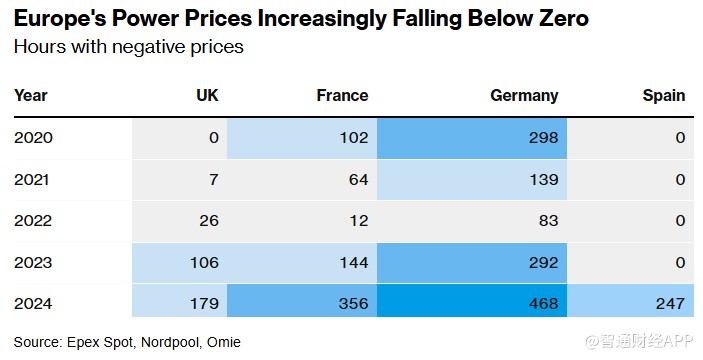
Germany's electricity prices fell below zero on the first trading day of this year, reflecting an oversupply of renewable energy. Wind power generation reached 40 gigawatts, causing electricity prices to turn negative for four hours overnight. In 2024, the duration of negative electricity prices in Germany increased to 468 hours, while France also rose to 356 hours. This trend has prompted politicians to call for limits on subsidies to address the challenges brought by the energy transition
According to Zhitong Finance APP, electricity prices in Germany fell below zero on the first trading day of this year, a phenomenon that is becoming increasingly common in Europe with the expansion of renewable energy.
Due to wind power generation reaching 40 gigawatts, far exceeding demand, the intraday price of electricity in Germany turned negative during four hours overnight.
Driven by the rapid growth of wind and solar power generation, the electricity market in continental Europe experienced a record period of negative prices last year. According to Epex Spot data, Germany's negative electricity price hours reached 468 in 2024, an increase of 60% year-on-year. In France, the hours of negative prices more than doubled to 356 hours.
Hours of negative electricity prices in European countries
This trend has prompted some politicians to call for limits on subsidies, as the government ensures that electricity producers receive a minimum payment even during periods when electricity is not needed.
The significant shift in renewable energy generation indicates that countries are facing challenges amid the accelerated energy transition. Last month, weather fluctuations had a huge impact on the European market, with prolonged calm weather causing wind turbines to stop operating, followed by stormy weather.
Spain experienced negative electricity prices for the first time last year, totaling 247 hours.
European electricity companies stated that across the entire EU, there were negative electricity prices in at least one so-called bidding zone for 17% of the time
