Trump's tariff policy shows unexpected changes! The decline in U.S. bonds slows down, and traders quickly close short positions and turn to long
Some bond traders are starting to bet that the sell-off of U.S. Treasuries will slow down due to questions surrounding Trump's policies. Traders are increasing options bets, expecting yields to retreat from a 14-month high. The new Trump administration may gradually implement tariffs, weakening inflationary impacts and providing a temporary boost to Treasuries. Uncertainty about future policies is prompting investors to predict substantial returns, with bullish sentiment in the spot market strengthening and long positions rising to a more than one-year high
According to Zhitong Finance APP, some bond traders have begun to bet that the relentless sell-off of U.S. Treasuries will soon lose momentum, partly due to questions surrounding how the policies of incoming President Trump will take shape.
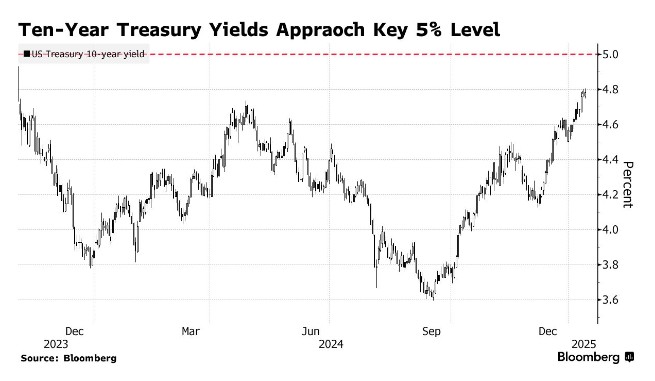
Traders have been increasing options bets, believing that yields will retreat from the 14-month high reached after last Friday's strong U.S. employment report. Last Friday's employment report shattered market expectations for further rate cuts by the Federal Reserve in the near term. A notable trade on Tuesday had a premium of over $40 million, targeting a decline in the 10-year Treasury yield from the current approximately 4.8% to 4.6% by February 21.
The next key data will be released on Wednesday, when the latest Consumer Price Index (CPI) will be announced, expected to show that inflation remains high. Since early December last year, U.S. Treasuries have been declining, pushing the 10-year Treasury yield up from around 4.15%, due to signs of resilience in the U.S. economy and speculation that Trump's economic agenda will stimulate faster growth. There are also concerns that his tariff plans could reignite inflation.
However, a report on Monday indicated that Trump's new administration may gradually implement tariffs, suggesting that the inflation impact could weaken, providing a brief boost to U.S. Treasuries. The report clearly indicated the level of uncertainty investors will face regarding the policy mix under Trump's leadership. On Tuesday, the bond market also received a temporary lift due to the Producer Price Index (PPI) report coming in below expectations.
The lingering questions surrounding the next year have prompted bond investors like Pacific Investment Management Company (PIMCO) to predict substantial returns ahead, while the well-known short seller RBC BlueBay Asset Management stated that it is time to take some chips off the table.
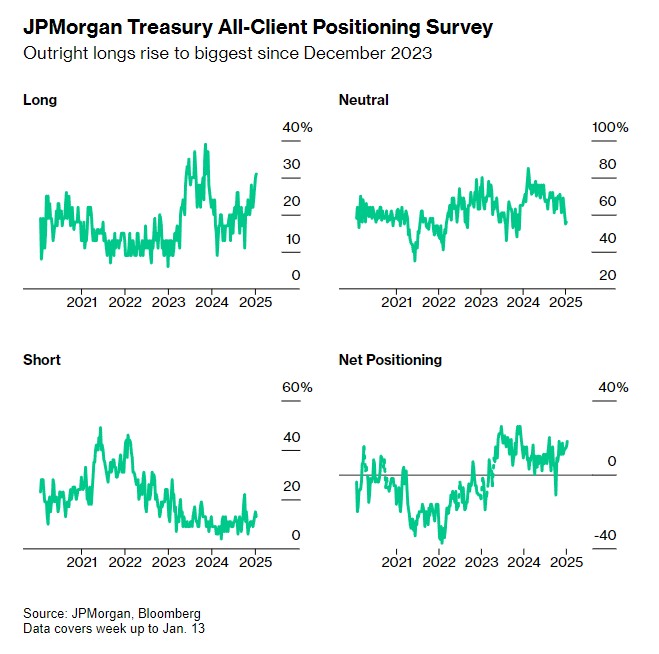
JP Morgan's latest client survey shows that bullish sentiment in the spot market is growing, with long positions increasing to the highest level in over a year, while short positions have decreased.
Meanwhile, in options related to the Secured Overnight Financing Rate (SOFR), which is closely tied to the Fed's expected policy path, some traders have begun to bet on a more moderate outlook than the current market consensus. The swap market expects the current policy cycle to see another 25 basis points cut, but this week's trades are targeting at least two more cuts this year.
Here is an overview of the latest positioning indicators in the interest rate market:
JP Morgan U.S. Treasury Client Survey
In the week ending January 13, JP Morgan clients' direct long positions increased by one percentage point, reaching the highest level since December 2023, while direct short positions decreased by two percentage points. Net long positions are currently at their highest level since November 4.
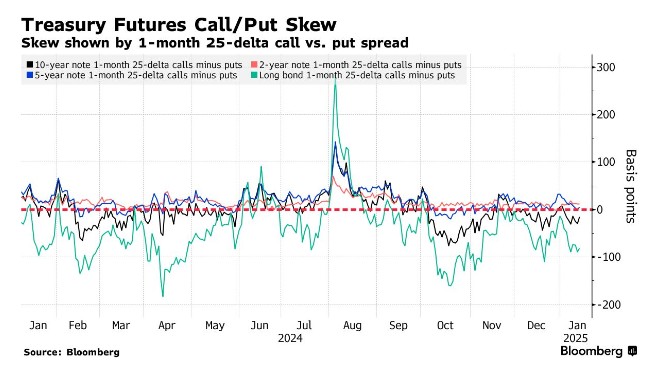
 U.S. Treasury Options Premium Favors Put Options
The cost of guarding against long-term Treasury sell-offs continues to exceed that of the front end and belly of the curve. The option skew in long bond contracts favoring put options remains close to this year's highest level. This trend aligns with the rise in U.S. Treasury yields following last Friday's employment report, which saw yields climb significantly, bringing the 10-year Treasury yield back into focus for traders at 5%.
SOFR Options Trading
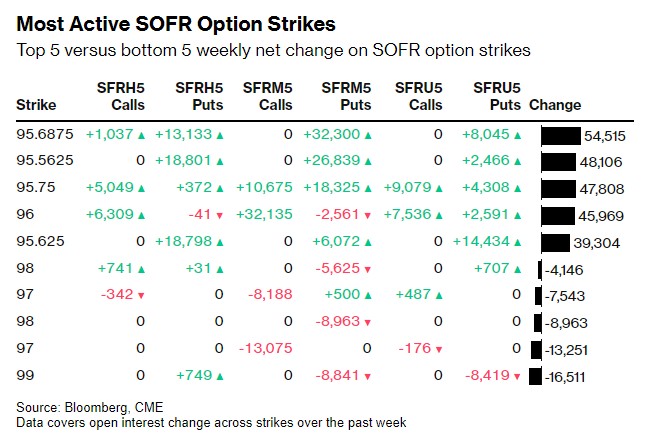
In the past week, a considerable amount of new risk was added in contracts with a strike price of 95.6875, following significant upward structures in June 25 options, including buying the SFRM5 96.0625/96.1875 call spread and selling the SFRM5 95.6875/95.625 put spread. Contracts with a strike price of 95.5625 were also active over the past week, with trades including buying the SFRH5 96.125/96.375 call spread and selling the SFRH5 95.5625 put option. There was also widespread trading around contracts with a strike price of 95.75, with recent trades including buying the SFRZ5 95.75/95.625/95.50 put options.
SOFR Options Heatmap
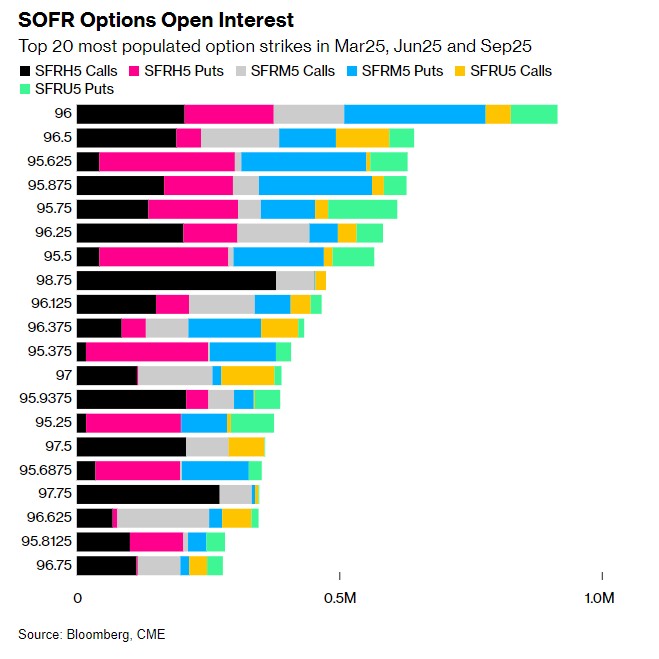
Among the SOFR options expiring on September 25, the contract with the highest trading volume had a strike price of 96.00, primarily due to a large number of call options on March 25 and a significant number of put options at that level on June 25. Recent trades around this strike price also included buying the SFRZ5 96.00/96.50/97.00 call options, while the SFRH5 96.00/9625/96.50 call options were also popular. For new risk, the SFRM5 96.00 - 96.25 call spread was bought in the past week.
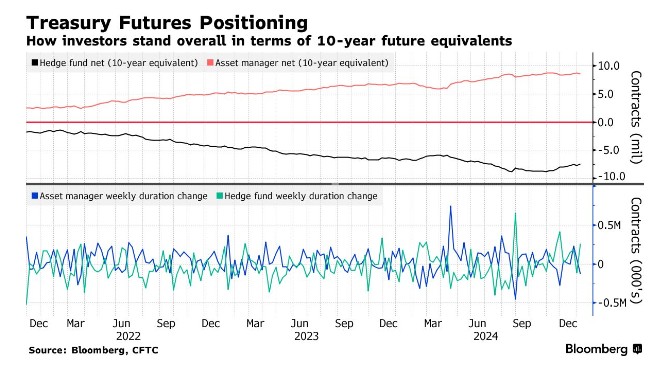
CFTC Futures Positioning
Data from the U.S. Commodity Futures Trading Commission (CFTC) as of January 7 shows that hedge funds have significantly covered short positions across the futures market, with a risk scale equivalent to approximately 263,000 10-year Treasury futures, marking the largest short covering since late November last year. On the other hand, asset management companies closed net long positions equivalent to about 125,000 10-year Treasury futures