Astrazeneca 2024 financial report: China market USD 6.4 billion, Dapagliflozin USD 7.7 billion, Osimertinib USD 6.6 billion

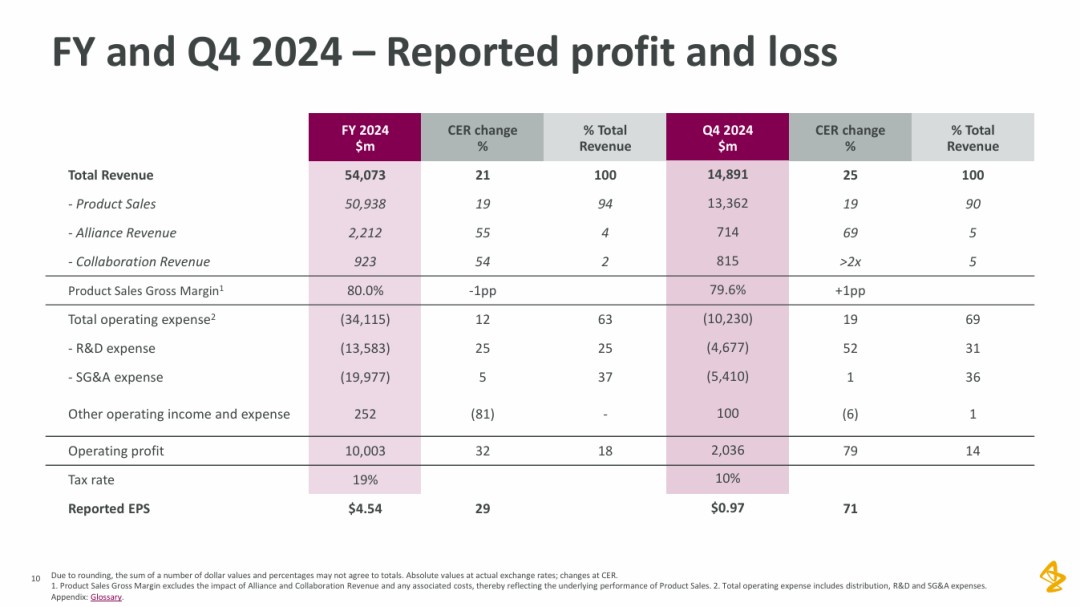
Astrazeneca released its financial report for 2024, with total revenue of USD 54.073 billion, a year-on-year increase of 21%. Among them, revenue from the Chinese market was USD 6.413 billion, accounting for 12% of the global market share. The company's revenue in oncology, cardiovascular, and rare diseases was USD 22.353 billion, USD 12.517 billion, respectively, with oncology drugs being the main source of income. Products such as Tagrisso, Imfinzi, and Enhertu performed outstandingly in the market, driving sales growth
On February 6, AstraZeneca announced its 2024 performance, with total revenue of USD 54.073 billion (+21%), of which product revenue was USD 50.938 billion (+19%); annual R&D investment was USD 13.583 billion, a year-on-year increase of 25%.

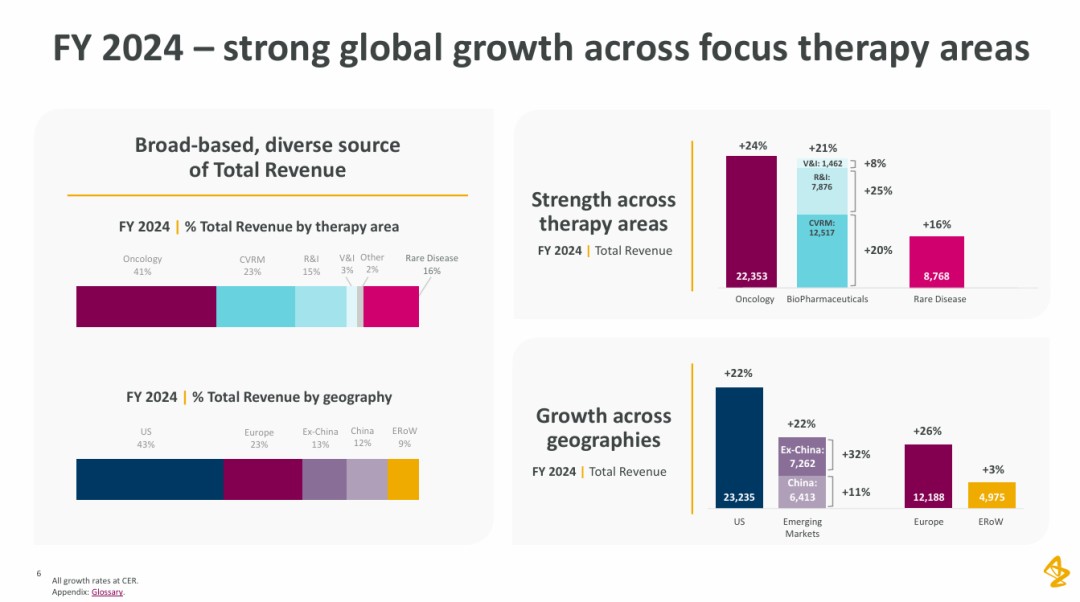
From a regional distribution perspective, in 2024, revenue from the U.S. market was USD 23.235 billion (+22%), revenue from emerging markets was USD 13.675 billion (+22%), of which revenue from China was USD 6.413 billion (+11%), accounting for 12% of AstraZeneca's global market share.

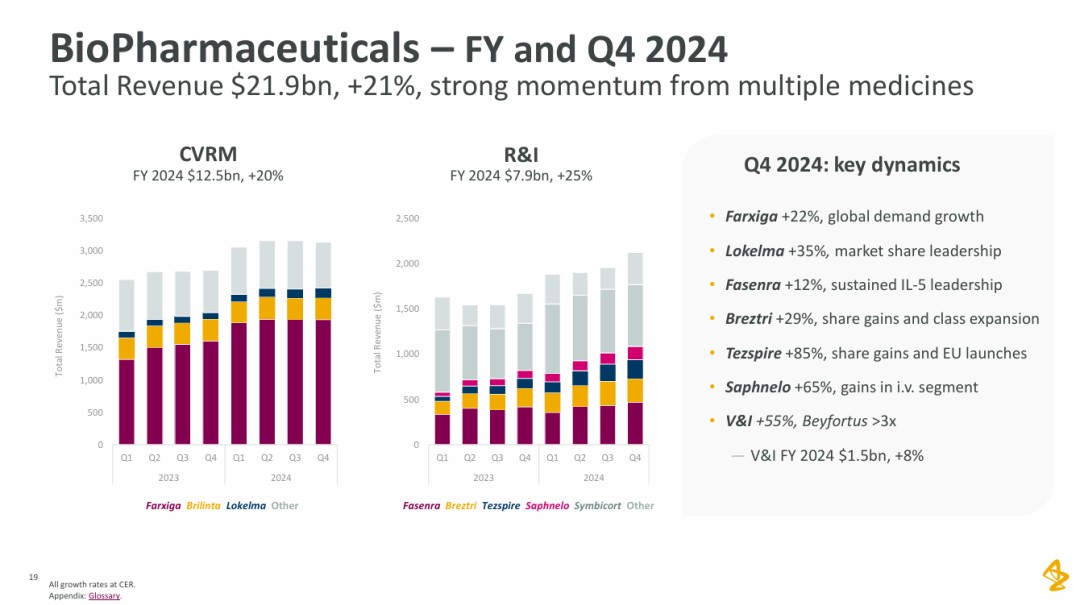
AstraZeneca divides its business into five major segments: Oncology, CVRM (Cardiovascular, Renal, and Metabolic Diseases), Rare Diseases, Respiratory & Immunology (R&I), and Vaccines & Immune Therapies (V&I). These segments contributed revenues of USD 22.353 billion (+24%), USD 12.517 billion (+20%), USD 8.768 billion (+16%), USD 7.876 billion (+25%), and USD 1.462 billion (+8%), respectively. The oncology segment is AstraZeneca's largest business segment, accounting for 41% of total product revenue.

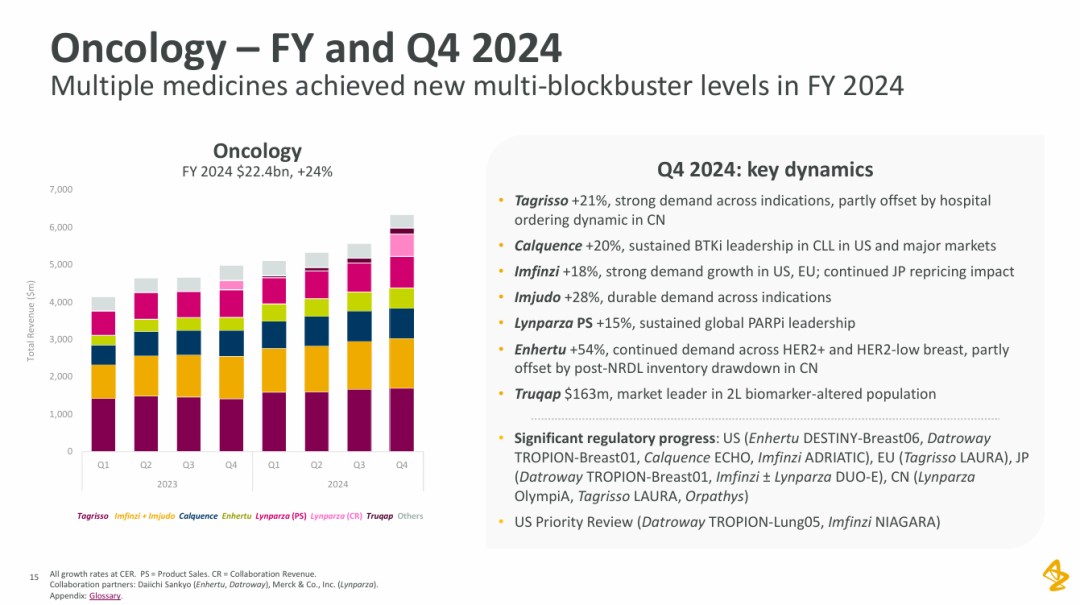
In the oncology field, AstraZeneca relies on products such as Tagrisso (osimertinib), Imfinzi (durvalumab), Lynparza (olaparib), Calquence (acalabrutinib), and Enhertu (fam-trastuzumab deruxtecan) to solidify its market position in lung cancer and breast cancer.

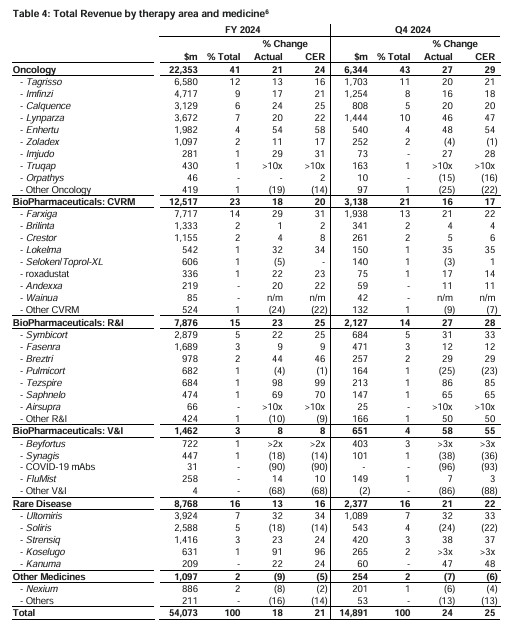
Tagrisso, Imfinzi, and Enhertu achieved remarkable regulatory milestones in 2024. Tagrisso received approvals for two indications: EGFR exon 19 deletion or exon 21 L858R mutation non-small cell lung cancer (NSCLC) and stage III EGFR-mutated NSCLC, injecting new fuel into its sales growth; Imfinzi has become the only immunotherapy drug suitable for extensive-stage small cell lung cancer (ES-SCLC) and limited-stage small cell lung cancer (LS-SCLC), and further covers perioperative treatment for early-stage NSCLC patients; Enhertu has secured 3 indications and recently added the indication for HER2 ultra-low expressing breast cancer, achieving comprehensive coverage for HER2 positive, HER2 low expressing, and HER2 ultra-low expressing breast cancer. Based on these achievements, the revenues of these three products have all achieved strong double-digit growth, with Enhertu's revenue reaching USD 3.754 billion (combined revenue reported by Daiichi Sankyo, +46%).
In addition, AstraZeneca's second ADC product Datroway (daratumumab) was approved last month. Although it faces competition from Trodelvy (sacituzumab govitecan), AstraZeneca has planned a breakthrough route for it—EGFR mutant NSCLC and early-stage NSCLC. With Enhertu and Datroway, AstraZeneca's position in the ADC track will continue to rise.
Another potential stock launched by AstraZeneca in the oncology field, Truqap (Capivasertib), has begun to gain traction, achieving sales of USD 430 million in its first year on the market.
In the CVRM field, the pillar product Farxiga (dapagliflozin) continues to maintain a high revenue growth rate, with annual revenue of USD 7.717 billion (+31%). The formulation patent and crystal form patent for dapagliflozin will expire in 2027-2028, and before that, Farxiga can continue to occupy the CRVM high ground, achieving higher peak sales. It is worth mentioning that AstraZeneca has developed a series of compound drugs for dapagliflozin to maximize its clinical value, including the combination of dapagliflozin with cinacalcet for the treatment of chronic kidney disease, which will further expand dapagliflozin's influence in the cardiovascular and renal fields.

While deeply exploring the value of dapagliflozin, AstraZeneca is also actively seeking new opportunities in the CVRM field. On one hand, AstraZeneca is orderly advancing the development progress of products obtained through previous introductions and acquisitions, such as the innovative antihypertensive drug baxdrostat acquired from CinCor Pharma, which will complete Phase III studies this year; on the other hand, AstraZeneca continues to hunt for potential drugs, reaching cooperation with 3 pharmaceutical companies in 2024 to introduce heart failure drug ION826, lipid-lowering drug YS2302018, and type 1 diabetes cell therapy QEL-002.
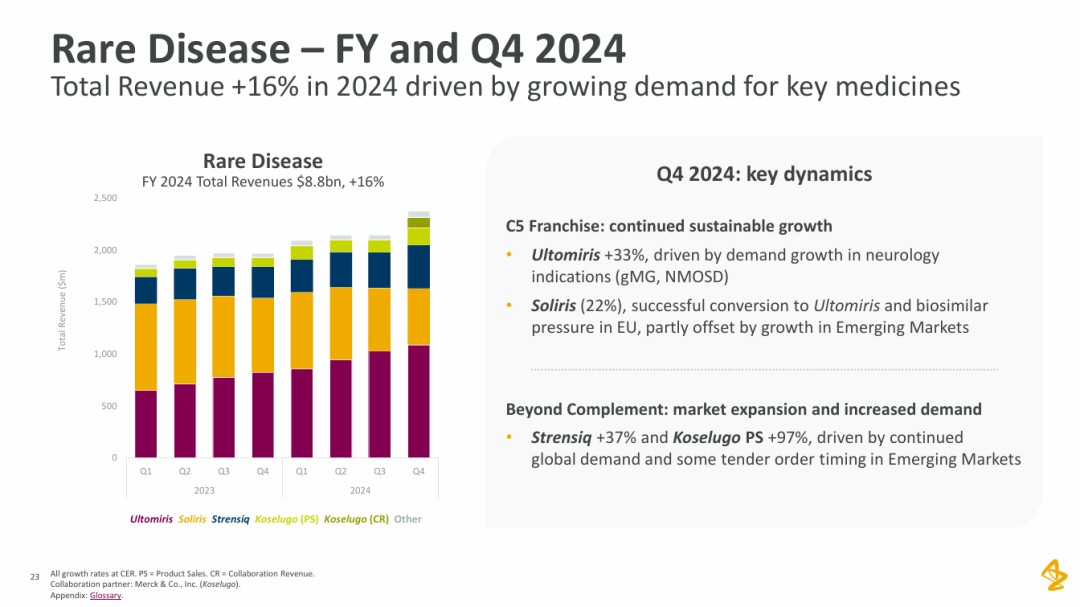
In the rare disease field, the second-generation C5 monoclonal antibody Ultomiris (ravulizumab) has seen sales soar, reaching USD 3.924 billion in 2024 (+34%), surpassing the first-generation drug Soliris (eculizumab), officially completing the transition The neurofibromatosis drug Koselugo (simeprevir) performed well, with sales reaching $631 million (+96%). It is worth mentioning that this year, Koselugo is expected to cover adult and pediatric neurofibromatosis patients, providing a new growth point. Additionally, the two innovative enzyme replacement therapies, Strensiq (asfotase alfa) and Kanuma (sebelipase alfa), also performed well, generating $1.625 billion in revenue.

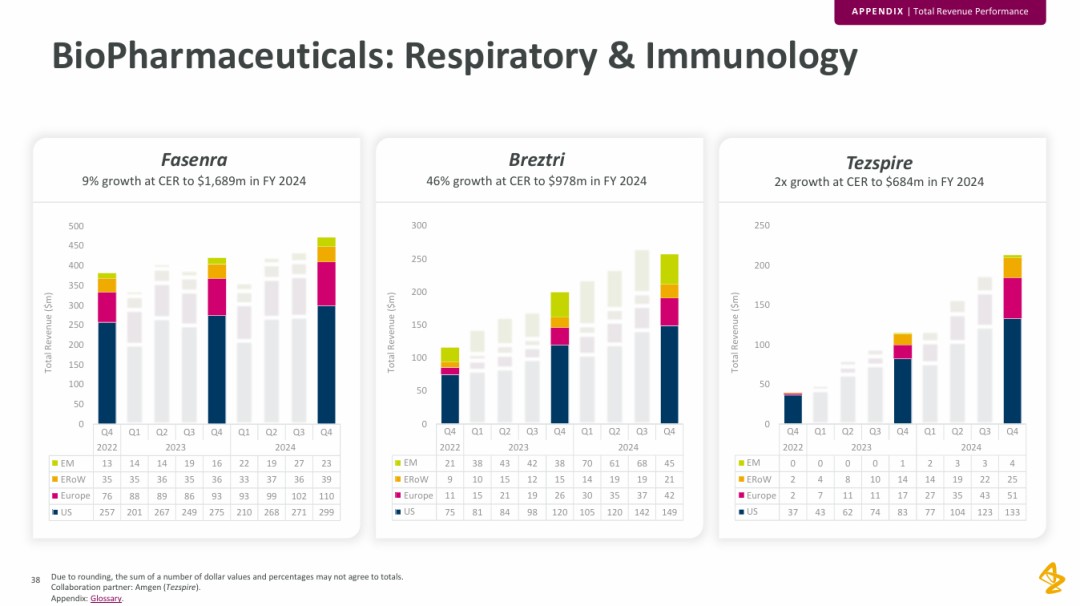
In the Respiratory & Immunology (R&I) field, several AstraZeneca products performed well, such as the COPD triple combination Breztri (budesonide + glycopyrrolate + formoterol), the asthma drug Tezspire (tezepelumab), and the systemic lupus erythematosus drug Saphnelo (avsola). Among them, Tezspire achieved annual revenue of $1.219 billion (combined revenue reported by Amgen, +87%), earning the title of "blockbuster." In 2025, Tezspire will launch a push for COPD, continuing to lead the development direction of IL-33 target indications.

In the Vaccines & Immunotherapies (V&I) field, the best-performing product is the RSV neutralizing antibody Beyfortus (nirsevimab). This product is currently the only neutralizing antibody for infants and young children in the RSV field, and its commercial performance has been strong since its launch, with sales expected to grow rapidly in 2024, reaching $2.147 billion (+205%), joining the ranks of "blockbusters."
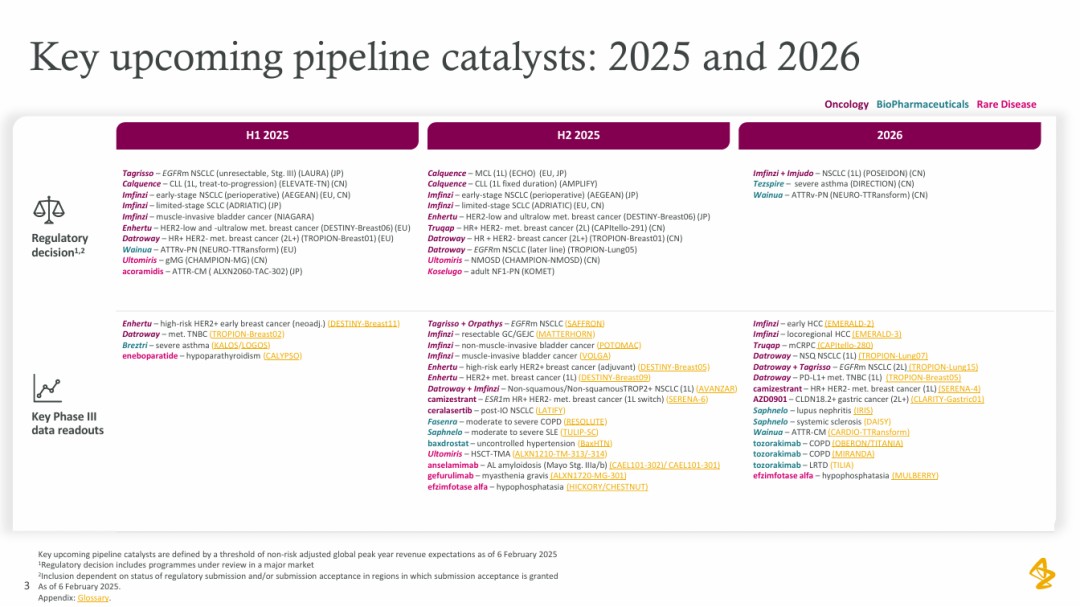
In 2025, AstraZeneca will encounter the milestone events of regulatory and Phase III study data disclosures as shown in the following image, including the announcement of the first Phase III study results for seven new molecular entities.

Looking ahead to 2025, AstraZeneca expects to achieve high single-digit growth for the full year