


Kobe Bryant's signature skills | Nvidia researches AI technology to enable robots to imitate star players' movements | Video
Nvidia has collaborated with Carnegie Mellon University to develop groundbreaking AI technology that enables humanoid robots to mimic the fadeaway jump shot of the late basketball legend Kobe Bryant. This technology combines simulation with real-world physics, significantly enhancing the robot's agility and allowing it to replicate the iconic movements of multiple sports stars. Although the robot is still limited by hardware and the number of joints, its mobility has been greatly improved
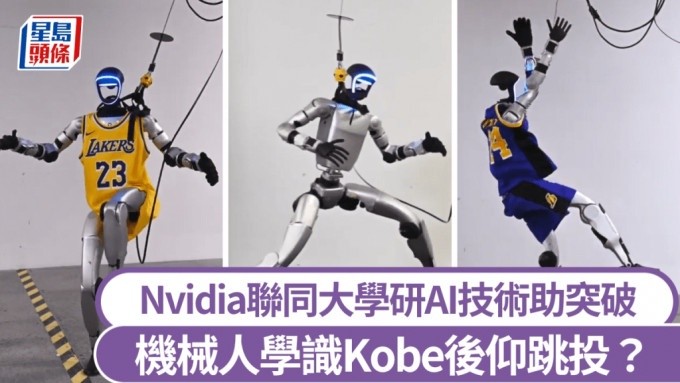 Nvidia develops AI technology to assist breakthroughs, robots imitate famous athletes' movements.
American chip giant Nvidia has collaborated with Carnegie Mellon University to develop groundbreaking artificial intelligence (AI) learning technology that enables humanoid robots to perform the iconic fadeaway jump shot of the late basketball legend Kobe Bryant. This AI learning technology combines simulation and real-world physics, training humanoid robots to move in alignment with real-world dynamics.
Joints are not as flexible as humans
Humanoid robots trained with the new technology can now replicate Kobe Bryant's fadeaway jump shot, as well as signature or celebration moves of sports legends such as Portuguese football star Cristiano Ronaldo and NBA Los Angeles Lakers star LeBron James.
Related news: Taishan promotes assistive robots, visitors: It feels like someone is pulling me up the mountain
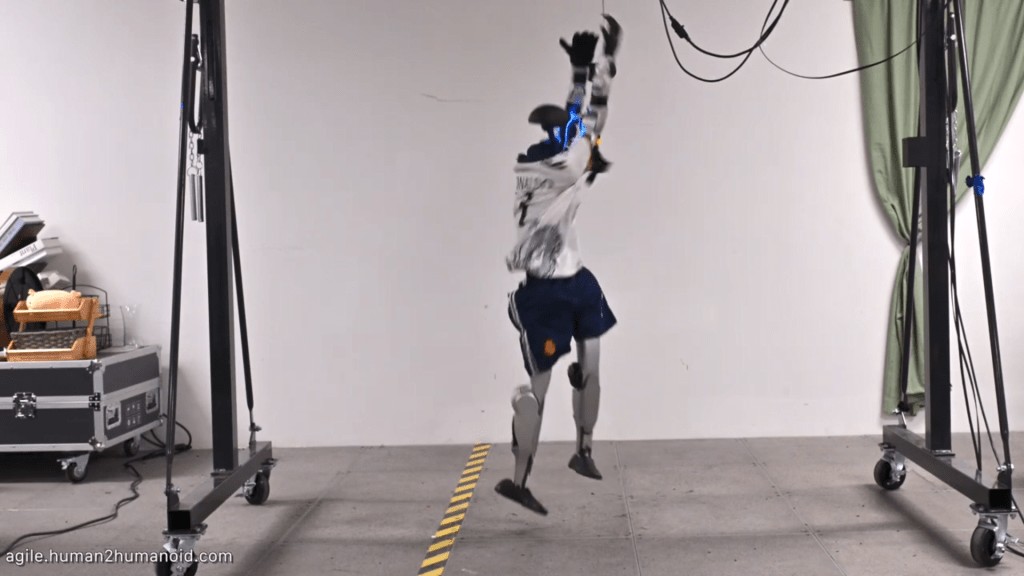
Robots imitate the movements of famous athletes. (Youtube@LeCAR Lab at CMU)
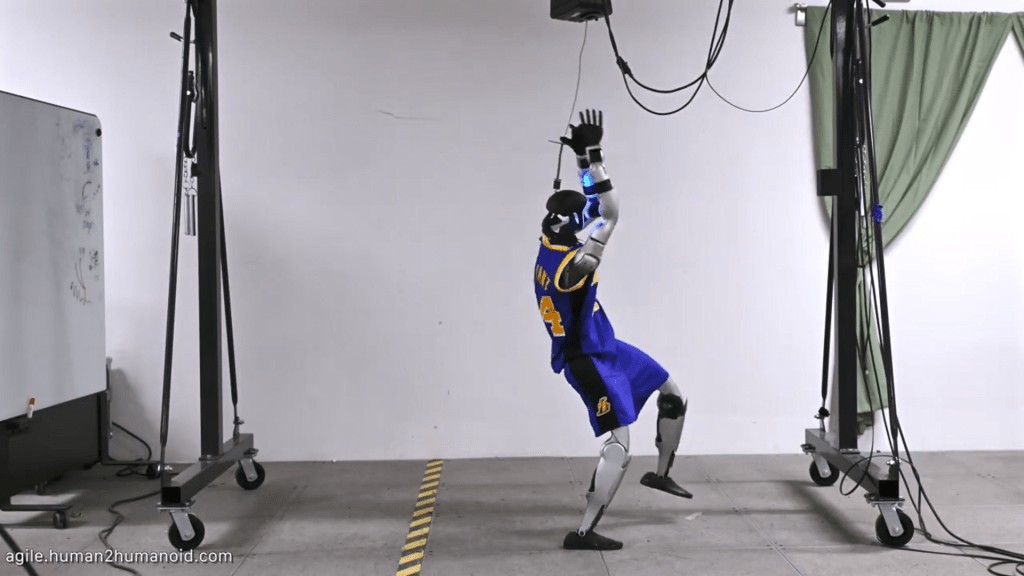 The robot imitates the movements of famous athletes. (Youtube@LeCAR Lab at CMU)
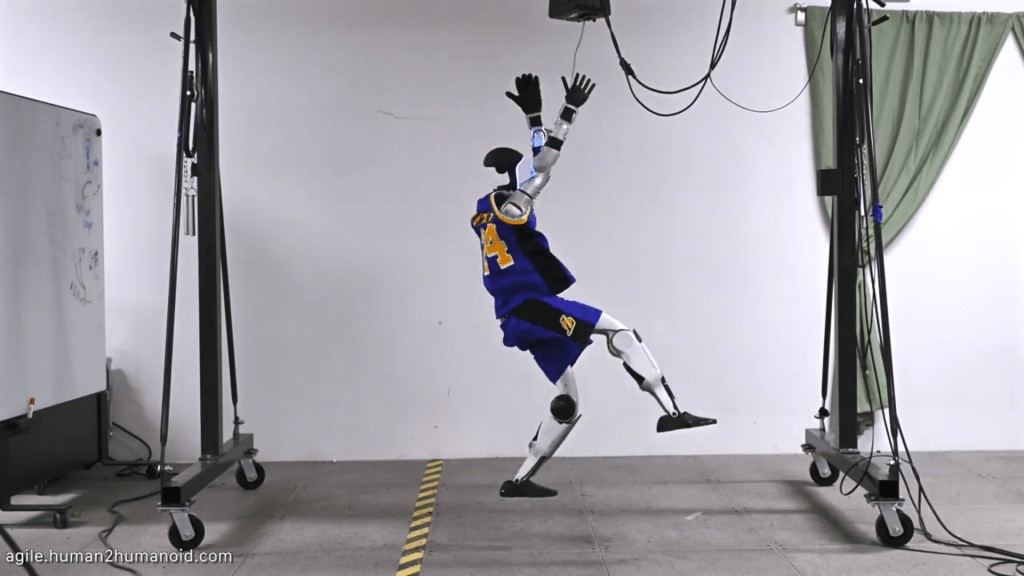
The robot imitates the movements of famous athletes. (Youtube@LeCAR Lab at CMU)
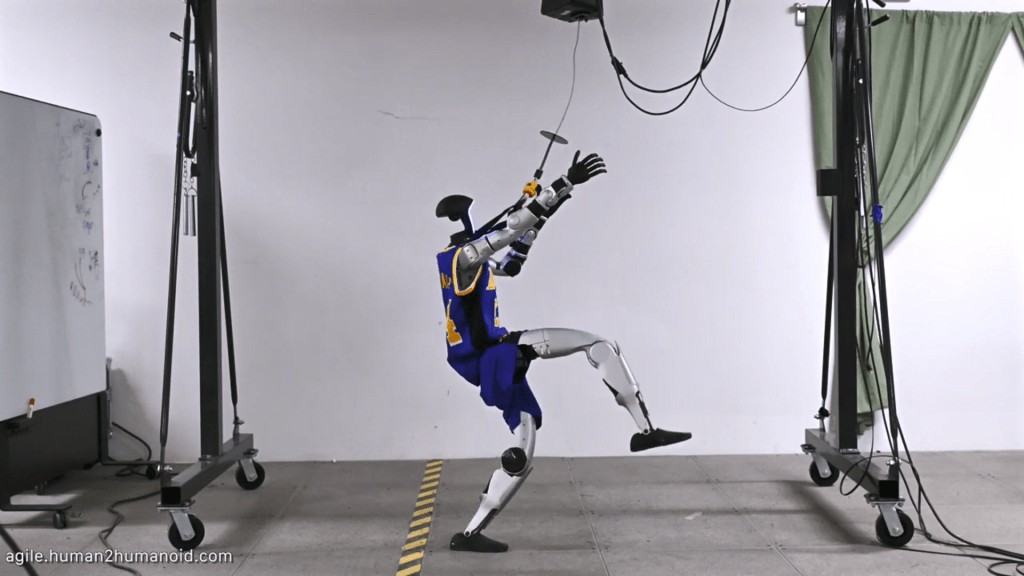
The robot imitates the movements of famous athletes. (Youtube@LeCAR Lab at CMU)
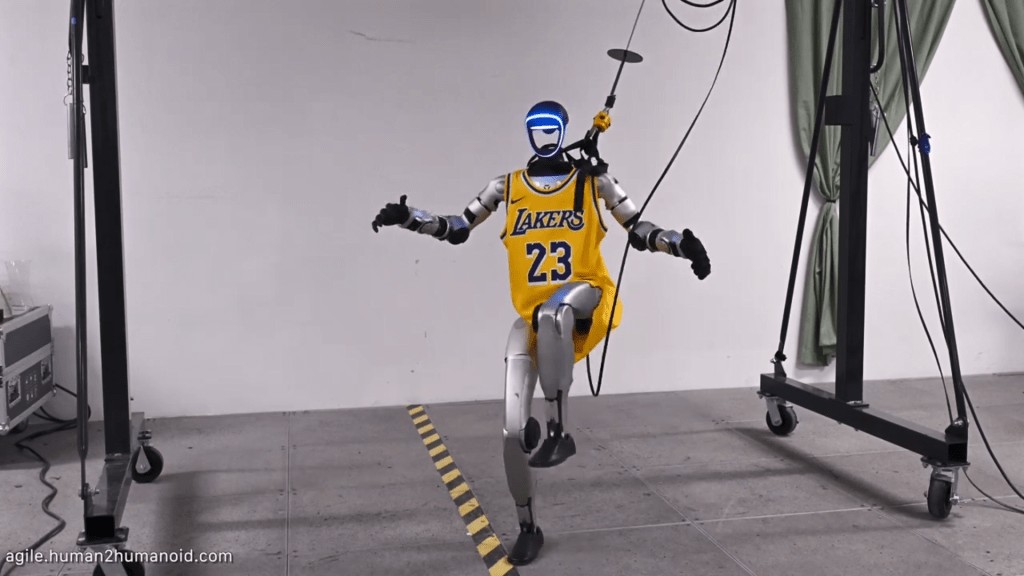
The robot imitates the movements of famous athletes. (Youtube@LeCAR Lab at CMU)
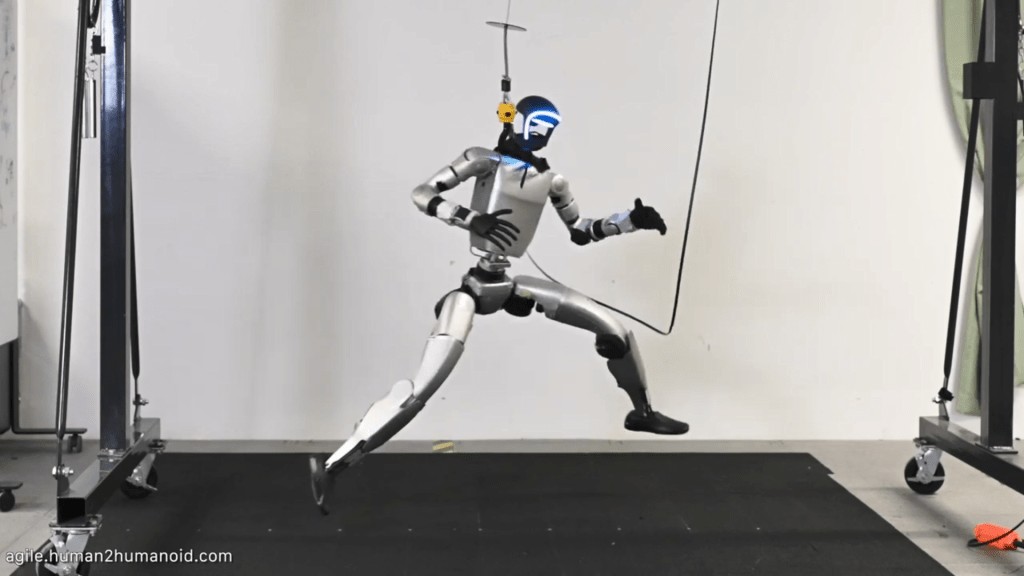 The robot's flexibility has been significantly enhanced. (Youtube@LeCAR Lab at CMU)
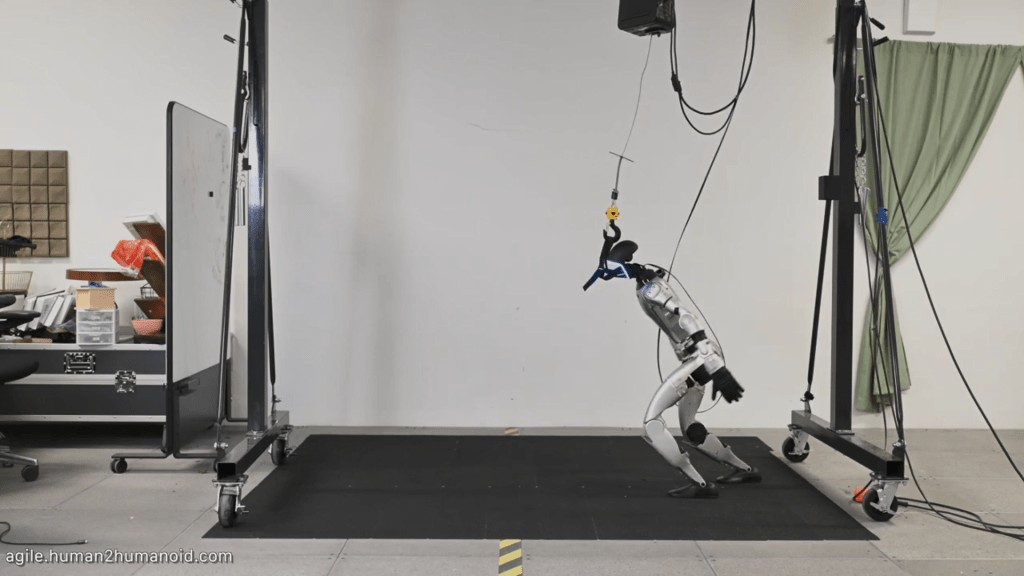
The robot's flexibility has been significantly enhanced. (Youtube@LeCAR Lab at CMU)
In addition, it can jump forward and sideways over 1 meter. Due to hardware limitations and having fewer joints than humans, this robot may still appear somewhat clumsy, but its flexibility has significantly improved compared to previous humanoid robots. Through new technology, researchers have reduced motion tracking errors by 52.7%, enabling the robot to perform complex full-body movements that were previously impossible
