


Technology First, Richard Yu Demystifies Million-Dollar Luxury Cars

Huawei launched the Aito S800 at the Guangzhou Auto Show, marking its entry into the million-dollar luxury car market. Richard Yu emphasized the technological innovations of the S800, including the Tuling Longxing platform and various intelligent systems, aiming to compete with traditional luxury car brands. The S800 showcases excellent driving performance, such as stability on complex roads and at high speeds, striving to stand out in the high-end market
Author | Chai Xuchen
Editor | Wang Xiaojuan
How to sell a car for over 1 million, creating China's Rolls-Royce and Maybach?
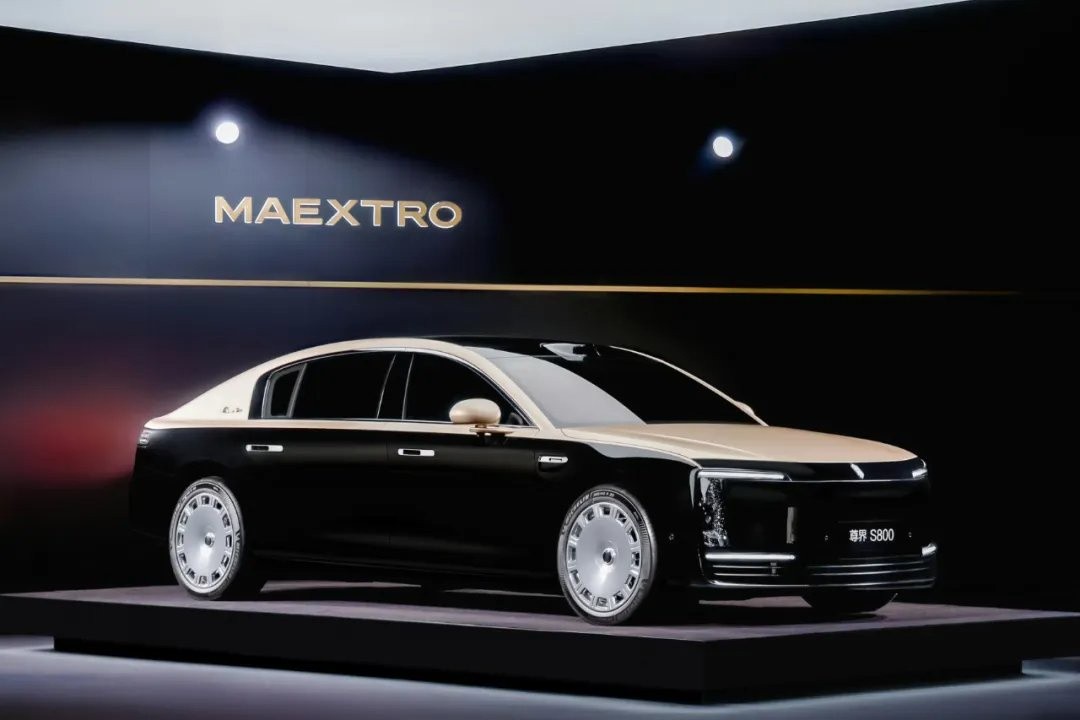
More than three months ago, at the Guangzhou Auto Show and Meta Brand Night, Huawei unveiled the ZunJie S800, with its imposing exterior and numerous design innovations making a strong first impression. However, the S800 is far from just "skin deep." Richard Yu's success with the Aito M9, using "black technology," launched a second assault on the high-end luxury market.
On February 20, Richard Yu held a technical press conference specifically for the ZunJie S800, showcasing Huawei's "secret weapons" for an hour and a half.
The new generation technology architecture represented by the S800 can be summarized as three "firsts"—the TuLing LongXing platform, Angel Seat active safety protection, and Huawei Star River communication; and three iterative upgrades of "2.0"—Harmony ALPS cockpit 2.0, Huawei Car Language System 2.0, and Huawei Giant Whale Battery 2.0.
However, as the price climbs to the million level, Huawei needs to distance itself from mere "configuration stacking" to avoid the pitfalls faced by HiPhi, Faraday Future, and others. Richard Yu has constructed a narrative of "intelligent awakening" for the ZunJie, which will be a key card to appeal to the wealthy and a powerful attempt to reshape the million-dollar luxury car market and compete for discourse power.
Disruption
With Huawei as the platform, the S800 showcased several impressive capabilities: "water-treading without a trace," climbing snowy slopes without losing speed, maintaining stability on complex road surfaces, and controlling the vehicle even with a front tire blowout at 120 km/h... Richard Yu even brought in Maybach and one of the domestic technology flagships, Nio ET9, for a showdown.
Achieving this is not easy. Traditionally, for conventional cars, manufacturers need to fine-tune various components such as the body, power, suspension, steering, and braking to achieve the high-end driving experience that BBA (Benz, BMW, Audi) prides itself on.
Huawei's secret weapon is to first use distributed electric drive, electronic braking, multi-wheel steering, and active suspension technologies to achieve intelligence in core driving components, and then unify them through the "TuLing LongXing" platform, allowing previously independent components to respond to the centralized domain controller's unified scheduling, completing the deep integration of intelligent driving, intelligent cockpit, and intelligent domain control systems.
This approach has proven effective. On icy roads, the Maybach can maintain a stable speed of 55 km/h, while the S800 can achieve obstacle avoidance at speeds of up to 80 km/h without losing control; when faced with bumpy roads, in addition to basic road information pre-scanning and body pre-adjustment, the S800 can maintain stable driving even after a tire blowout.
With the "brain" achieving complete coordination of the "limbs," the S800 has also pushed the upgrade of its "sensory organs" to the extreme: four laser radars are strategically placed at the front, rear, and sides of the vehicle, significantly solving blind spot issues; three distributed millimeter-wave radars make the active safety that Richard Yu has always emphasized possible Originally, Huawei's ADS 3.0 intelligent driving system could achieve omnidirectional collision avoidance in all directions. Now, thanks to the capabilities of more sensors, it has additionally increased collision avoidance capabilities in rainy and foggy weather, as well as for vertically approaching vehicles. If a collision is unavoidable, the suspension of the S800 will actively lift to reduce impact.
The leap from passive intelligence to active intelligence is clearly Huawei's dimensional strike against traditional wealth, and this is itself an advantage of Huawei's full-stack self-research. Richard Yu detailed the subtext of the S800's technical capabilities, which is to enhance safety capabilities to a new level through intelligence, a part that high-net-worth individuals are most concerned about, and a consistent pursuit of all luxury brands.
At the press conference, Richard Yu mentioned that the new car is also equipped with satellite communication capabilities, using a distributed vehicle-mounted satellite system, allowing users to call for help even if they overturn in a mountain valley; inside the cabin, the S800 is also equipped with a new air filtration system that can filter harmful gases efficiently.
Beyond the critical aspect of safety, Richard Yu is also finding ways to provide emotional value for S800 owners.
In terms of intelligent interconnectivity, the S800 is equipped with Huawei's Car Language System 2.0, which can distinguish between different lanes, moving and stationary vehicles, and pedestrians through interaction with the headlights, implementing different shielding strategies. The new car's dynamic light carpet can provide autonomous driving guidance and adjust the light carpet's shape in real-time based on driving trajectories, sensing road conditions and providing autonomous visual width guidance.
In terms of energy replenishment, the S800 supports unmanned fast charging by charging robots, allowing users to get out of the car upon arrival at their destination while the vehicle automatically parks and charges, freeing owners from these trivial matters.
Targeting the needs of high-net-worth clients, Richard Yu is becoming increasingly adept at managing high-end models, and the rise of HarmonyOS Intelligent Travel is gradually gaining momentum.
Disruption
Huawei has already had successful experience in catering to wealthy car owners.
At the end of last year, HarmonyOS Intelligent Travel announced that the cumulative pre-orders for the Aito M9 exceeded 200,000 units, not only maintaining its position as the sales champion for luxury models priced over 500,000 yuan in China for eight consecutive months but also surpassing the total of the other top 20 models on the list, capturing one-third of the market share. More importantly, the single vehicle price of the M9 has reached nearly 600,000 yuan, and its explosive popularity allowed HarmonyOS Intelligent Travel and Seres to turn a profit last year.
The logic behind the M9's successful rise is not complicated. The Yiche Research Institute points out that the understanding of brand power among the new wealthy users in China, led by highly educated individuals, has changed significantly, shifting towards technological innovation and experience improvement. The brand power previously interpreted by BBA can no longer effectively capture this segment of new wealthy users.
In an economic downturn, being able to purchase a vehicle with stronger product capabilities that better meets needs at the same price is becoming increasingly important for consumers. As Richard Yu stated, consumers are getting a luxury car experience worth millions for 500,000 yuan. The demystification of BBA's high-end series has become inevitable. Huawei's technological luxury has broken through the comfort zone of traditional wealth.
The ultimate goal of technology is equality. Today, this "high-end alternative" approach has been brought into the million-level market by Richard Yu, who aims to test whether the ivory tower once dominated by European automotive brands with long "lineages" like Mercedes-Maybach and Rolls-Royce can be shaken, giving rise to the ZunJie S800 Therefore, although the price of the S800 is only about 1/6 of the starting price of the Rolls-Royce Phantom, Richard Yu bluntly stated that the S800 "far exceeds Maybach and Rolls-Royce Phantom." At this time, the market also presented an opportunity for the ZunJie to capture the traditional ultra-luxury market. According to data from the China Association of Automobile Manufacturers, in the first 11 months of last year, the sales of top luxury brands such as Bentley and Ferrari in China fell by nearly 30% year-on-year.
According to official data from Hongmeng Zhixing, this Eastern vehicle, priced at 1-1.5 million yuan, garnered 2,108 orders within 48 hours of its pre-sale launch. Behind the wealthy voting with their money is the precursor to the collapse of the century-old order in the traditional luxury car market.
However, compared to the high-end market of over 500,000 yuan, industry insiders believe that consumers in the million-yuan tier are more willing to pay for brand stories, cultural connotations, and history. Additionally, like other luxury goods in the consumer sector, luxury cars need to have good resale value; some luxury cars can even become investment products, but this is a shortcoming of new energy vehicles.
Richard Yu's solution is to build support using China's cultural heritage.
Designers from Hongmeng Zhixing told Wall Street Insights that the S800 started from a blank sheet of paper in March 2021. Initially, Richard Yu did not impose many constraints on the design team, but the ultimate goal was clear: they needed to find a crossover point between future technology and traditional automobiles in the era of intelligent electric vehicles, which is the core of subverting "old money."
In other words, this car represents Huawei's judgment on the demand trends of future million-level luxury car consumer groups. As a pioneer, this is very difficult; although there are pioneers like Rolls-Royce, Bentley, and Maybach leading the way, Huawei's designers believe that this is not the expression of Chinese aesthetics for million-level luxury cars. The S800 needs to have its own posture and emotion.
At this moment, the designers found themselves in an uninhabited realm, needing to create something from nothing and find a cognitive intersection for luxury cars in the era of intelligent electric vehicles.
Richard Yu also had clever ideas about this. Huawei internally formed a pre-research team for smart mobility, which not only included big names from traditional luxury car brands but also designers with over a decade of experience in high-end mobile phone design. Huawei's extraordinary masters have previously worked on flagship series like Meta and Pura. This forms a contrast with teams from traditional brands that are purely automotive and academically trained.
Beyond the aesthetics of Chinese luxury cars, another major foothold for the S800 is the experience. The designers mentioned the internal "collisions" within the team the most, where user experience and traditional automotive standards are in mutual competition. This is because established car manufacturers usually prioritize appearance and DNA heritage when creating luxury cars, often suppressing demands for space and aerodynamic drag.
The Huawei team seized this pain point and prioritized experience in an era where consumers want "both." The designers said that the term "educating consumers" does not exist in Huawei's internal R&D system: we want to make users comfortable while riding, not to make them pay for this standard. Therefore, the team created a fastback shape on the D+ level body, which also considered internal space.
The million-yuan battleship that Richard Yu painstakingly crafted has taken shape, but the design team told Wall Street Insights that this is still just the tip of the iceberg, and there may be high-end customization plans in the future. "There are simply too many highlights on this car; it may take four to five hours to explain them all." The S800 is the first move by Richard Yu to enter the million-dollar market. Sources close to HarmonyOS have revealed to Wall Street News that the future product planning for the ZunJie brand also includes SUV and MPV models, continuing the assault on the luxury market after the S800.
For the automotive market, this will be another major disruption in the luxury market and the beginning of the "wealth creation" myth.
Richard Yu, who is making a name for himself in the high-end market, aims to connect ZunJie, XiangJie, Aito, ZhiJie, and the soon-to-be-launched "ShangJie" through HarmonyOS, continuing to charge into the luxury car market. The next generation of global luxury car brands is expected to emerge from them.
Led by ZunJie, Huawei's automotive team will also shine a strong light on the path for Chinese car companies to reach higher goals. The day when domestic brands dominate and define the luxury car market may not be far off.
Risk Warning and Disclaimer
The market has risks, and investment requires caution. This article does not constitute personal investment advice and does not take into account the specific investment goals, financial situation, or needs of individual users. Users should consider whether any opinions, views, or conclusions in this article are suitable for their specific circumstances. Investing based on this is at your own risk
