


The present and future of the "impossible triangle" of stocks, bonds, and currencies
The article discusses the changes in China's current monetary policy, forming a triangle of stocks, bonds, and exchange rates, but facing the dilemma of the "impossible trinity." Monetary easing will begin in July 2024, and by January 2025, the policy goal will shift towards financial stability and exchange rate stability. The internal economic recovery and external high interest rate expectations have influenced policy adjustments. The launch of DeepSeek-R1 may break this dilemma and promote the development of Chinese equity assets
Core Viewpoints
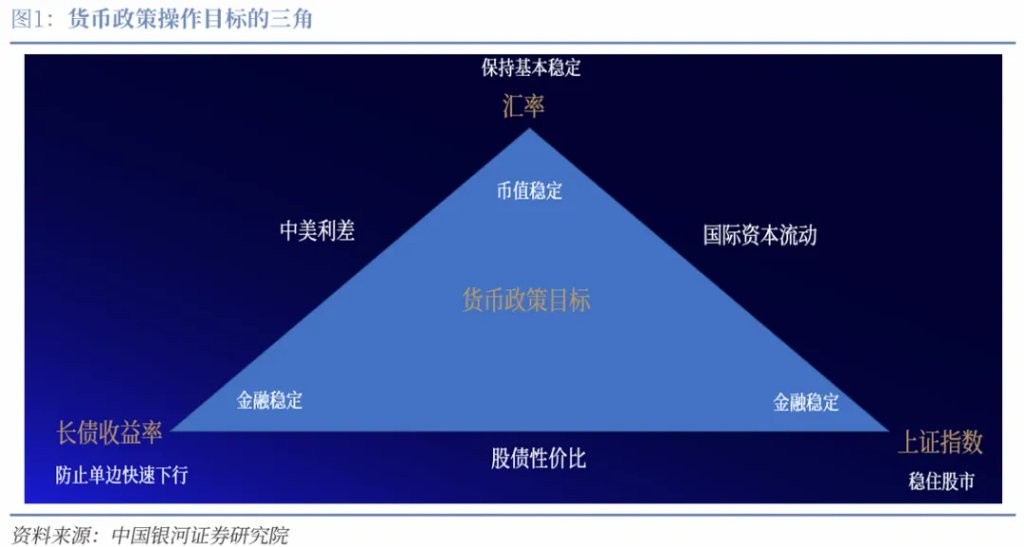
Changes in January: The shift in the prioritization of monetary policy goals forms a triangle of stocks, bonds, and exchange rates, but this seems to be an "impossible triangle." July 2024 marks the beginning of monetary easing, September is a milestone, and December is the peak, during which economic growth is the primary goal. However, in January 2025, when voices are loud, it is the moment when the balance of monetary policy changes, prioritizing financial stability and exchange rate stability. On January 10, the central bank announced the suspension of open market treasury bond purchases, releasing an important policy signal. As a result, the operational goals change, forming a triangle of stocks, bonds, and exchange rates, namely:
- Maintaining basic stability of the exchange rate;
- Avoiding a too rapid decline in long-term bond yields;
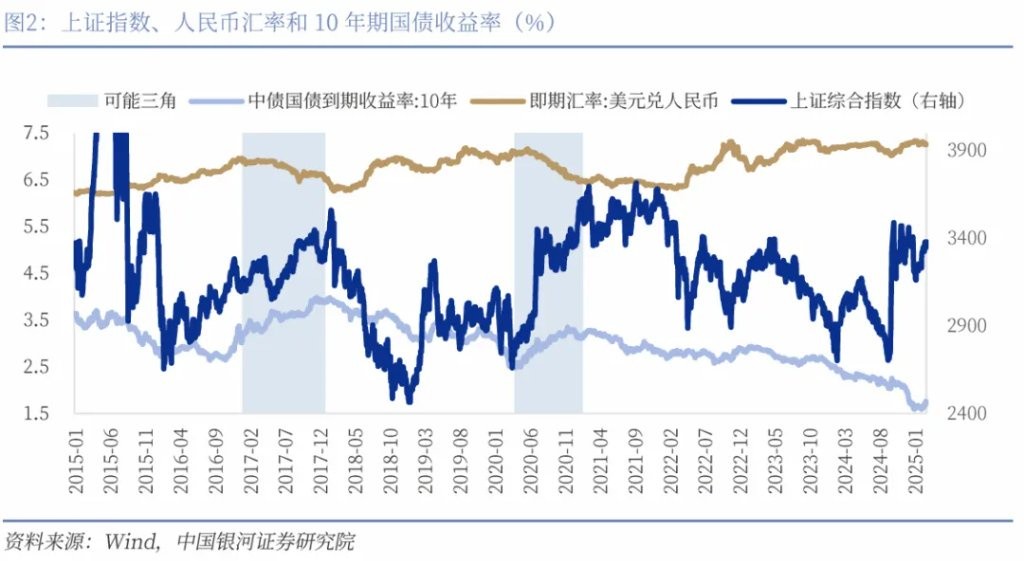
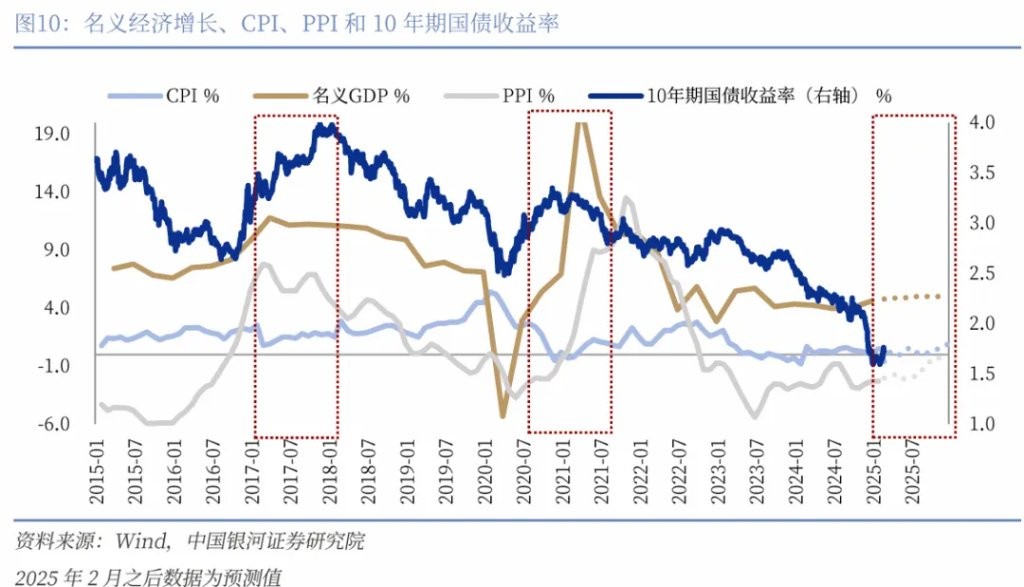
- Stabilizing the stock market. However, looking back at history, the "possible triangle" only occurred in 2017 and 2020, the two years of strong economic recovery in China. This means that unless the Chinese economy strongly recovers, the triangle of stocks, bonds, and exchange rates will be an "impossible triangle."
Returning to early January 2025, the market had not yet formed a consensus that China's economy would achieve high growth and return to inflationary pressures, thus the short-term monetary policy operational goals seemed to be trapped in the dilemma of the "impossible triangle."
Why has the triangle of stocks, bonds, and exchange rates become the operational goals of monetary policy? The framework of China's monetary policy is a balanced and adaptive choice between internal and external factors, and the shift in goals in January comes from changes both internally and externally.
From an internal perspective: 1. In the fourth quarter of 2024, China's economy showed signs of recovery, and the unemployment rate declined; 2. The decline in long-term bond yields was too rapid in December.
From an external perspective: 1. Market expectations suggest that high U.S. interest rates may last longer, reducing the space for interest rate cuts in 2025 and delaying the timing; 2. Possible increases in tariffs and shifts in trade policy from the U.S. External changes have put pressure on the RMB exchange rate.
Against this backdrop, the priority of monetary policy shifts to financial stability and exchange rate stability, forming a triangle of stocks, bonds, and exchange rates. Avoiding a too rapid decline in long-term bond yields is based on considerations of alleviating exchange rate pressure through the China-U.S. interest rate differential, as well as avoiding excessive consumption of monetary policy operational space, which could lead to financial risks due to overcrowding in the bond market. Stabilizing the stock market has become an important consideration for monetary policy since asset prices have become a significant factor post-September 24.
DeepSeek breaks the curse of the "impossible triangle." During the Spring Festival, the launch of DeepSeek-R1 broke the narrative of absolute leadership in the U.S. technology sector, ushering in a historic moment for the re-pricing of Chinese equity assets, leading to a rapid rise in the stock market. One of the triangles, "stabilizing the stock market," has been successfully achieved, and the stock market is no longer a constraint on the central bank's tightening of liquidity. As the central bank tightens liquidity, funding costs rise, long-term bond yields increase, the China-U.S. interest rate differential narrows, and exchange rate pressure eases. The "possible triangle" is achieved.
Is the current "possible triangle" unbreakable? If the prioritization of monetary policy goals shifts again, or if market risk appetite changes, the current "possible triangle" is likely to be broken. The period from March to May is an important time window, where the prioritization of monetary policy goals may shift again, re-entering easing. At this stage, the central bank has no intention of actively changing the "possible triangle." The goal ranking switch still requires new changes from both internal and external sources.
From an internal perspective, if the issuance of government bonds accelerates after the Two Sessions, the weight of monetary policy targets may tilt towards coordination with fiscal policy; if the credit and inflation data for February, released in March, are below expectations, the target weight may shift towards supporting economic growth.
From an external perspective, expectations for interest rate cuts by the Federal Reserve in the second quarter may reignite, and exchange rate pressures may be released in stages, reducing constraints on monetary easing. On the other hand, if uncertainty in U.S. trade policy rises significantly, market risk appetite may weaken again, leading to a renewed pursuit of safe assets. Bonds, as a tool to hedge stock risk, will reduce their term premium, pushing long-term bond yields down. The exchange rate may also face pressure again.
A truly solid "possible triangle" requires a strong recovery of the Chinese economy and a return to inflationary pressures. In 2025, the market may repeatedly verify three narratives: first, the scale and effectiveness of special bonds for land reserves exceed expectations, leading to a relatively strong rebound in real estate; second, policy stimulus drives consumption recovery better than expected; third, breakthroughs from DeepSeek promote a new round of capital expenditure, boosting economic growth.
However, at present, the probability of a strong recovery of the Chinese economy in 2025 is low, with limited inflationary pressures and "difficulties in wide credit" remaining more likely narratives. In the baseline scenario, we believe that China's nominal economic growth rate may be around 4.9% in 2025, showing a moderate recovery. CPI and PPI are expected to have a relatively mild rebound, possibly rising to 0.9% and -0.2% respectively by the end of the year. The inability of the Chinese economy to show a strong recovery in 2025 is based on three reasons:
First, exports may face external shocks. The current global economy is more fragile, lacking strong growth momentum. The U.S. may also fall into a stagflation dilemma. There remains uncertainty in U.S. trade policy towards China; second, implementing strong policies to accelerate the clearing and stabilization of the real estate market can, from a deeper logical perspective, allow the Chinese economy to quickly lighten its load and focus on developing new productive forces. Counter-cyclical policies are not about stimulating the economy but about reducing risks; third, the downward cycle of real estate may not end in 2025, and the transition between old and new driving forces may not be seamless.
2025 Monetary Policy Outlook and Its Impact on Investment:
The moderate easing orientation remains unchanged, but the pace of interest rate cuts may change, and further cuts will need to wait. The basic narrative for 2025 is a shift towards moderate easing in monetary policy, with room for interest rate cuts and reserve requirement ratio reductions throughout the year. The cumulative policy interest rate (7-day reverse repo rate) may be lowered by 30-40 basis points, guiding the 5-year LPR down by 40-60 basis points. The cumulative reserve requirement ratio reduction throughout the year may be 100-150 basis points. The central bank's net purchase of government bonds in the open market may exceed 2 trillion yuan for the year.
The interest rate cut window may gradually open after expectations for Federal Reserve rate cuts reignite in the second quarter. Both reserve requirement ratio cuts and outright reverse repos will be important tools for releasing medium- to long-term liquidity, while reserve requirement ratio cuts can save bank costs and support credit expansion, with a high probability of implementation in the first quarter We predict that in 2025, the annual fluctuation range of the 10-year government bond yield will be 1.5%-1.9%. If the central bank lowers the policy interest rate by 40 basis points throughout the year, according to our calculations, 1.64% may be a reasonable level. The USD/CNY exchange rate may fluctuate around 7.3, and a 10% tariff pressure may not be enough to break the current central level.
Before the substantial implementation of further tariffs by the United States, the RMB may fluctuate in the range of 7.1-7.3. If the U.S. imposes further tariffs in the future, the RMB may adjust from its current position, but overall, the impact of trade friction on the RMB will be weaker than in 2018, with a new fluctuation range for the RMB likely around 7.1-7.5.
Main Text
1. Changes in January
Changes in January: The order of monetary policy objectives has switched, forming a triangle of stocks, bonds, and exchange rates, but this seems to be an "impossible triangle."
July 2024 marks the beginning of monetary easing, September is a milestone, and December is the peak, during which economic growth is the primary goal. In July, the central bank's operation of maintaining the policy interest rate unchanged for 10 consecutive months was broken, and a rate cut marked the beginning of easing. September 24 is a milestone, as monetary easing enters a new phase. The Governor of the People's Bank of China explained at the September 24 press conference that the current order of monetary policy objectives is:
- Economic growth; 2. Promoting a moderate recovery in prices; 3. Considering the health of the banking sector; 4. Exchange rates; 5. Coordinating with fiscal policy. In December's Politburo meeting, China's monetary policy orientation shifted back to the historically most accommodative "moderate easing" after 14 years. Market expectations for monetary policy easing peaked, and the government bond yield curve quickly declined.
In January 2025, amidst the clamor, it was the moment when the balance of monetary policy changed, prioritizing financial stability and exchange rate stability. On January 10, the central bank announced the suspension of open market government bond purchases, releasing an important policy signal. The operational objectives thus changed, forming a triangle of stocks, bonds, and exchange rates, namely:
1. Maintaining basic stability of the exchange rate; 2. Avoiding a too rapid decline in long-term bond yields; 3. Stabilizing the stock market. However, looking back at history, the "possible triangle" only occurred in 2017 and 2020, the two years of strong economic recovery in China. This means that unless the Chinese economy experiences a strong recovery, the triangle of stocks, bonds, and exchange rates will be an "impossible triangle."
Returning to early January 2025, the market had not yet formed a consensus that China's economy would achieve high growth and return to inflationary pressure, thus the short-term monetary policy operational objectives seemed to be trapped in the dilemma of the "impossible triangle."
II. Why Have Stocks, Bonds, and Exchange Rates Become the Triangular Targets of Monetary Policy Operations?
China's monetary policy framework is a flexible choice that takes both internal and external factors into account, with the switch in target priorities in January stemming from changes both internally and externally. From an internal perspective: 1. China's economy is showing signs of recovery in the fourth quarter of 2024, with a declining unemployment rate; 2. The long-term bond yield is declining too rapidly in December.
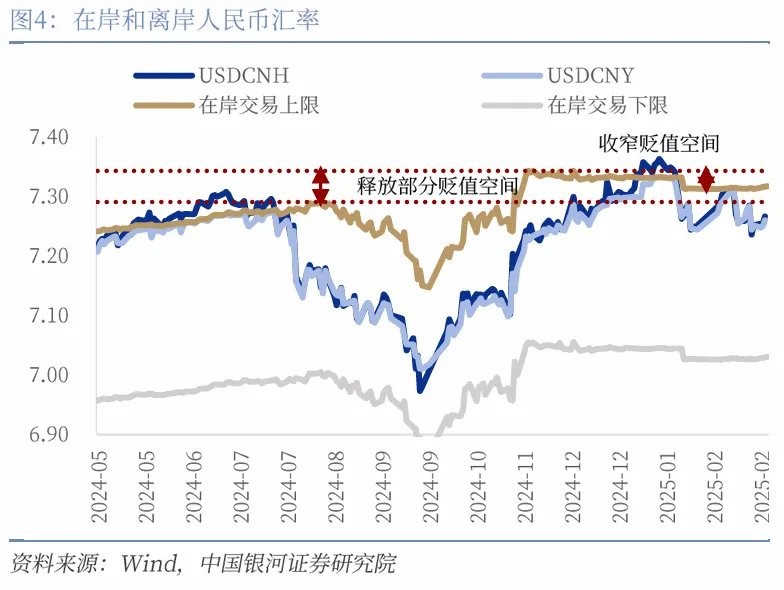
From an external perspective: 1. Market expectations suggest that high interest rates in the U.S. may persist longer, reducing the space for interest rate cuts in 2025 and delaying the timing; 2. Possible increases in tariffs and shifts in trade policy in the U.S. External changes are putting pressure on the RMB exchange rate. Against this backdrop, the priority targets of monetary policy have shifted to financial stability and exchange rate stability, forming a triangular target of stocks, bonds, and exchange rates.
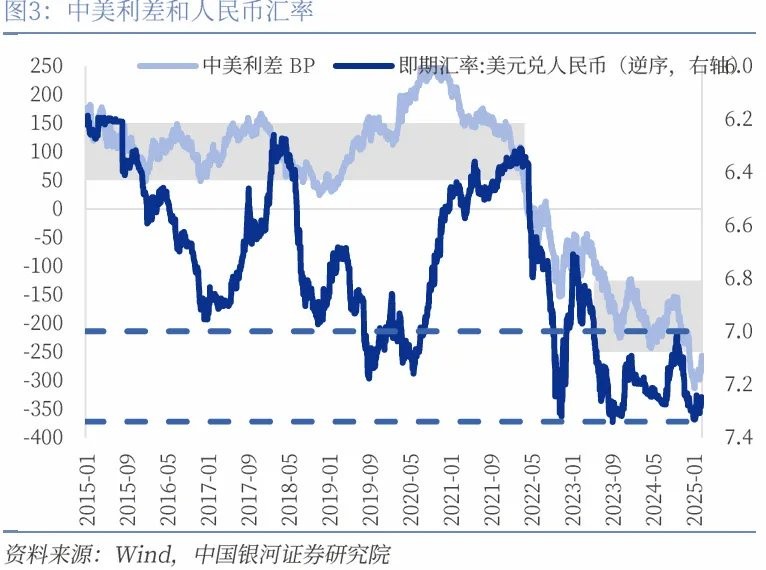
To avoid a too rapid decline in long-term bond yields, considerations include alleviating exchange rate pressure through the China-U.S. interest rate differential, as well as preventing excessive consumption of monetary policy operational space and potential financial risks from excessive trading commissions in the bond market. Stabilizing the stock market has become an important consideration for monetary policy since asset prices became a key factor after September 24.
III. DeepSeek Breaks the "Impossible Triangle" Curse
During the Spring Festival, the launch of DeepSeek-R1 broke the narrative of absolute U.S. technological superiority, ushering in a historic moment for the re-pricing of Chinese equity assets, leading to a rapid surge in the stock market. One of the triangles, "stabilizing the stock market," has been successfully achieved, and the stock market is no longer a constraint on the central bank's liquidity tightening. As the central bank tightens liquidity, funding prices rise, long-term bond yields increase, the China-U.S. interest rate differential narrows, and exchange rate pressure eases. The "possible triangle" has been achieved.
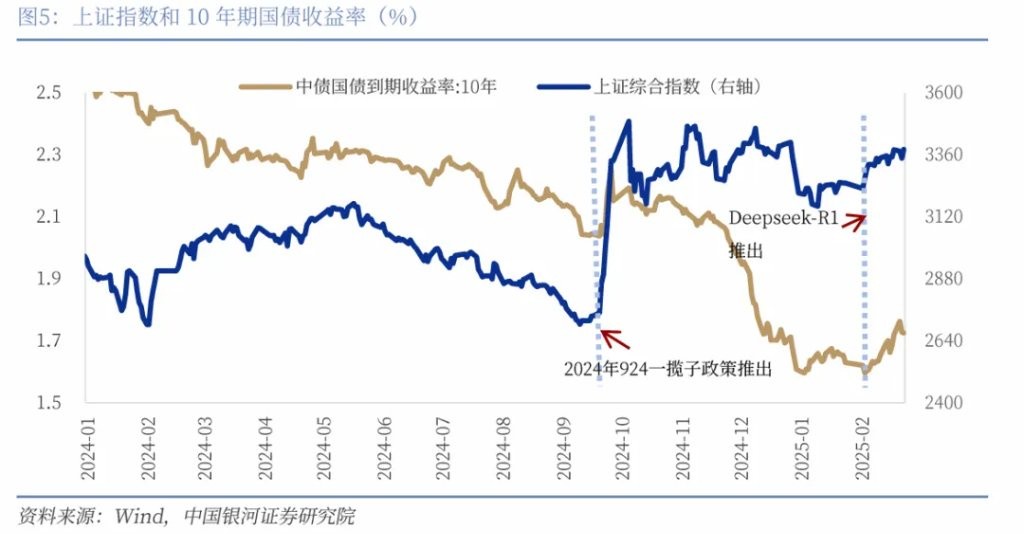
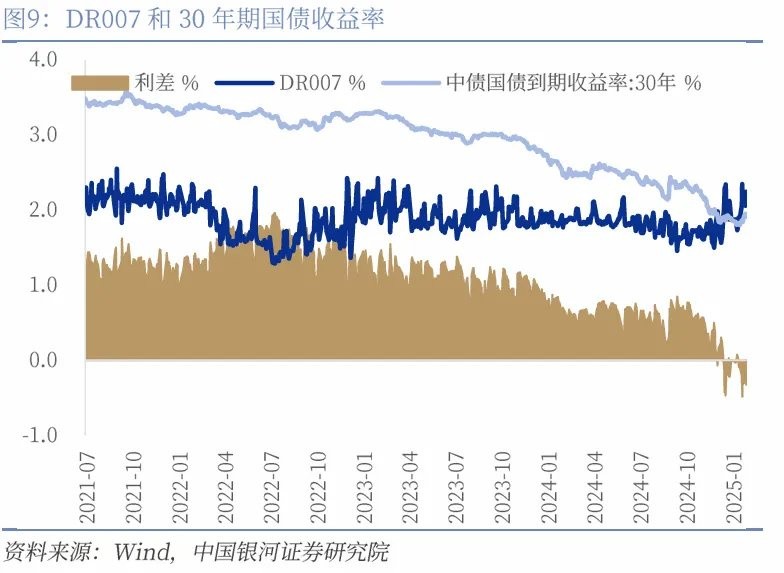
Based on the triangular targets of monetary policy operations, the central bank's open market operations are marginally tightening liquidity, pushing funding prices up, which is transmitted to the bond market, causing the yield curve of government bonds to rise. If the trend of long-term bonds in January was somewhat hesitant and fluctuating, the rise in long-term bond yields after the Spring Festival has been more rapid. In less than a month, the yield on 10-year government bonds rose from 1.6% to 1.76%, and the yield on 30-year government bonds rose from 1.8% to around 1.95%.
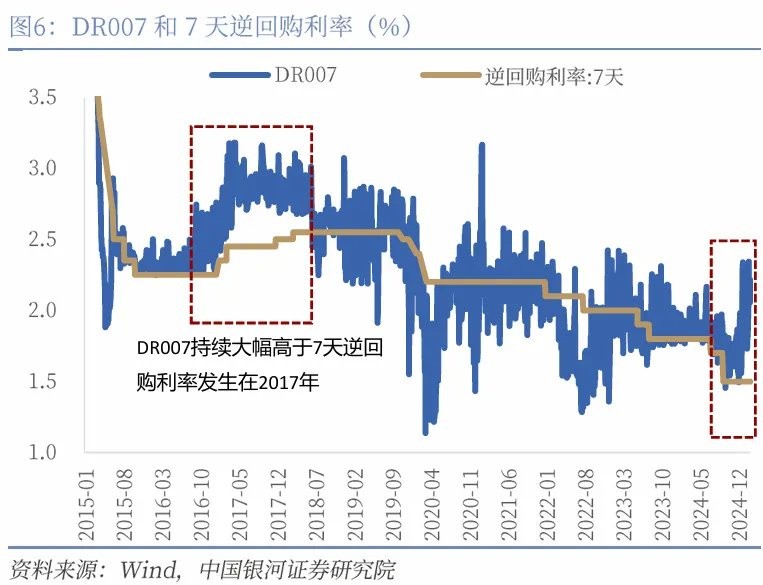
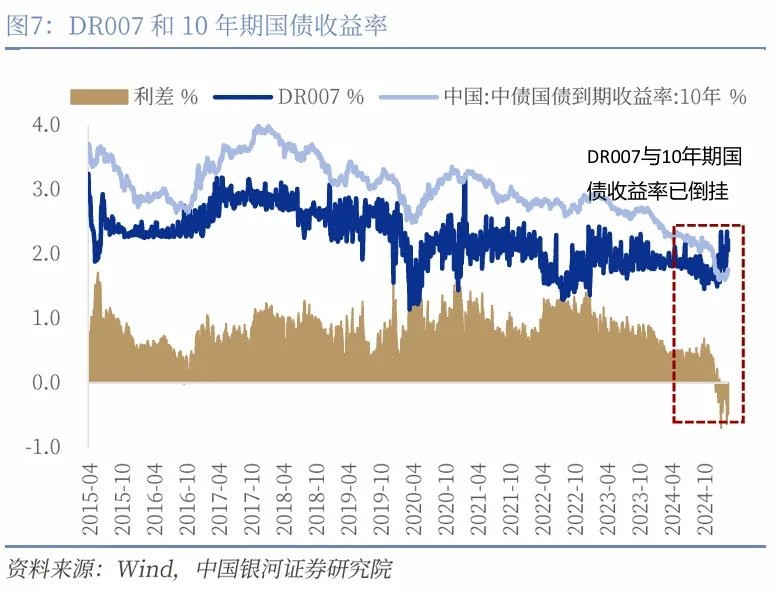
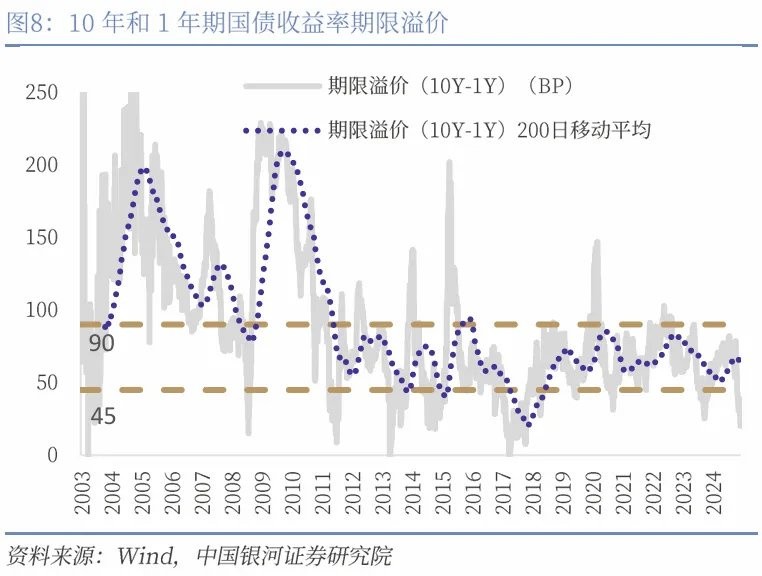
Entering February 2025, DR007 has significantly deviated from the 7-day reverse repo, averaging about 50 basis points higher than the 7-day reverse repo. The last time DR007 was significantly higher than the 7-day reverse repo for an extended period was in 2017, against a backdrop of strict financial regulation and deleveraging. The inversion of DR007 and the 10-year government bond yield is the first inversion since 2016 Even DR007 and the 30-year government bond yield have inverted. The yield curve has flattened, and the term premium has broken below its historical range. Rising funding costs have pushed short-term bond yields up, while the increase in long-term bonds is smaller than that of short-term bonds. Currently, the yield spread between the 10-year and 1-year government bonds is 26 basis points, significantly deviating from the range of 45 to 90 basis points since 2012. The current term premium has not fully priced in economic growth.
IV. Is the current "possible triangle" unbreakable?
If the order of monetary policy objectives switches again, or if market risk appetite turns, the current "possible triangle" is likely to be broken.
March to May is an important time window, and the order of monetary policy objectives may switch again, re-entering easing. At this stage, achieving the "possible triangle," the central bank has no intention of actively changing.
A switch in the order of objectives still requires new changes from both internal and external sources. Internally, if the issuance of government bonds accelerates after the Two Sessions, the weight of monetary policy objectives may tilt towards coordination with fiscal policy; if the credit and inflation data for February, released in March, are below expectations, the weight of objectives may tilt towards supporting economic growth.
We believe that the credit expansion in January mainly came from the push for a "good start," with increased supply-side investment. Continued credit growth in the future requires confirmation from the demand side. However, during the real estate downturn cycle, credit expansion faces demand constraints, which remains the basic narrative, and the recovery of confidence in private sector credit expansion is a slow variable.
The demand for household credit still depends on the continued improvement in real estate sales. Corporate loans, especially the recovery of medium- and long-term loans, still require an increase in investment willingness and the pull of government project investments.
If demand cannot take over from supply, the "good start" in January will only be a pre-release of credit demand, bringing greater downward pressure on credit growth in subsequent months. Externally, expectations for a Federal Reserve rate cut in the second quarter may reignite, and exchange rate pressures may be released temporarily, reducing constraints on monetary easing.
At the same time, if uncertainty in U.S. trade policy rises significantly, market risk appetite may weaken again, leading to a renewed pursuit of safe assets. Bonds, as a hedge against stock risk, will reduce their term premium, pushing long-term bond yields down Exchange rates may also face pressure again.
V. What does a truly solid "possible triangle" require?
A truly solid "possible triangle" requires the Chinese economy to achieve a strong recovery and return to inflationary pressure.
In 2025, the market may repeatedly verify three narratives:
Narrative One: The scale and effect of special bonds for land reserves exceed expectations, leading to a relatively strong rebound in the real estate sector. The beginning of this narrative comes from the rapid advancement of special bonds for land reserves. However, based on international experience, the real estate downturn cycle typically requires 5-7 years, making it difficult to see a turning point in 2025. The policies aimed at the real estate sector are intended to prevent risks rather than provide strong stimulus, and real estate will no longer play the role of counter-cyclical economic driver.
Narrative Two: Policy stimulus drives consumer recovery better than expected. This narrative begins with the rapid sales increase of products such as mobile phones supported by policy subsidies. However, the recovery of residents' consumption willingness remains a slow variable, and the consumption increment brought by current policy strength has limited effects on economic stimulation.
Narrative Three: DeepSeek breakthroughs drive a new round of capital expenditure. On one hand, this will stimulate manufacturing investment; on the other hand, it will promote a structural bull market in technology, transmitting wealth effects to resident consumption. Together, these will drive China's economic growth. However, this narrative may be the logic for the next 3-5 years and may not be immediately confirmed in 2025.
Currently, it appears that a moderate recovery of the Chinese economy in 2025, with limited inflation pressure and "difficult wide credit," remains a more likely narrative. Under the baseline scenario, we predict that China's nominal economic growth rate in 2025 may be around 4.9%, showing a moderate recovery. CPI and PPI are expected to see a relatively mild rebound, possibly rising to 0.9% and -0.2% respectively by the end of the year.
The inability of the Chinese economy to show a strong recovery in 2025 is based on three reasons: First, exports may face external shocks. The current global economy is more fragile and lacks strong growth momentum. The U.S. may also fall into a stagflation dilemma, and there remains uncertainty regarding U.S. trade policies towards China;
Second, the current implementation of strong policies to accelerate the clearing and stabilization of the real estate market can, from a deeper logical perspective, allow the Chinese economy to quickly lighten its load in the future to focus on developing new productive forces. Counter-cyclical policies are not about stimulating the economy but about risk mitigation;
Third, the real estate downturn cycle may not end in 2025, and the transition between old and new driving forces has not yet been perfectly achieved.
VI. 2025 Monetary Policy Outlook and Its Impact on Investment
The moderate easing orientation remains unchanged, but the pace of interest rate cuts may change, and further rate cuts will need to wait. The monetary policy orientation in 2025 is still fundamentally directed towards moderate easing, with room for interest rate and reserve requirement ratio cuts throughout the year. It is expected that the policy interest rate (7-day reverse repurchase rate) may be cumulatively lowered by 30-40 basis points, guiding the 5-year LPR down by 40-60 basis points The cumulative reserve requirement ratio may be reduced by 100-150 basis points throughout the year. The central bank's net purchase of government bonds in the open market may exceed 2 trillion yuan for the entire year. The interest rate cut window may gradually open after the expectations for the Federal Reserve to cut rates reignite in the second quarter. Both reserve requirement ratio cuts and reverse repos will be important tools for releasing medium- to long-term liquidity, while the reserve requirement ratio cut can save bank costs and support credit expansion, with a high probability of implementation in the first quarter.
We predict that in 2025, the annual fluctuation range of the 10-year government bond yield will be 1.5%-1.9%. If the central bank lowers the policy interest rate by 40 basis points throughout the year, according to our calculations, 1.64% may be a relatively reasonable level. The exchange rate of the US dollar against the Chinese yuan may fluctuate around 7.3, and a 10% tariff pressure may not be enough to break the current central level.
Before the substantial implementation of further tariffs by the United States, the yuan may fluctuate in the range of 7.1-7.3. If the United States imposes further tariffs in the future, the yuan may adjust from its current position, but overall, the impact of trade friction on the yuan will be weaker than in 2018, with a new fluctuation range for the yuan likely around 7.1-7.5.
Authors of this article: Zhang Jun, Zhang Di, Zhan Lu, Source: China Galaxy Macro, Original title: "[China Galaxy Macro] The Present and Future of the 'Impossible Triangle' of Stocks, Bonds, and Exchange Rates"
Risk Warning and Disclaimer
The market has risks, and investment should be cautious. This article does not constitute personal investment advice and does not take into account the specific investment goals, financial conditions, or needs of individual users. Users should consider whether any opinions, views, or conclusions in this article are suitable for their specific circumstances. Investment based on this is at one's own risk
