


Unveiling the Killer Move in the Small and Medium-Sized Panel Market | Exclusive Interview with Zhou Mingzhong from TCL Huaxing

Printed OLED and eye-care screens
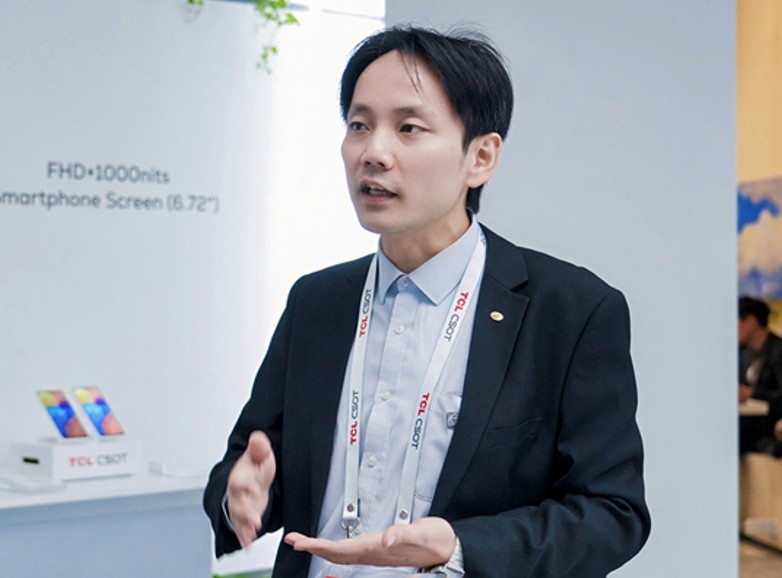
Author | Huang Yu
Editor | Liu Baodan
At the annual Mobile World Congress (MWC), the most important event in the global mobile communications field, TCL Huaxing, one of the global panel leaders, showcased its numerous small and medium-sized display products.
Zhou Mingzhong, head of the Technology Planning Center at TCL Huaxing, told Wall Street Insights that compared to the International Consumer Electronics Show (CES) held at the beginning of the year, TCL Huaxing's focus at this MWC is on small and medium-sized products that are more related to mobile devices.
Printed OLED is a major highlight of TCL Huaxing's exhibition this time. After 11 years of investment, the printed OLED technology, regarded by TCL Huaxing as the next generation display technology, officially welcomed its first mass-produced product—a display screen for medical devices—last November.
At this MWC, in addition to the first mass-produced printed OLED 4K professional display screen, TCL Huaxing also showcased several new small and medium-sized products equipped with printed OLED technology to demonstrate its leadership in the display technology field globally.
Among them, the world's highest brightness printed QD-EL laptop screen (14") attracted significant attention. This product also represents an important breakthrough in TCL Huaxing's high-precision inkjet printing technology. The next generation of TCL Huaxing's printed OLED will continuously evolve and upgrade to QD-EL by replacing the light-emitting layer of printed OLED with quantum dot materials, achieving a breakthrough in the performance of printed OLED products.
It is reported that this product is made using printed QD-EL technology, with a resolution of 240 PPI, which not only significantly enhances color purity and brightness but also ensures excellent viewing angles; without a color filter, the optimization of quantum dot materials makes the picture colors richer and more delicate.
TCL Huaxing has high hopes for printed OLED technology.
TCL's founder and chairman, Li Dongsheng, has stated that as early as ten years ago, TCL Huaxing chose printed OLED as the main direction for next-generation display technology for two main reasons: first, traditional OLED patents have already been laid out by leading companies, and TCL would face significant patent restrictions if it developed in this field; second, printed OLED is more competitive than traditional OLED.
The mass production of the printed OLED 4K professional display screen has also strengthened TCL Huaxing's confidence in its continued investment in printed OLED.
Zhou Mingzhong stated that last year marked a good start for the mass production of printed OLED products. Printed OLED not only aligns with the value proposition of TCL Huaxing's display technology brand APEX but also has a very wide application boundary, covering products from small and medium sizes to large sizes.
Regarding this year's key tasks in printed OLED, Zhou Mingzhong revealed to Wall Street Insights that this year they will raise the resolution to a higher level while improving yield rates. Additionally, in terms of products, they will expand the categories of mass production to include laptops, but the specific mass production timeline will depend on user demand According to Zhao Jun, Senior Vice President of TCL Technology and CEO of TCL Huaxing, printed OLED aligns with the only certain major trend in the display industry for the next five years, which is the expansion and increased penetration of OLED in medium-sized applications.
Following smartphones, Pads, laptops, and monitors will increasingly adopt OLED technology at a faster pace.
To break through the growth bottleneck, TCL Huaxing aims to further enhance its market share in the medium and small size markets while continuing to consolidate its advantages in the large size sector.
It is reported that in the first three quarters of last year, TCL Huaxing's television panel share in the large size sector remained the second largest globally, with the largest market share in the 65-inch and 75-inch segments, and the shipment area ratio of products 65 inches and above increased to 55%. In the medium size sector, it currently holds the second largest market share globally in displays, with a stable first place in the esports monitor market.
In the small size sector, TCL Huaxing's LTPS smartphone panel brand customer shipment volume remains the second largest globally, with steady growth in flexible OLED smartphone panel shipments and an increasing proportion of high-end products.
Zhou Mingzhong stated that producing good products will increase market share. "How to let consumers see a very comfortable screen is a major pillar for us to grow in the medium and small sizes. Starting from brand building and technological dimensions, providing consumers with a better screen experience is the most important basic work."
Against this backdrop, TCL Huaxing emphasizes exploration and innovation in "visual health." At this year's MWC, TCL Huaxing introduced two important eye-care products: the WQHD 120Hz LTPS circular polarized eye-care screen (6.67") and the moth-eye bionic eye-care tablet (12.1").
It is reported that the WQHD 120Hz LTPS circular polarized eye-care screen uses circular polarization technology, which effectively suppresses screen glare and significantly enhances screen contrast, making colors more vivid and layered. Even under strong light or while wearing sunglasses, the screen remains clear, providing users with a relaxed and comfortable reading experience.
Additionally, this screen is equipped with global DC dimming technology, fundamentally reducing flicker stimulation to the eyes and effectively alleviating visual fatigue caused by prolonged use of electronic devices, offering users a healthier visual experience.
The other product, the moth-eye bionic eye-care tablet, combines 4A anti-glare, anti-reflection, anti-fingerprint, and antibacterial technologies, as well as de-polarization technology and ultra-low blue light technology, to comprehensively enhance users' visual comfort.
Zhou Mingzhong pointed out that eye-care displays are an inevitable trend in industry development. "So it's not just us working on health and eye care; our peers are also moving in this direction, including some terminal brands. Of course, it’s a bit like competition, but competition is good for consumers."
After 26 years on the path of globalization, TCL recently became an Olympic global partner, which will propel it to open a new chapter in its globalization strategy. Standing at a new starting point, TCL Huaxing must also open new growth spaces in its global layout through continuous investment in cutting-edge technologies The following is an excerpt from a conversation with Chang Zhoumingzhong, the Planning Center of TCL Huaxing Technology (edited):
- TCL Huaxing brought several cutting-edge display products to MWC this time. Could you please elaborate on the main highlights of this exhibition? Especially, what are the differences compared to the previous CES exhibition?
Chang Zhoumingzhong: The attributes of the exhibitions have some differences. CES focuses more on universal electronic products and consumer products. MWC pays more attention to mobile small and medium-sized devices, such as laptops, tablets, and smartphones, so there is a difference in the tone of the exhibition. Therefore, we may showcase more products related to small and medium sizes and mobile devices. We have several significant highlights, such as printed displays, which are a unique technology of TCL Huaxing in the display industry. We will bring a relatively new breakthrough in both products and technology, including the world's highest brightness printed QD-EL laptop screen (14") and TCL Huaxing's first mass-produced printed OLED 4K professional display (21.6") for high-end medical use. On the other hand, related to our value proposition, we are more concerned about what constitutes a good screen, focusing on health and environmentally friendly eye protection screens. In the field of smartphones, we will have some new work, such as the WQHD 120Hz LTPS circular polarized eye protection screen (6.67"), which has a particularly high refresh rate and achieves eye protection through circular polarization technology, focusing on how to provide consumers with better screens. We have spent a long time with products like smartphones and tablets, so we pay more attention to how to create healthy and eye-protective screens, which is also the direction of our important exhibits this time.
- TCL Huaxing has launched products such as circular polarized eye protection screens and moth-eye bionic eye protection tablets. How does it reduce eye fatigue from the underlying principles, and will it further expand the application scenarios of this eye protection technology in the future?
Chang Zhoumingzhong: As TCL Huaxing is a technology company primarily focused on displays, we have always been thinking about what is best for human eyes. Since we started making displays, we have been concerned about what constitutes the best display. This time, including technologies like circular polarization and global DC dimming, we are more focused on creating and restoring the light of the real world. Through our research over the past few years, we have found that both low blue light and circular polarization indeed have a significant positive impact on visual fatigue. Therefore, we have done a lot of work on the 6.67” eye protection circular polarized screen, including reducing blue light and lowering reflectivity on tablets. The so-called moth-eye technology relies on our years of research on visual health, especially in the area of fatigue. We will continue to expand these eye protection technologies, which will have many combinations. For example, I may focus on low blue light for smartphones, while there may be different needs for tablets. I believe the boundaries will continue to expand according to the dimensions and needs of the products.
-
Does TCL Huaxing have any new progress in the breakthroughs and product applications of printed OLED technology, and what are the key tasks and goals planned for this year? Zhou Mingzhong: Last year should be considered a good start for us. I just mentioned that TCL Huaxing has been engaged in printed displays for about ten years. Last year, we officially announced the mass production of a medical display screen measuring 21.6 inches, a professional medical display product. From our perspective, in addition to the few aspects that match our APEX value proposition, printed displays have a significant advantage in that their application boundaries are very broad, allowing them to range from small and medium sizes all the way to televisions. Of course, there are many breakthroughs to be made. As I mentioned earlier, we are making a significant breakthrough this year by raising the overall resolution to a new level. The mass production we achieved last year was more focused on professional monitors, and this year, the most important work will be to expand into the notebook segment. Another major focus for us this year will be improving our overall yield.
-
Do you expect to achieve scale shipments or mass production in the notebook segment this year?
Zhou Mingzhong: This is something that customers may be concerned about. We will prepare the technology, but the pace of implementation must align with customer demand. We will first ensure that the technology is ready.
- How will TCL Huaxing build differentiated advantages in the small and medium-sized display sector, and how will it increase its market share in this segment?
Zhou Mingzhong: We firmly believe that as long as we produce good products, our market share will naturally increase. Market share is somewhat of a lagging indicator; I am not pursuing market share but rather focusing on creating good products. This leads us to define what a good product is. TCL Huaxing is quite unique because we have invested significantly in all technologies, from LCD to OLED to printed OLED to LED. It’s somewhat like a technology matrix concept; as long as customers have needs, we can provide corresponding products. Additionally, branding plays a significant role. Sometimes, what moves consumers is not just the product itself but our commitment to technology and quality. Therefore, brand building is still a crucial factor for consumers. They know that choosing a TCL Huaxing screen means choosing a reliable screen. We are determined to convey that this is a healthy screen, an environmentally friendly screen, and a screen that offers an excellent visual experience. This is a major pillar for us in the small and medium-sized segment, focusing on brand building and technology to provide consumers with a better screen experience, which is the most fundamental work.
- Will eye protection in small and medium-sized screens be a key direction or competitive track?
Zhou Mingzhong: I believe this is an inevitable trend, just like everyone’s needs. The first demand is to have it, and the second demand is to have it good. What does "good" mean? Currently, all mobile phone screens have some improvements in picture quality and power consumption, but what people care about is whether it can reduce harm to their eyes. This is an inevitable trend. Therefore, not only are we focusing on health and eye protection, but our peers are also moving in this direction. Across all terminals, all terminal brands are also working in this direction Of course, it is somewhat like competition, but competition is good for consumers. It may be different from past competition parameters. We hope that the more competition there is, the better it is for consumers' eyes, or at least the less harm it causes them. This is definitely the right direction.
- Currently, the proportion of eye protection screens in the smartphone category is still not particularly high, right?
Zhou Mingzhong: Yes, the reason we launched APEX is that consumers don't really know what kind of screen they are using. Of course, it goes back to an earlier question: what generation of eye protection screen is it? However, this definition may become very vague. Therefore, TCL Huaxing may have a key task to provide consumers with a more intuitive and clear definition of what constitutes a good eye protection screen. It is currently difficult for us to define which smartphone uses so-called eye protection screens or non-eye protection screens because it indeed requires some time. We need to conduct research, including human factors and medical experiments, and then clarify this definition, even needing to establish an eye protection index
