China's Internet Going Abroad Weekly Headlines: Let's Look at the Truth and Discuss Major Events | Baijing Chuan 350th Issue

This week's Internet Overseas Weekly focuses on the latest developments in AI image products, particularly the application of the DeepSeek R1 model. The Krea platform has integrated DeepSeek R1 in a short period, enhancing user experience by allowing users to generate and modify images through natural language, thereby lowering the usage threshold. The introduction of this technology not only improves the effectiveness of image generation but also makes the application of commercial products more feasible
This column is a news weekly created by the pan-internet overseas service platform - Baijing Chuhai, specifically designed for internet professionals going overseas. I am Jing Xiaobai, and let's take a look at the noteworthy news in the overseas circle this week.
AI Going Overseas
Has the first AI image product to benefit from DeepSeek appeared?
After the R1 inference model became popular, everyone began to integrate DeepSeek, with large model cloud service platforms like Silicon-based Flow, chatbots like Tencent Yuanbao, and even top-tier platforms like WeChat. However, there has been little news about AI image products integrating DeepSeek R1. From the release of DeepSeek-R1 to Krea announcing new features, only 10 days have passed, making this response the fastest among image products.
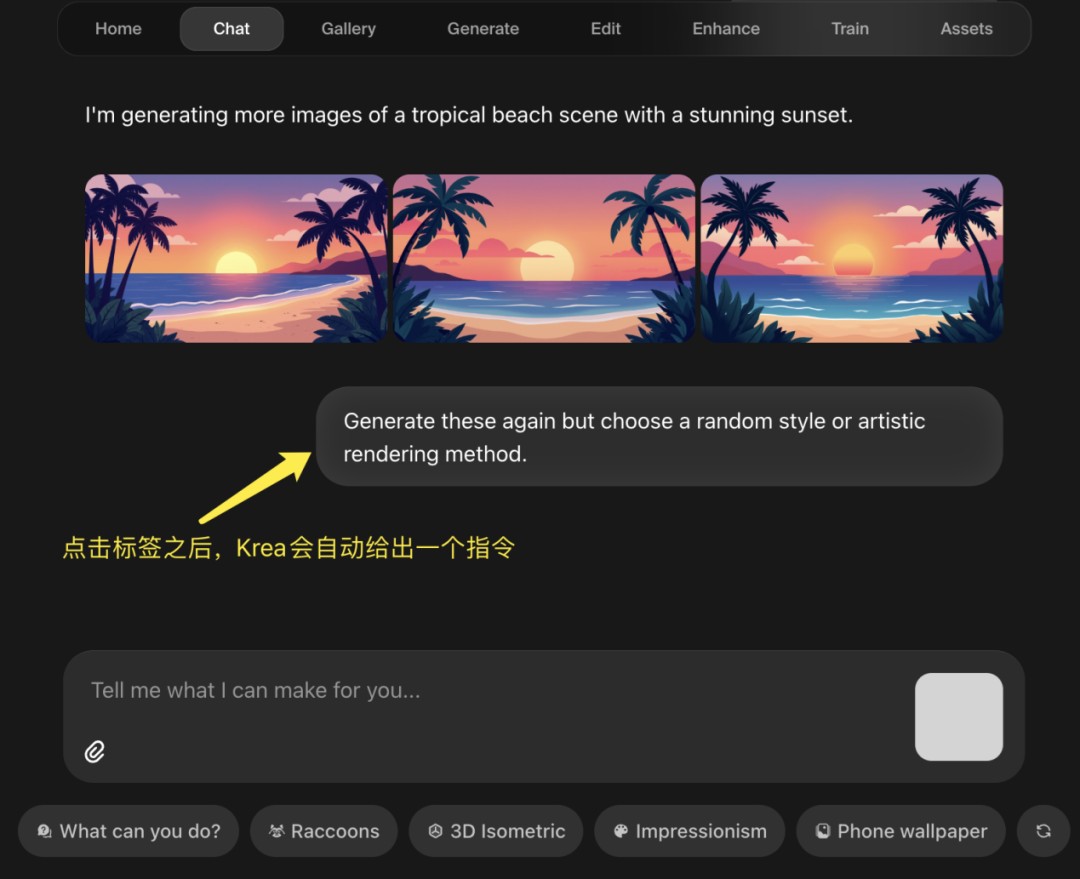
Before Krea, there were already integrated Chatbot features for generating and modifying images, the most typical being ChatGPT. However, readers who have used it may have some feelings; although it added a step for the Chatbot to understand user intent, the results for both generating and modifying images were not satisfactory. (See the case comparison below)
The introduction of DeepSeek-R1 has changed the user experience for these functions, with two points: deep reasoning and low cost. The former solves controllability, while the latter determines that new technology can be applied to commercial products.
When users express their intentions in natural language, it is not as clear as a carefully crafted prompt. DeepSeek-R1 focuses on understanding user intent, and Krea has also added a buff for the follow-up operations needed to approach a usable state.

Krea's integration of R1 is aimed at lowering the threshold, allowing users to generate and modify images using natural language. Therefore, for subsequent operations, such as changing styles or generating animations, Krea has set up convenient interactive buttons. However, in terms of interaction, the product actually "translates" the button functions into a phrase that R1 can understand, making the generated results closer to user expectations.
Moreover, Krea's introduction of R1 not only brings generated and modified images closer to user expectations but also significantly lowers the usage threshold. Whether it’s not having to carefully craft prompts or being able to proceed with just a click, it is more user-friendly for the average user.
So, where does Krea's approach come from?
Top VCs like a16z invest, and there are Chinese founders entering the AI image/video track
According to TechCrunch, the AI creative tool Flora, developed by Chinese founder Weber Wong, officially launched on March 1. To date, the products and landscape in the AI image and video track have become somewhat solidified, so having fresh products join, especially from a Chinese founder, is indeed surprising

Weber Wong's work resume | Image source: LinkedIn
According to information on LinkedIn, Flora currently has fewer than 10 employees. Founder Weber Wong studied at the University of Southern California and New York University, with a background spanning finance, technology, and the arts. After graduation, he worked as an analyst and investor at investment banks Evercore and Menlo Ventures.
In a conversation with TechCrunch, Weber Wong stated, that after using existing AI products on the market, he found that while some products lowered the creative threshold, they were not very controllable, while others, although optimized for controllability, were not intuitive enough in interaction. Based on this insight and his practical experience in engineering and creativity, he founded Flora. In terms of design philosophy, the team did not focus on optimizing the model but rather on controllability and interaction.
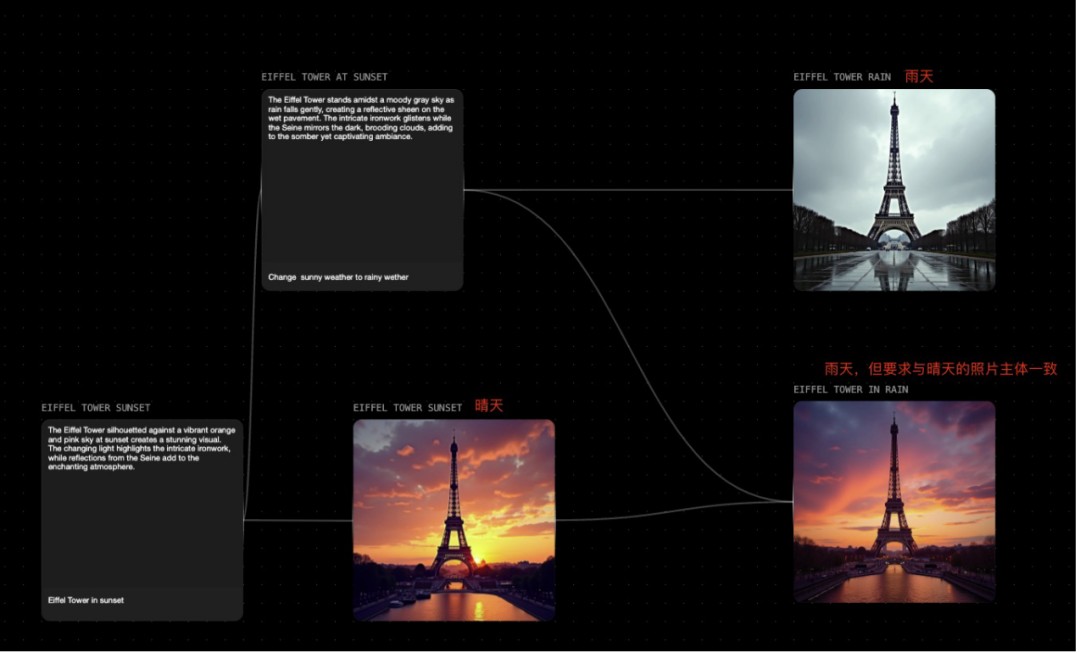
Overall, Flora is a "workflow" tool, with a core interaction logic similar to ComfyUI's "nodes and connections" model. Its nodes are divided into three types: "text, image, video." The core of each type of node is the mainstream large models of each modality, such as GPT and Claude (rewriting user’s everyday language into prompts) for text, Flux and SD for images, and Kling and Pika for videos.

Using a simple workflow, generate images of the Eiffel Tower in different weather conditions. When my workflow required a change in weather while maintaining consistency with the sunny image's subject, Flora did not complete the task.
Users can freely combine the three types of nodes to complete specific tasks, forming a complete workflow. Connecting two nodes means that the "downstream" node, when executing tasks, needs to refer to the output of the "upstream" node. Users can also "feed" the content of multiple upstream nodes to the downstream node, which can optimize consistency and controllability to some extent. However, in practical use, although Flora has optimized certain operations and interactions compared to other products, its testing goals have not been achieved, and the effectiveness of its optimized controllability may still be questionable.
In addition to clearly optimizing consistency and controllability, Flora is also enhancing other aspects of user experience, such as traceability and the convenience of generating multiple similar assets through copy node operations A former colleague who wrote about overseas stories for nearly 5 years has ventured into AI entrepreneurship | Conversation with the founder
If you have been following "BaiJing Chuhai" for more than half a year, you might remember an author named "Xin Tong." In the team's impression, she has a perfect passion for products and content, having carefully dissected Match Group's business landscape and Byte's AI layout, and she is not shy about praising a product or startup team that may not be well-known but that she genuinely likes; when traveling abroad, she would also take the time to research local motorcycle riders... In her writing, one can often sense a natural curiosity. In Xin Tong's words, writing is the job she most wants to do without considering income. But a few months ago, she chose to start her own business.
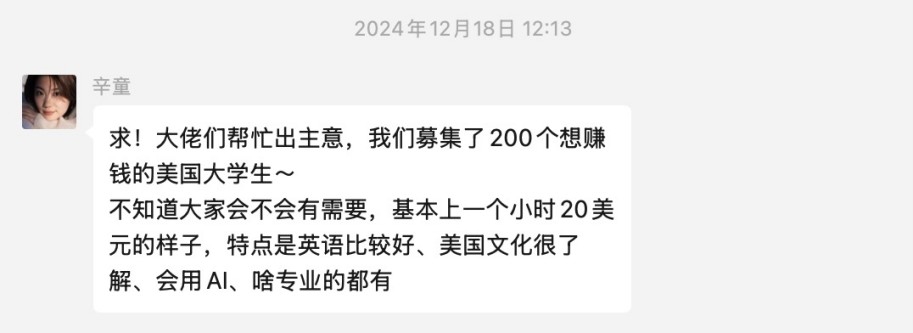
At the end of September last year, Xin Tong decided to leave after 4 years, 10 months, and 5 days at BaiJing's editorial department to embark on entrepreneurship, just like many entrepreneurs she has documented who started from 0 to 1. In our communications after her departure, we learned that she had joined an AI startup and formed her own small team, although the business direction was still being explored. In December last year, we saw her begin to collect demands from "200 American college students who want to make money" in her social circle and overseas community, and two months later, this demand research materialized into a complete grassroots marketing platform, XcreateAI.


From demand recruitment to XcreateAI
This product has a catchy slogan similar to Temu—"Start global grassroots marketing for just $5." XcreateAI has officially launched, attracting over 4,000 creators to join and is currently trending on Product Hunt. While we are delighted by her phased success, we are also very curious about the gaps in theory and practice that Xin Tong, as an industry observer who often discussed overseas growth and PMF in recent years, encounters when she immerses herself in the field. Meanwhile, what problems can this marketing platform, which promotes "low-cost global grassroots marketing," solve? If you happen to be a prospective entrepreneur looking to go overseas or are at a crossroads in your career, we believe the following conversation can provide you with some inspiration.
SeaArt finally reaches the top, with another overseas product experiencing double-digit rapid growth
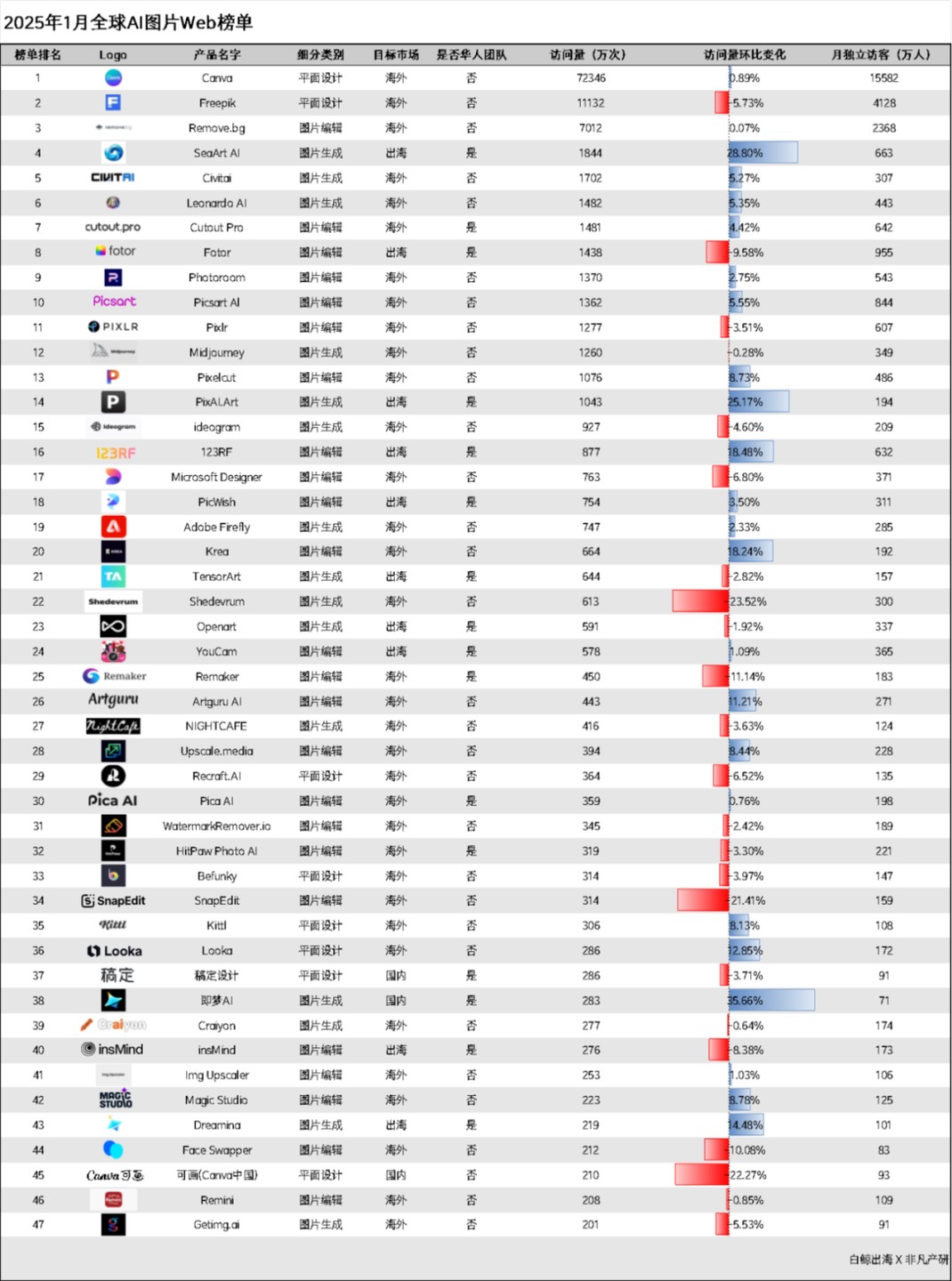
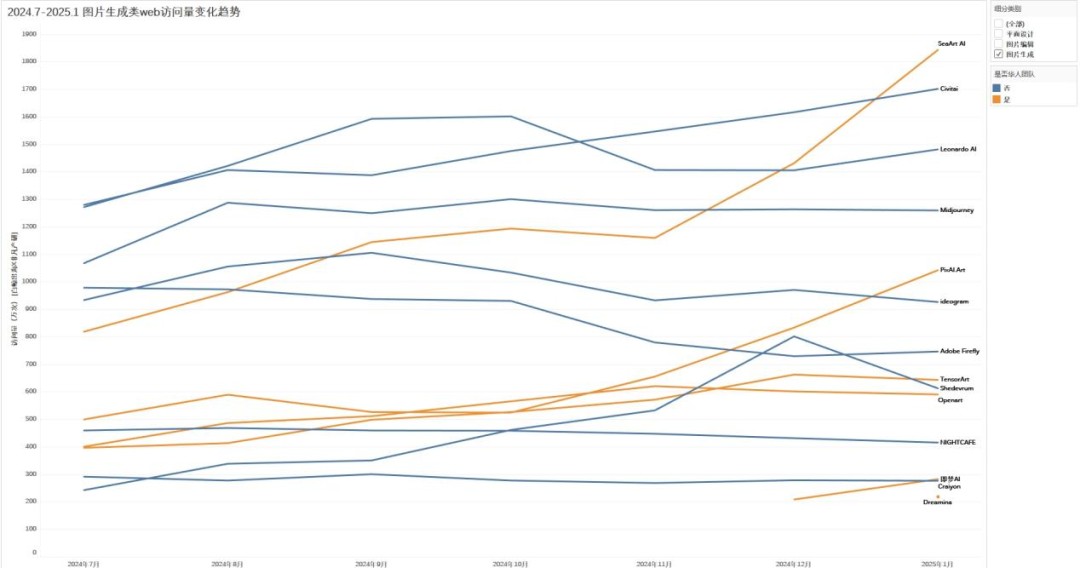
This month's image ranking has not changed much, presenting Insights: 1. SeaArt finally tops the image generation web sub-ranking. The most important point of this ranking is that SeaArt has achieved the overall growth rate Top 2 and the image generation category visit Top 1, surpassing Midjourney and then C Station to finally reach the top;

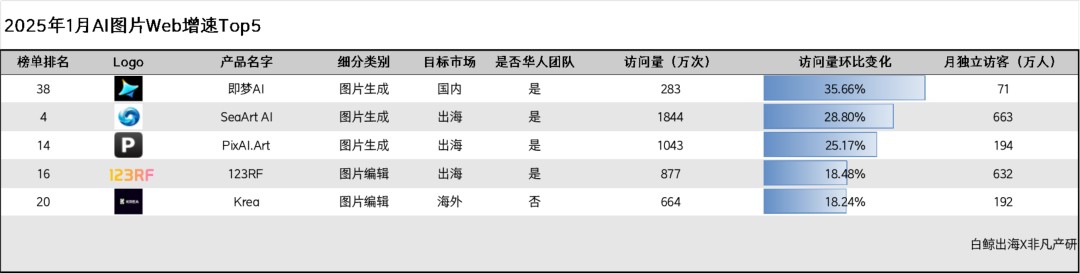
- Multiple overseas image generation products are experiencing rapid growth - ByteDance has 2 products on the list. In addition to SeaArt, several image generation web products developed by Chinese teams are also growing rapidly. PixAI.Art and JiMeng AI have been experiencing rapid growth over the past two months, with JiMeng AI's overseas version surpassing 2 million visits this month, and Dreamina being the only new product on the list this month; this has led to 4 out of the Top 5 AI image web growth products this month being from Chinese teams, with the remaining one being the recently popular Krea.

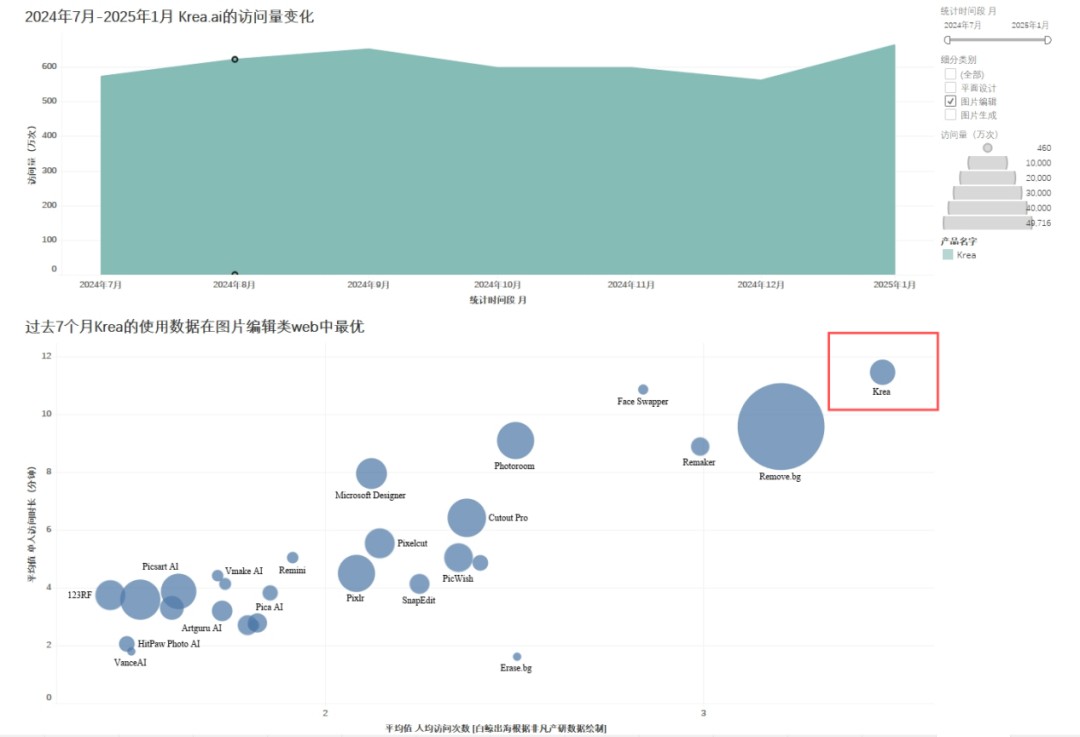
- Krea continues to break boundaries, achieving Top 5 growth this month, which is very rare for Krea. Krea's usage data (average visit duration and per capita visit frequency) looks good, but traffic has remained flat, and there has been a slight decline in the second half of 2024. After launching real-time 3D generation in images and low-threshold Avatar customization training features in January 2025, it has been widely discussed by many creators, finally welcoming an 18.24% month-on-month growth. (Krea is a product with its own thinking and positioning in the "similar appearance" image track, and its unique product interaction design and precise control based on unique interactions ensure user stickiness. In the past month, it has been trying to break boundaries continuously. This week, we will specifically release a topic on Krea, interested readers can pay attention.)

-
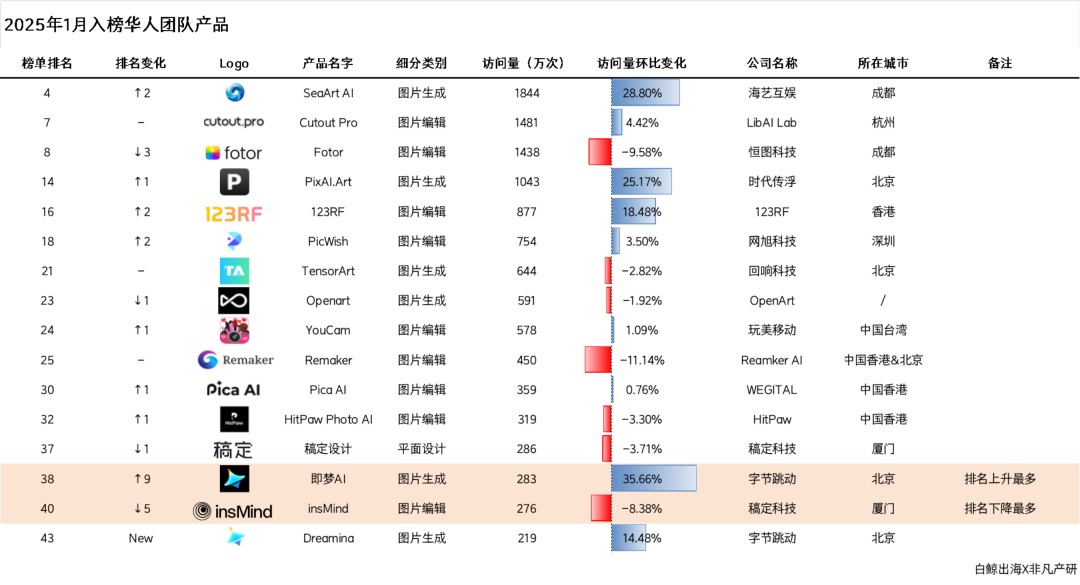
The number of products from Chinese teams remains unchanged. MoDao AI's traffic is unstable and has dropped out of the ranking again, while ByteDance's Dreamina has entered the list. Additionally, due to SeaArt's rapid growth, it has replaced Fotor as the No. 1 AI image web in terms of visits from Chinese teams. This month, the product with the most significant ranking increase is JiMeng AI, which continues its strong growth trend, while the one with the most significant decline is insMind, which focuses on AI product images (the product's buying volume has not stopped since January).

-
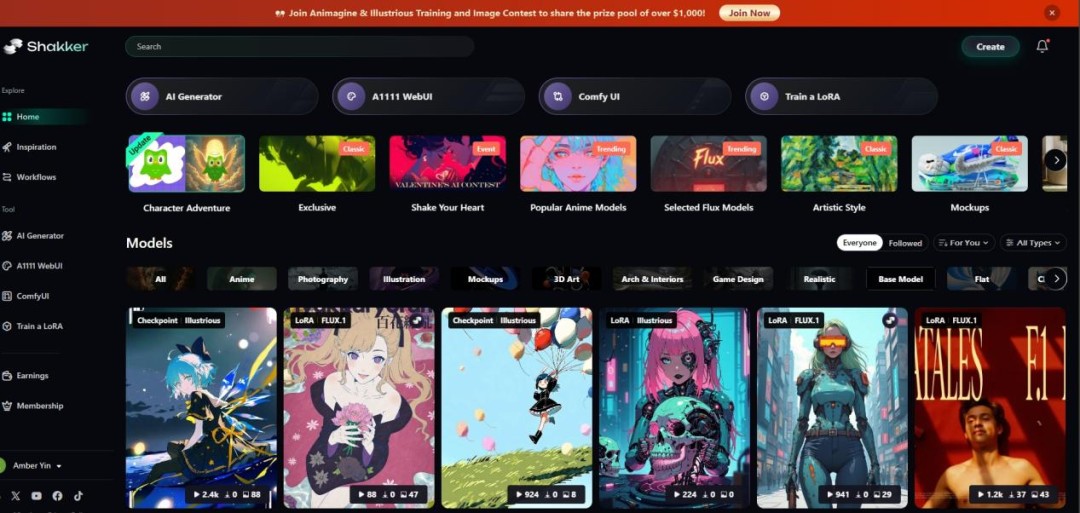
Products Worth Noting (1) VMake AI -- After changing its positioning, it has reignited the growth horn. Previously, Meitu was originally positioned in the direction of AI model images/product images, but later the exploration results were unsatisfactory, and it shifted towards the Talking Video direction. After experiencing a painful transformation period, this month, the visit volume increased by 15.84% month-on-month to 1.9 million, and the number of visitors increased by 11.71%, exceeding 1 million. However, due to the change in product positioning, we will include it in the AI video rankings for discussion. (2) Shakker.AI -- A star startup that has secured hundreds of millions in financing, performing well overseas. In addition to the three double-digit growth web products on the list, this month there were also two double-digit growth products in the raw image category. One is Shakker.AI, which saw a month-on-month increase of 18% in visit volume to 1.54 million. According to industry insiders and our own verification, this website was launched by Qidian Xingyu, and the more familiar domestic product is liblib.ai, which just announced the completion of a new round of financing worth hundreds of millions last week. Additionally, liblib.ai has already achieved 2.3 million in visit volume, and we will include it in the rankings next month.
Shakker.AI Homepage
The other is ImagineArt, developed by a team from Pakistan, which also saw a month-on-month increase of over 18% in visit volume to 1.99 million, standing on the threshold of 2 million visits. ImagineArt itself also provides video services and has just introduced Hailuo and Kling, while offering various AI image tools.

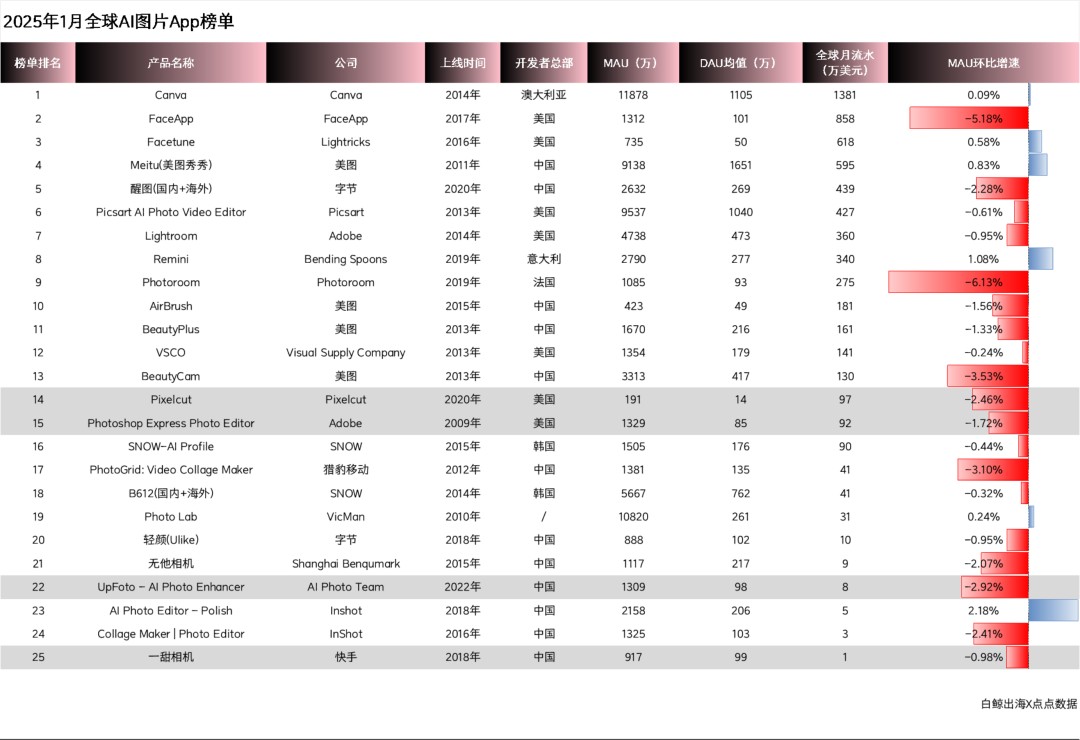
- In terms of the image app rankings, most products this month experienced a month-on-month decline in MAU, with four products no longer meeting the entry threshold of one million DAU or one million dollars in monthly revenue. Two products from the Chinese team, UpFoto and Kuaishou's Yitian Camera, had DAU below one million this month. Notably, Adobe released a new version of Photoshop on iOS and removed the previous Photoshop Express in certain regions, hoping to redirect users to the new product. As a result, this product's DAU decreased and fell out of the rankings. As a former image king of the last era, Adobe's pace in the AI era seems to be somewhat slow, and this move is also aimed at capturing a portion of users on mobile. We will monitor the development of this new product E-commerce Going Global
A new dark horse emerges in the billion-dollar race, smart fitness mirrors set crowdfunding records
In 2020, Lululemon spent $500 million to acquire the fitness brand Mirror, officially igniting the home fitness craze. With the benefits of the pandemic, home fitness brands like Tonal, Peloton, and Fiture quickly became darlings of the capital market, achieving explosive growth.
However, just three years later, news broke that Mirror was being sold off by Lululemon, and to this day, it has not found a buyer, with its valuation plummeting to $58 million.
Subsequently, several leading brands, from Peloton to Fiture, fell into a slump, facing performance pressures, which turned the once-coveted home fitness sector from a "hot cake" embraced by capital into a "forgotten child."
In this industry winter, an emerging brand named AEKE has risen against the trend, attracting a large number of users domestically and raising 10 million yuan in overseas crowdfunding within 40 days, breaking the crowdfunding record for the same category.
As star brands continue to face crises, the home fitness sector has cooled down. In this winter, how did AEKE manage to secure millions in crowdfunding and race ahead?
The author learned that AEKE belongs to QuDong WeiLai (Shenzhen) Technology Co., Ltd., primarily engaged in home fitness equipment, focusing on strength training and Pilates, with yoga and aerobic exercise as supplementary offerings.
Compared to predecessors like Mirror, Peloton, and Fiture, AEKE's timing for entry is not ideal. According to Fortune Business data, the global home fitness equipment market reached $11.15 billion in 2022 and is expected to grow to $16.56 billion by 2030, with a compound annual growth rate of 5%.
At the end of the global pandemic, while the demand for home fitness remains high, the growth rate has gradually slowed, and the market shows signs of weakness. Therefore, after refining its products, AEKE did not hastily enter the overseas market but frequently participated in various industry exhibitions, building industry reputation while establishing domestic and international sales systems.
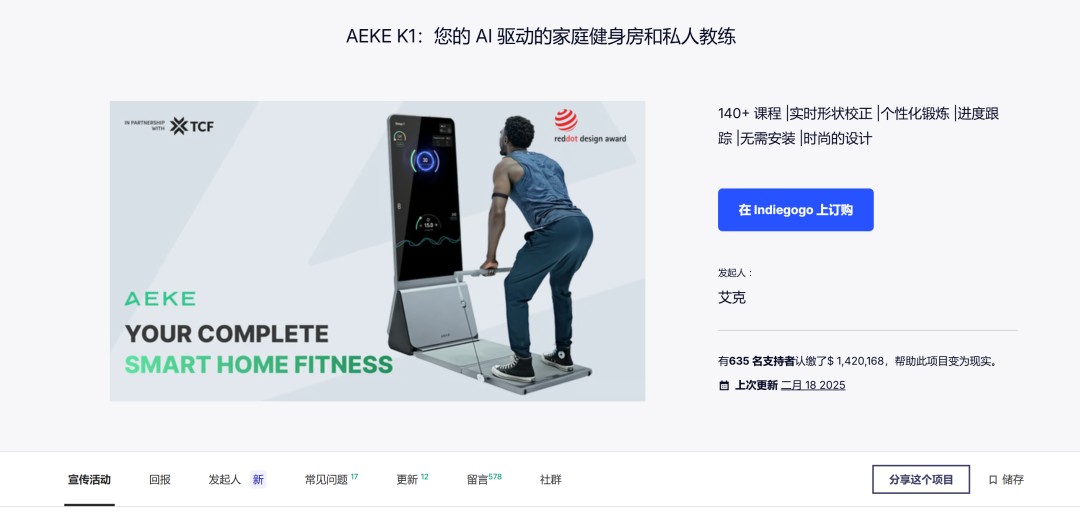
In December 2024, AEKE launched its first product, the AEKE Smart Home Gym K1, on the crowdfunding platform Kickstarter, officially entering the overseas market, and achieved $1.4 million in pre-sales (approximately 10.04 million yuan) within 40 days, exceeding expectations by 2959%, breaking multiple records for the fastest crowdfunding speed, highest sales volume, and most funds raised in the same category during the same period.

Source: Kickstarter
In response to crowdfunding, AEKE accurately identified consumer pain points, quickly opened up the market through clear positioning and flexible marketing strategies, and accumulated its first batch of overseas users Multiple studies have shown that trust is one of the important factors influencing overseas users' investment in crowdfunding projects. Users focus on assessing the potential risks of the project when participating in crowdfunding, including the risk of project failure, the risk of delivery delays, and product quality issues.
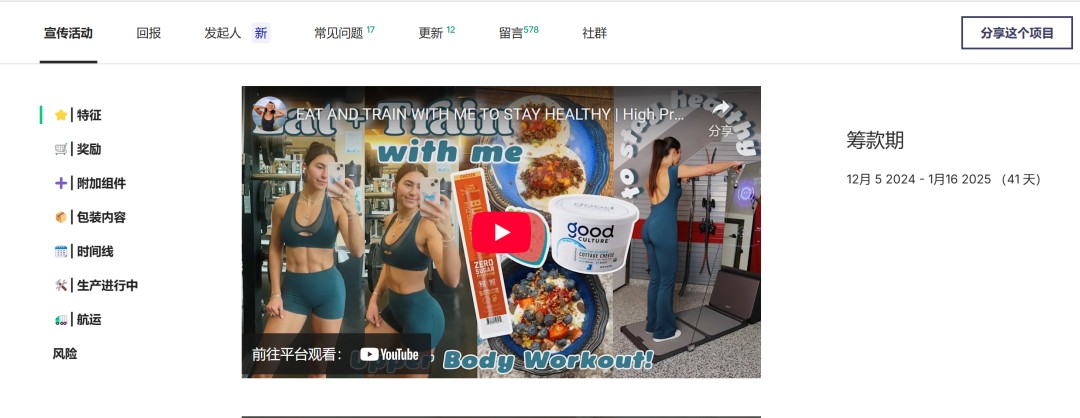
Therefore, AEKE has taken the lead in making three major commitments on the project homepage: "30-day trial, 2-year warranty, and fast delivery guarantee." They clearly explain the product production progress and estimated delivery time through real-life photos and timelines, demonstrating professionalism and reliability, aiming to alleviate overseas users' concerns and enhance their trust and willingness to purchase.
Additionally, AEKE has set different levels of discounts at different stages; the earlier the purchase, the greater the discount, and they promise no subscription fees for the product, further stimulating users' desire to buy.

Image source: Kickstarter
In terms of content, AEKE not only produced an advertisement that combines a sense of technology and fashion but also utilized a large number of influencer review videos, deeply focusing on the core theme of "home scene + fitness influencers + AI personalized customization" for product display, highlighting the product's superiority and convenience in spatial aesthetics and functionality.
Moreover, AEKE places great importance on user feedback, patiently and meticulously responding to user comments in the comment section and actively addressing after-sales issues, continuously enhancing user experience and satisfaction, thereby strengthening the trust bond between the brand and users.
Game Overseas Expansion
Casual Games, Crazy Financing Against the Trend?
In the past two years, although the global game financing market has gradually emerged from the post-pandemic decline, it is still basically in a winter state.
According to the "2024 Global Gaming and Esports Report" released by market research firm Drake Star, the total financing amount for the global gaming market in 2024 is expected to grow by 30% compared to 2023, reaching $4.8 billion, but the number of transactions has decreased by 3%. This means that transactions are likely to be more concentrated at the top, and many industry insiders in the domestic gaming market have expressed that "it is becoming increasingly difficult to secure investments."
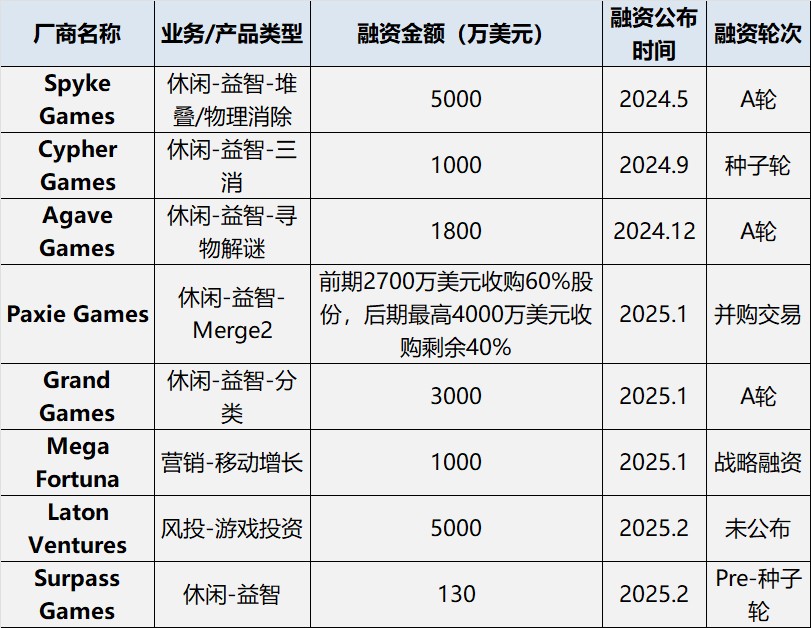
However, in this environment, there have been quite a few financing cases for casual games in the past six months, and interestingly, they are mainly concentrated among Turkish teams.
The author found that from mid-2024 to February this year, several mobile game companies and related enterprises in Turkey announced the completion of new rounds of financing or merger and acquisition transactions, with the vast majority of transaction amounts exceeding ten million dollars.
The author has compiled statistics showing that in less than a year, there have been 8 financing transactions in the Turkish gaming market, as shown in the figure below.
In the past year, financing transaction records of Turkish mobile game-related companies | Data source: Google, Crunchbase
Another 4 dark horses have emerged, with a single product attracting 3.4 billion overseas; there are still opportunities in this track
It is well known that mini-games are very popular in China in 2024. This trend is still ongoing, and relevant reports predict that by 2025, its scale will increase to 61 billion.
The actions of peers also reflect this. Previously, executives from NetEase and Zhongyou Game entered the market through entrepreneurship, followed by ACG teams transforming to develop mini-games. Additionally, listed companies such as Caesar Culture plan to sell 14 properties worth a total of 255 million yuan and reinvest the funds into mini-games and other fields to explore the company's second growth curve.
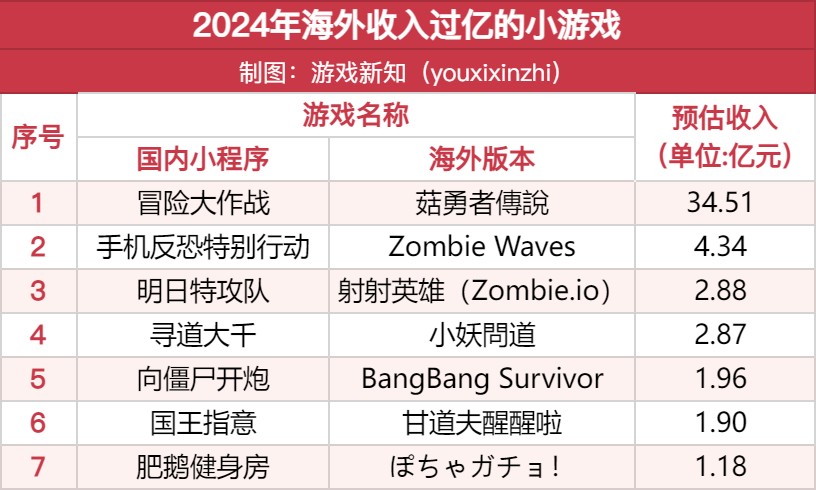
The domestic market has also had a significant impact on overseas markets. According to statistics, in 2024, 7 mini-games generated over 100 million in revenue overseas. Although the number is not large, a single product can reach as high as 3.4 billion; furthermore, it can be observed that the overseas bestseller list is seeing an increasing number of mini-game-like products, indicating that there is still considerable space for mini-games to explore overseas.

Recently, the Vice President of Overseas Business at 4399 mentioned in a dialogue that (mini-game) overseas distribution is simpler than in China (the domestic market is too competitive), and each manufacturer can find suitable regions and categories overseas; moreover, the development opportunities are relatively larger, and the overall monopolistic effect at the top is not as pronounced as in China. As 2025 begins, another 4 "new faces" have achieved certain results in this track.
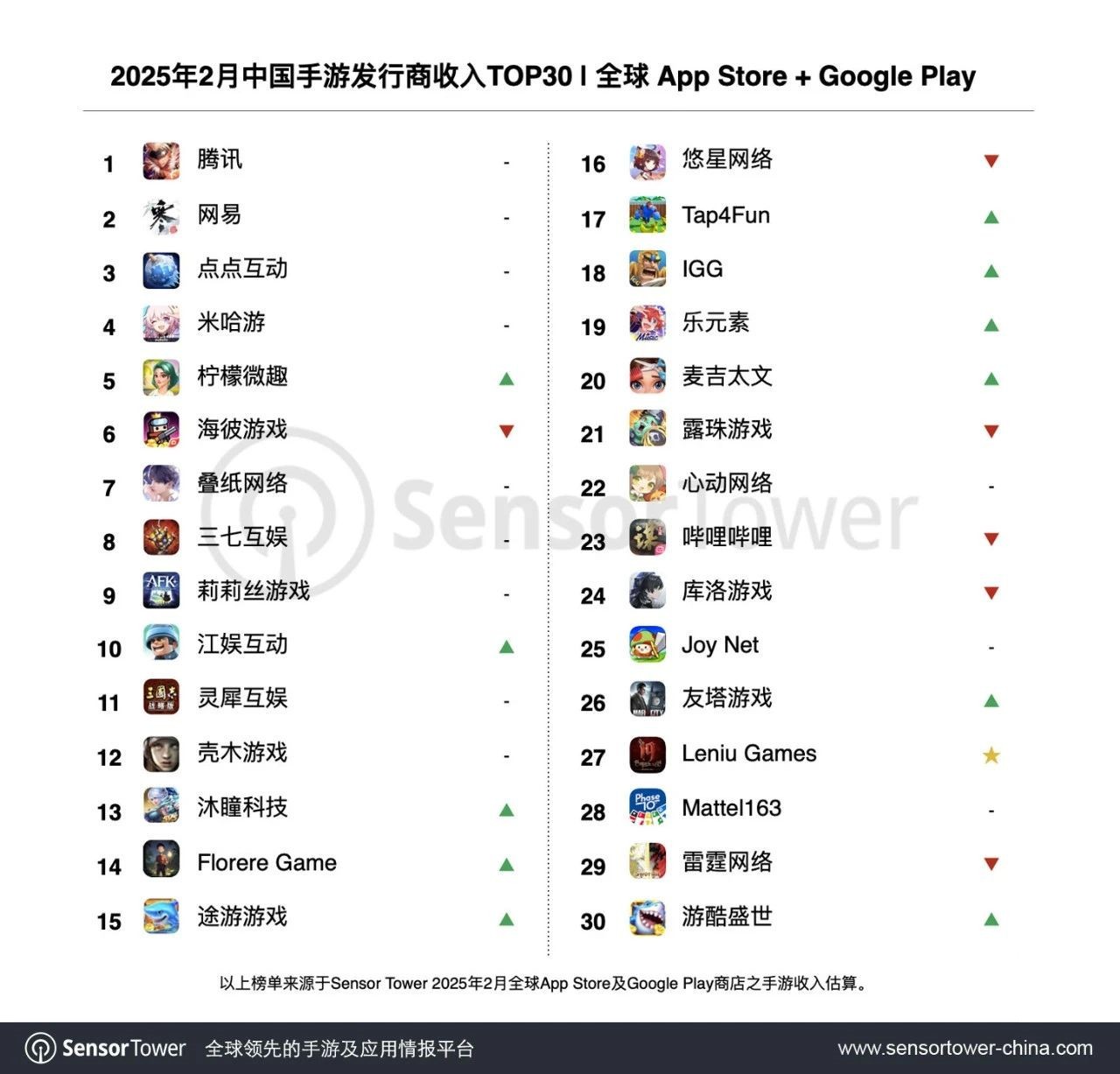
February 2025 Global Revenue Ranking of Chinese Mobile Game Publishers
With the arrival of the Lunar New Year, NetEase's social party mobile game "Egg Party" launched a collaboration with the classic animation "Hulu Brothers," introducing exquisite appearances of the Hulu Brothers. At the same time, the "Egg Party" x "Milk Dragon" collaboration also kicked off on January 29, with the Milk Dragon red envelope rain event running from January 28 to February 4. On January 29, the daily revenue of "Egg Party" quickly climbed to its highest value in nearly 12 months, with a 22% revenue growth in February, securing the publisher's position as the second highest in revenue ranking.
The 4X strategy mobile game "Whiteout Survival" continues to maintain strong profitability, with a 4% month-on-month revenue growth in February, driving a 4% increase in revenue for Diandian Interactive, securing the third position in the publisher revenue ranking.

The synthesis mobile games "Gossip Harbor" and "Seaside Escape" from Lemon WeiQu also maintained a growth trend, with month-on-month revenue increases of 8% and 10%, respectively, contributing to a 9% month-on-month revenue growth for the publisher in February, advancing one position to the fifth place in the revenue ranking In the field of synthetic mobile games, Lemon Microfun continues to be the champion of this sector, with February revenue reaching 3.5 times that of the second-ranked publisher.
The leading games from Jiangyu Interactive, "Top Heroes" and "Pocket Warriors," saw February revenues increase by 7% and 26% month-on-month, respectively, driving the publisher's revenue up 13% compared to the previous period, ranking it 10th on the revenue list. "Top Heroes" surpassed 10 million global downloads in late January, and its February revenue experienced a 7% month-on-month growth, bringing its total revenue close to $200 million on the occasion of its first anniversary.
Florere Game's apocalyptic-themed 4X strategy mobile games "Dark War Survival" and "Last Z: Survival Shooter" saw revenue growth of 7% and 69% in February, respectively, resulting in an 18% increase in publisher revenue, setting a historical high and advancing 3 places to 14th on the revenue list. "Last Z: Survival Shooter" is currently only available on the Google Play platform, quickly attracting players with its popular dodge-shooting gameplay and trending advertising materials, while providing a deeper gaming experience through a blend of character collection and resource management strategy gameplay.
During the Spring Festival, Le Element's match-3 mobile game "Happy Match" launched numerous welfare gift packages. Coupled with casual games becoming an important way for people to socialize and entertain during the holidays, the game's revenue rose by 19% in February, boosting Le Element's revenue by 9% and advancing 5 places to 19th on the list.
Leniu Games launched its new hardcore combat MMORPG mobile game "I9:인페르노 나인" (I9: Inferno Nine) in the South Korean market in mid-January, achieving outstanding performance and ranking second in February's South Korean RPG mobile game revenue list, only behind "Lineage M," while also claiming the title of this period's overseas mobile game revenue growth champion, leading to a 110% surge in publisher revenue and marking its first entry into the revenue list at 27th place.
Outside the list, the Chinese mobile game publishers that made it into the global revenue TOP 100 are: HaoPlay, Competitive World, Youka Network, 4399, and Le Duo Games, totaling 34 companies.
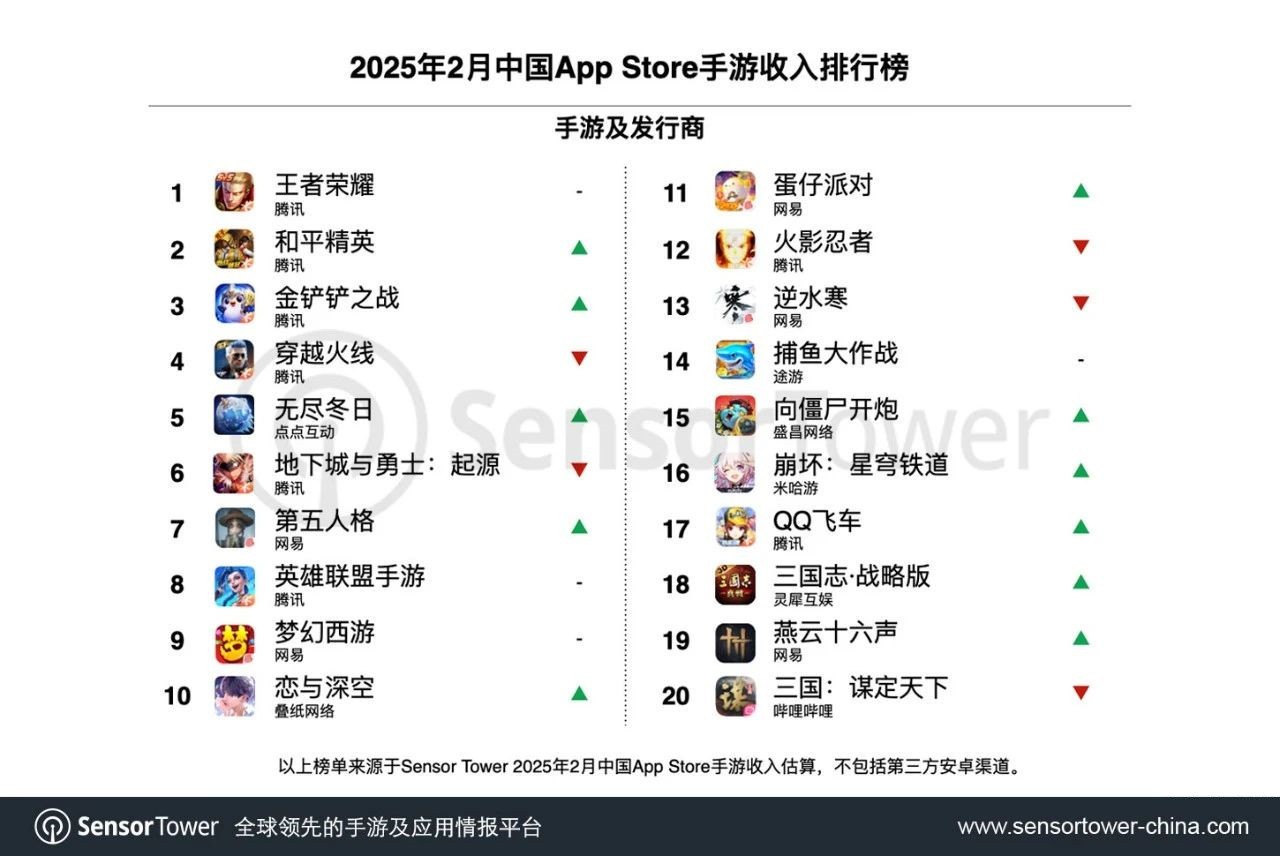
China App Store Mobile Game Revenue TOP 20
Tencent's "Honor of Kings," "Peacekeeper Elite," "Gold Shovel Battle," and "Crossfire" occupy the top 4 spots on the China App Store mobile game revenue list.
In February, "Honor of Kings" maintained stable profitability, with the launch of new skins such as "Cang," "Xishi," and "Di Renjie" helping the game achieve an 8% increase in revenue in the Chinese iOS market, retaining its position as the revenue champion for this period.
Driven by events such as Valentine's Day, "Endless Winter" saw a 23% month-on-month increase in revenue, allowing the Chinese iOS market revenue to surpass that of the United States once again With the launch of the new character "Aglaea" in the 3.0 half-card pool and the release of the new 3.1 version "The Opening of the Door, The End of the Throne," miHoYo's "Honkai: Star Rail" saw a month-on-month revenue increase of 11%, returning to the 16th position on the charts.