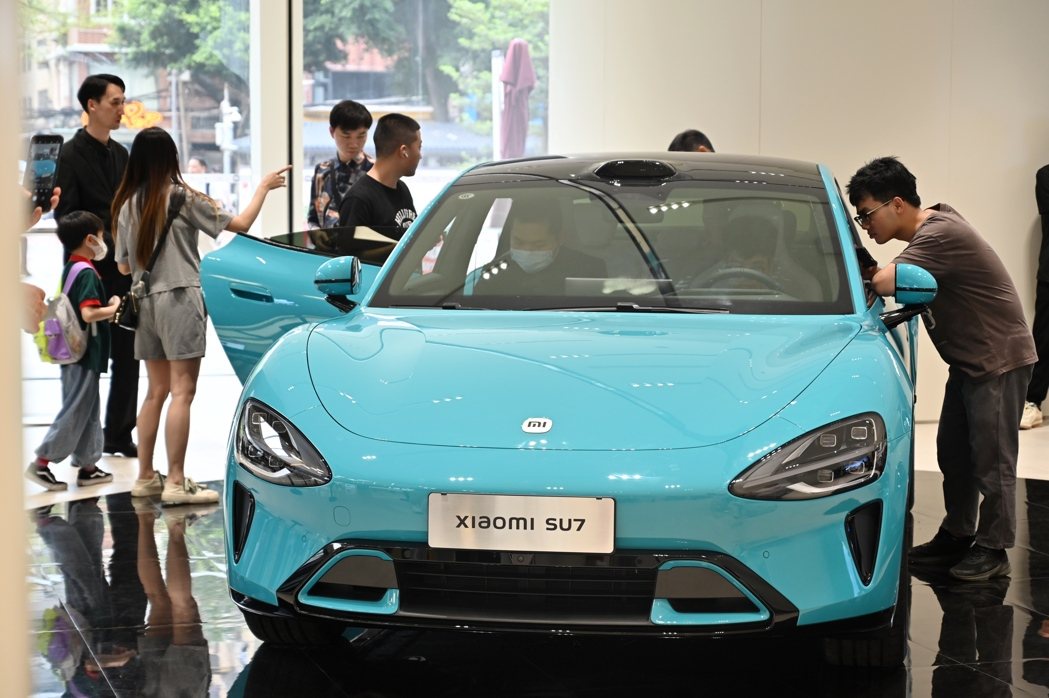
Xiaomi cars lose 200,000 each? You calculated wrong, it's a profit of 200,000 each

Xiaomi Automobile sold 136,854 units in 2024, with revenue of 32.8 billion yuan and a loss of 6.2 billion yuan, resulting in an average loss of 45,000 yuan per vehicle. However, based on gross margin calculations, each vehicle actually earns 44,000 yuan. Xiaomi's gross margin has been increasing quarter by quarter, with an annual gross margin of 18.5%. As sales volume increases, the allocation of initial investment costs will decrease, leading to significant profit potential in the future
Xiaomi recently announced its 2024 financial report, showing that it sold a total of 136,854 vehicles in 2024, generating revenue of RMB 32.8 billion, with a loss of RMB 6.2 billion. This translates to an average loss of RMB 45,000 (approximately NT$ 205,000) for each vehicle sold. However, Chinese media calculated another set of figures, indicating that based on gross profit margin, Xiaomi actually earns RMB 44,000 (approximately NT$ 200,000) for each vehicle.
According to Sina Finance, once Xiaomi's financial report was released, many uninformed netizens began to criticize, saying that since Xiaomi Chairman Lei Jun is losing money on car manufacturing, why continue making cars? Losing RMB 45,000 on each vehicle is like doing charity... It would be better to stop production and just give everyone RMB 45,000 instead. Some people suspect the data is fabricated, while others believe it is just playing with words... Of course, there are also those who are looking forward to when Lei Jun will finally make a profit in the automotive business.
In fact, newly established car companies invest heavily in early-stage research and development, often amounting to hundreds of billions, so they allocate costs according to financial rules. Regardless of how many vehicles you deliver in a year, the costs to be allocated remain high. When you deliver fewer vehicles, the cost allocated to each vehicle is higher, leading to losses. For example, if you invest RMB 10 billion and only sell 100 vehicles, the cost allocated to each vehicle is RMB 100 million, resulting in losses. However, if you deliver 1 million vehicles, the allocated cost per vehicle drops to RMB 10,000, making it much easier to turn a profit.
Whether new car manufacturers make money mainly depends on gross profit margin. The gross profit of a vehicle refers to the profit remaining after subtracting costs directly related to production (such as raw materials, labor, manufacturing costs, etc.). Data shows that Xiaomi's gross profit margin in Q2 was 15.4%, in Q3 it was 17.1%, and in Q4 it was 20.4%, with an annual gross profit margin of 18.5%.
In 2024, Xiaomi delivered 136,854 vehicles, generating revenue of RMB 32.8 billion, with an average price of around RMB 240,000. The gross profit margin is 18.5%, which means the gross profit per vehicle is as high as RMB 44,000. This is the actual profit Xiaomi earns from each vehicle sold. Once Xiaomi's vehicle sales reach a certain scale, the allocated cost of early-stage investments will decrease, and the profits will be astonishing. This is why Xiaomi's target sales volume for this year is to increase more than twofold to 300,000 vehicles.
In comparison, Li Auto's gross profit margin for 2024 is 20.3%, Leapmotor's is 8.4%, XPeng's is 9.9%, Nio's is 14.3%, while Tesla's gross profit margin is 17.9%. With this comparison, it becomes clear that Xiaomi's vehicles are actually profitable; it's just that the initial investment is too large, leading to high average allocations, which makes it appear to be a loss. In reality, making a profit is just around the corner.