LI NING falls behind, the secrets and lessons behind a drop of over 200 billion

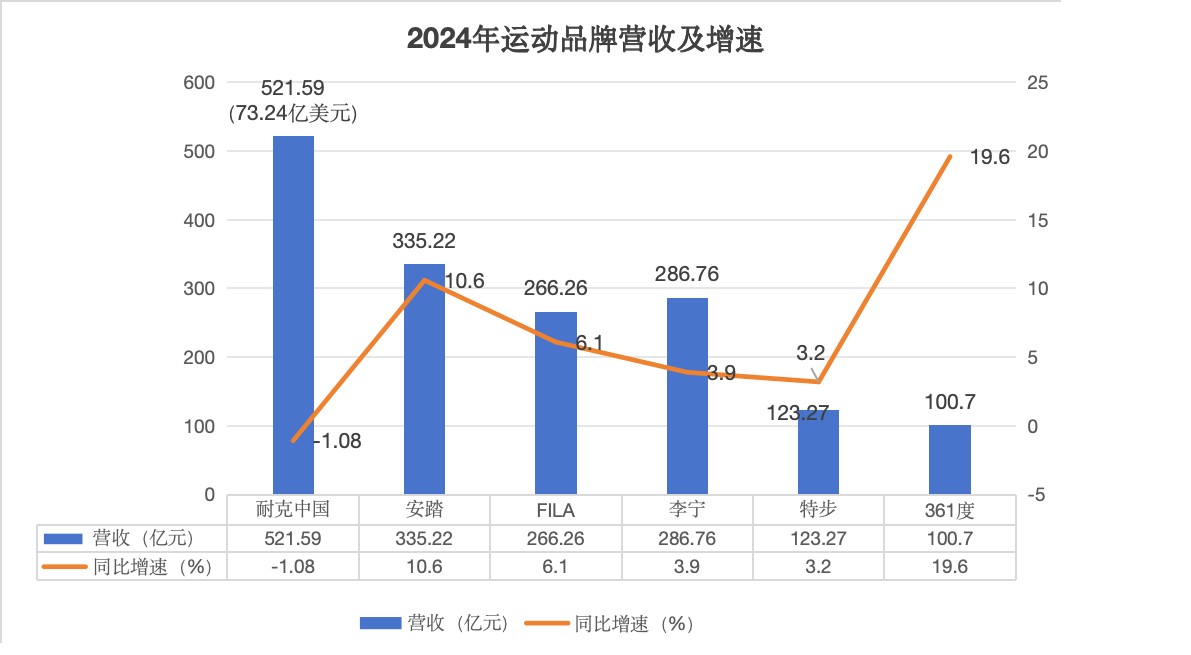
LI NING performed poorly in its 2024 financial report, with revenue growth of 3.9% to CNY 28.676 billion, but net profit decreased by 5.5% to CNY 3.013 billion. Compared to other domestic brands, LI NING's market value has evaporated by over HKD 230 billion, a decline of 85%. Although it once achieved rapid growth due to innovative design and the national trend, it now faces a transformation dilemma
Author 丨 Liao Zilin
Editor 丨 Dong Jinpeng
Among Chinese sports shoe and apparel brands, Li Ning was the last to announce its 2024 financial report. 361 Degrees' revenue broke the 10 billion yuan mark for the first time, Xtep's net profit grew by 20% to reach a historical high, Anta and Amer Sports jointly created a 100 billion yuan sports goods group, while Li Ning delivered an annual report that was "mixed."
- Increased Revenue but Decreased Profit — Revenue for 2024 rose by 3.9% to 28.676 billion yuan, with e-commerce business revenue growing by 10%, becoming the fastest-growing channel, while direct sales channel revenue fell from 6.907 billion yuan in 2023 to 6.883 billion yuan; net profit decreased by 5.5% year-on-year to 3.013 billion yuan.
Nike China's revenue is the annual income as of November 30, 2024, converted to RMB at the average exchange rate for that year.
- Secondary Market Stock Price Fluctuations — The market reacted quickly, and investors could no longer hold back. On March 28, at the opening, Li Ning's Hong Kong stock price rapidly declined, dropping by 4.07% within 3 minutes, with the latest market value today only at 41.3 billion HKD. Compared to the peak period in 2021 (market value of about 280 billion HKD), the market value has evaporated by over 230 billion HKD, a decline of 85%.
In recent years, the market value of the four major domestic sports brands has all adjusted, with Li Ning experiencing the largest decline. In 2021, Anta's market value reached 500 billion HKD, but has now fallen to around 240 billion HKD, a decline of over 50%. In the same year, Xtep's market value reached 42.9 billion HKD, but now only remains at about 14 billion HKD, a decline of nearly 70%. The peak market value of 361 Degrees occurred on the day of the 2025 financial report release, after revenue broke 10 billion, the market value also reached a new high of 10.09 billion HKD.
Once upon a time, Li Ning achieved accelerated growth through innovative design, the trend of national brands appealing to younger consumers, and a professional product layout, coupled with a rebound in sports consumption after the pandemic. In 2021, Li Ning's revenue was 22.6 billion yuan, and net profit was 4 billion yuan, earning it the title of "Light of Domestic Products."
However, the good times did not last long, and a decline soon followed. Industry insiders summarize this as "succeeded due to national trends, failed also due to national trends." Why has the brand transformation of Li Ning, driven by national sentiment, not been so successful? Referring to the growth paths of domestic and foreign sports brands, what new solutions does Li Ning, which has experienced the largest market value decline, have for the future?
Besides being expensive and national trend-oriented, what other impressions do you have of Li Ning?
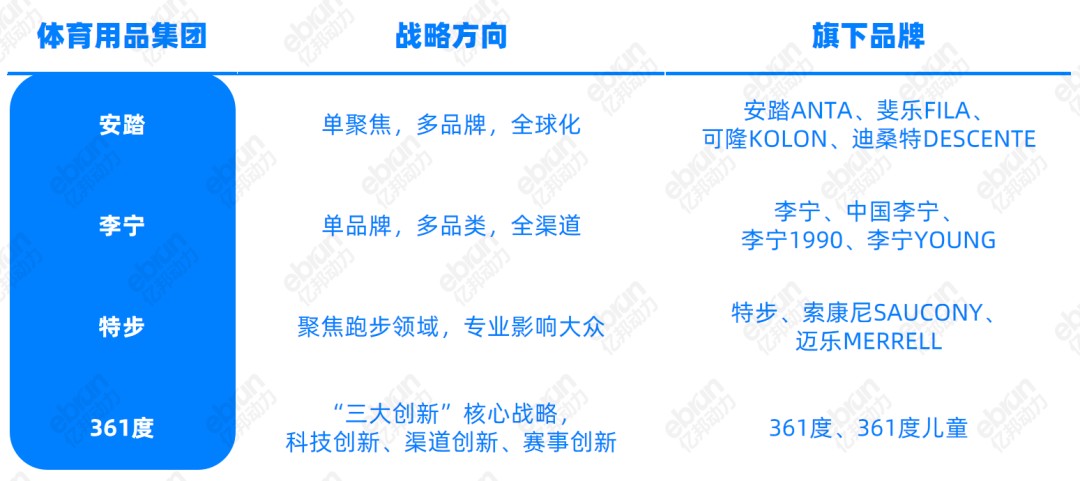
Whenever discussing the rise and fall of Li Ning, observers often attribute it to the misstep of a "single brand" strategy. Unlike Anta and Xtep's multi-brand strategy, Li Ning has long adhered to a "single brand, multiple categories, all channels" strategy. The former seems to contradict the judgment of positioning theory founder Trout, which states, "For each additional category in brand extension, consumer memory strength declines by 30%," from the very beginning
Image source: YiBang Power
Li Ning is a follower of Nike's path. Nike Group's revenue exceeds $50 billion, with the Nike brand holding an absolute dominant position. This to some extent indicates that Li Ning has not yet reached the ceiling of growth under a single brand strategy, and its significant performance decline should not be attributed to this.
Rather than attributing the mistakes to a single brand strategy, it is more accurate to say that Li Ning's brand value connotation is relatively vague.
Founded in 1990, Li Ning has changed its brand slogan and logo three times to date. The earliest slogan was "Anything is Possible." After CEO Zhang Zhiyong led a youth-oriented and high-end reform in 2010, it was changed to "Make The Change," along with a new logo that emphasized a sense of sports and modernity. In 2015, Li Ning restarted "Anything is Possible" and reverted to the old logo version.
Changing the brand slogan and logo is just a microcosm; behind it is the radical and frequent changes that have led to a vague brand positioning and chaotic market perception. In contrast, Nike has integrated the spirit of sports into its brand soul over decades, inspiring global consumers to engage in sports and challenge their limits through the iconic slogan "Just Do It." When consumers think of Nike, they have a clear understanding.
Around 2012, Li Ning's inventory crisis was also caused by the rebranding. Old logo products became inventory that needed to be cleared quickly in a short time; while new logo products were significantly marked up, resulting in the disappearance of the cost-performance advantage, causing Li Ning to lose competitiveness in third- and fourth-tier markets. Almost simultaneously with the rebranding, Li Ning attempted to integrate inefficient domestic retailers and opened stores in regions such as Hong Kong and the United States, which further caused inventory backlog among distributors, leading to a large number of store closures after 2012.
Similar issues also plagued Li Ning's sub-brands, such as Li Ning, China Li Ning, Li Ning 1990, LNG, and Li Ning YOUNG. Consumer research by YiBang Power found that very few people could accurately articulate the differences between Li Ning's sub-brands. The blurred boundaries of sub-brand positioning make it difficult to clarify the core brand value.
This point is often compared with Anta. Different brands under Anta Group target different markets and have clear positioning. When mentioning the mass sports brand "Anta," people think of "domestic goods" and "high cost-performance." When it comes to the fashionable sports brand "FILA," consumers associate it with their favorite celebrities, and the brand is evaluated as "good design, trendy, and comfortable."
However, Li Ning often leaves people with the impression of "expensive," "national trend," and "influencer." YiBang Power found that the stories related to these Li Ning sub-brands almost all occurred after the rise of the national trend in 2018, which can also explain the reasons for these labels' formation.
In 2018 and 2019, Li Ning first appeared on the runway of mainstream fashion weeks in New York and Paris, quickly rising to fame with "national trend." During the "Xinjiang Cotton Incident," Li Ning wrote "Xinjiang Cotton" on its labels, and under the nationwide support for domestic goods, it welcomed a shining moment, achieving both revenue and profit growth In 2021, Li Ning's revenue exceeded 20 billion yuan for the first time, a year-on-year increase of 56%, with a net profit of 4 billion yuan, a year-on-year increase of 136%, marking the fastest growth since its listing. In the capital market, Li Ning reached a market value peak of HKD 280 billion in 2021.
Amid the market's enthusiastic support, Li Ning began to promote its high-end transformation—launching the high-end fashion sub-brand "China Li Ning" and the professional sports children's clothing brand "Li Ning YOUNG" in 2018, and establishing the independent high-end sports fashion brand "Li Ning 1990" in 2021.
High-end brands require high-end products to support them, and high-end products need higher added value, which includes factors such as tone, design, and technology. However, before feeling sufficient added value, Chinese consumers have formed the impression that brands like China Li Ning and Li Ning 1990 are "increasingly expensive." According to incomplete statistics, from 2019 to 2022, the average price of Li Ning's products on Tmall increased by 40%.
Previously, the external perception of Li Ning was that its design capabilities were outstanding, but in recent years, there have been frequent "missteps" that lowered the brand's premium. In 2022, Li Ning's new winter cotton clothing was criticized for its colors and styles resembling Japanese military uniforms, triggering negative emotions among the public. Similar incidents have occurred more than once, such as the "tomato scrambled eggs" jacket color scheme that was ridiculed for being extremely ugly, and design elements from fashion week being accused of plagiarism.
Combining Chinese elements with its design has certain characteristics, but China Li Ning has always struggled to create a sense of high-end and high originality in its designs, leading more and more consumers to feel that it is "not worth it." For a consumer with a shopping budget of 1,000 yuan, why should they buy Li Ning instead of Nike or Adidas? Apart from national sentiment in consumption, Li Ning has yet to find a reason in its products themselves, at least in terms of design capabilities that can convince consumers.
Shifting to High Margins and Trend Marketing, Insufficient R&D Investment Misses New Trends
Unlike other consumer goods, the sports and outdoor industry has a certain technological attribute. In a long economic cycle, the stronger the professional attributes of a brand or product, the stronger its ability to withstand cycles. Specifically, the industry has shown a trend of "weakened demand for sports leisure categories, while professional functional products are more resilient."
Industry insiders generally believe that the professional technological attributes of sports shoes are stronger than those of clothing. This has been confirmed in the financial reports of multiple companies in 2024. In the past year, Xtep International's clothing revenue declined by 5.7% year-on-year in 2023, while footwear revenue still grew steadily by 15.9%. Anta's footwear revenue growth (15.3%) was higher than that of clothing (12.3%), and 361 Degrees' adult footwear revenue growth (22.1%) also significantly outpaced clothing revenue growth (15.1%).
Because of this, professionalism and technological advancement are key points of competition among sports brands, especially in footwear. Li Ning's R&D expense ratio from 2021 to 2024 was 1.8%, 2.1%, 2.2%, and 2.3%, respectively. Although there has been a gradual increase after the surge in revenue and market value in 2021, in contrast, Anta's R&D expense ratio has remained between 2.3% and 2.8% for nearly five years, while Nike and Adidas' R&D expense ratios during the same period were between 5% and 10% Low R&D investment directly leads to insufficient technological content in products, making it difficult to withstand market tests. Taking the core technology of sports shoes as an example, for the first two to three years, LI NING primarily focused on "Bèng Technology," failing to form a differentiated advantage compared to competitors, and even lagging behind Anta (Nitrogen Technology) and Peak (Dynamic Technology) in key performance areas.
With the support of "Dynamic Technology," Peak's shoe materials can intelligently adjust their hardness based on the state of movement (becoming harder to provide feedback during breakthroughs and softer for cushioning upon landing), making the cushioning efficiency highly matched with the sports scenario. In contrast, LI NING's "Bèng Technology" only emphasizes maintaining resilience at -40℃ extreme cold but does not mention intelligent response capabilities, and its applicable scenarios are relatively singular, making it difficult to meet complex sports demands.
This comparison can also be reflected in the "numerical improvement of core technology in cushioning and rebound." According to official information, Anta's "Nitrogen Technology" uses nitrogen-foamed PEBA materials and A-FlashFoam wormhole technology, which significantly improve product performance by 20% (rebound) and 66% (cushioning), respectively. While LI NING's "Bèng Technology" emphasizes "high resilience" and dynamic durability (with a deformation rate of only 0.74%), it has not disclosed specific rebound numerical improvements, often leading outsiders to believe that its technological content is insufficient.
Similar to shoes, LI NING's application of technology in clothing is also very limited. Previously, LI NING's clothing products focused more on appearance design, with insufficient development of functional fabrics (such as temperature control and breathability), failing to meet the demands of professional sports scenarios. At the Paris Olympics, members of the Chinese table tennis team wore "LI NING" brand professional sportswear "Dragon Suit" during competitions, but some netizens questioned the poor sweat absorption of the clothing, which clung tightly to the athletes' bodies when wet, causing the LI NING brand to trend on Weibo for negative reasons.
The reason for this is that after gaining popularity at New York Fashion Week in 2018, LI NING officially shifted to trendy marketing, with the proportion of fashion SKUs increasing from 30% to 50%, and the revenue share of clothing gradually exceeding that of shoes, reaching a peak of 52.4% in 2021, about 10 percentage points higher than that of shoes. While LI NING tilted towards high-margin trendy products, Anta and Xtep continued to focus on professional sports, creating one blockbuster product after another with core technology.
Once a strong category, "basketball shoes," LI NING is also continuously losing market share. Although the LI NING Wade Classic series attracted attention due to the controversy over the "WOW6" design, it subsequently lacked breakthrough technological updates, with frequent user complaints about issues like "glue separation and broken seams." In recent years, LI NING has lacked sponsorship and exposure at international top events like the Olympics, leading to a steady decline in its professional basketball shoe category.
In contrast, 70% of Anta's shoe products apply core "Nitrogen Technology," reinforcing its professional sports brand image by sponsoring NBA star Klay Thompson (KT series), the Winter Olympics, and other top IPs, continuously capturing market share. In 2023, after the appointment of new CEO Xu Yang, Anta secured a partnership with NBA superstar Kyrie Irving, launching a co-branded Kyrie series basketball shoe that sold out across various channels
Changes are quietly happening, diverse competition continues
The sports industry has a certain closed nature, and competition is quite diverse; it cannot achieve long-term superiority merely through correct brand strategic positioning, leading channels, or single technological advancements. Conversely, for Li Ning to achieve a rebound, it must also focus on these aspects.
After experiencing significant ups and downs, Li Ning has begun a series of inward-looking self-reforms. In a previous earnings call, Co-CEO Qian Wei emphasized that "professional sports are core," controlling the revenue proportion of Li Ning China (fashion sports products) to within 5%, concentrating resources on developing core categories such as basketball and running.
The changes that have already occurred are reflected in the 2024 annual report of Li Ning, which shows that the revenue proportion of more professionally technological footwear has reached 49.87%, while apparel revenue has decreased by 2.9% year-on-year, creating a gap of about 7% between the proportions of total revenue from footwear and apparel.
Li Ning is also continuously striving for professional technology. Last year, Li Ning launched the midsole technology "Super Bouncing," which has been upgraded four times over six years from "Bouncing Technology," successfully identifying the technical differentiators. This is achieved through dual innovation in material and process preparation technology, with the energy return rate of Super Bouncing materials reaching 89%, effectively reducing energy loss during running and jumping activities.
At the same time, the performance of "Super Bouncing" in terms of rebound and durability is also outstanding. The rebound ratio of Super Bouncing reaches 1271.42, achieving high rebound in shoe materials; after 40,000 dynamic compression tests (equivalent to the intensity of two marathons or more than ten basketball games), the deformation after 24 hours is only 0.74%, while traditional EVA materials have a deformation rate of about 20%.
In addition, the newly launched "Carbon Core" assist system and GCU ground control system in 2023, with the Carbon Core assist system winning the "2024 German iF Design Award." In July 2024, Li Ning China will also launch the "Chuang" designer platform to reserve high-quality trendy design power for the sports leisure business.
Not only Li Ning, but the market environment is also quietly changing. Li Ning's competitors are also continuously building strength. In 2024, in addition to core sports like running and basketball, rope skipping, outdoor activities, and skiing are new growth sports scenarios that Anta, Xtep, and 361 Degrees are targeting, attempting to cultivate new blue ocean markets around segmented sports.
361 Degrees has upgraded its children's running shoes with flagship technologies such as elastic spring technology and hydrogen-oxygen technology, adding innovative sports technologies like soft elastic column technology and shock-absorbing rubber technology, focusing on different sports scenarios like rope skipping, running, and basketball, launching products like "Elastic Spring Running Shoes 4.0," "Wind Basketball Shoes," and "Flash Antelope 5.0 Jump Rope Shoes," continuously solidifying its positioning as "youth sports experts."
Anta Group's Descente and Kolon are focusing on skiing and outdoor sports. In 2024, Kolon strategically expands the proportion of footwear products and launches a series of iconic footwear products focused on two core outdoor scenarios: hiking and camping, including MOVE ALPHA hiking shoes and the KS-2000 cross-generation hiking shoe series. Descente is deeply cultivating high-end skiing and high-end golf tracks, with breakthrough professional technological innovations in ultra-light down and running series achieving results last year Offline, sports brands have reached new heights, evolving from eliminating distributors and emphasizing direct-to-consumer (DTC) reforms to a "thousand faces for a thousand people" approach in stores. Beyond standard store types, there is a demand for larger store spaces and more precise target demographics. The industry trend has shifted from brands replicating the same store in different cities to opening different stores in various cities.
Anta's offline store types are the most diverse. The main Anta brand categorizes its offline stores into five levels: Arena, Palace, Elite, AES (Standard), and AS (Basic Specialty Store), thereby covering different consumer groups. On this basis, the "Anta Champion" stores have fully transitioned to outdoor sports and have also launched a comprehensive brand collection store called "Super Anta" (the Uniqlo of the sports world), as well as SNEAKERVERSE (SV Anta Collection), which focuses on mid-to-high-end trendy shoes. Data shows that some "Super Anta" stores have achieved store efficiency three times that of traditional stores.
As the industry becomes competitive in first-tier cities, 361 Degrees has carved out a steep growth curve in third and fourth-tier markets. Last year, 75.9% of 361 Degrees' 5,750 stores continued to focus on cities at the third tier and below, with average store size expanding from 138㎡ in 2023 to 149㎡, continuously opening larger and more flagship stores.
In December last year, the first 361 Degrees Super Product Store (focusing on extreme cost-performance) opened in Shijiazhuang, Hebei. Subsequently, distributors quickly opened three more 361 Degrees Super Product Stores in Huizhou, Guangdong, Chengdu, Sichuan, and Nanning, Guangxi. The Super Product Store, as an emerging channel format, aims to establish a self-selection model for sports products with extreme cost-performance, capturing new market opportunities.
Under the Xtep Group, Saucony, which surpassed 1 billion yuan in revenue for the first time last year, has 145 stores in mainland China. Among the newly opened stores last year, two are particularly noteworthy—the Shenzhen concept store opened in September and the Beijing city experience store opened in November.
The Shenzhen concept store features a brand-new "Fission Moon" visual space design, showcasing its core running shoe technology and paying tribute to the historic moment in 1965 when astronauts wore Saucony space shoes to complete the first spacewalk. The design at the entrance of the Beijing city experience store continues the lunar concept while incorporating iconic running routes in Beijing, creating an immersive shopping experience space.
From competing domestically to going abroad, overseas expansion has become a new source of growth for sports brands. The Southeast Asian market is typically the first to be entered, with Anta already exceeding 200 stores in Southeast Asian countries by 2024. In March, it gradually secured a foothold in the European and American markets with the release of the second generation of the Irving series sneakers. 361 Degrees has opened a total of 1,365 offline sales outlets overseas and will open its first overseas direct store in Kuala Lumpur, Malaysia, in January 2025.
In China's trillion-yuan sports goods market, the current brand concentration is still relatively low, and the absolute leader has yet to be determined, providing unlimited opportunities for Anta, Li Ning, Xtep, and 361 Degrees, which are striving for success. Looking to the future, competition in the sports goods industry continues, and the future winners will undoubtedly belong to those with leading comprehensive capabilities in technology, channels, services, and marketing This article is reproduced from Yibang Power (ID: iebrun) with authorization. All rights reserved by Yibang Power. Unauthorized translation or reproduction is prohibited.
The "2024 China Consumer Brand Growth White Paper" is hot-selling, priced at 398 yuan with free shipping to your home!
In the past year, the global consumer market has shown unprecedented complexity after experiencing challenges from economic fluctuations and opportunities and changes brought by technological iterations. Beneath the surface of overall slowing growth, a large number of structural opportunities remain to be explored. Currently, enterprises need to cope with short-term survival pressures while also laying out long-term value, facing increasingly difficult challenges. Adapting to trends and reshaping mental strength will become the core strategy for consumer enterprises.
The "2024 China New Consumer Brand Growth White Paper" is based on over 8,000 consumer surveys, insights from more than 100 experts, and in-depth analysis of over 3,000 companies, decoding the essence of the market from eight dimensions and anchoring future trends from six perspectives. This 200,000-word professional report will serve as a "barometer" for the iteration of the consumer industry and will also be a strategic guide for enterprises to break through existing constraints and reshape growth momentum.
Click here or the image below to purchase, with free shipping to your home!