


"The King of Beauty" L'Oréal has bigger ambitions

Strengthen competitiveness in China
Author | Zhou Zhiyu
Editor | Zhang Xiaoling
L'Oréal North Asia and China Public Affairs President Lan Zhenzhen still remembers that 28 years ago, with the dream of "giving every Chinese woman a lipstick," L'Oréal entered the Chinese market.
Today, the ambition to become the number one in the Chinese beauty market has been realized. The small office that once housed a dozen people has expanded to 15,000, and L'Oréal's brands in China have grown from the initial 3 to now 32.
At the strategic communication meeting on March 31, L'Oréal's executive team laid out a more ambitious map: by 2030, the number of Chinese consumers reached should be 150 million. Currently, this figure is 100 million.
A 50% increase in the number of people reached over five years is how this century-old French beauty giant is reinterpreting the Chinese market.
Faced with the dramatic shift in the Chinese beauty market from "premiumization" to "value for money," as well as the strong rise of domestic brands, L'Oréal is attempting to carve out new growth opportunities in the fiercely competitive Chinese market with a more aggressive localization strategy. Through deep localization, all-channel penetration, and technological empowerment, L'Oréal aims to find a stronger growth engine in the Chinese beauty market.
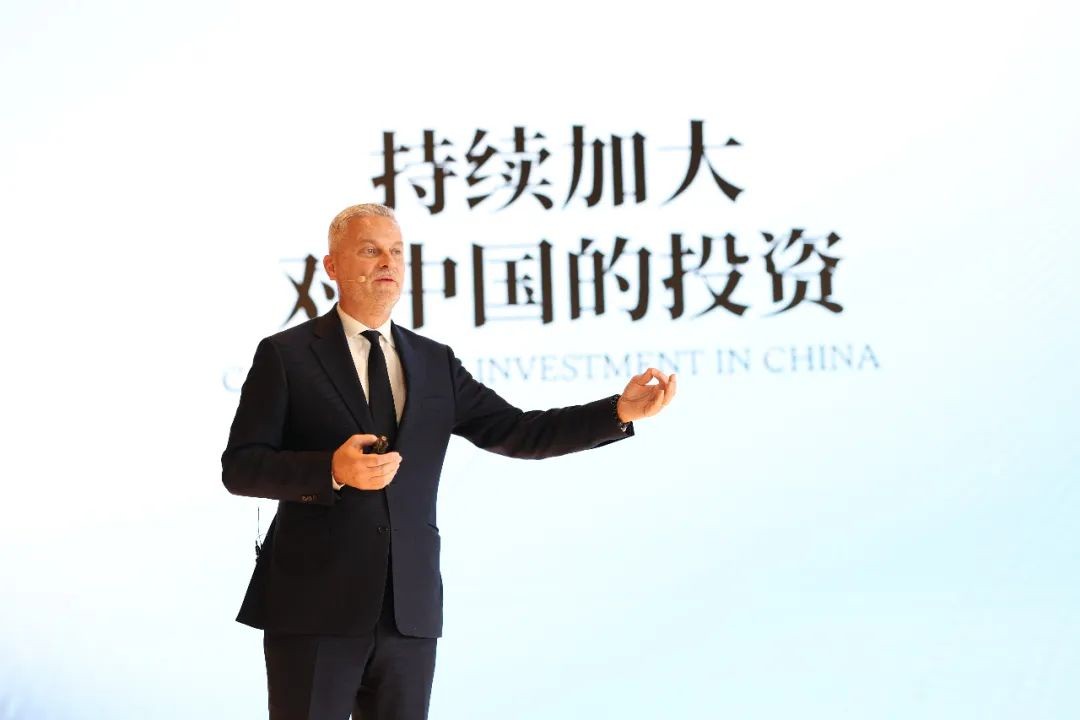
L'Oréal Group North Asia President and CEO Nicolas Boivin candidly stated that L'Oréal must face the significant changes in the Chinese beauty market. After several years of rapid growth, the growth rate of the Chinese beauty market is indeed slowing down. In this more challenging new environment, L'Oréal needs to refocus on adaptability and innovation, fully committed to facing new challenges.
Boivin also emphasized that the company will adhere to long-termism and continue to deepen its efforts in the Chinese market.
Behind this transformation is a redefinition of localization strategies by multinational giants and a reflection of the shift in the Chinese beauty market from incremental competition to stock competition.
Major Changes
Last year, the Chinese beauty market was undergoing a major transformation. Consumers shifted from pursuing "high price tags" to "efficacy first," with the growth of high-end beauty slowing down and the mass market embroiled in a price war.
According to data from the National Bureau of Statistics, the retail sales of cosmetics above the designated size in China are expected to decline by 1.1% year-on-year in 2024, marking the official entry into the stock era.
In this context, the performance of domestic and foreign beauty companies has shown differentiated results. High-end international brands generally faced difficulties, while domestic brands continued to capture market share and consumer mindsets.
From the financial reports, L'Oréal Group's global sales reached €43.48 billion, a year-on-year increase of 5.1%, setting a new historical high. However, the revenue in the North Asia region (including China) declined by 3.2% year-on-year, becoming the "stumbling block" in the group's growth engine.
This marks the first recorded negative growth for L'Oréal in the Chinese market, with a "slight single-digit decline." As a result, L'Oréal Group CEO Jean-Paul Agon described the Chinese market as "more challenging" during the earnings call. Nevertheless, it still maintains its position as the largest beauty group in China.
Compared to old rivals like Estée Lauder, L'Oréal's multi-brand matrix covers high-end beauty to mass product lines, diversifying risks. In the face of challenges to high-end brands, L'Oréal Paris has maintained its foothold in the mass market
L'Oréal China Deputy CEO and General Manager of the Luxury Cosmetics Division, Ma Xiaoyu
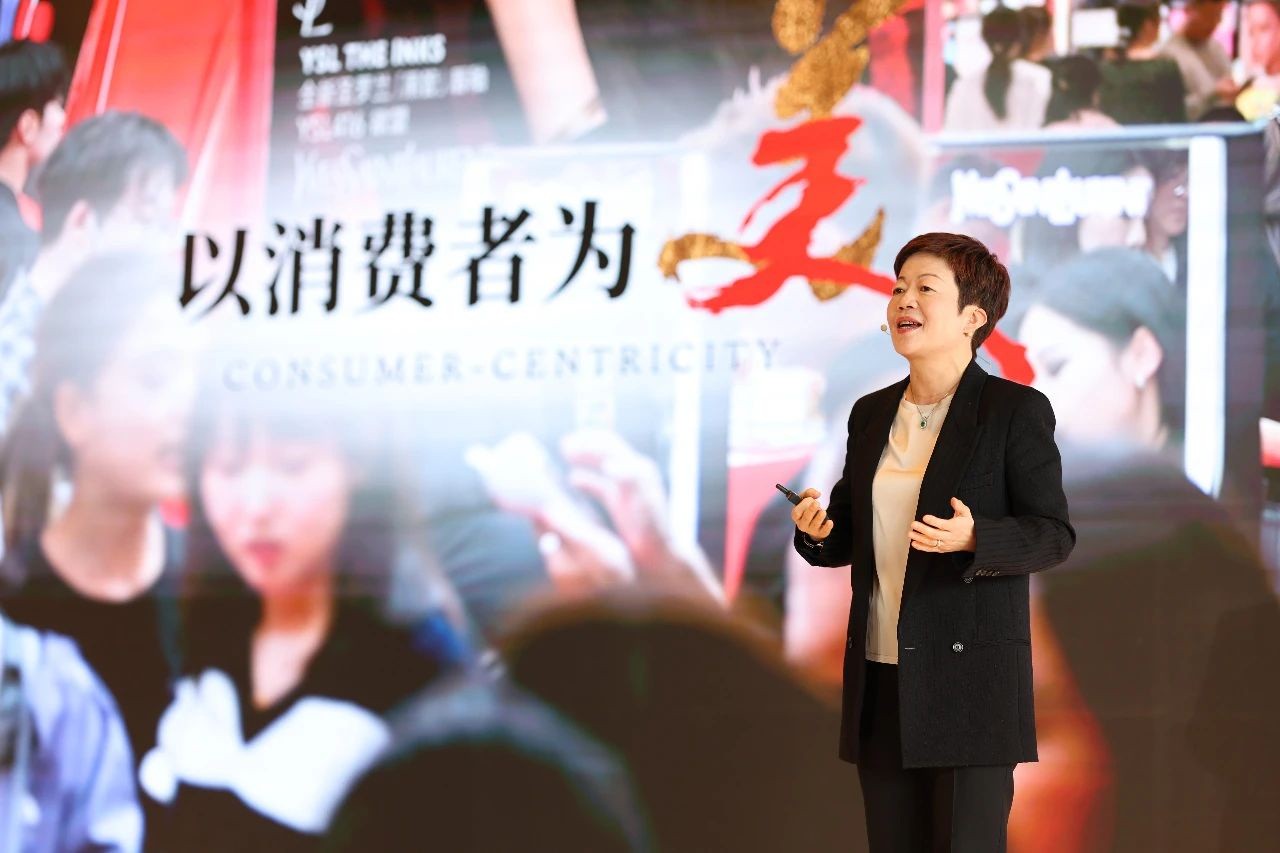
Ma Xiaoyu, Deputy CEO and General Manager of the Luxury Cosmetics Division at L'Oréal China, stated that the company's performance in China for 2024 is attributed to the contributions of its four major divisions.
Among them, the mass cosmetics division continues to perform excellently, driven by the world's largest beauty brand, L'Oréal Paris; the luxury cosmetics division maintains a leading market share under the guidance of Lancôme; the Dermatological Beauty Division occupies the largest share in its sub-segment and has achieved a historical high; and the Professional Hair Products Division, represented by Kérastase, is also highly favored by consumers.
Lan Zhenzhen pointed out that beauty is an eternal pursuit of humanity, shaping personal identity and belonging through cultural customs, supporting public physical and mental health from a daily life perspective, and contributing to consumption growth and job promotion on a socio-economic level.
This ensures the continued existence of industries centered around "beauty," although the definition of "beauty" will evolve with socio-economic development.
The changes in the Chinese beauty market cannot be ignored. Bo Wanshang stated that Chinese consumers are extremely professional and knowledgeable, and their consumption concepts are also undergoing transformation. A new era of Chinese consumers is emerging, characterized by three changes.
Specifically, consumers are becoming more cautious and rational, focusing on "cost-performance ratio"; value, quality, and efficacy have become core demands, pursuing a higher "quality-price ratio"; in addition, consumers seek brands that resonate culturally with them and establish deeper, more meaningful connections, similar to the immense success of films like "Ne Zha," where brands also need to create a "heart-price ratio."
In the face of disruptive changes such as intensified consumption stratification, the rise of domestic products, and channel reconstruction, L'Oréal, as a global beauty giant, also needs to provide targeted strategies to respond to the changing landscape.
Opportunities
L'Oréal hopes to discover new territories in the red ocean of the Chinese beauty market.
Ma Xiaoyu stated that in the past, L'Oréal China's assessment targets were more based on GMV and market share, but in the future, a new dimension of evaluation will be adopted.
An important assessment indicator is the number of consumers reached, which needs to grow from the current 100 million to 150 million by 2030.
Where will the incremental 50 million consumers come from? L'Oréal's answer lies in three core consumer groups: Generation Z, the mature population aged 45 and above, and male consumers.
Ma Xiaoyu cited the male consumer market as an example, noting that men are becoming increasingly refined; for instance, the penetration rate of facial cleansing and skincare among Chinese male consumers has reached 51%.
She revealed that 20% of the audience for Lancôme's Little Black Bottle series are men. In the future, many of L'Oréal's brands in China will launch products for male consumers, such as Biotherm, which will release a new men's cream with Pro-Xylane in August this year.
As for Generation Z, they are considered to have less economic pressure and are willing to experiment with makeup and fragrances; women aged 45-55 are regarded as "the luckiest generation," as their pursuit of beauty far exceeds that of 20 years ago After identifying the target audience, L'Oréal aims to further reach them through channels. The management of a domestic beauty company headquartered in South China told Wall Street Insights that in the past, online channels were mainly for customer acquisition, but as consumers place more emphasis on experience, filling in offline channels has become a necessary course for them.
Several domestic beauty brands, such as JOOCYEE and Ximuyuan, opened offline stores last year. Additionally, some domestic beauty brands are also establishing offline presence through beauty collection stores.
Zhang Yi, CEO of iiMedia Research, believes that the rising costs of online channels and consumers' demand for offline shopping require domestic beauty brands to engage face-to-face with consumers through new beauty collection stores.
Ma Xiaoyu believes that from a channel perspective, both online and offline have their respective roles. Online channels allow L'Oréal to penetrate 2,200 cities in China, which is something that offline channels cannot achieve in the short term.
In terms of channel performance, data from the China Fragrance Association shows that last year, the online transaction scale of cosmetics in China grew by 5.86% year-on-year to 691.052 billion yuan, accounting for about 64.35% of the total transaction volume in the Chinese cosmetics market. The offline scale, on the other hand, saw a slight contraction.
"The rapid development of online channels in recent years may have left offline channels feeling somewhat neglected. However, the stronger advantage of offline is service," Ma Xiaoyu pointed out. He noted that the positioning of offline is being re-evaluated, and offline needs to transform from a sales point to an experience point. Offline must ensure that customers come not only for products but also for experiences and services.
L'Oréal is also accelerating its layout in lower-tier markets to tap into opportunities in third-tier cities and below. According to L'Oréal's data, last year, L'Oréal China’s high-end cosmetics division added 165 new stores, with 72 located in 39 cities. Ma Xiaoyu stated that with nearly 5,000 shopping malls across China, L'Oréal's opportunities remain vast.
In addition to offline stores, L'Oréal is also creating immersive experiences through Helena Rubinstein's "First Class" experience stores and SkinCeuticals' SKINLAB flagship stores; the dermatological beauty division is also in talks with qualified clinics, while the professional hair division collaborates with high-end salon channels. Ma Xiaoyu mentioned that through professional partnerships, new service models will be unlocked.
Innovation
When L'Oréal established its first office in Shanghai in 1997, it only had three brands launched in China: L'Oréal Paris, Lancôme, and Maybelline. The first skincare product launched was the Revitalift series from L'Oréal Paris, endorsed by Gong Li.
With the subsequent introduction of brands like Vichy and Helena Rubinstein, L'Oréal quickly built a comprehensive layout in China that includes mass brands, mid-range brands, and high-end brands.
During this process, along with the rapid growth of national income in China, the revenue of L'Oréal's high-end cosmetics division has continued to increase due to the growth of the high-end market, competing multiple times with the mass cosmetics division to become L'Oréal's largest division. However, starting in 2023, the revenue of the high-end cosmetics division has once again been surpassed by the mass cosmetics division.
The ongoing changes reflect the ever-changing beauty market, and the new changes in the Chinese market require L'Oréal to respond with new strategies Ma Xiaoyu believes that consumers today are not only pursuing cost-effectiveness, quality-price ratio, or emotional price ratio; they are more concerned about whether brands can resonate with them through their "personas."
At the communication meeting, L'Oréal also showcased a series of films that presented the "personas" and brand tones of over 30 brands. It hopes to match each brand with corresponding consumers, allowing each brand to fully leverage its strengths and be seen, found, and experienced by consumers at the right moment.
Ma Xiaoyu pointed out that he believes L'Oréal's existing product structure already has products that meet the needs of various consumers, and the key lies in how to further communicate with consumers from different angles. Through research and innovation, L'Oréal has prepared many undisclosed "secret weapons" for consumers.
Bai Lin, Director of the R&D and Innovation Center of L'Oréal China, told Wall Street Insight that L'Oréal, based on a consumer-centric approach, ensures that it maintains cutting-edge scientific research capabilities in the beauty field through resource integration. In addition, L'Oréal connects its internal optimal results from global and local R&D with external innovation ecosystems.

Bai Lin, Director of the R&D and Innovation Center of L'Oréal China, provided by the interviewee
Last year, L'Oréal's investment in R&D exceeded 1.3 billion euros, accounting for about 3% of its revenue, surpassing the beauty industry's average level of 1.5%-2%.
Regarding product diversity, Bai Lin cited lipstick shades as an example, noting that the development history of lipstick shades in China is quite interesting. Ten years ago, red was popular; five years ago, pink gradually increased; now, there are shades like brown, nude, and beige. L'Oréal's primary task is to decode consumer preferences.
For instance, Chinese consumers prefer matte lipsticks, but matte is not just one type. The L'Oréal China R&D Center has developed targeted products based on the needs of Chinese consumers. The newly launched 3CE Hug Series Velvet Lipstick is an example that has achieved market success in China and has also performed well in North Asia, Japan, South Korea, and South Asia.
The second generation of L'Oréal's Little Honey Pot Cream includes recombinant collagen, sourced from China's cosmetics raw material ecosystem. Bai Lin revealed that other brands within the group will gradually promote this innovative ingredient to global consumers.
Bai Lin emphasized that he was impressed by the sophistication and expertise of Chinese consumers when he arrived in China two years ago. The maturity and professionalism of Chinese consumers mean that their needs hold significant reference value for the global market.
L'Oréal is also creating an open innovation ecosystem through the BIG BANG beauty technology co-creation program. Bai Lin revealed that one of the key areas L'Oréal is exploring is biotechnology, bioengineering, and the combination of AI and biotechnology. He believes this will lay the foundation for L'Oréal's success this year and in the future.
On March 31, L'Oréal also announced a partnership with Tiantu Capital and Cathay Capital to establish two funds focused on investments, incubation, and technological innovation cooperation in the Chinese beauty-related industry This indicates that changes in the Chinese market require L'Oréal to be on high alert. While responding to the competitive pressure brought by the rise of domestic brands, L'Oréal will continue to increase its investment in research and development, deepen its involvement in the Chinese industrial chain, grasp changes in the Chinese market, leverage China's innovative technologies, and even transform these locally sourced technologies and products into competitive advantages for L'Oréal in the global market.
Bo Wan Shang also stated that China is leading the future of the global beauty market, and L'Oréal firmly believes that investing in China is investing in the future. L'Oréal will also support the expansion of Chinese beauty companies or related enterprises in the Chinese market and their journey towards global markets through investment.
When L'Oréal incorporates "coexist with the Chinese economy, resonate with consumers, and promote brand leap" into its strategic core, its ambitions have transcended commercial competition and pointed towards deeper ecological reconstruction. The essence of this transformation is a Chinese-style experiment by multinational giants seeking new growth in a saturated market, reshaping themselves into a "new species" that can withstand the impact of domestic products while leading global innovation through channel revolution, demographic fragmentation, and product evolution.
The ultimate outcome of this transformation will also redefine the global landscape of L'Oréal, the "king of beauty."
