Exclusive Interview with Daniel Zhang of Peninsula Hotels: The Survival Rules of a Century-Old Enterprise

Wallstreetcn
2025.04.11 08:36
portai
I'm PortAI, I can summarize articles.

The Peninsula Hotels has adhered to the business philosophy of "slow is fast" for a century, opening only 12 hotels worldwide, focusing on integration with the city's character. Daniel Zhang stated that the hotel location is based on the regional economic fundamentals, ensuring the feasibility of infrastructure and operating costs. Since the opening of The Peninsula Hong Kong in 1928, The Peninsula Hotels has steadily expanded in international metropolises and now has established locations in Beijing and Shanghai

Author | Wang Xiaojun

Editor | Zhang Xiaoling

In a constantly changing era, how can a century-old luxury hotel survive and thrive through cycles? The Peninsula Hotels undoubtedly has the most authority to speak on this issue, having stood the test of time for a hundred years and remaining at the top of the hotel pyramid, which is the best answer.

The Peninsula Hotels operates a slow business, adhering to the strategy of "slow is fast." A most intuitive reflection of this is that over the past century, only 12 Peninsula Hotels have been opened worldwide.

In the operational philosophy of the Peninsula Hotels, choosing to open a hotel in a city is not just about running a new hotel, but also about investing in a city, aiming to create a new urban landmark that integrates with the city's character. Therefore, in many countries/regions where it chooses to enter, the Peninsula Hotels typically only opens one hotel at the core location of the largest city.

Zhang Rongyao, Executive Vice President of the Peninsula Hotel Group for the Asia region and Executive Director of The Peninsula Hong Kong, stated that the core logic behind building a Peninsula Hotel is not "I like a certain country, so I want to build here," but rather to assess whether the economic fundamentals of the region can support the infrastructure and operational costs of building a hotel.

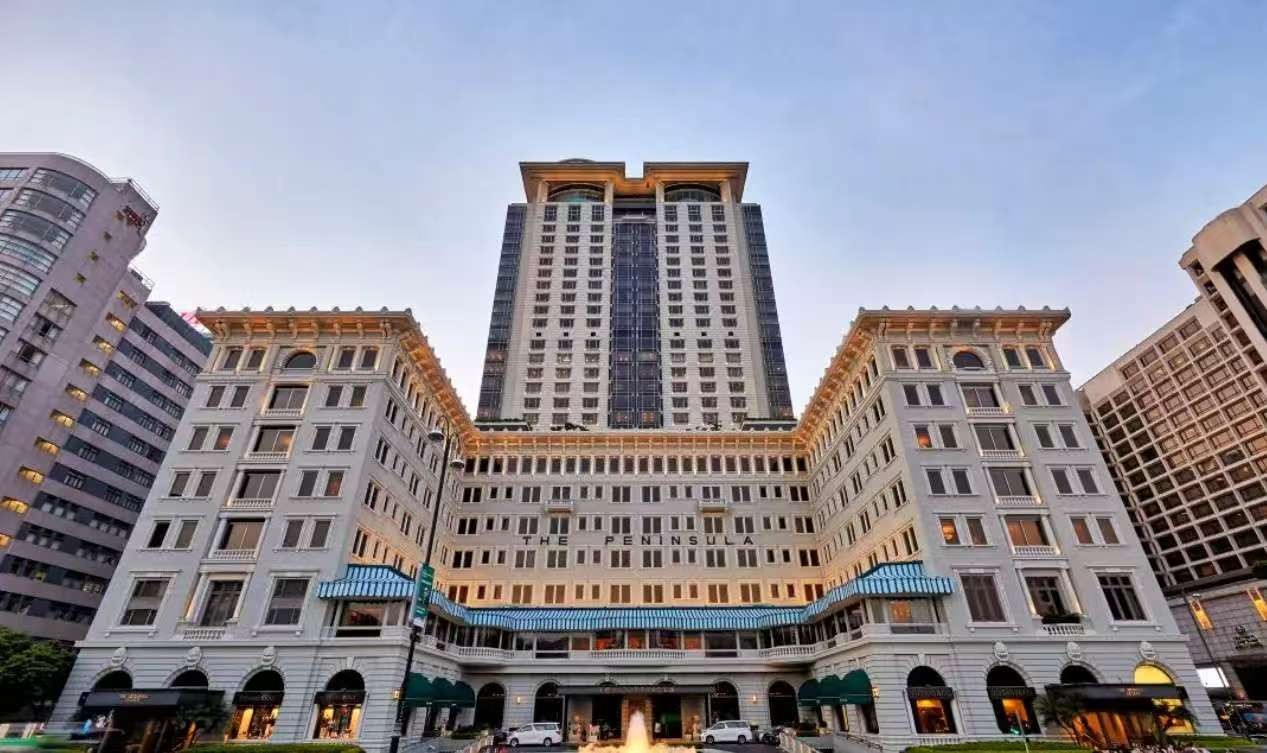
The first Peninsula Hotel, The Peninsula Hong Kong, opened in 1928. This hotel has witnessed a century of Hong Kong's history and the rise of many celebrities, including Leslie Cheung.

It wasn't until 1976 that the Peninsula Hotels chose to open its second hotel—the Peninsula Manila. This hotel was once referred to as "the living room of the capital," located at the center of commerce and politics, and was a regular residence for international dignitaries.

After the 1980s, the pace of opening Peninsula Hotels accelerated, but it was still only about one new hotel every five years, and the chosen cities were all international metropolises, with only one store opened in the most central location of each city. For example, The Peninsula New York is located at the intersection of Fifth Avenue and 55th Street, adjacent to Central Park, in Manhattan's prime location, which is also a filming location for many famous American TV shows.

The expansion of the Peninsula Hotels in the mainland market mainly began after the millennium and the rapid economic development, but it is currently limited to Beijing and Shanghai.

In 2006, the Wangfujing Hotel, located next to the Forbidden City in Jinyu Hutong, was renamed The Wangfujing Peninsula Hotel, becoming the first Peninsula Hotel in mainland China. In 2009, the Peninsula Hotels selected the Bund in Shanghai, becoming its flagship hotel in mainland China. At that time, The Peninsula Shanghai became the first new building on the Bund in over 70 years, yet it harmoniously blended with the surrounding architecture. This was also a choice that integrated into the city and matched the city's character.

In recent years, after entering the European market, the Peninsula Hotels has also chosen international metropolises such as Paris, London, and Istanbul.

Regarding future cities that may be considered, Zhang Rongyao stated that they will still consider cities where consumer spending power can support, such as Miami and Mexico City, while in Asia, they may consider investing in India, "because there is a growing demand for truly high-quality brands, safe environments, clean rooms, and high-quality dining." The secret of The Peninsula Hotels' ability to navigate through cycles lies in its actively chosen business model. Each hotel is self-owned, sharing in the profits from rising land and property prices while also generating continuous revenue from room rates.

According to the 2024 annual report released by its parent company Hong Kong Shanghai Hotels Limited, in addition to its hotel business, it owns multiple office buildings and residential projects in various locations around the world, with its main business divided into hotels, commercial properties, clubs, and services. Of course, hotels still account for the majority.

At the same time, The Peninsula Hotels has also ventured into retail and other businesses; for example, the mooncakes from The Peninsula Hotels were once a popular choice for high-end business gifts during the Mid-Autumn Festival.

This business approach determines its characteristic of slow expansion, and its heavy asset base and diversified operations are also important means for it to navigate through cycles.

Additionally, several Peninsula Hotels house numerous luxury brand stores. For instance, the Peninsula Hotel in Wangfujing is home to the first Hermès store in China.

In the view of Zhang Rongyao, navigating through cycles tests a company's resilience. The Peninsula Hotels has repeatedly managed to traverse cycles, and these diversified assets and layouts have played a buffering role during economic downturns. For example, last year's revenue included HKD 3.452 billion from the sale of residential apartments at The Peninsula London.

Facing the cyclical fluctuations in the near future, The Peninsula Hotels does not plan to lower room rates but instead aims to leverage its advantages to continuously create its uniqueness and break the homogenized competition.

For example, it attracts foot traffic through local collaborations for fireworks displays, art exhibitions, and strengthens the sales of seasonal products like mooncakes; in the long term, it leads industry trends by enhancing the social attributes of public spaces (such as periodic art exhibitions and wellness zones); in terms of service, it attracts the Bleisure clientele through customized services (such as sleep optimization packages and cultural tours).

A representative project is The Peninsula Hotels Group's large-scale global art project "Art Resonance," which aims to support artists and their creative works while providing customers with more artistic experiences.

Its 2025 "Art Resonance" will once again be showcased at The Peninsula Hotel in Hong Kong, featuring commissioned installation works by Hong Kong media artists Xu Fanghua, Zhang Hanqian, and Shanghai-based artist Lin Fanglu; among them, Lin Fanglu's work is a collaborative result between The Peninsula Hotels Group and the Victoria and Albert Museum.

As a top representative of the old-money style, The Peninsula Hotels aims to serve the elite at the top of the pyramid, providing these celebrity customers with an experience that exceeds expectations. Therefore, The Peninsula is also very attentive to the trends of contemporary technology, with AI already integrated into their operations.

In 2025, as AI sweeps the globe, various industries hope to be empowered by AI. The Peninsula Hotels has chosen to primarily use AI to enhance backend efficiency, while being cautious in its use at the front desk.

According to Zhang Rongyao, the Executive Vice President of The Peninsula Hotels Group for the Asia region, AI can optimize processes through technology rather than genuinely enhance the warmth of service. Therefore, at the front desk, The Peninsula Hotels still aims to provide sincere and empathetic service, which requires human involvement In early March, Benjamin Vuchot officially took office as the CEO of the Peninsula Hotels Group. This veteran, who has over 30 years of experience in the global luxury goods industry, has held key positions at Richemont Group and LVMH Group. The Peninsula Hotels Group stated that Benjamin Vuchot's expertise accumulated in the luxury goods industry aligns perfectly with the development trajectory and DNA of the hotel.

Next, we will see what new stories the successor can bring.

The following is a dialogue between Wall Street Journal and Joseph Chong, Executive Vice President of the Asia Region of the Peninsula Hotels Group and Managing Director of The Peninsula Hong Kong (translated and edited without altering the original meaning):

Q: The Peninsula Hotels Group adheres to the "self-owned properties + heavy assets" model. In the context of the global luxury hotel industry shifting towards light asset management, how does this model balance long-term asset appreciation with short-term market volatility risks?

Joseph Chong: For family-owned businesses, our company has been passed down for over 150 years. It is not uncommon for a company that has lasted more than 150 years to hold heavy assets, which precisely indicates that the company is focused on long-term development. Over the past century and a half, we have experienced countless economic cycles and still survived, which itself proves the value of the assets.

Clearly, from the company's perspective, our business is very diversified. We not only operate hotels but also own properties and apartments. These assets serve as a buffer during economic downturns—especially in Hong Kong. Although heavy assets carry higher risks during economic cycles, we balance overall income through the revenue from other assets.

This is thanks to our property leasing and commercial leasing businesses. The combination of the two allows us, as a company, to operate without worrying about economic fluctuations. Our debt ratio is extremely low, which means we have abundant cash flow and a robust balance sheet. For us, holding heavy assets stems from the family’s management philosophy—we hold assets not just for short-term gains but with a long-term vision. Therefore, heavy assets are not a disadvantage for us, but outsiders may wonder, "Why hold heavy assets?" The answer is that our family itself is an investor in real estate.

Take other companies that operate with light assets as an example. For instance, in China, owners hold properties while hotel management companies are only responsible for management. These companies do not hold assets; they only provide management. But we are different; we hold assets and are responsible for operations. This choice stems from our appreciation for the brand—we want to protect the brand and ensure its continuation for the next century.

We focus on maintaining the integrity of the brand and brand commitments. For example, if you go to a hotel in Shenzhen tomorrow, its quality and service may differ from that of the Peninsula Hotels because the owner's investment decisions will affect the hotel's presentation. Moreover, the expansion of the Peninsula brand is very cautious; after 150 years, there are only 12 hotels worldwide, while some brands have over 100 hotels since their establishment in 1980, reflecting a completely different management philosophy.

We choose to hold heavy assets because we are well aware of our financial capability to manage heavy assets. This choice is not only a protection of the brand but also a commitment to long-term value Question: You mentioned the "slow is fast" strategy, and the Peninsula has finally landed in Istanbul and London in the past two years amid everyone's expectations. What are the core considerations for future hotel site selection? Will emerging markets (such as Southeast Asia or the Middle East) be considered?

Zhang Rongyao: Expansion has always been a part of our long-term strategy, and there is no doubt about that—after all, we currently have only 12 hotels. Over the past 20 years, we have witnessed the development of hotels in cities like Tokyo, Shanghai, London, and Istanbul. Clearly, we have never stopped our expansion efforts. However, due to the proximity of the London project and another project in terms of timing, we invested a lot of resources during construction.

At present, our resources need a slight breather; the so-called "rest" means we are analyzing the global market to find the next hotel site. The core logic of building a Peninsula hotel is not "I like a certain country, so I want to build here," but rather viewing it as a long-term investment while ensuring it can continuously generate cash flow.

We will only build hotels when the economic conditions of a certain economy or city are met, and the economic fundamentals of the area can support the infrastructure and operating costs of building a hotel. For example, the construction cost of the Peninsula London hotel reached £1 billion (approximately RMB 9 billion), which is enough to build three or even more ordinary hotels, but we only built one because we have very high standards for quality.

However, investing heavily in London is reasonable because hotel prices there are very high. During peak opening periods, the price of standard rooms reaches £1,300-£1,500 (approximately RMB 14,000 to RMB 15,000), such high room rates are sufficient to cover the operating costs of the hotel.

Now many people ask, "You have hotels in Beijing and Shanghai, why not open in Chengdu, Guangzhou, or Shenzhen?" The answer is simple: the cost of building a Peninsula hotel in these cities is high, while the average room rates locally are difficult to support.

Our strategy has always been closely related to the economic fundamentals of the location. As for potential expansion locations in the future, we believe India is a good choice because there is a growing demand for truly high-quality brands, safe environments, clean rooms, and high-quality dining.

Additionally, Miami may also be an option—where the purchasing power is strong. As for Mexico City, it is still under consideration. Although many people suggest we open hotels in the Middle East, we have no intention of going there; the Middle Eastern market is too seasonal, and the number of hotels is already saturated (for example, there are 24 Four Seasons hotels in Dubai alone), and we do not want to follow the trend blindly. Unless we build a small hotel with only 60 rooms, but such an investment is not very meaningful. Therefore, we will focus more on other core markets with greater potential and are also exploring whether to enter the African or South American markets.

Question: According to our observations of high-end travel destinations among Chinese consumers, the trend of consumption polarization is becoming increasingly evident, with high-end consumers and those pursuing extreme cost-effectiveness on the rise, while middle-class consumption is weak. In your observation, which type of consumer has been the fastest-growing group at the Peninsula Hong Kong over the past year? What are the consumption preferences of this group? **

Daniel Zhang: We all know that economics and the economy are cyclical; they cannot maintain growth indefinitely. However, for any organization, the most important thing is to understand economics and the basic law of its cyclicality, so the company's strategy must always be prepared to respond to such situations. This is precisely the meaning of the term "resilience"—you must have enough reserves to weather the challenges posed by the economic cycle.

Now, regarding the reports of declining luxury consumption rates in Hong Kong, my view is both agreement and partial disagreement. I believe that Hong Kong is not experiencing an economic recession on its own but is affected by the global situation. The changes in the fundamentals have made Hong Kong a victim, rather than due to its poor performance. This is just a normal phenomenon of the economic cycle.

The overall economy of Hong Kong remains strong. The banking system is solid, and the dining economy is thriving; it is just that the shopping sector is performing poorly—not because of Hong Kong's own issues, but because another country can offer better options at lower prices.

As for how to respond to this situation, a short-term strategy could be to lower prices, but the long-term strategy should be to control internal costs. For example, reducing the number of stores and lowering operational expenses while maintaining current prices. Because the economic cycle has its own rhythm, it will eventually recover. If prices are significantly lowered now, when the economy rebounds, trying to raise prices again will lead consumers to resist, complaining that "prices were lower in the past," and turning to other options.

Therefore, any organization must make resilience a core strategy, remembering that economic downturns do not last long—typically around three years for recovery. Companies need to lay a foundation that can support them for three years to weather the cycle. When business warms up, companies that maintain their original prices will find that consumers have already accepted the fact that prices have not fallen, and will continue to choose them.

Question: At the beginning of this year, the AI startup DeepSeek has brought new opportunities and challenges to various industries. What is your view on the impact of AI on the hotel industry? Has AI been applied to the service scenarios of The Peninsula Hotels?

Daniel Zhang: This needs to be analyzed from two levels; the hotel industry is divided into front office and back office departments. The application of AI in the hotel back office can significantly improve efficiency, assist in strategic decision-making, and foster innovation.

However, in front office services, AI cannot temporarily replace the core value of "genuine service"; it is more about optimizing processes through technology rather than truly enhancing the warmth of service. We often say that the core of service is sincerity and empathy, which is also the service philosophy of The Peninsula Hotels. AI cannot replace this humanized service, but it can assist in handling correspondence and communication tasks.

However, AI may improve efficiency at the front desk. For example, integrating AI into property management systems can optimize the check-in and check-out processes. It is important to emphasize that there is currently a blindness in the market regarding the application of AI; many people do not truly understand the essence, functions, applicability of AI, and how to translate it into the desired results.

The application prospects of AI in the back office are vast.

The back office includes finance, sales and marketing, engineering, as well as human resources and corporate culture. These departments involve a large amount of data statistics, analysis, and decision-making, where AI has great potential. AI can optimize reporting processes, provide highly valuable data and analysis, helping us better plan financial performance, develop marketing strategies, and manage future expenditures In these backend areas, the role of AI is very significant.

Taking finance as an example, AI can analyze the operational data of hotels over the past 20 years, extract trends, and predict the business direction for the next 10 years. It can also combine factors such as historical conference activities and global economic recessions to provide decision-making support for investment renovations or equipment purchases. Additionally, AI can identify unnecessary expenses, helping hotels optimize costs.

In the sales and marketing field, AI can analyze market segmentation and customer distribution over the past 10 years, assess the cost-to-sales ratio of product packages, and suggest future markets to focus on, such as Russia or South Africa. In human resources, AI can analyze employee salaries, skill levels, and tenure, and evaluate whether employee benefits are lacking in attractiveness.

Q: What do you predict will be the biggest change in the luxury hotel industry in the next five years? How will The Peninsula respond?

Daniel Zhang: For evergreen luxury hotels like The Peninsula, I believe that their strategy of adhering to high-quality construction, significant investment in talent, and premium products will not change. But how do we operate? We must balance costs through pricing.

We always believe that there will always be a clientele that truly appreciates ultra-luxury experiences, so there is no need for concern. But the current question is how to capture these clientele. It's like a pyramid — those with high spending power are always in the minority. For ultra-luxury brands like ours, we need to think about how market share affects revenue and profit.

Therefore, adjusting hotel scale is always a topic of general discussion in the industry. For example, The Peninsula Hong Kong, as an ultra-luxury hotel with 300 rooms, is there an excess number of rooms today? The answer is yes. However, we have never reduced any service standards because we firmly believe that quality cannot be compromised. Looking ahead to the next five years, I believe that hotels with more than 215 rooms should consider adjusting their scale.

Risk Warning and Disclaimer

The market has risks, and investment requires caution. This article does not constitute personal investment advice and does not take into account the specific investment objectives, financial situation, or needs of individual users. Users should consider whether any opinions, views, or conclusions in this article are suitable for their specific circumstances. Investing based on this is at one's own risk