Institutional investors have a lot riding on LendingClub Corporation (NYSE:LC) with 77% ownership

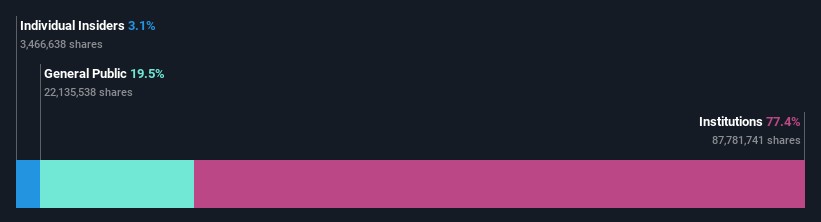
LendingClub Corporation (NYSE:LC) has 77% institutional ownership, indicating that its stock price is sensitive to institutional trading actions. The top 17 shareholders control 51% of the company, with The Vanguard Group being the largest shareholder at 11%. Recent insider buying suggests alignment of interests, while the general public holds 20% of shares. The stock gained 5.9% last week, contributing to a 14% return over the past year. Analysts recommend further research into the company's performance and potential warning signs.
Key Insights
- Significantly high institutional ownership implies LendingClub's stock price is sensitive to their trading actions
- 51% of the business is held by the top 17 shareholders
- Insiders have been buying lately
We've found 21 US stocks that are forecast to pay a dividend yield of over 6% next year. See the full list for free.
To get a sense of who is truly in control of LendingClub Corporation (NYSE:LC), it is important to understand the ownership structure of the business. The group holding the most number of shares in the company, around 77% to be precise, is institutions. In other words, the group stands to gain the most (or lose the most) from their investment into the company.
And as as result, institutional investors reaped the most rewards after the company's stock price gained 5.9% last week. The gains from last week would have further boosted the one-year return to shareholders which currently stand at 14%.
Let's take a closer look to see what the different types of shareholders can tell us about LendingClub.
See our latest analysis for LendingClub
What Does The Institutional Ownership Tell Us About LendingClub?
Institutional investors commonly compare their own returns to the returns of a commonly followed index. So they generally do consider buying larger companies that are included in the relevant benchmark index.
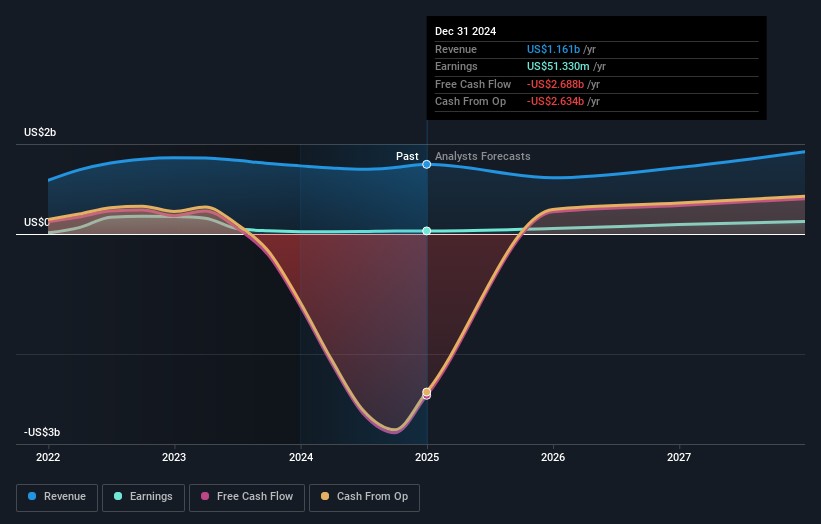
As you can see, institutional investors have a fair amount of stake in LendingClub. This can indicate that the company has a certain degree of credibility in the investment community. However, it is best to be wary of relying on the supposed validation that comes with institutional investors. They too, get it wrong sometimes. It is not uncommon to see a big share price drop if two large institutional investors try to sell out of a stock at the same time. So it is worth checking the past earnings trajectory of LendingClub, (below). Of course, keep in mind that there are other factors to consider, too.
Since institutional investors own more than half the issued stock, the board will likely have to pay attention to their preferences. We note that hedge funds don't have a meaningful investment in LendingClub. The company's largest shareholder is The Vanguard Group, Inc., with ownership of 11%. BlackRock, Inc. is the second largest shareholder owning 7.9% of common stock, and Dimensional Fund Advisors LP holds about 5.4% of the company stock. Additionally, the company's CEO Scott Sanborn directly holds 1.2% of the total shares outstanding.
Looking at the shareholder registry, we can see that 51% of the ownership is controlled by the top 17 shareholders, meaning that no single shareholder has a majority interest in the ownership.
While studying institutional ownership for a company can add value to your research, it is also a good practice to research analyst recommendations to get a deeper understand of a stock's expected performance. Quite a few analysts cover the stock, so you could look into forecast growth quite easily.
Insider Ownership Of LendingClub
While the precise definition of an insider can be subjective, almost everyone considers board members to be insiders. The company management answer to the board and the latter should represent the interests of shareholders. Notably, sometimes top-level managers are on the board themselves.
Most consider insider ownership a positive because it can indicate the board is well aligned with other shareholders. However, on some occasions too much power is concentrated within this group.
We can see that insiders own shares in LendingClub Corporation. It is a pretty big company, so it is generally a positive to see some potentially meaningful alignment. In this case, they own around US$32m worth of shares (at current prices). Most would say this shows alignment of interests between shareholders and the board. Still, it might be worth checking if those insiders have been selling.
General Public Ownership
With a 20% ownership, the general public, mostly comprising of individual investors, have some degree of sway over LendingClub. This size of ownership, while considerable, may not be enough to change company policy if the decision is not in sync with other large shareholders.
Next Steps:
It's always worth thinking about the different groups who own shares in a company. But to understand LendingClub better, we need to consider many other factors. For instance, we've identified 1 warning sign for LendingClub that you should be aware of.
If you would prefer discover what analysts are predicting in terms of future growth, do not miss this free report on analyst forecasts .
NB: Figures in this article are calculated using data from the last twelve months, which refer to the 12-month period ending on the last date of the month the financial statement is dated. This may not be consistent with full year annual report figures.
If you're looking to trade LendingClub, open an account with the lowest-cost platform trusted by professionals, Interactive Brokers.
With clients in over 200 countries and territories, and access to 160 markets, IBKR lets you trade stocks, options, futures, forex, bonds and funds from a single integrated account.
Enjoy no hidden fees, no account minimums, and FX conversion rates as low as 0.03%, far better than what most brokers offer.
Sponsored Content