Canalys: In the first quarter, smartphone shipments in India decreased by 8% year-on-year

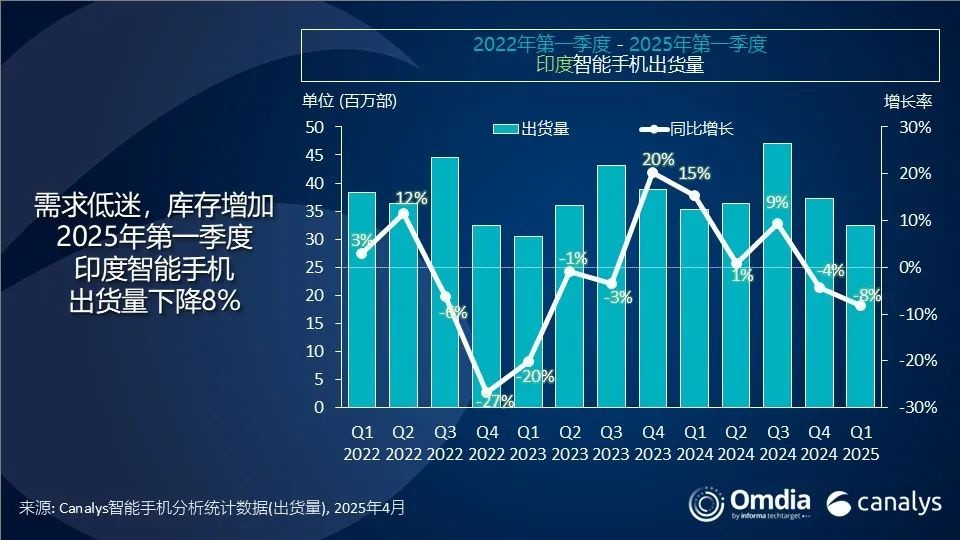
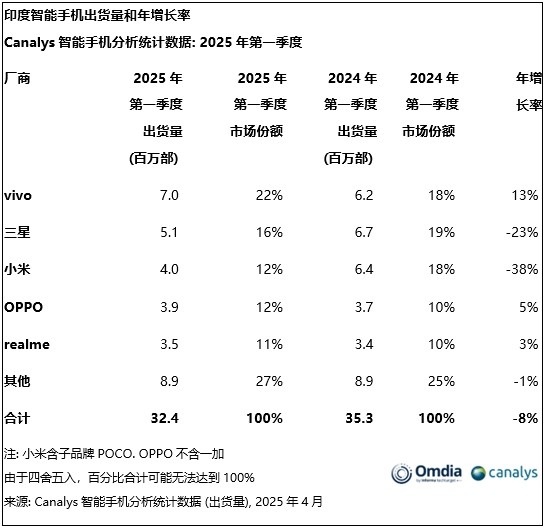
According to Canalys data, smartphone shipments in India fell by 8% year-on-year in the first quarter of 2025, totaling 32.4 million units, mainly affected by weak demand and high inventory. Vivo ranked first with a shipment of 7 million units and a 22% market share, followed by Samsung and Xiaomi with 5.1 million and 4 million units, respectively, in second and third place. Analysts pointed out that 2025 may be a channel-driven year, and manufacturers will need to rely on retail and distribution networks to boost sales
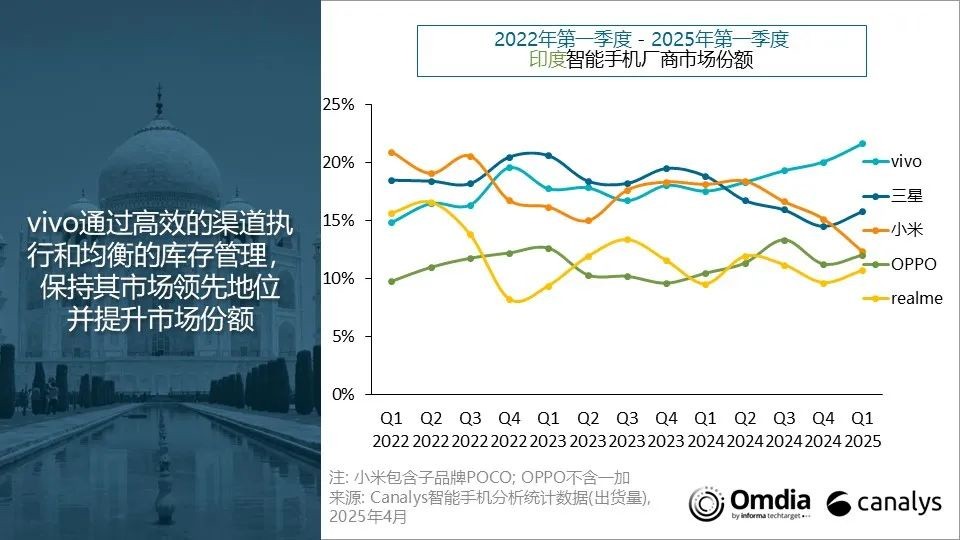
According to Zhitong Finance APP, Canalys data shows that in the first quarter of 2025, smartphone shipments in India fell by 8% year-on-year, totaling 32.4 million units, mainly affected by persistently weak demand and high channel inventory at the end of 2024. High inventory levels disrupted the rhythm of new product launches, forcing manufacturers to readjust their channel strategies. Vivo topped the list with a shipment of 7 million units and a 22% market share, further expanding its leading advantage. Samsung shipped 5.1 million units, while Xiaomi (01810) ranked third with a shipment of 4 million units and a 12% market share. OPPO (excluding OnePlus) shipped 3.9 million units, and realme shipped 3.5 million units.

Sanyam Chaurasia, a senior analyst at Canalys, stated: "Due to continued weak consumer demand, 2025 is likely to be another channel-driven year. In the absence of strong natural demand, manufacturers are increasingly relying on retail and distribution networks to drive sales. Channel incentive programs, offline promotional activities, and closer collaborative sales will again be key to competing for market share."
Chaurasia added: "In the first quarter of 2025, Vivo expanded its leading advantage with a balanced product portfolio and efficient channel execution. Its V50 series significantly enhanced brand exposure through collaboration with Zeiss, wedding season marketing activities, and KOL-led promotional campaigns, while the T series and Y series achieved strong online and offline synergy. OPPO (excluding OnePlus) continued to leverage its retail channel advantages, emphasizing the durable design, waterproof features, and long battery life of its products, helping it achieve steady growth. Realme regained growth momentum after completing inventory adjustments, with nearly 20% of shipments coming from the newly launched 14X 5G model, and offline channels currently contributing 58% of its shipments. In contrast, although Xiaomi launched the Note 14 series early, it faced limited market response due to high inventory and conservative channel sentiment. However, the Redmi 14C 5G performed well in the entry-level market, helping the brand maintain a certain shipment momentum."
Chaurasia continued: "As overall demand trends towards weakness, brands like Apple and Samsung are formulating strategies around user upgrade intentions and higher average selling prices (ASP). Apple (AAPL.US) achieved its strongest first-quarter performance ever in India, thanks to the hot sales of the iPhone 16 series and promotional activities on e-commerce platforms and major retailers during Republic Day. The launch of the iPhone 16e also helped Apple further penetrate second- and third-tier cities in India. Despite high inventory levels at the beginning of the quarter and an overall year-on-year shipment decline of 23%, Samsung achieved a 5% year-on-year growth in shipments of the S25 series compared to the same period of the S24 series, thanks to its high-end positioning and conversational AI features. For these two major brands, ecosystem stickiness and high-end-focused channel execution will be key strategic levers in the coming quarters Chaurasia finally pointed out: "The changing tariff policies of the United States have strengthened India's position in the global smartphone value chain, but in the coming quarters, the market will still face the test of demand fluctuations. Tariff adjustments have opened up more space for local manufacturing, and smartphone exports are expected to benefit from this. However, industries reliant on exports still face challenges, especially against the backdrop of slowing global demand and rising prices of American products. The demand in the smartphone market is already on a downward trend, and as the replacement wave during the pandemic gradually ends by mid-2025, consumer sentiment remains weak, particularly in rural areas where spending heavily relies on agricultural income brought by the monsoon. In urban areas, users' replacement cycles are also extending, and only the creation of ecosystems and AI-driven innovations can stimulate new consumer demand. In the context of a lack of strong natural growth momentum and a still prominent channel dominance, the Indian market is expected to achieve moderate growth in 2025. However, it is worth noting that with the continuous rise in average selling prices (ASP) and the trend towards premiumization driven by financial installment plans, market highlights will be concentrated in the price range of 20,000 to 30,000 rupees (approximately 250 to 350 USD)."