


From 100 to 5.8 Billion: Secrets of the Indian Buffett

Over 20 years, he turned the initial 5000 rupees (about 100 US dollars) into 5.8 billion US dollars, while the Indian SENSEX index also broke through the 80,000 point mark from the initial 150 points.
“I am a street fighter, fearless except for God, my wife, and the tax authorities.”
— Rakesh Jhunjhunwala
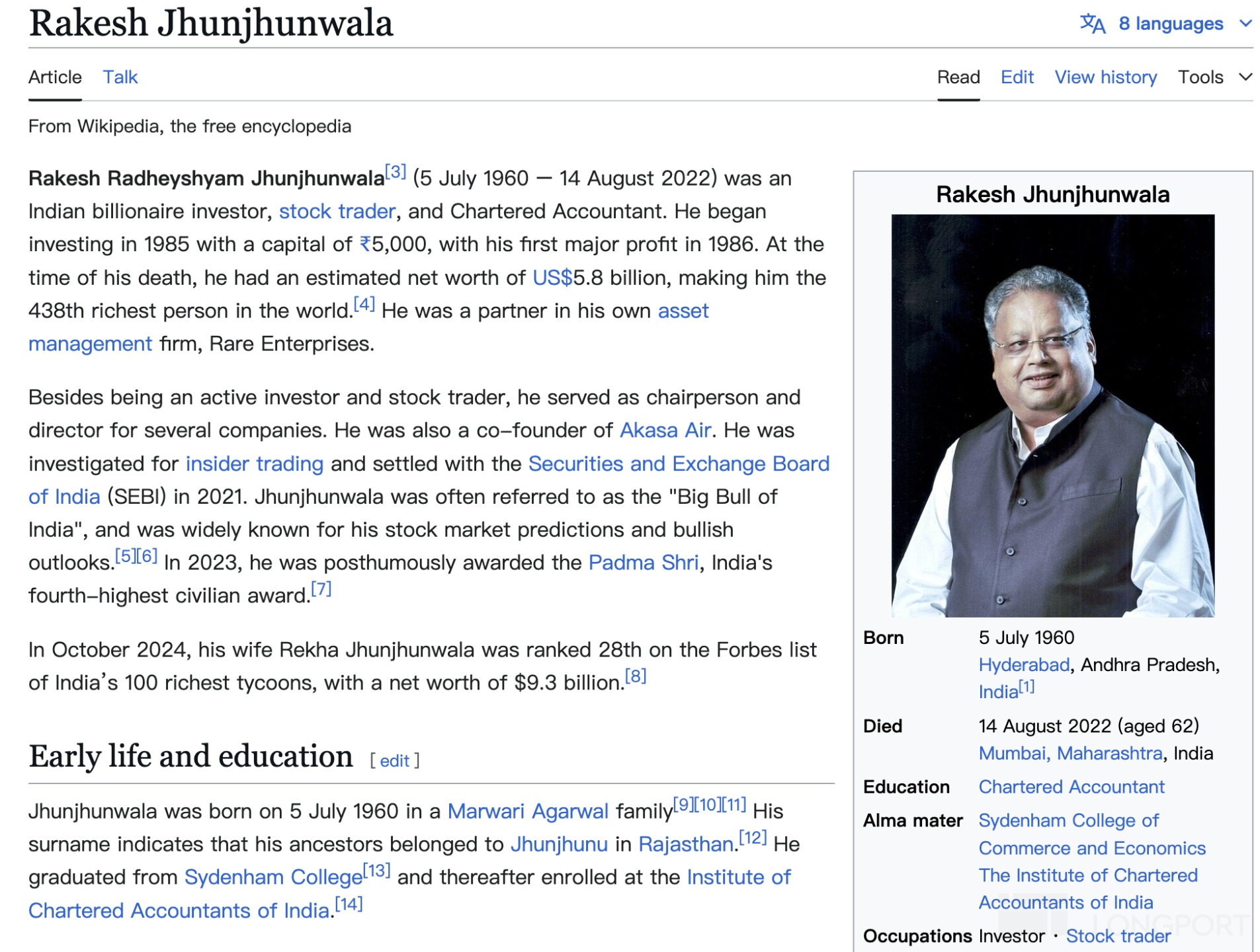
Dubbed the “Indian Buffett,” the renowned Indian billionaire trader Rakesh Jhunjhunwala was India’s 36th richest person in 2022, ranking 438th on the global rich list. His passion for the stock market began in childhood, starting with just 5,000 rupees ($100) and growing his wealth through trading to eventually join the global elite.
However, he disliked the “Indian Buffett” title, feeling far inferior to Warren Buffett. Despite this, both shared a knack for value investing, turning investments into gold. Jhunjhunwala believed Buffett, with a net worth exceeding $100 billion, was far more impressive. Their investment philosophies were nearly identical, both emphasizing “value investing.”
For example, in 1973, The Washington Post’s market value was $100 million, while analysts estimated its intrinsic value at $400–500 million. Buffett invested $10 million and later earned a $2 billion profit.
Despite his wealth, Jhunjhunwala remained casual. He wore a Tata watch worth less than 100 rupees, never spent over 200 rupees on shoes, yet flaunted a 5-carat diamond ring and owned a luxurious countryside villa. Some say his style mirrored India’s contradictions.
Tragically, Jhunjhunwala passed away in Mumbai on August 14, 2022, at age 62 due to illness, leaving behind a fortune of $5.8 billion.
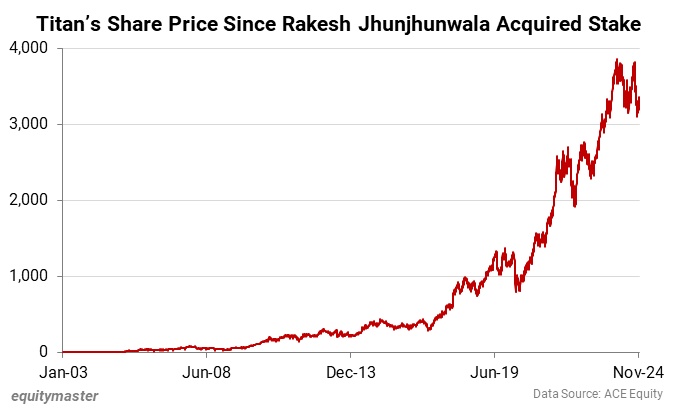
Today, let’s explore the trading journey of India’s stock legend Rakesh Jhunjhunwala and the valuable lessons he left for investors.
Interested in Stocks Since Childhood
Jhunjhunwala was born in Mumbai in 1960 to a tax official father. Growing up, he overheard his father and friends discuss the stock market, sparking his curiosity. He once asked, “Why do stock prices fluctuate daily?”
His father advised him to read newspapers to understand market-moving news. This ignited Jhunjhunwala’s passion for stocks, aspiring to a career in the market. However, his father insisted he complete his education first. Jhunjhunwala graduated from Sydenham College in 1985, earning a chartered accountant qualification. He then sought his father’s permission to pursue stock market investing. This time, his father agreed but refused to provide financial support or allow him to borrow from friends for initial capital.
Entering the Stock World
In 1985, 25-year-old Jhunjhunwala entered the Mumbai Stock Exchange on Dalal Street with 5,000 rupees (about $100) secretly borrowed from his cousin, marking his first trade.
Unknowingly, this moment launched his legendary career. Over the next 20 years, his initial investment grew to $5.8 billion, while the Indian SENSEX index, starting at 150 points, soared past 70,000 points (reaching 72,886 points by February 26, 2024).
Soon, a client introduced by his brother entrusted him with a 250,000-rupee fund, expecting higher returns than fixed deposits. A year later, Jhunjhunwala earned a 500,000-rupee profit, tripling his investment in Tata Tea shares—bought at 43 rupees and sold at 143 rupees within three months.
From 1986 to 1989, he amassed 2–2.5 million rupees. Another key investment was Sesa Goa, where shares bought at 28 rupees surged to 65 rupees after additional purchases at 35 rupees.
Jhunjhunwala radiated optimism, aligning his philosophy with Buffett’s: “Buy the right stock and hold it fanatically.” He cautioned retail investors against short-term trading, warning, “One day you will feel very hurt.”
His 20-year journey mirrored India’s shift from tradition to modernity. Despite the chaotic 1980s Indian market—marked by exchange crashes, trading halts, and regulatory probes—Jhunjhunwala emerged as a market “god,” rising above greed and fear.
Trading Philosophy of the Indian Stock Legend
Known as the “Indian Buffett,” Jhunjhunwala was a value investor, prioritizing a company’s profit model, growth potential, and management quality. He founded RARE Enterprises, a stock trading firm named after him and his wife, Rekha.
Though he rejected the “Indian Buffett” label, feeling inferior to Buffett, their strategies aligned. Jhunjhunwala admitted to being both a trader and a long-term investor, believing short-term trading yields fleeting gains, while long-term investments bring lasting returns.
He avoided large blue-chip stocks, favoring smaller companies with sustainable growth potential. A value investor, he also used technical analysis, embracing the mantra “the trend is your best friend.” He relied on technical tools to trade, acknowledging that overvalued stocks might still rise, requiring disciplined judgment.
Three Key Tips for High Returns
Jhunjhunwala’s success hinged on two principles:
- Focusing on a company’s intrinsic value (profit model, growth potential, vitality).
- Assessing industry growth opportunities and future demand.
These principles demand patience and confidence—qualities many investors lack. He offered three tips:
- Don’t Try to Time the Market
When prices hit lows, investors often hesitate, fearing further declines. Jhunjhunwala advised buying if a stock’s price is undervalued based on its intrinsic value and prospects. - Don’t Overfocus on Profits
Many investors fixate on sales and profits, tracking quarterly results and ROE. Jhunjhunwala emphasized understanding the sources of mid- and long-term profit growth and a company’s opportunities in its sector. - To Find a Ten-Bagger, Let Go of the Obsession
Chasing ten-baggers often leads to overpriced stocks and losses. Jhunjhunwala suggested a contrarian approach: identify market errors, seek overlooked companies, and invest wisely for long-term gains.
