


Why Buffett owns Barrick Gold

Warren Buffett's investment in Barrick Gold reflects confidence in the company's low-cost production model and strategic infrastructure investments. Barrick excels in cost management, utilizing advanced extraction methods and local energy solutions to enhance profitability. The Lumwana mine in Zambia is set to double copper production, significantly boosting revenue. Barrick's long-term strategy focuses on maintaining profitability through efficient operations and adapting to local conditions, positioning it well against market fluctuations. Despite inherent risks in the commodity sector, Barrick's low-cost structure provides a competitive advantage.
When Warren Buffett (Trades, Portfolio)'s flagship investment company took a stake in Barrick Gold in 2020, many investors were surprised. Buffett and Munger have long criticized gold as an unproductive asset. The investment isn't as contradictory as it seems.
Barrick isn't gold. Investors in gold buy that commodity; Barrick sells it. There is a difference. The company generates earnings through extraction, processing, and operations. That's where things become clearer. Buffett has always favored low-cost producers in commodity sectors, and Barrick fits the mold. Its inclusion in Berkshire's portfolio reflects not just confidence in the gold market, but a broader endorsement of how Barrick runs its business.
It helps that Berkshire understands energy infrastructure deeply. NV Energyone of its key subsidiariespowers much of Nevada, including mining operations. That insight likely gave Berkshire an edge in evaluating Barrick's cost structure and its efficient use of infrastructure to enhance returns.
Competitive advantages
Gold mining is a tough business, but Barrick excels where it matters mostcost. Its all-in sustaining cost (AISC) sits well below its peers.
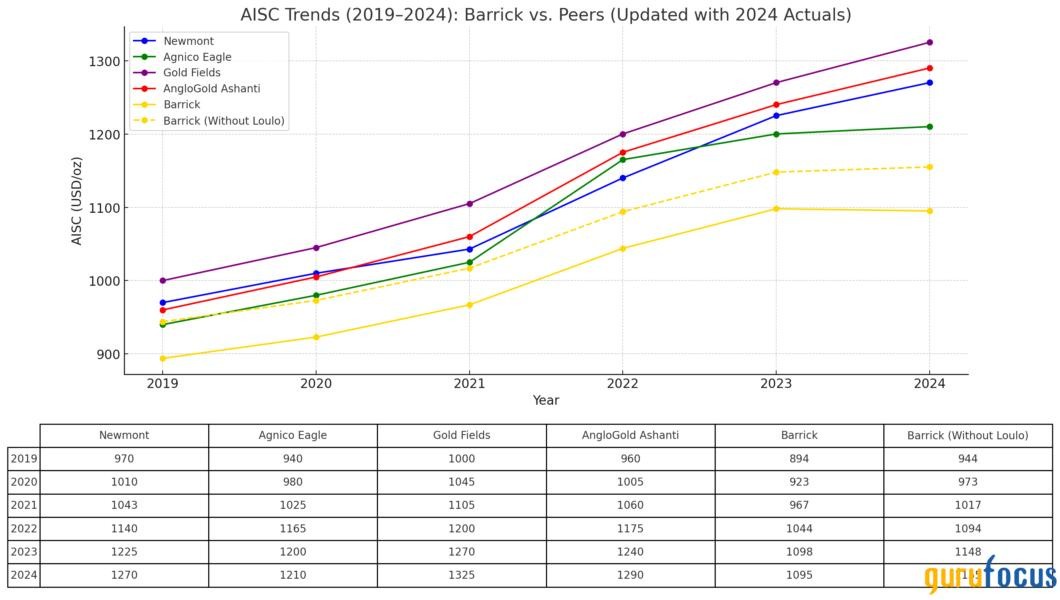
This cost advantage stems from Barrick's brownfield developments that leverage existing infrastructure. Many of Barrick's operations use pressure oxidation (POX), a high-energy but high-yield method that can consume up to 800 kWh per tonne of concentratefar more than standard cyanide leaching. The POX process requires substantial energy and technical infrastructure, but it extracts more value per tonne of ore, especially in complex deposits.
Barrick's tailors its processing methods to local conditions. In Mali, for instance, it relies on conventional, labor-intensive leaching due to political instability and infrastructure limitations. In Zambia, where conditions are more stable, it makes significant capital investments, including energy infrastructure, to support higher-volume, long-life assets.
Lumwana: A Strategic Copper Play
Barrick's Lumwana mine in Zambia illustrates this point. The company is investing heavily to double annual copper production from 120,000 to 240,000 tonnes. At current copper prices of around $8,500 per tonne, this means revenue from Lumwana could increase from $1.02 billion to over $2 billion annually. That expansion would elevate Zambia to one of Barrick's top revenue contributors.
To support this growth, Barrick has committed to bolstering local power infrastructure. Unlike First Quantum Mineralswhich imports a significant portion of its electricity for Zambian operationsBarrick prioritizes local energy solutions. Since late 2024, it has launched co-generation projects and is working with ZESCO, the national utility, to upgrade the national electricity grid by complementing existing hydroelectric generation with large-scale solar-electric projects.
These efforts not only reduce energy risk at Lumwana but also benefit regional development. Stable electricity isn't just good for the mineit supports community services, local businesses, and future industrial investments.
A Business Built Around Infrastructure
Solar and hydro are complementary: solar fluctuates with the sun, but hydro offers consistency. Barrick uses both to balance costs and maintain uptime, integrating its energy needs into a broader strategy that supports national development where it operates.
Nevada is the global showcase for this model. Barrick's partnership in Nevada Gold Mines (with Newmont) taps into high-grade deposits and world-class logistics. It's no coincidence that NV Energyowned by Berkshire Hathawaypowers much of the state's mining sector, including Barrick's operations. Berkshire's experience with infrastructure and renewables likely informed its investment in Barrick.
When capital, ore and power alignas they do in places like Nevada and Zambiathe result is a competitive advantage that is hard to replicate.
Long term value
Barrick holds around 77 million ounces of proven and probable gold reserves. With production averaging 4 million ounces per year, that implies roughly 19 years of future output. Barrick's strategy isn't just about maximizing current margins. It's about ensuring that even in downturns, the company remains profitable. As a low-cost producer, Barrick is more resilient when gold prices falland more profitable when they rise. That's the kind of asymmetry value investors look for. Inflation may cause costs to go up for all mines, but Barrick's sunk infrastructure costs should enable inflation-beating returns for shareholders over the coming decades.
Management
CEO Mark Bristow has led Barrick through a period of consolidation and refocus since its 2019 merger with Randgold. He's brought operational discipline and geopolitical awareness. The company adapts its capital intensity to local conditionsspending heavily in stable regions and keeping costs lean in volatile ones.
This balance shows strategic maturity: don't overspend where the risk doesn't justify it, and don't underinvest where long-term infrastructure can pay off.
Risks
Every commodity business carries risk. Gold prices fluctuate. Operations face disruptions. Regulatory frameworks shift. But Barrick's positioning as a low-cost producer gives it a cushion. It's likely to remain profitable where higher-cost peers falter.
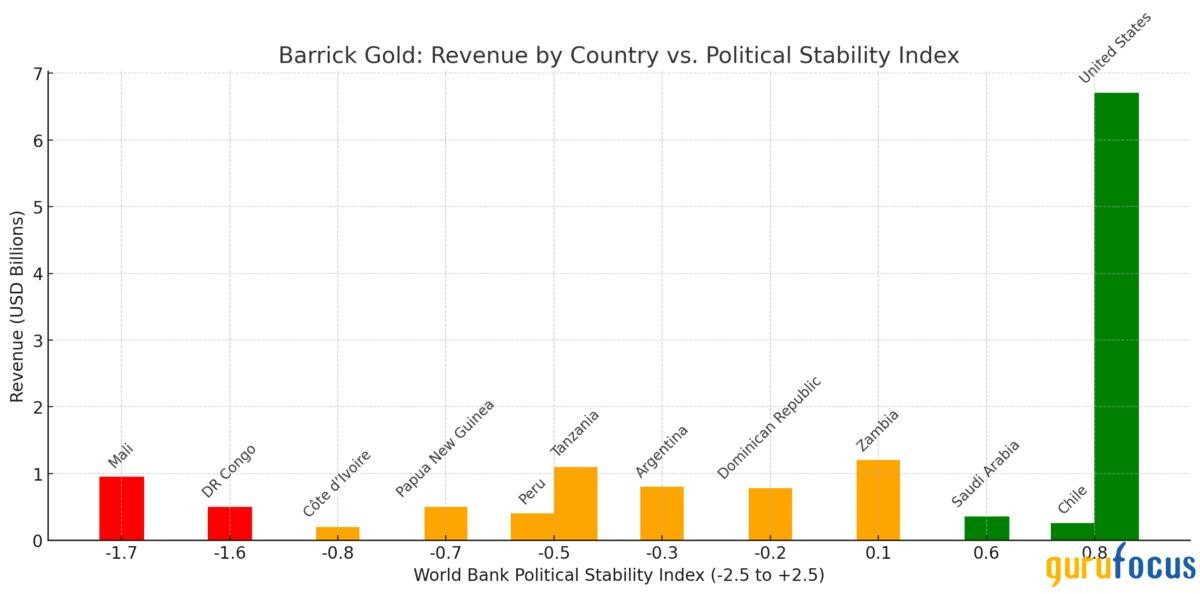
Geopolitical exposure is managednot eliminated. In Mali, Barrick limits capex and leans on simpler methods. There is a reason Mansa Musa was once the richest man on earth. Mali produces gold at very low cost. Even without its Malian operations, Barrick remains the clear leader. And because gold is globally fungible, it doesn't face the same tariff or logistics risks as many other raw materials.
ESG is also rising in importance. Barrick's ongoing investments in renewable energy and local development are responses to both regulatory pressure and investor expectation. These are long-term bets on license to operate.
Final Thoughts
Buffett's investment in Barrick makes more sense when seen through the lens of operational efficiency and infrastructure leveragenot a bet on gold itself. Barrick doesn't promise smooth returns, but it's built to endure volatility.
If you're looking for a speculative momentum play, this isn't it. But if you value a long-lived asset base, prudent management, exposure to both gold and copper, and a price that doesn't yet reflect all of thatBarrick might just be worth a closer look.
With a hat tip to funtrading for bringing Barrick Gold to my attention.
