


The UK job market continues to cool, but high wage growth may keep the Bank of England cautious

The UK job market has cooled again due to increased taxes and US tariffs, with the number of employees decreasing by nearly 33,000 in April, and job vacancies dropping to 761,000. Although wage growth increased by 5.6% year-on-year, which is lower than expected, the pound and financial markets' expectations for interest rate cuts remain unchanged. The Bank of England is concerned about inflationary pressures in the labor market and is considering the pace of interest rate cuts. The Monetary Policy Committee has differing opinions on interest rate cuts and ultimately decided to cut rates by 25 basis points to 4.25%
According to Zhitong Finance APP, the UK job market cooled again last month due to the burden of increased taxes on employers and the impact of US government tariffs, which may provide some relief to the Bank of England regarding easing inflation pressures. Data released by the temporary tax office on Tuesday showed that after a decrease of 47,000 employees in March, the number of employees fell by nearly 33,000 in April.
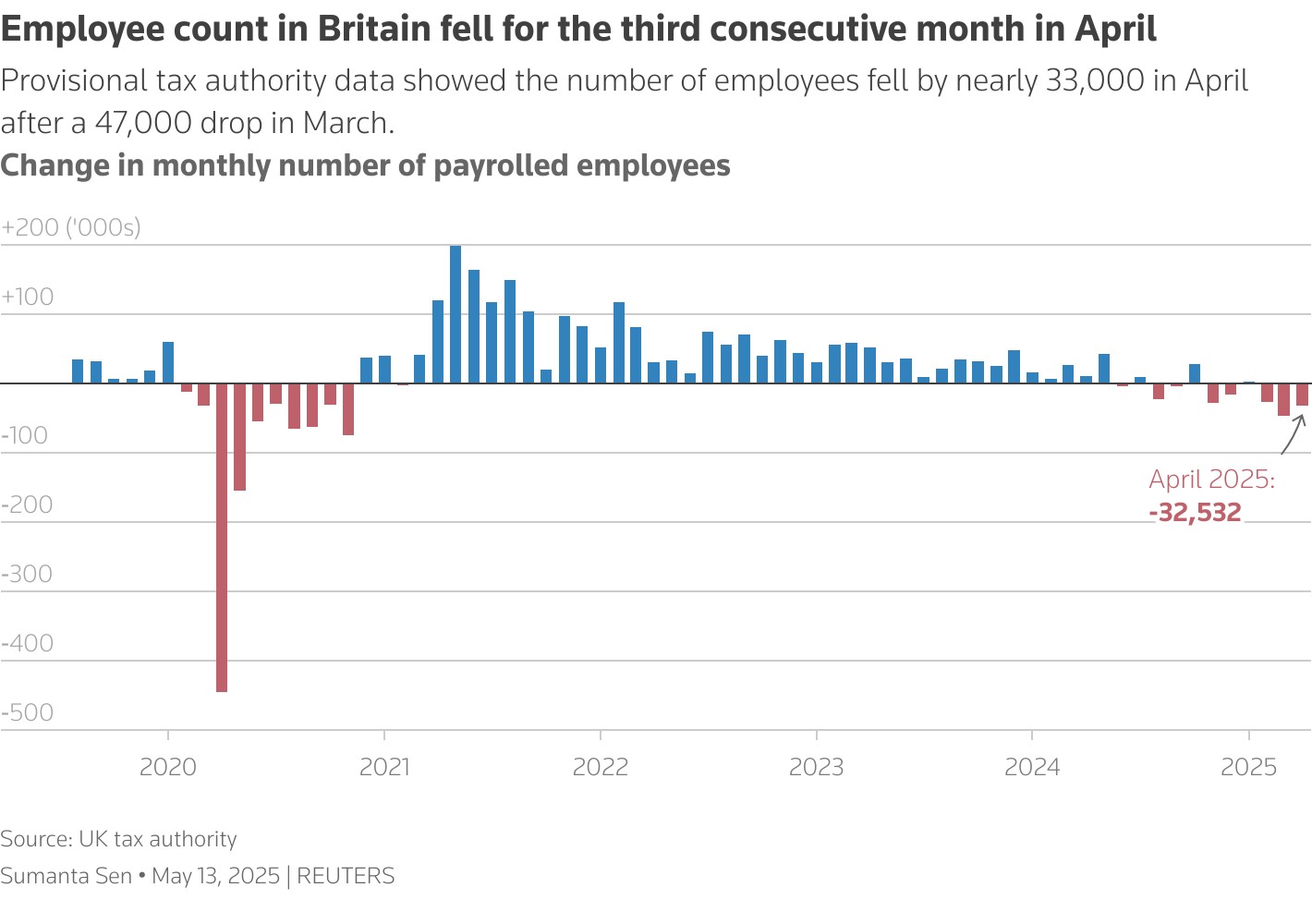
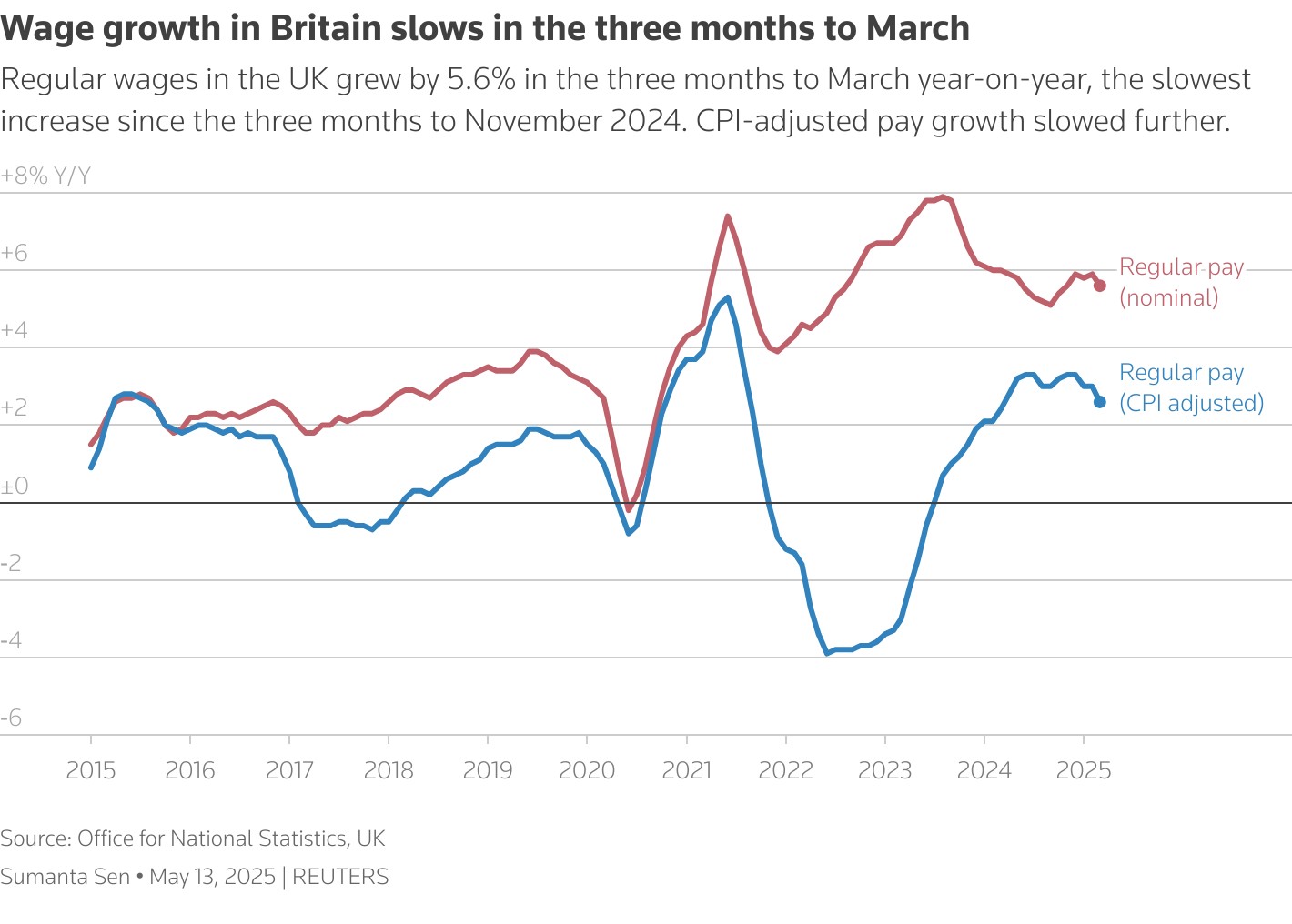
In the three months ending in April, the number of job vacancies decreased by 42,000, marking the largest decline in over a year, bringing the total down to 761,000, further below pre-pandemic levels. Meanwhile, the average wage growth excluding bonuses in the UK for March—an indicator tracked by the Bank of England to measure domestic inflation pressures—grew by 5.6% year-on-year, below economists' expectations of 5.7% and the previous value of 5.9%, marking the lowest increase in three months since last November.
Following the data release, the pound and financial markets showed little change in bets on the scale of interest rate cuts by the Bank of England for the remainder of the year. Luke Bartholomew, deputy chief economist at Aberdeen, stated: "Despite the continued slowdown in the labor market and the visible impact of the national insurance tax increase, there are no signs that the labor market is suddenly collapsing due to shocks." "Combined with recent positive news on trade, there is currently no reason for the Bank of England to regret its decision to continue the 'gradual' easing cycle."
The Bank of England is closely monitoring inflation pressures in the UK labor market while considering whether to accelerate the pace of interest rate cuts to protect the economy from the impacts of Trump’s policies. The Bank of England lowered interest rates by 25 basis points last week as expected, bringing the rate down to 4.25%. However, there was a three-way split in the Monetary Policy Committee (MPC): five members supported a 25 basis point cut, two members supported a larger cut of 50 basis points, while another two members advocated for keeping rates unchanged.
On Monday, policymakers Clare Lombardelli and Megan Greene pointed out that there are inflation risks in the labor market, with wage growth still too high compared to the Bank of England's 2% inflation target. However, another policymaker, Alan Taylor, stated that the "quite dangerous" trade situation was one of the reasons he voted for a 50 basis point cut.
Jack Kennedy, a senior economist at the global recruitment platform Indeed, indicated that the Bank of England may remain vigilant regarding the risks posed by still high wage growth in the UK. He stated: "If wage growth pressures show a more significant and sustained easing, it could open the door for faster rate cuts, but the voting split in May by the Monetary Policy Committee highlights a cautious attitude towards persistent inflation pressures." ”
