


U.S. durable goods orders fell 6.3% month-on-month in April, with core capital goods orders experiencing the largest decline since October of last year

Affected by a sharp decline in commercial aircraft orders, U.S. durable goods orders unexpectedly fell in April, with core capital goods orders (excluding aircraft and military hardware) dropping by 1.3%, marking the largest decline since October of last year. Under the influence of uncertainties in tariff and tax policies, corporate investment willingness is weakening
Due to a sharp decline in commercial aircraft orders, durable goods orders in the U.S. fell more than expected in April, with core capital goods orders (excluding aircraft and military hardware) dropping by 1.3%, marking the largest decline since October of last year. Business investment sentiment is weakening under the influence of uncertainty regarding tariffs and tax policies.
Data released by the U.S. Department of Commerce on Tuesday showed that U.S. durable goods orders fell by a preliminary value of 6.3% month-on-month in April, compared to an expected value of -7.8%, with the previous value revised from 9.20% to 7.50%.
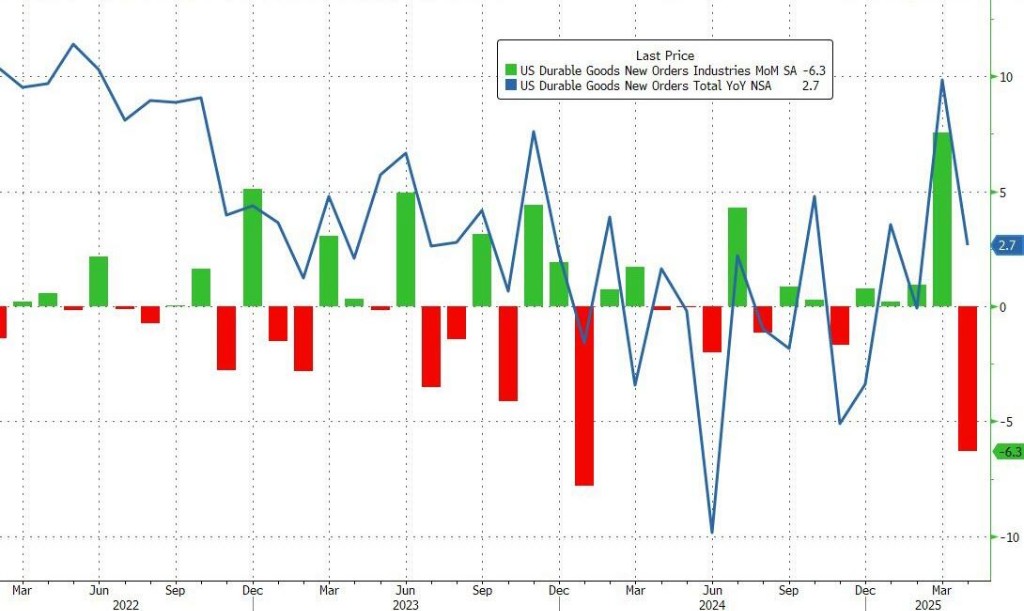
Excluding the volatile transportation equipment, durable goods orders increased by 0.2% month-on-month in April, better than the market's expectation of flat growth.
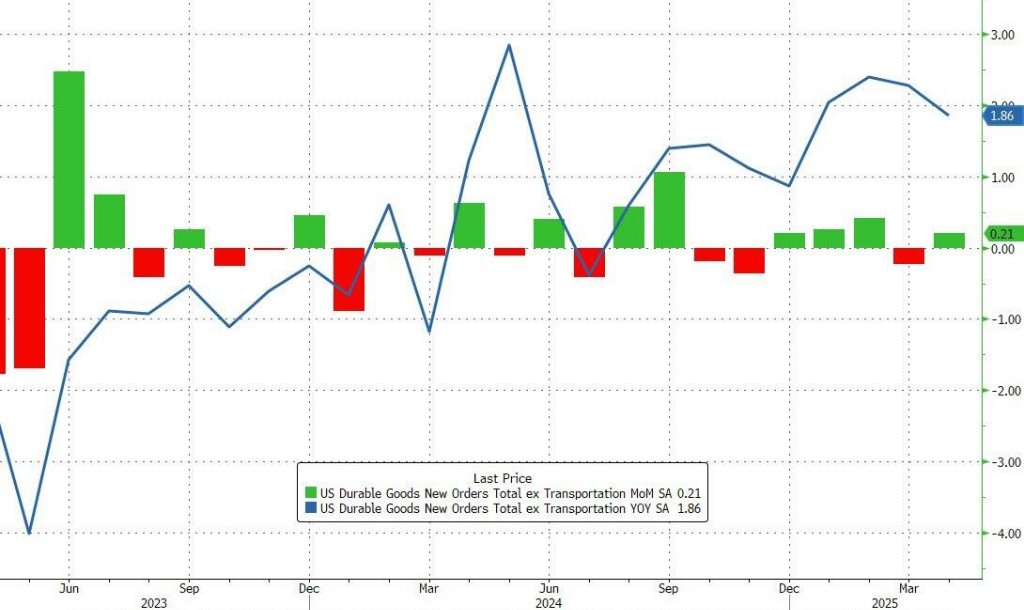
As a non-volatile indicator of business equipment investment, core capital goods orders (excluding aircraft and military hardware) fell by 1.3% last month, marking the largest decline since October of last year, while the data for March was revised upward to a growth of 0.3%.
Due to the possibility of order cancellations, the U.S. government places more emphasis on shipment data when calculating Gross Domestic Product (GDP), as shipments reflect actual payments. The data shows that core capital goods shipments fell by 0.1% in April.
The report emphasizes that businesses are exhibiting a notably cautious attitude when assessing demand prospects and are focusing on cost-cutting, which directly reflects the uncertainty shock brought about by Trump's trade policies. Meanwhile, the tax legislation being debated in Congress has left businesses in a wait-and-see mode, further suppressing investment impulses.
Significant Decline in Commercial Aircraft Orders Poses Challenges to GDP Contribution
Data shows that capital goods shipments, including defense and commercial aircraft, grew by 3.2% in April, while they fell by 1% in March.
Volatile commercial aircraft orders plummeted by 51.5% in April, following growth in March. Boeing reported that it received only 8 aircraft orders in April, the lowest level since May 2024, far below the 192 orders in March, which was the highest level since 2023.
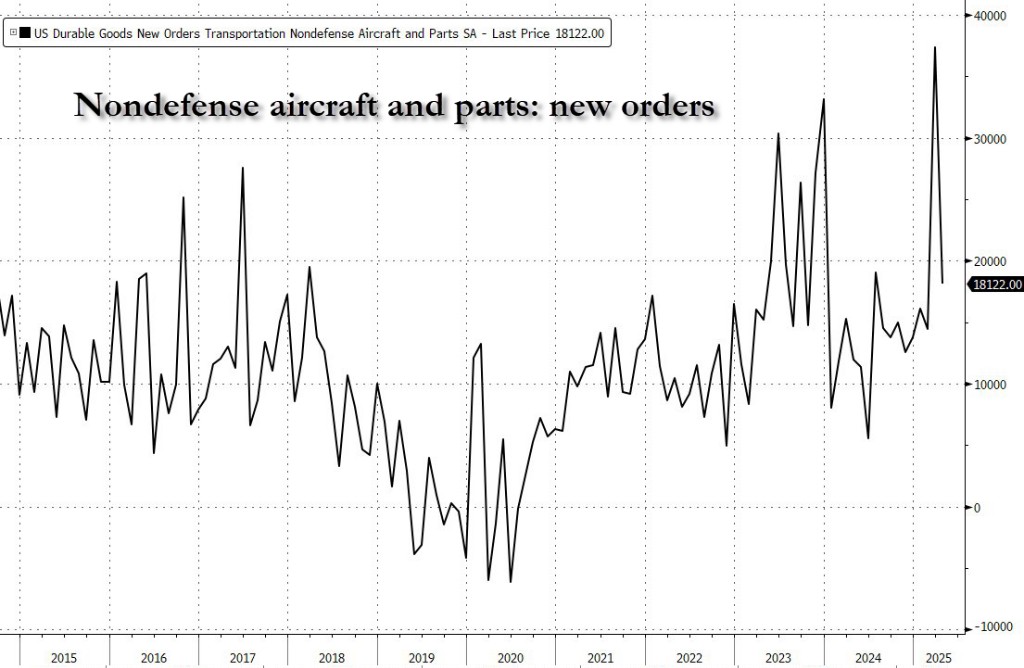
Prior to the release of this durable goods report, the Atlanta Fed's GDPNow forecasting model had predicted that business equipment spending would contribute nearly 0.4 percentage points to GDP in the second quarter. In the first quarter, equipment investment contributed more than one percentage point to GDP, the highest level since 2020, primarily driven by aircraft orders.
