Tesla Successfully Launches Robotaxi Service in Austin

Tesla has launched its Robotaxi service in Austin, marking a significant step in its autonomous driving goals. The pilot program features 10 to 20 Model Y vehicles offering driverless rides with a safety monitor present. Rides are available from 6 a.m. to midnight for a promotional fare of $4.20. Initial reactions have been positive, although some navigation quirks were noted. CEO Elon Musk anticipates rapid expansion, potentially deploying thousands of robotaxis soon, while emphasizing safety and regulatory compliance as key challenges ahead.
Tesla has officially, and successfully, launched its long-awaited Robotaxi service, marking a major milestone in the company’s autonomous driving ambitions. On Sunday afternoon, a select group of invited users took their first driverless rides through South Austin in Tesla Model Y vehicles equipped with the latest Full Self-Driving (FSD) software.
CEO Elon Musk heralded the launch as the “culmination of a decade of hard work,” posting on X to congratulate Tesla’s AI software and chip design teams. While the company had previously promised a fully unsupervised autonomous experience, the current rollout still includes a Tesla employee sitting in the front passenger seat as a safety monitor.
Nevertheless, no one occupies the driver’s seat, making this the first public ride-hailing service by Tesla to deploy driverless vehicles on city streets.
A Cautious Rollout
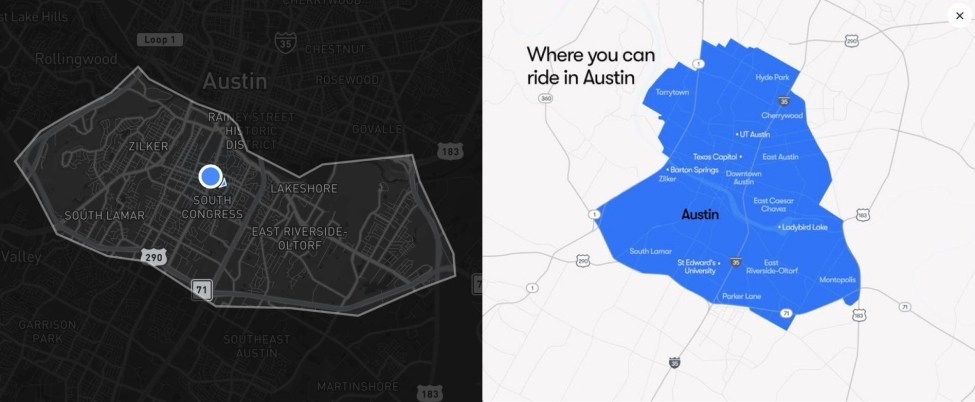
The pilot program includes 10 to 20 Tesla Model Y vehicles operating within a geofenced section of South Austin. The area spans a roughly 30-minute driving radius and has been thoroughly mapped by Tesla engineers. Rides are currently available between 6 a.m. and midnight and are being offered for a flat promotional fare of $4.20 per trip — a nod to Musk’s frequent use of the figure in public messaging.

Tesla’s new robotaxi service is being accessed through an update to the existing Tesla mobile app, where users in the Early Access Program can hail a ride, choose destinations, and sync personal vehicle preferences such as media playlists and climate control settings.
Despite the excitement, Tesla is moving forward cautiously. The company has restricted service during inclement weather, avoids complex intersections, and does not permit riders under 18. Tesla also emphasizes that safety monitors cannot intervene via a steering wheel or pedals but can activate a “kill switch” if necessary.
Public Reactions and First Rides
Early ride footage posted by Tesla influencers showed smooth driving performance, although some experienced minor navigation quirks. One vehicle reportedly braked unexpectedly in an intersection near police vehicles, though no incident occurred. Riders praised the experience as “smooth,” “normal,” and “uneventful,” with many livestreaming their experiences across social media.
Tesla’s robotaxi system is powered by an advanced version of FSD software that relies solely on cameras and neural network training — a stark contrast to competitors like Waymo, which use lidar and radar. Tesla’s approach has drawn skepticism from industry experts, but on Sunday the system performed without a major incident.
What’s Next?
Musk has hinted at a rapid scale-up, saying Tesla could have “thousands” of robotaxis on roads within months, though the company has not confirmed timelines for broader availability. The futuristic “Cybercab” vehicle first revealed in late 2024 is not part of this initial deployment, with production not expected until 2026.
As Tesla collects real-world data from the Austin pilot, the challenge now shifts from a successful launch to expanding operations safely, securing public trust, and navigating evolving regulatory frameworks across the U.S. and beyond.