Tesco PLC (LON:TSCO) is favoured by institutional owners who hold 82% of the company

Simplywall
2025.06.30 10:11

Tesco PLC (LON:TSCO) has 82% of its shares held by institutional investors, indicating significant influence over the stock's price. The top 24 shareholders own 51% of the company, with BlackRock, Inc. being the largest at 9%. Insider ownership is less than 1%, while the general public holds 14%. Institutional ownership can enhance credibility but may also lead to volatility if trading decisions shift. Analysts' sentiments and future forecasts are crucial for understanding Tesco's potential.

Key Insights

  • Given the large stake in the stock by institutions, Tesco's stock price might be vulnerable to their trading decisions
  • 51% of the business is held by the top 24 shareholders
  • Insiders have bought recently

We've found 21 US stocks that are forecast to pay a dividend yield of over 6% next year. See the full list for free.

If you want to know who really controls Tesco PLC (LON:TSCO), then you'll have to look at the makeup of its share registry. And the group that holds the biggest piece of the pie are institutions with 82% ownership. In other words, the group stands to gain the most (or lose the most) from their investment into the company.

Because institutional owners have a huge pool of resources and liquidity, their investing decisions tend to carry a great deal of weight, especially with individual investors. Hence, having a considerable amount of institutional money invested in a company is often regarded as a desirable trait.

Let's delve deeper into each type of owner of Tesco, beginning with the chart below.

View our latest analysis for Tesco

LSE:TSCO Ownership Breakdown June 30th 2025

What Does The Institutional Ownership Tell Us About Tesco?

Institutional investors commonly compare their own returns to the returns of a commonly followed index. So they generally do consider buying larger companies that are included in the relevant benchmark index.

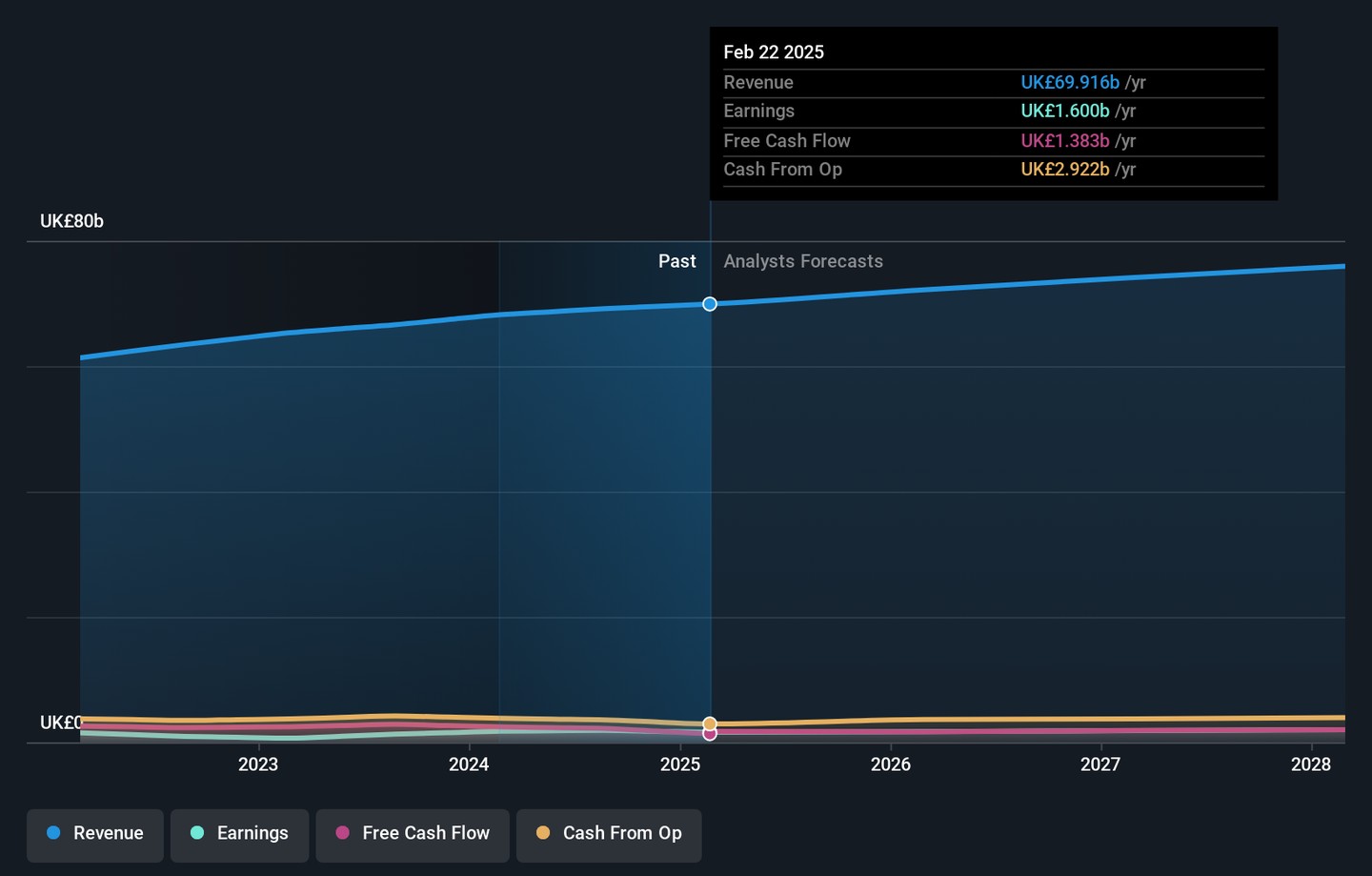
Tesco already has institutions on the share registry. Indeed, they own a respectable stake in the company. This can indicate that the company has a certain degree of credibility in the investment community. However, it is best to be wary of relying on the supposed validation that comes with institutional investors. They too, get it wrong sometimes. If multiple institutions change their view on a stock at the same time, you could see the share price drop fast. It's therefore worth looking at Tesco's earnings history below. Of course, the future is what really matters.

LSE:TSCO Earnings and Revenue Growth June 30th 2025

Investors should note that institutions actually own more than half the company, so they can collectively wield significant power. We note that hedge funds don't have a meaningful investment in Tesco. BlackRock, Inc. is currently the largest shareholder, with 9.0% of shares outstanding. In comparison, the second and third largest shareholders hold about 5.2% and 2.7% of the stock.

After doing some more digging, we found that the top 24 have the combined ownership of 51% in the company, suggesting that no single shareholder has significant control over the company.

While it makes sense to study institutional ownership data for a company, it also makes sense to study analyst sentiments to know which way the wind is blowing. Quite a few analysts cover the stock, so you could look into forecast growth quite easily.

Insider Ownership Of Tesco

The definition of company insiders can be subjective and does vary between jurisdictions. Our data reflects individual insiders, capturing board members at the very least. Company management run the business, but the CEO will answer to the board, even if he or she is a member of it.

I generally consider insider ownership to be a good thing. However, on some occasions it makes it more difficult for other shareholders to hold the board accountable for decisions.

Our most recent data indicates that insiders own less than 1% of Tesco PLC. Being so large, we would not expect insiders to own a large proportion of the stock. Collectively, they own UK£13m of stock. Arguably recent buying and selling is just as important to consider. You can click here to see if insiders have been buying or selling.

General Public Ownership

The general public-- including retail investors -- own 14% stake in the company, and hence can't easily be ignored. While this group can't necessarily call the shots, it can certainly have a real influence on how the company is run.

Next Steps:

I find it very interesting to look at who exactly owns a company. But to truly gain insight, we need to consider other information, too. To that end, you should be aware of the 1 warning sign we've spotted with Tesco .

But ultimately it is the future, not the past, that will determine how well the owners of this business will do. Therefore we think it advisable to take a look at this free report showing whether analysts are predicting a brighter future.

NB: Figures in this article are calculated using data from the last twelve months, which refer to the 12-month period ending on the last date of the month the financial statement is dated. This may not be consistent with full year annual report figures.