Breakfast FM-Radio | July 16, 2025

Wallstreetcn
2025.07.15 23:03
portai
I'm PortAI, I can summarize articles.

Understand the global market in five minutes, all in the Financial Breakfast

Huajian Morning Voice

Market Overview

Moderate inflation data once boosted both U.S. stocks and bonds, but the impact of tariffs remains, suppressing expectations for a Federal Reserve rate cut. U.S. stocks and bonds retreated, while Chinese concept stocks outperformed the market, and the U.S. dollar continued its recent upward trend.

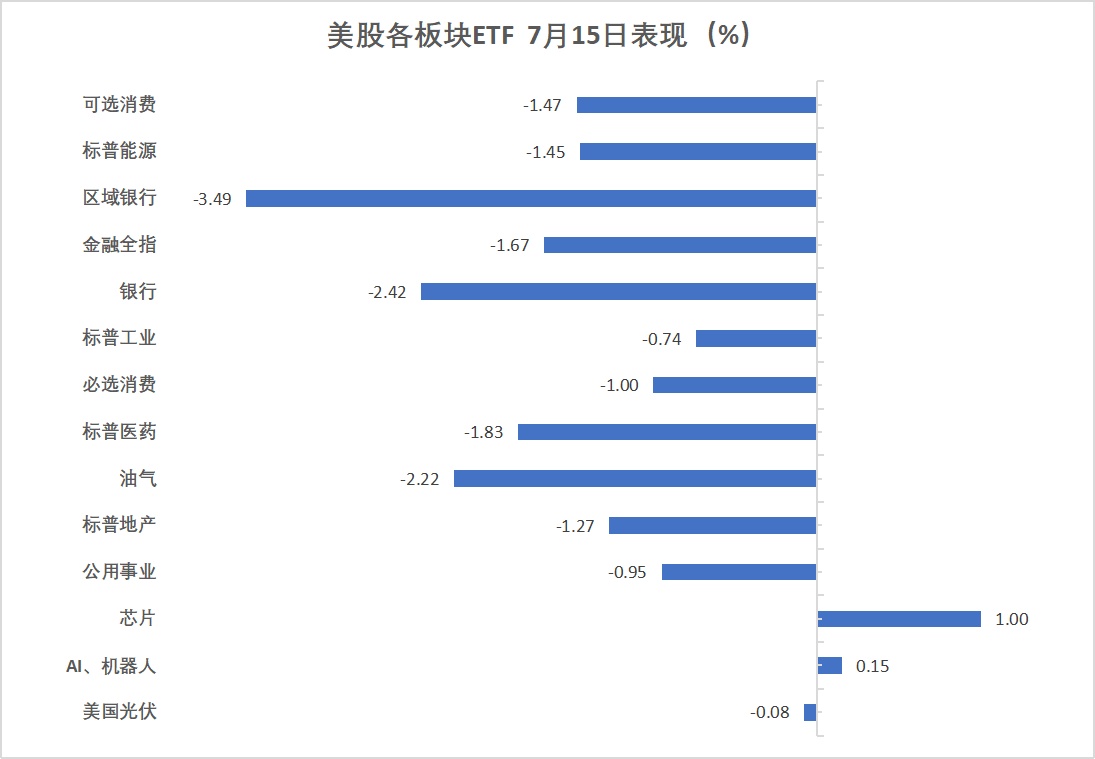
The Dow fell nearly 1%, while Nvidia's excellent performance drove the tech-heavy Nasdaq to a new high. Following news of chip sales licenses, Nvidia rose 4%, and AMD rose 6.4%. Citigroup's stock rose 3.7% due to better-than-expected second-quarter results, while Wells Fargo fell 5.4% after lowering its full-year net interest income forecast. Rare earth concept stock MP Materials rose nearly 20%.

U.S. Treasury yields initially fell and then rose, with the 10-year U.S. Treasury yield increasing by 4.8 basis points to 4.481%, reaching its highest point since February. The U.S. dollar closed up about 0.6%. The yen fell to its lowest level against the dollar since early February.

The U.S. House of Representatives failed to pass a procedural vote on a bill related to this week's "Crypto Week," leading to a more than 3% drop in Bitcoin. Gold fell over 1.3% from its daily high. Oil continued its weakness from yesterday, with U.S. crude fluctuating below $67.

During the Asian session, the Shanghai Composite Index narrowly held above 3500 points, with the computing power industry chain surging. The Hang Seng Index rose over 2%, Alibaba rose nearly 7%, Tencent rose over 3%, and government bonds surged, while commodities showed divergence.

Key News

U.S. Treasury Secretary latest remarks: No need to worry about the deadline for the suspension of additional tariffs between the U.S. and China; negotiations are "going well."

U.S. June Core CPI rose 2.9% year-on-year and 0.2% month-on-month, remaining below expectations for five consecutive months! "New Federal Reserve News Agency": June CPI data will not change the Federal Reserve's decision.

Trump stated that an agreement has been reached with Indonesia, with the U.S. imposing a 19% tariff, lower than last week's threatened level. European Union: There are "significant gaps" in positions between the U.S. and Europe in some areas, and a 30% tariff has left U.S. negotiators confused. Canadian Prime Minister: "There is not much evidence" that the U.S. is willing to reach an agreement without imposing tariffs.

Trump: Zelensky should not target Moscow for attacks. Trump's so-called "major statement on Russia" was revealed, and the market reacted: Another 50 days? TACO! Oil prices plummeted in response.

Jensen Huang: The U.S. government has approved export licenses and will begin selling H20 chips to the Chinese market. Huang met with the media at the Beijing Chain Expo on Wednesday, stating that Nvidia will launch a new version of the China-customized chip as early as September.

Bessent: The formal process for Powell's successor has begun, and the selection will proceed at Trump's pace. JP Morgan CEO issued Wall Street's clearest warning: The independence of the Federal Reserve is crucial

Republican lawmakers defect, and the cryptocurrency regulation bill supported by Trump faces a major setback, failing to pass in the House of Representatives.

Is Apple's foldable screen really coming? The first iPhone Fold is expected to be released in the second half of next year, with a starting price of $1,800.

Market Closing Report

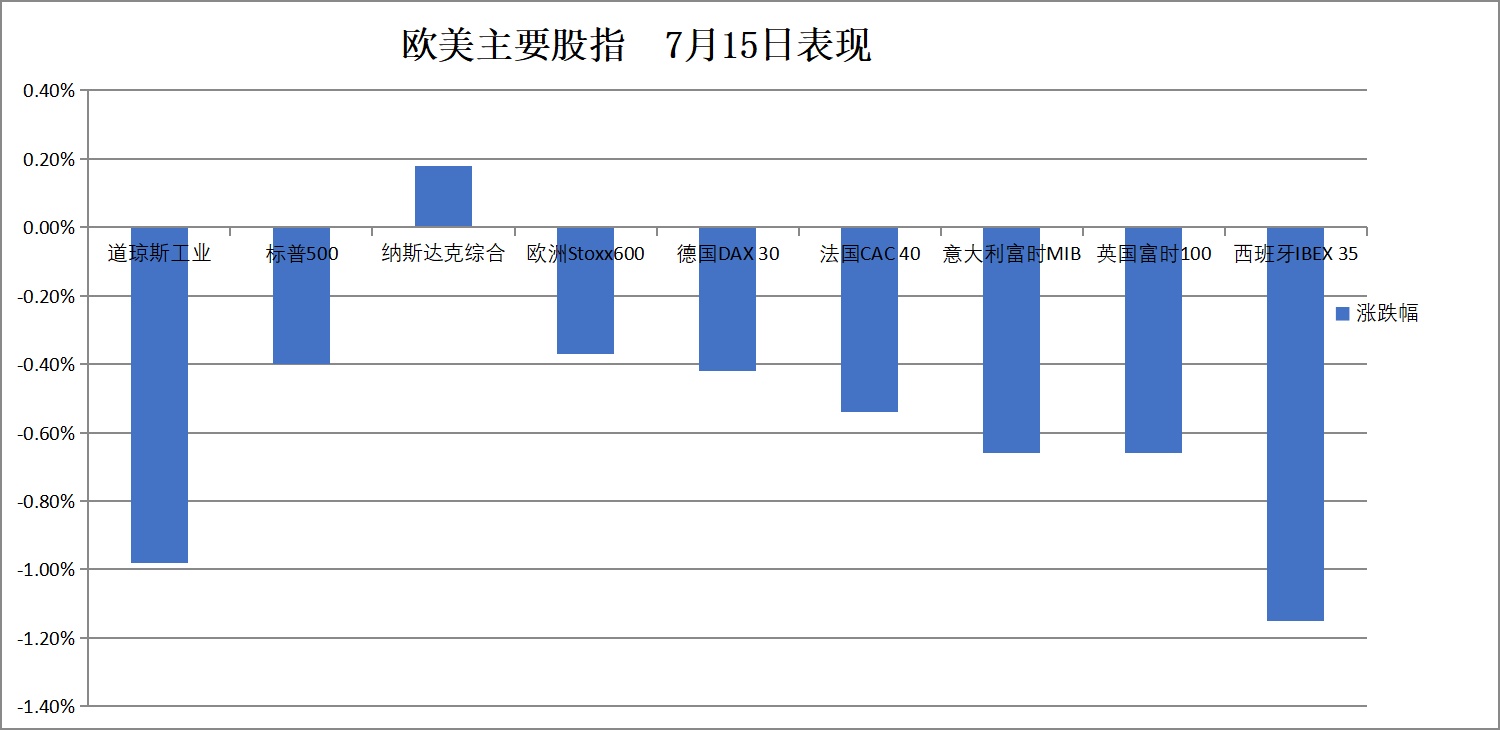
U.S. and European Stock Markets: The S&P 500 index closed down 0.40%, at 6,243.76 points. The Dow Jones Industrial Average fell 0.98%, closing at 44,023.29 points. The Nasdaq rose 0.18%, closing at 20,677.80 points, continuing to set a new closing historical high. The European STOXX 600 index closed down 0.37%, at 544.95 points.

A-shares: The Shanghai Composite Index fell 0.42%, closing at 3,505 points; the Shenzhen Component Index rose 0.56%, closing at 10,744.56 points; the ChiNext Index rose 1.73%, closing at 2,235.05 points.

Bond Market: The yield on the U.S. 10-year benchmark Treasury bond rose by 4.80 basis points, to 4.4813%. The yield on the 2-year U.S. Treasury bond rose by 4 basis points, to 3.9398%.

Commodities: WTI August crude oil futures closed down 0.68%, at $66.52 per barrel. Brent September crude oil futures closed down 0.72%, at $68.71 per barrel. COMEX gold futures fell 0.54%, closing at $3,333.50 per ounce.

News Details

Global Highlights

U.S. Treasury Secretary's latest remarks: No need to worry about the deadline for the suspension of some tariffs between the U.S. and China, negotiations are "going well". According to Global Times, Bessent stated that he hopes to meet with the Chinese side as soon as possible, possibly in a third country, around early next month, "we are still working hard"; approving licenses for H20 chips is part of the negotiations between the Trump administration and the Chinese side.

U.S. core CPI rose 2.9% year-on-year in June, 0.2% month-on-month, remaining below expectations for five consecutive months! In June, prices for furniture and toys, which are heavily affected by tariffs, accelerated, but the decline in prices for used cars and air tickets offset this impact. The month-on-month increase in core CPI indeed meets the Federal Reserve's target, which is good news for policymakers, but it is not enough to support a rate cut in July. Traders predict that the Federal Reserve will begin cutting rates in September, with a total of nearly two cuts by the end of the year

  • “New Federal Reserve News Agency”: June CPI data will not change the Federal Reserve's decision. Nick Timiraos pointed out that although the June CPI data has been released, Federal Reserve officials are likely to continue to maintain a cautious attitude. Regardless of how the market interprets the June data, the key is that the impact of tariffs has not yet fully manifested, and the data for July and August will be of greater concern.

Trump claims to have reached an agreement with Indonesia, the U.S. will impose a 19% tariff, lower than last week's threat level. Trump stated that the U.S. will exempt Indonesian export goods from tariffs and trade barriers, with Indonesia "opening its entire market to the U.S. for the first time," and promised to purchase $15 billion in U.S. energy, $4.5 billion in U.S. agricultural products, and 50 Boeing aircraft. The Indonesian ETF rose further, and Boeing's stock price briefly turned up over 1%. The tax letter released by Trump last week stated that Indonesia would be subject to a 32% tariff starting August 1.

EU: There are “significant gaps” in the positions of the U.S. and EU in some areas, a 30% tariff has left U.S. negotiators confused. EU Trade Commissioner Valdis Dombrovskis stated that although the two sides are quite close on the principle text in negotiations, there are still significant differences in certain key areas; if tariffs reach 30% or higher, it will make transatlantic trade "almost impossible" to conduct as before.

  • What does a 30% tariff mean for the EU? A 30% tariff could trigger a transatlantic trade war, forcing the EU to take retaliatory measures, leading to a 0.7% shrinkage in the Eurozone's economic output, and the European Central Bank may lower interest rates to 1% ahead of schedule, putting pressure on the euro exchange rate. Export powerhouses like Germany will be the first to suffer, facing losses in the hundreds of billions of euros. Barclays warned that if tariffs are implemented, European stocks could plummet "double digits," and market risk aversion is rising.

Canadian Prime Minister: “There is not much evidence” that the U.S. is willing to reach an agreement without imposing tariffs. Canadian Prime Minister Carney publicly stated for the first time that U.S. tariffs may remain unchanged. He said that even if a bilateral agreement is reached with the U.S. to resolve the current tariff dispute, it may not completely exempt the tariffs imposed by the U.S.; negotiations between Canada and the U.S. are expected to intensify significantly before the August 1 deadline.

Trump: Zelensky should not target Moscow for attacks. Previously, media reports indicated that to force Russia back to the negotiating table, Trump encouraged Ukraine to intensify its attacks on Russian territory during a recent call with Zelensky, even asking if Ukraine could strike Moscow if the U.S. provided long-range weapons Trump's so-called "major statement on Russia" revealed, market reaction: Another 50 days? TACO! Oil prices plummet. Trump threatened that if an agreement is not reached between Russia and Ukraine within 50 days, he would impose a 100% tariff on Russia and secondary tariffs on countries purchasing Russian oil, and announced an agreement with NATO to supply weapons to Ukraine. However, the market believes that Trump's statement lacks immediate threat, has limited short-term impact on global energy supply, and temporarily eases concerns over sanctions on Russian oil exports, leading to a drop in oil prices.

Jensen Huang: The U.S. government has approved export licenses and will begin selling H20 chips to the Chinese market. Jensen Huang stated that NVIDIA will launch a new RTXpro GPU, specifically designed for computer graphics, digital twins, and artificial intelligence.

  • Jensen Huang met with the media at the Beijing Chain Expo on Wednesday, NVIDIA will launch a new version of the custom chip for China as early as September. The third Chain Expo will open on July 16 in Beijing, and NVIDIA will participate for the first time. Jensen Huang will attend this Chain Expo to introduce NVIDIA's new products and reaffirm the company's long-term commitment to the Chinese market, with the new AI chip customized for China expected to launch as early as September this year.
  • What investment signals does NVIDIA's H20 return to the Chinese market release? Citigroup and Jefferies stated that the restart of H20 chip sales will have a positive impact on China's internet data center industry. Bernstein estimates that for every $10 billion in revenue NVIDIA recovers in the Chinese market, it could lead to an approximate $0.25 increase in EPS.

Besant: The formal process for Powell's successor has begun, and the selection will proceed at Trump's pace. Besant emphasized, "This is President Trump's decision, and everything will proceed at his pace," and that Besant will participate in the decision-making process regarding the Federal Reserve Chair candidate. Besant also highlighted that the Federal Reserve Chair usually resigns from the Board upon leaving office, implying that his position on the Board is also in question.

  • JP Morgan CEO issues the clearest warning from Wall Street: The independence of the Federal Reserve is crucial. Dimon stated during a conference call after JP Morgan's earnings report, "I believe the independence of the Federal Reserve is absolutely critical. If there are manipulations against the Federal Reserve, it could have counterproductive consequences." Dimon is the first major financial institution leader in the U.S. to publicly respond to Trump's attacks on the Federal Reserve Chair. Analysts point out that given Dimon's status on Wall Street and his history of influencing Trump's decisions, his public support for the Federal Reserve is particularly significant Republican lawmakers defect, Trump-supported cryptocurrency regulation bill suffers major setback, House vote fails. The final vote result in the U.S. House of Representatives was 196 votes in favor and 223 votes against, with 13 Republicans voting against the procedural motion alongside Democrats. The House leadership has tentatively planned to hold another vote later on Tuesday to continue pushing these bills. Media reports indicate that it remains unclear whether the second vote later on Tuesday will be on the same rules and the same bills, or whether House Republican leaders will modify the bill's content to meet the demands of opponents.

  • As a result, Bitcoin fell 2.66% during the day, and the stock price of Circle, a stablecoin company, dropped more than 7% at one point.

Is Apple's foldable screen really coming? The first iPhone Fold is expected to be released in the second half of next year, with a starting price of $1,800. According to the latest industry survey by Tianfeng Securities' Guo Mingqiang, to ensure mass production of the foldable iPhone in the second half of 2026, Apple will adopt Samsung Display's (SDC) crease-free display design. Fine M-Tec, as the metal plate supplier for SDC displays, will be the biggest beneficiary. In terms of production and pricing, UBS stated that the initial pricing of the Apple phone may be in the range of $1,800 to $2,000, with initial production expected to be limited to 10 to 15 million units.

After a 14% gain in the first half of the year, Bridgewater raises outlook for Chinese stock market, citing low valuations and attractive risk-reward! The world's largest hedge fund, Bridgewater Associates, is increasing its investment in the Chinese stock market. Its China fund recorded a strong return of 14% in the first half of the year, mainly due to the Chinese government's economic stimulus policies and the relatively low valuation of the stock market. Bridgewater believes that ongoing policy support in China will continue to boost risk assets.

Domestic Macro

Central Urban Work Conference held in Beijing, Xi Jinping delivers important speech. The conference outlined key tasks in seven areas for urban work.

  • First, focus on optimizing the modern urban system. Aim to enhance the comprehensive carrying capacity of cities for population and economic and social development, develop group-style and networked modern urban agglomerations and metropolitan areas, promote urbanization construction with county towns as important carriers, continue to promote the urbanization of agricultural transfer populations, and facilitate coordinated development of large, medium, and small cities and towns, as well as urban-rural integration.
  • Second, focus on building vibrant innovative cities. Carefully cultivate an innovation ecosystem, continuously achieve breakthroughs in developing new quality productive forces; rely on reform and opening up to enhance urban momentum, carry out high-quality urban renewal, and fully leverage the role of cities as hubs in the domestic and international dual circulation
  • In addition, efforts are being made to build comfortable and convenient livable cities, green and low-carbon beautiful cities, safe and reliable resilient cities, morally uplifting civilized cities, and convenient and efficient smart cities.

An important article by General Secretary Xi Jinping titled "Unwaveringly Promote High-Level Opening Up" was published in Qiushi Magazine. The article points out that domestic circulation should attract global resources and factors, enhancing the linkage effects of domestic and international markets and resources. It emphasizes steadily expanding institutional openness in rules, regulations, management, and standards, actively aligning with international high-standard economic and trade rules, deepening reforms in foreign trade, foreign investment, and outbound investment management systems, and creating a first-class business environment that is market-oriented, law-based, and internationalized. It advocates implementing a free trade pilot zone enhancement strategy, encouraging innovative and integrated exploration, and creating a new high ground for reform and opening up with higher levels of openness and stronger radiation effects.

China's central bank conducts a record 1.4 trillion yuan reverse repurchase operation, continuing to increase for two consecutive months, signaling clear liquidity stability. Wang Qing, chief macro analyst at Dongfang Jincheng, believes that the central bank is currently comprehensively using reverse repos and MLF to continuously inject medium-term liquidity into the market. This aims to effectively respond to external fluctuations affecting macroeconomic operations, promote a moderate rebound in price levels, and provide room for various monetary policy tools to exert efforts in a moderately loose direction in the second half of the year.

China's GDP grew by 5.3% year-on-year in the first half of the year. By industry, the added value of the primary industry was 31,172 billion yuan, an increase of 3.7% year-on-year; the added value of the secondary industry was 239,050 billion yuan, an increase of 5.3%; the added value of the tertiary industry was 390,314 billion yuan, an increase of 5.5%.

In June, China's social retail sales growth rate slowed to 4.8% year-on-year, the added value of industrial enterprises above designated size increased by 6.8% year-on-year, and fixed asset investment in the first half of the year increased by 2.8%, while real estate development investment decreased by 11.2% year-on-year.

  • In June, China's social retail sales growth rate slowed to 4.8%, with a slowdown in catering revenue. Retail sales of household appliances and audio-visual equipment, cultural and office supplies, and communication equipment in units above the designated size increased by 32.4%, 24.4%, and 13.9%, respectively, showing a slowdown compared to the previous month. In June, catering revenue was 470.8 billion yuan, an increase of 0.9%, down from 5.9% previously.
  • In June, China's added value of industrial enterprises above designated size increased by 6.8% year-on-year, with rapid growth in the production of new energy vehicles and industrial robots. In June, 36 out of 41 major industries maintained year-on-year growth in added value. The electrical machinery and equipment manufacturing industry and the production of computers, communications, and other electronic equipment showed rapid growth The output of 3D printing equipment, new energy vehicles, and industrial robot products increased by 43.1%, 36.2%, and 35.6% year-on-year, respectively.
  • In the first half of the year, China's national fixed asset investment grew by 2.8%, with manufacturing investment increasing by 7.5%. After excluding the impact of price factors, fixed asset investment (excluding households) increased by 5.3% year-on-year. On a month-on-month basis, fixed asset investment (excluding households) decreased by 0.12% in June.
  • From January to June, China's real estate development investment decreased by 11.2% year-on-year, and the sales area of newly built commercial housing decreased by 3.5% year-on-year. The year-on-year decline in the sales area of newly built commercial housing from January to June expanded by 0.6 percentage points compared to January to May; among them, the sales area of residential properties decreased by 3.7%. The sales amount of newly built commercial housing was 442.41 billion yuan, a decrease of 5.5%; among them, the sales amount of residential properties decreased by 5.2%.
  • China's June 70-city housing prices: New and second-hand housing prices in various cities continued to decline month-on-month, while the year-on-year decline narrowed overall. New and second-hand housing prices in various cities have declined month-on-month, with the month-on-month decline in second-hand residential prices in second- and third-tier cities expanding to 0.6%; the overall year-on-year decline in housing prices in various cities continued to narrow, but the year-on-year decline in second-hand housing prices in first-tier cities decreased by 3%, and the decline expanded.

The China Chain Store & Franchise Association advocates: standardize the order of the instant retail market and jointly resist "involution-style" competition through price subsidies. To safeguard market fairness, protect consumer rights, and promote the industry to return to the essence of value competition, the China Chain Store & Franchise Association has issued the following initiative to all members and related enterprises: standardize low-price subsidy competition behavior, maintain market fairness; adhere to the bottom line of operation, protect consumer rights; build a diversified competitive system, establish a long-term business philosophy; strengthen proactive self-discipline, enhance compliance management; practice social responsibility, and safeguard the industry ecosystem.

Domestic Companies

Pop Mart: Revenue in the first half of the year increased by no less than 200% year-on-year, and profit increased by no less than 350% year-on-year. Pop Mart stated that the performance growth is mainly attributed to the following reasons: the recognition of the Pop Mart brand and its IP has further increased globally, the proportion of overseas revenue continues to rise, and product costs are continuously optimized.

Leading optical module company Zhongji Xuchuang: Expected net profit in the first half of the year increased by 52.64%-86.57% year-on-year, with strong demand for 800G optical modules. The significant increase in sales of high-end optical modules such as 800G is the core factor driving performance growth. Before deducting equity incentive expenses, the optical module business achieved a consolidated net profit of approximately 4 billion to 4.9 billion yuan in the first half of the year, an increase of 57.02%-92.35% compared to the same period last year YuShu Technology CEO Wang Xingxing: This year, YuShu's robot shipments have seen significant growth, and in the next 3-5 years, humanoid robots will accelerate their application in various industries, including services, industrial scenarios, and rescue operations.

Overseas Macro

US Stock Q2 Earnings Season Approaches: Profit Expectations Cool Significantly, Tariffs Become the Biggest Variable, Focus on Four Key Themes. Affected by tariffs, the market currently expects S&P 500 constituent companies' earnings to grow by 5% in the second quarter, the slowest profit growth since Q4 2023. Bank of America believes that the recent market rebound indicates that corporate earnings to be announced in the coming weeks may be underestimated, and it recommends investors focus on four key themes: capital expenditure guidance, layoffs, foreign exchange impact, and the impact of the Inflation Reduction Act.

Bank of America's Latest Institutional Survey: Investors are Returning to Risk Assets at a Record Pace. Bank of America's fund manager survey is known as a "famous contrarian indicator," accurately predicting key market turning points over the past year. The latest survey shows that global risk appetite has seen the fastest growth since 2001, with record inflows into US stocks, European stocks, and the tech sector, while cash allocation has fallen below the warning line of 3.9%. The market is filled with greed, and this indicator has issued another warning, suggesting that the market may face a correction.

Japan's Bond Crisis Enters a New Phase: 10-Year Yield Breaks Warning Line, Hits Highest Level Since 2008. The Japanese bond crisis is escalating, with the 10-year yield approaching 1.6%, reaching a new high since 2008. Unlike ultra-long-term government bonds, the rise in the 10-year government bond yield has a more direct impact on the real economy. This unusual movement coincides with the upcoming Japanese Senate elections, raising market concerns that a loss for the ruling coalition could lead to a shift in fiscal policy, with the opposition party's campaign policies likely to increase the fiscal deficit, triggering a "bond vigilante" sell-off, potentially leading Japan to repeat the UK's "Truss moment."

  • With the Japanese Senate elections imminent, Nomura states "this possibility is increasing": Prime Minister's resignation, stalled US-Japan negotiations, Japan faces tax increases. Nomura states that multiple polls indicate a significant increase in the likelihood of the ruling coalition losing its majority in the Senate, which could lead to Prime Minister Shigeru Ishiba's resignation, stalled US-Japan trade negotiations, and a 25% tariff risk. The market expects that a potential new government in Japan may shift towards more accommodative fiscal policies, delaying the Bank of Japan's interest rate hikes, leading to a depreciation of the yen, but with a differentiated impact on the stock market.

Overseas Companies JP Morgan's Q2 revenue of $45.7 billion exceeds expectations, with a net profit of $15 billion, stock trading revenue hits a record high. JP Morgan's revenue for the second quarter was $45.68 billion, with earnings per share of $5.24, surpassing analyst expectations. The growth was mainly driven by strong performance in trading operations amid a volatile market environment and a recovery in investment banking. Market fluctuations triggered by Trump's trade policies created a favorable environment for the bank's trading division. JP Morgan's stock rose over 2% in pre-market trading but closed down 0.7%.

As Bitcoin hits a new high, crypto asset management giant Grayscale applies for a U.S. IPO. Grayscale's IPO application is seen as a result of the Trump administration's shift towards crypto-friendly policies, following the company's fierce battle with the Biden administration's SEC over its Bitcoin ETF. This wave of favorable crypto policies has also led to listing applications from crypto exchanges like Gemini and Bullish, and has encouraged the U.S. to allow retirement accounts to invest in cryptocurrencies.

Cryptocurrency exchange company Figure plans to go public in the fall, raising up to $1 billion. Currently, many cryptocurrency companies are eager to take advantage of the White House's more favorable crypto policy environment and the heightened interest from investors in the industry to actively push for listings.

Tesla enters the high-end market in India, with Model Y starting at nearly $70,000, double the price in China. Tesla opened its first showroom in Mumbai on Tuesday, with the Model Y priced at around $70,000, and is currently accepting pre-orders, with deliveries expected to begin in the third quarter. The high pricing is mainly due to India's 70% tariff on imported cars, and Tesla has chosen to import vehicles to test the Indian market, competing with luxury brands like BMW and Mercedes-Benz in the high-end electric vehicle market.

Tesla's core executives undergo another change, reports indicate North American sales head has left. According to reports, Troy Jones, the vice president responsible for sales, service, and delivery operations at Tesla, has left the company after 15 years. He was in charge of Tesla's largest market—North America.

Apple bets $500 million on the only rare earth supplier in the U.S., strengthening its domestic supply chain layout. Apple will source U.S.-made rare earth magnets from MP Materials' Texas plant, and both parties plan to build a new factory in Fort Worth, Texas. Just a few days ago, the U.S. Department of Defense announced a $400 million investment in MP Materials, acquiring a 15% stake in the company

Industry/Concept

  1. Brokerage Firms: The current brokerage sector has multiple catalytic factors, including high growth in mid-year performance, innovative virtual asset businesses in Hong Kong, high prosperity in the primary and secondary markets of Hong Kong stocks, and mergers and acquisitions driving industry concentration. Focus on the recovery opportunities in the brokerage sector, with H-shares having more advantages.

  2. Strategy: Huafu Securities pointed out that compared to the S&P 500 sector index, the Stoxx 600 sector index, the Hang Seng Composite sector index, and the CSI 300 sector index, the overvaluation level of US dollar assets (S&P 500 sector) is significantly ahead. Chinese assets (Hang Seng Composite sector and CSI 300 sector) have relatively low valuations. Under the logic of economic bottoming, asset quality improvement, and valuation switching, low PB targets are expected to benefit first.

  3. Container Shipping: The birth of the Alliance of the Twin Stars will transform shipping routes from pendulum routes to radial routes, replacing the efficiency of large vessel trunk transportation with increased demand for small vessels. A weekly European trunk line theoretically will add 40 small container ships of 2,000 TEU. The tight supply of shipping capacity supports the continuous rise in period charter and second-hand ship prices.

  4. Thermal Power: Guotai Junan Securities research report pointed out that in recent years, the PB valuation of thermal power asset acquisitions/sales transactions is significantly higher than the secondary market thermal power valuation level, indicating that thermal power stocks still have room for valuation improvement.

Today's News Preview

US June PPI.

US June industrial output.

NVIDIA CEO Jensen Huang holds a press conference in Beijing.

The Federal Reserve releases the Beige Book on economic conditions.

New York Fed President John Williams, Fed Governor Christopher Waller, Richmond Fed President Tom Barkin, and Cleveland Fed President Loretta Mester will give speeches.

US EIA crude oil inventory changes last week.